Forum's New Admin Tools Signal the Next Phase of AI-Powered Community Building
When a platform announces new tools for the people who run its communities, it is easy to file the news under "product update" and move on. That would be a mistake. The quiet shift toward building for admins, the moderators, organizers, and operators who keep online spaces alive, tells us far more about where artificial intelligence is actually heading than any flashy chatbot demo ever will.
The latest move on that front comes from Forum, which has introduced a set of tools aimed squarely at the administrators who build and maintain communities on the platform. On the surface, this is a story about better dashboards and smoother workflows. Beneath the surface, it is a story about where AI earns its keep: in the unglamorous, repetitive, high-stakes work of keeping a group of humans functioning together without driving everyone away.
The Admin Is the Most Important User Nobody Designs For
Think about how software usually gets built. Companies obsess over the end user. They polish the first five minutes of the experience, run experiments on button colors, and chase sign-up conversion. The person who actually holds the community together, the one answering questions at midnight, settling disputes, welcoming newcomers, and quietly deleting spam, is often an afterthought.
That imbalance is starting to correct, and the reasons are partly economic. A community without a capable admin does not stay a community for long. It becomes a ghost town or a complaint box. Every platform that depends on user-generated discussion eventually learns the same lesson: the health of the community is the product. If the admins burn out, the community decays, and the platform's engagement numbers follow.
Tools built for admins, then, are not a niche feature. They are infrastructure. And infrastructure is exactly where AI has the most to offer, not as a novelty, but as a way to multiply the effectiveness of a small number of people.
Why Admin Tooling Is Where AI Actually Lands
The most useful way to think about this shift is to ask a simple question: what does an admin actually do all day? The answer is a mix of judgment calls and chores. Judgment calls, should this post come down, is this member acting in good faith, does this argument need a nudge or a lock, require context and human values. Chores, sorting, tagging, summarizing, noticing patterns, drafting responses, spotting the same bad actor under a new name, are repetitive and draining.
That second category is where AI shines. Large language models and related systems are extraordinarily good at pattern recognition across text, summarization, classification, and drafting. They do not get tired of the tenth spam report at 2 a.m. They do not lose their temper in a thread. They can read a thousand messages and surface the three that actually need a human decision.
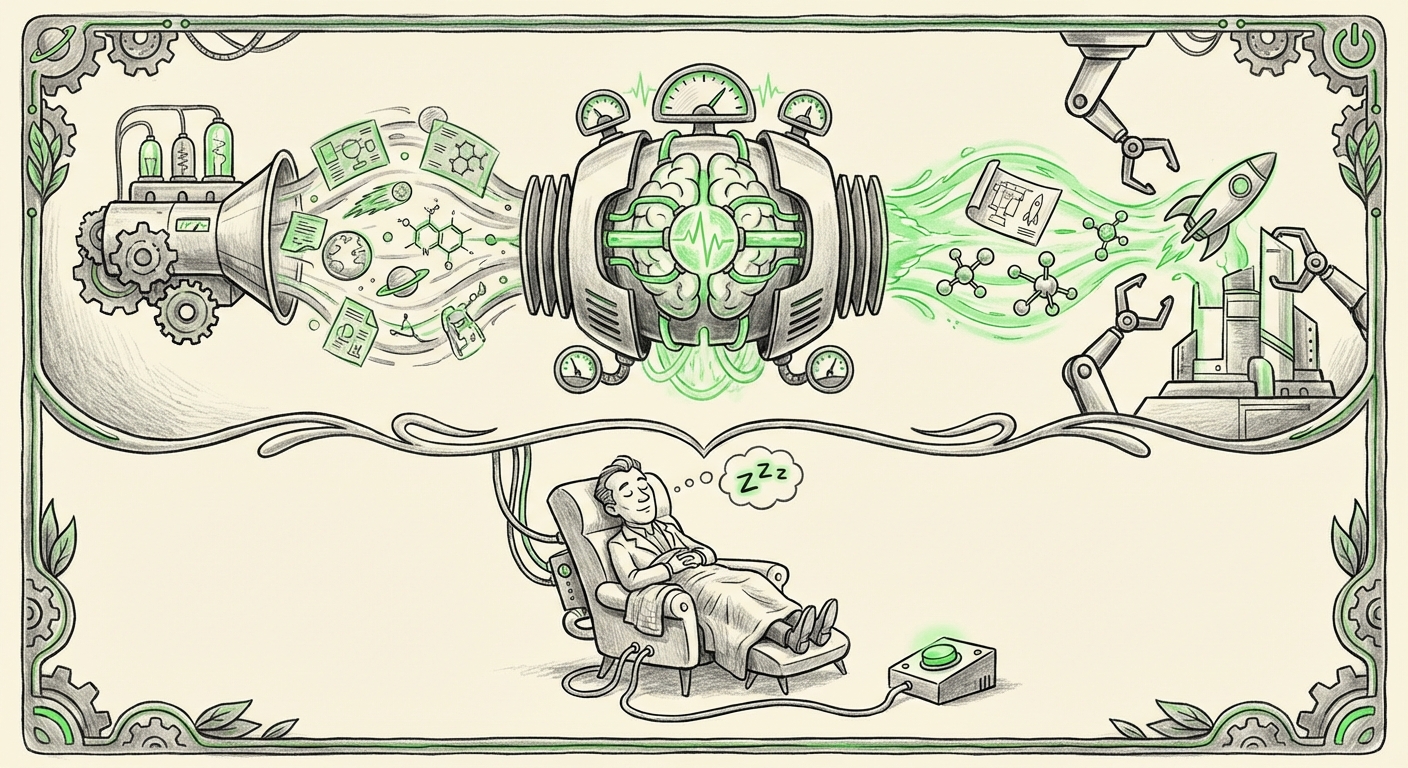
This is the crucial reframing. AI in community management is not about replacing the admin. It is about giving one admin the leverage of ten. The tools that win will be the ones that absorb the grind and hand the human a clean, well-organized queue of decisions that genuinely require a person.
The three jobs AI does best for community teams
- Triage and prioritization. Separating the urgent from the noisy so people spend attention where it matters most.
- Summarization and context. Catching someone up on a fifty-message thread in seconds instead of twenty minutes.
- Pattern spotting. Noticing repeat behavior, emerging conflicts, and coordinated spam before it spreads.
Notice what is missing from that list: final decisions. The moment a system tries to make the judgment call on its own, trust erodes fast. Communities are built on a sense of fairness, and fairness is deeply human. Members will forgive a slow response. They will not forgive an unexplained, automated punishment.
The Trust Problem Is the Whole Ballgame
Here is the tension every platform now faces. The same AI that can protect a community can also hollow it out. If moderation becomes invisible and automatic, members start to feel like they are talking to a machine that is grading them. If every post is quietly scored and filtered, the sense of a shared human space disappears, and that sense is the entire reason people join communities in the first place.
The platforms that get this right will follow a few principles, whether they state them openly or not:
- Transparency about automation. Members should be able to tell when a machine made a call and be able to ask a human to look again.
- Human final say on consequences. AI can flag, sort, and draft. A person should own anything that removes someone's voice or standing.
- Admin override as a first-class feature. The operator must always be able to see why a system acted and correct it.
- Bias checks in plain sight. Automated systems inherit the blind spots of their training data. Communities with their own norms need tools that respect those norms, not a one-size-fits-all filter.
Admin-facing tools are the natural place to enforce those principles, because the admin is the person who already holds the community's trust. When the tool empowers that person instead of bypassing them, automation feels like backup rather than surveillance.
The Business Case: Communities Are Expensive to Run Well
For business audiences, the financial logic is blunt. Community operations are labor-intensive and hard to scale. Hiring more moderators is linear, twice the budget, twice the headcount, twice the management overhead. Software leverage is not linear. A well-designed admin toolset can raise the ceiling on how much community one team can responsibly handle.
This matters beyond social platforms. Every company now runs some form of community: customer support forums, developer ecosystems, user groups, internal knowledge channels, partner networks. All of them share the same bottleneck, a small number of people with the context and authority to keep things healthy. AI-assisted admin tooling turns that bottleneck into a manageable, measurable operation instead of a constant fire drill.
There is also a retention argument. Volunteer moderators and community managers quit when the work feels thankless and endless. Tools that reduce the daily grind are, in effect, retention tools. The cheapest moderator to hire is the one you didn't lose.
What This Signals About the Future of AI
Step back and the pattern is clear. The first wave of generative AI was about producing content on demand. The next wave is about operating systems for human coordination, tools that help groups of people make decisions, resolve conflict, and stay aligned without a manager standing over every exchange.
Community admin tools are an early, visible example of that wave. They sit exactly where AI's strengths meet human judgment's limits. They involve real consequences, real people, and real trust. If AI can earn its place there, quietly, reliably, with humans in charge, it will have proven something far more important than its ability to write a poem.
The platforms that invest in admin tooling now are placing a bet that the future of AI is not a chatbot that talks to you, but a layer of quiet assistance that makes the people running things dramatically more capable. That is a less exciting pitch than a demo video. It is also a much more durable business.
Actionable Steps for Teams Watching This Space
If you run a community
- Audit where your admins' time actually goes. Track the repetitive tasks for two weeks. That list is your automation roadmap.
- Start with triage, not enforcement. Let AI sort and summarize before you let it act.
- Write down your community's rules in machine-readable terms. Tools can only respect your norms if you have spelled them out.
- Keep a visible escalation path to a human. It protects trust and it protects you.
If you build products
- Design for the operator, not just the visitor. The admin is your most valuable power user.
- Make automation explainable by default. "Why did this happen?" should always have an answer.
- Treat override as a core feature. Trust is built in the moments when a person can correct the machine.
If you are evaluating vendors
- Ask what the system does when it is wrong, not just when it is right.
- Ask who owns the decision and who owns the record of it.
- Ask whether the tool adapts to your community's norms or imposes someone else's.
The Bottom Line
New admin tools rarely make headlines, but they reveal where an industry is genuinely heading. Forum's focus on the people who build communities points to a maturing view of AI: less about replacing human judgment, more about clearing away everything that gets in the way of it. The platforms that understand this will end up with healthier communities, more loyal operators, and a far better story to tell when the next wave of hype arrives.