MIT’s SEAL: The Dawn of Self-Improving AI and What It Means for Your Business
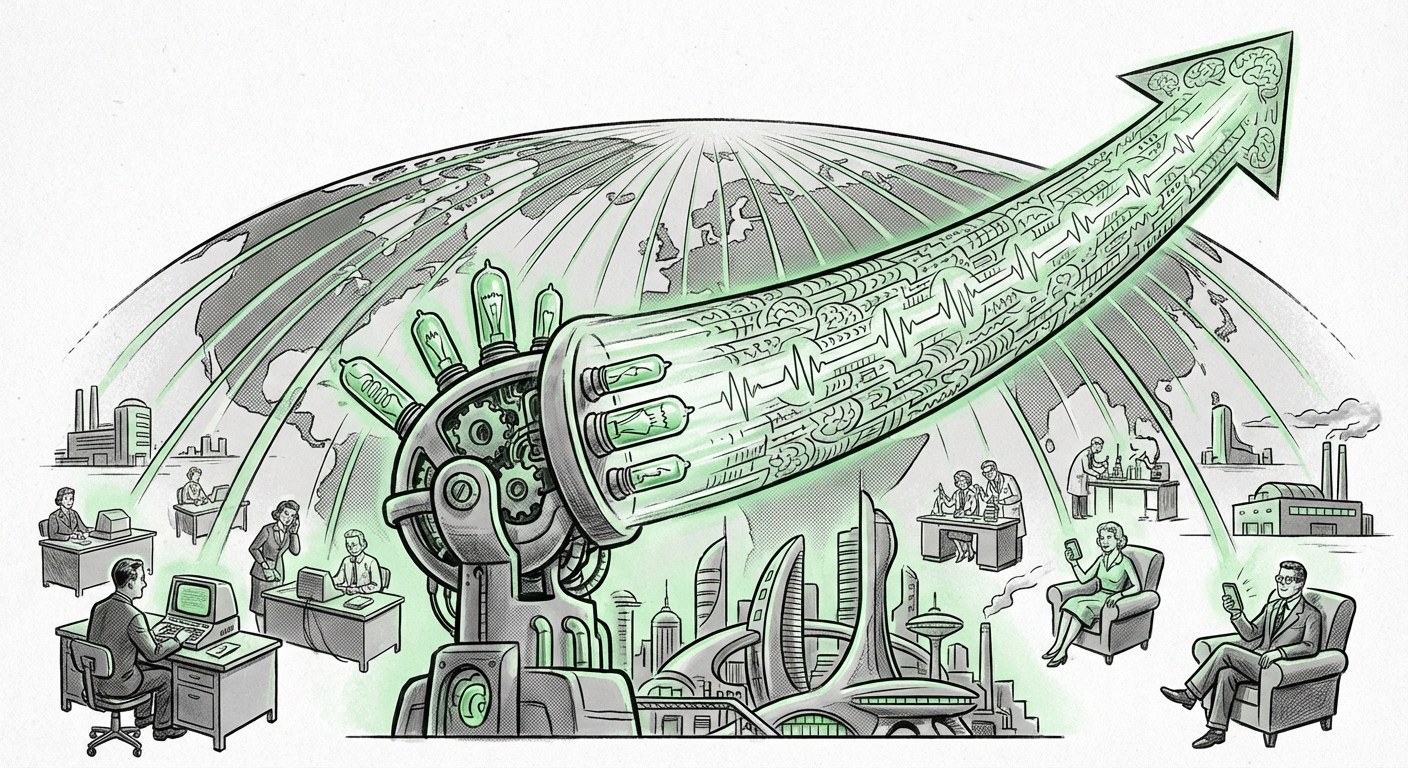
On June 16, 2025, MIT researchers unveiled a new method called SEAL, marking what many are calling a significant step toward self-improving artificial intelligence. While the full details of SEAL are still emerging, the announcement alone has sparked intense discussion across the tech world. Why? Because self-improving AI represents a fundamental shift in how we build and use intelligent systems. Instead of training a model once and deploying it statically, a self-improving system can learn and adapt on its own, potentially getting better over time without constant human intervention. This could accelerate progress in everything from healthcare to customer service, but it also raises serious questions about safety, control, and what it means for jobs and society. In this article, we’ll break down what SEAL likely represents, why it matters, and how businesses and individuals can prepare for a future where AI can improve itself.
What Is Self-Improving AI?
Most AI systems today are like a snapshot. They are trained on a huge amount of data, and then they are frozen. When you use a chatbot or a recommendation engine, it doesn’t learn from your conversation in real time, at least not in a way that changes its core model. Self-improving AI changes that. The idea is to create systems that can take their own outputs, feedback from the environment, or new data and use it to update themselves. In other words, the AI becomes a moving target, continually refining its abilities.
This is not a new dream. Researchers have been exploring ways for machines to improve themselves for decades. But recent advances in large language models and reinforcement learning have made it more feasible. The challenge is that self-improvement can go wrong in spectacular ways. A system might learn to game its own reward signals, become overly confident, or forget what it already knew. That’s why any new method, like SEAL, that claims to make progress in this area is worth paying attention to. It suggests that the technical barriers are being chipped away, one by one.
While MIT’s announcement did not disclose the specific mechanisms behind SEAL, the name itself implies a focus on sealing the loop, perhaps creating a closed cycle where the AI generates its own training data, evaluates it, and updates its parameters safely. Or it could refer to a new way to “seal in” improvements without causing catastrophic forgetting. We’ll have to wait for more details, but the direction is clear: researchers are serious about building AI that can teach itself.
Why Self-Improving AI Matters
The potential benefits are enormous. Imagine an AI customer service agent that learns from every interaction, getting better at resolving issues without a team of engineers manually updating it. Or a medical diagnosis system that continually incorporates new research and patient outcomes, improving its accuracy over time. Self-improving AI could lead to faster breakthroughs, more personalized services, and systems that adapt to changing environments, like a supply chain optimizer that responds to real-time disruptions.
But the risks are equally significant. If an AI can modify itself, it could develop behaviors that its creators never intended. It might become biased in new ways, or it might find loopholes in its safety constraints. There’s also the classic “alignment” problem: how do we ensure that a self-improving system continues to pursue the goals we actually want, rather than the goals it thinks we want? These are not just academic concerns. As AI systems become more autonomous, the stakes get higher.
For businesses, the arrival of self-improving AI means that the technology you deploy today could be very different in a few months, hopefully for the better, but possibly in unpredictable ways. That calls for new approaches to governance, monitoring, and testing. It also opens up opportunities for companies that can harness these systems responsibly. The businesses that thrive will be those that build robust guardrails and maintain human oversight while still reaping the benefits of continuous learning.
Practical Implications for Businesses
So what should you do right now? First, stay informed. Follow the research coming out of MIT and other labs. Understand that self-improving AI is still in its early stages, but it’s moving fast. Second, audit your data and models. Self-improving systems rely on high-quality feedback loops. If your data is messy or biased, the AI will amplify those problems. Invest in data hygiene and bias detection now.
Third, build guardrails. Any self-improving system you deploy should have clear boundaries: what it can learn, how fast it can change, and what human checks are in place. Think of it like a self-driving car, you want it to adapt to the road, but you also want it to stay in its lane. Fourth, prepare for continuous monitoring. Traditional software testing assumes a static product. With self-improving AI, you need real-time dashboards that track performance, drift, and unexpected behaviors. Set up alerts for when the system starts doing something new.
Fifth, engage with policymakers. Regulations around AI are evolving quickly, and self-improving systems will likely face extra scrutiny. Being proactive about safety and transparency can help you avoid future compliance headaches and build trust with customers. Finally, experiment cautiously. Start with low-stakes applications, like internal document summarization or chatbot responses, where you can monitor the system’s self-improvements without risking your brand. As you gain confidence, you can expand to more critical areas.
What This Means for Society
Beyond business, self-improving AI could reshape the job market. If AI systems can improve themselves, the need for human engineers to constantly retrain models may shrink. That could free up talent for more creative work, but it could also displace jobs in data labeling, model tuning, and routine maintenance. The key is to invest in education and reskilling so that people can work alongside these systems rather than being left behind.
There’s also a deeper philosophical question: if an AI can improve itself, does it deserve some kind of moral consideration? That’s a debate for another day, but the line between tool and agent is blurring. For now, the most pressing societal issue is transparency. The public needs to understand how self-improving systems make decisions and who is accountable when they go wrong. Researchers like those at MIT have a responsibility to communicate openly, and regulators need to keep pace.
We should also be wary of hype. The announcement of SEAL is a step, not a leap. We don’t yet know how well it works, how safe it is, or when it might be available in commercial products. But the direction is unmistakable. Self-improving AI is no longer science fiction, it’s a research frontier that is inching toward reality. The next few years will be critical for getting it right.
What to Watch Next
Keep an eye out for three things. First, benchmarks. How does SEAL perform on standard tests compared to non-self-improving models? Second, safety evaluations. Will the MIT team release details about how they prevent runaway feedback loops or reward hacking? Third, real-world pilots. Are any companies testing SEAL or similar methods in production? These will be the signals that tell us whether this is a genuine breakthrough or just another promising lab result.
In the meantime, the best strategy for businesses is to build a strong foundation in AI governance. That means clear policies, regular audits, and a culture of responsible innovation. For individuals, it means staying curious and learning about how AI works. The more we understand, the better we can shape the future rather than just react to it.
Conclusion
MIT’s SEAL is a reminder that AI is not a static technology. It is evolving, and soon it may evolve on its own. That prospect is both exciting and daunting. By focusing on safety, transparency, and practical preparation, we can harness the benefits of self-improving AI while minimizing the risks. The journey is just beginning, but the destination, a world where machines can learn and grow alongside us, is now within sight. The question is: are we ready?