The Great Progression: What Peter Leyden's Vision of AI, Trump, and the Next 25 Years Means for You
We are living through a moment of rapid change. Artificial intelligence is getting smarter every month. Politics is shifting in unpredictable ways. And many of us feel like we are just trying to keep up. But what if we stepped back and looked at the next 25 years instead of the next 25 days?
That is exactly the kind of long-term thinking that Peter Leyden brings to the table. In a recent conversation about his concept of the "Great Progression," Leyden explored how AI, the return of Donald Trump to the political spotlight, and a quarter-century of technological change could reshape everything. This article breaks down what that vision means for the future of AI and how it will be used, practically, for businesses and for society.
What Is the Great Progression?
Peter Leyden is a futurist and author who has spent years studying how technology and society evolve together. His idea of the "Great Progression" is simple but powerful: the next 25 years will not be a straight line. Instead, it will be a series of surges and setbacks, driven by breakthroughs in AI and other technologies, and shaped by political and cultural reactions.
Leyden argues that we are at the beginning of a new era. The first quarter of the 21st century was about building the foundation, smartphones, cloud computing, social media. The next quarter will be about scaling intelligence itself. AI will move from a tool we use to a force that restructures industries, governments, and daily life.
But the Great Progression is not just about technology. It is also about how humans respond. Leyden points out that progress rarely happens smoothly. There are booms and busts, breakthroughs and backlashes. The rise of Trump, for example, is not a side note, it is a signal that many people feel left behind by rapid change. The next 25 years will be a tug-of-war between acceleration and resistance.
AI as the Engine of the Next 25 Years
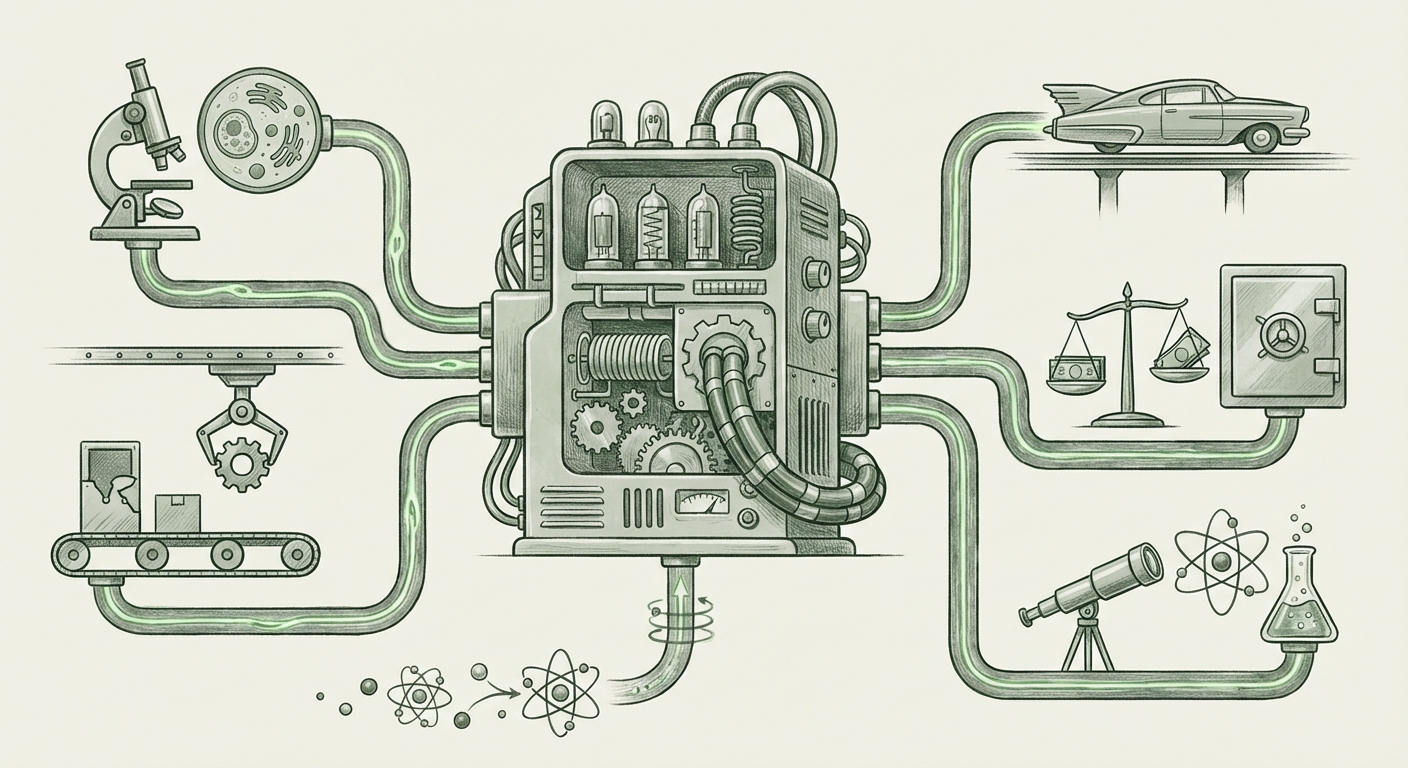
If the Great Progression has an engine, it is artificial intelligence. Leyden sees AI as a general-purpose technology, like electricity or the internet, that will eventually touch every part of the economy. But the timeline matters. In the next five to ten years, AI will automate routine cognitive tasks: writing, coding, analysis, customer service. In the next twenty-five years, it could help solve problems we have not even defined yet.
What does that mean for the future of AI? It means AI will not stay in a box labeled "tech." It will become embedded in healthcare, education, transportation, agriculture, and government. The companies that win will be the ones that figure out how to integrate AI into their core operations, not just as a gadget, but as a fundamental part of how they work.
Leyden also warns that the pace of AI progress will not be uniform. There will be breakthroughs that feel like magic, followed by periods of disappointment and regulation. The Great Progression is a bumpy ride. But the overall direction is clear: more intelligence, more automation, more data-driven decisions.
The Trump Factor: Political Disruption Meets Technological Disruption
You cannot talk about the next 25 years without talking about politics. The return of Donald Trump to the political stage, and the broader populist wave he represents, is a wildcard. Leyden suggests that Trump's appeal is partly a reaction to the speed of technological change. Many people feel that the system is rigged against them, that AI and globalization are taking their jobs and eroding their communities.
This creates a tension. On one hand, the government could accelerate AI investment to stay competitive globally. On the other hand, political instability could lead to inconsistent regulations, trade barriers, and a backlash against big tech. For businesses, this means planning for uncertainty. AI strategy cannot be separated from political and social strategy.
Leyden's view is that the next 25 years will require a new kind of leadership, one that can harness AI's potential while addressing the very real fears of people who feel left behind. The countries and companies that get this balance right will thrive. Those that ignore it will face resistance and stagnation.
Practical Implications for Businesses
So what should companies do differently based on this long-term view? Here are three actionable insights.
1. Rethink Your Strategy Timelines
Most businesses plan three to five years out. That is not enough. The Great Progression suggests you need to think in 25-year horizons. That does not mean you ignore quarterly results, but it does mean you ask bigger questions. How will AI change your industry by 2050? What skills will your workforce need? What new competitors might emerge from left field? Building a long-term vision helps you make better short-term decisions.
2. Invest in AI Literacy at Every Level
AI is not just for data scientists. In the next 25 years, every employee will need to understand what AI can and cannot do. Leyden's work implies that the biggest bottleneck is not the technology itself, it is human adaptation. Companies should invest in training programs that help everyone from the mailroom to the boardroom use AI tools effectively and responsibly.
3. Build Adaptive Systems, Not Just Predictions
The future is uncertain. Instead of trying to predict exactly what will happen, build systems that can adapt. That means flexible cloud infrastructure, modular AI models, and a culture of experimentation. The Great Progression is full of surprises. The businesses that survive will be the ones that can pivot quickly.
Implications for Society
Beyond business, the Great Progression has big implications for society. AI could help solve climate change, disease, and education inequality. But it could also widen the gap between the haves and have-nots. Leyden's framing suggests that the outcome depends on choices we make now, about regulation, education, and social safety nets.
One key issue is trust. As AI systems become more powerful, people will demand transparency and accountability. The Trump-era political climate has already shown that public trust in institutions is fragile. For AI to succeed, it needs to be seen as fair and beneficial. That means involving diverse voices in AI development and being honest about its limitations.
Another issue is work. The Great Progression will create new jobs that we cannot imagine today. But it will also destroy old ones. Societies that invest in retraining and lifelong learning will fare better than those that do not. Leyden's long view reminds us that the transition may be painful, but the destination could be a more prosperous and creative world.
Actionable Insights
Here is a quick checklist for leaders who want to prepare for the Great Progression:
- Think in decades, not quarters. Set a 25-year vision for your organization and use it to guide annual planning.
- Embrace AI as a general-purpose tool. Look for ways to embed AI in every department, not just in a single innovation lab.
- Monitor political and social trends. Understand how regulatory shifts and public sentiment could affect your AI strategy.
- Invest in human skills. Critical thinking, creativity, and emotional intelligence will become more valuable as AI automates routine tasks.
- Build resilience. Prepare for both rapid breakthroughs and sudden setbacks. Diversify your bets and stay flexible.
Conclusion
Peter Leyden's Great Progression is not a prediction of doom or utopia. It is a framework for thinking clearly about a messy, fast-moving future. AI will be at the center of that future, but so will politics, culture, and human choice. The next 25 years will be shaped by how well we manage the interaction between technology and society.
For businesses, the message is clear: plan for the long term, invest in people, and stay adaptable. For society, the message is even bigger: we need to have honest conversations about the kind of world we want AI to help create. The Great Progression is coming. The question is whether we will shape it or just react to it.