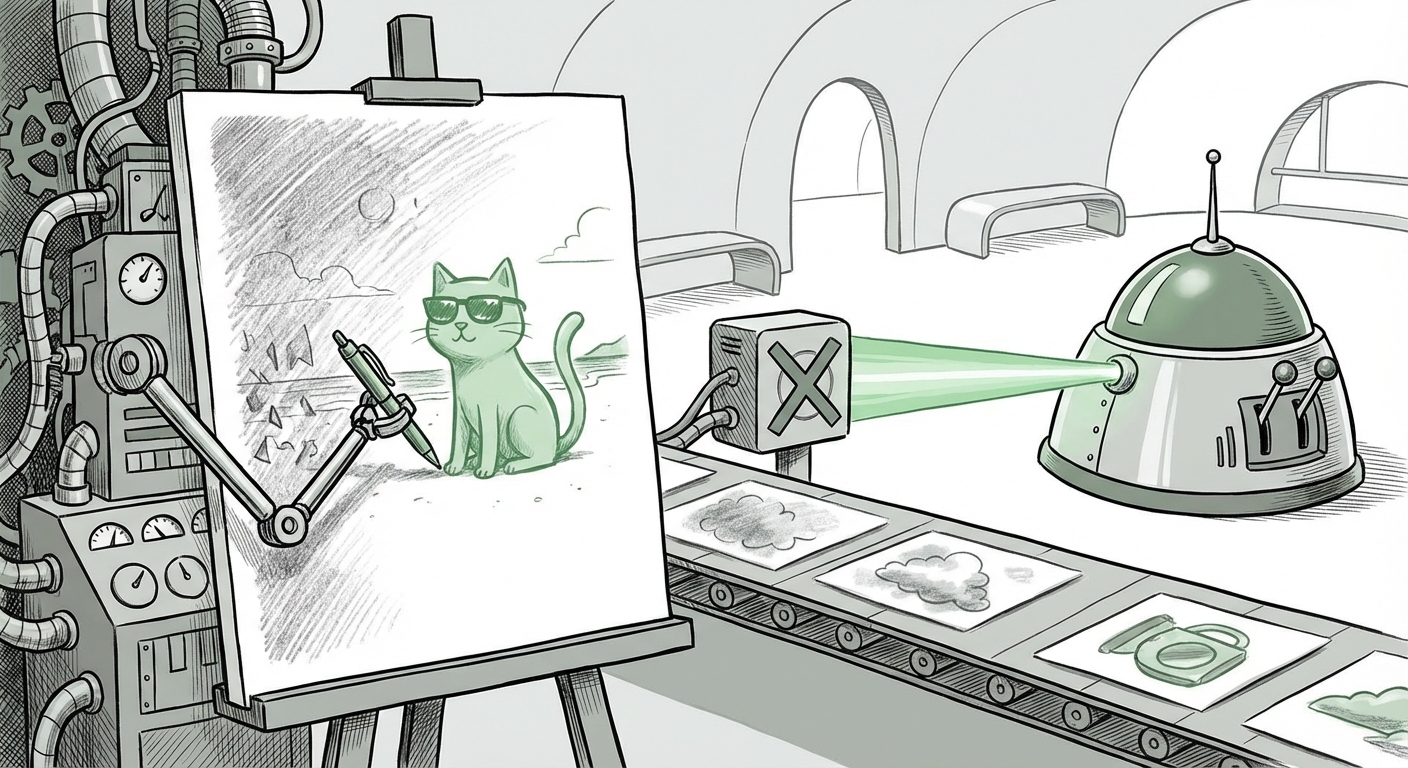
SAP Hands Its Certification Renewals to AI, and It Shows Where Enterprise AI Is Heading Next
For the past few years, most people have met AI as a chat box. You type a question, it types back an answer. It is impressive for about five minutes, and then you go back to doing your real job the way you always did.
That phase is ending. The next phase is quieter and much more important: AI is being wired into the actual steps of how work gets done. And a decision from SAP, the giant of business software, shows exactly what that looks like in practice.
SAP has put AI in a key role in how it renews certifications. That probably sounds like the least exciting AI story of the year. It is also one of the most telling.
What SAP Is Actually Doing
SAP runs a large certification program. Partners, consultants, and specialists need to hold current credentials to sell, build, and support SAP systems. Those credentials do not last forever. They come up for renewal, and renewal is a grind.
Someone has to receive the renewal request. Someone has to check that the paperwork is complete. Someone has to compare what the applicant submitted against the rules for that certificate. Someone has to decide whether it passes, whether more evidence is needed, or whether it should be sent back. Then someone has to record that decision in a way that will hold up if it is ever questioned.
Do that a few times a year and it is a chore. Do it thousands of times across a global partner network and it becomes an expensive, slow, error-prone machine that exists mostly to say "yes," "no," or "not yet."
SAP has now made AI a core part of that machine. The company is not using AI to write marketing copy or draft emails. It is using AI inside a formal process where the outcome carries real weight, a credential that affects who can do business with SAP and how.
That is the story. Not the model. The placement.
Why Certification Renewal Is a Near-Perfect AI Job
Certification renewal has a set of traits that make it unusually well suited to automation. Look at the list:
- The rules are written down. Criteria for a certificate exist in documents. They are not vibes.
- The inputs are digital. Records, training histories, exam results, documentation, all machine-readable.
- The volume is high and the steps repeat. Same checks, thousands of times.
- The output can be checked. A decision can be compared against the rulebook afterward.
- Bad calls are costly but recoverable. A wrong decision is a problem, not a catastrophe, and can be appealed.
When you find a process with all five traits, you have found the kind of work AI does well today. This is not a moonshot. It is a fit.
It also marks a change in how AI is being built. The old wave was rules written by hand, "if the document is missing, reject." The new wave uses models that can read messy submissions, understand variation, and flag the odd case. The newest wave adds agents: software that takes a task, plans the steps, uses tools, and reports back.
Certification renewal sits right at the meeting point of all three. That is why it is a good test bed, and why other companies should be watching.
The Real Shift: From Answering Questions to Owning a Step
Most AI tools today are advisors. They suggest. A human decides. That is safe, and it is why so many pilots stall: the AI does the thinking and the human still does the work.
SAP's move is different in kind. It gives AI a role inside a defined process, with defined rules and a defined output. The AI is not chatting. It is working.
This is the pattern that will define the next several years of enterprise AI:
- AI stops being a product and becomes plumbing. Nobody thanks the plumbing, but nothing works without it.
- Companies apply AI to their own operations first. Internal processes are lower-risk than customer-facing ones, and the payoff is easier to measure.
- Agents get real job titles. Not "AI assistant" but "renewal reviewer," "claims triager," "invoice matcher." A job title means an owner, a metric, and an error budget.
- Evaluation becomes the product. The hard work is not building the AI. It is proving the AI is right often enough to trust.
- Process data becomes a moat. A company that has run a process thousands of times has the examples needed to train and test a system. That history is an asset competitors cannot copy.
In other words, the value is moving away from the model itself and toward the process it is dropped into. Everyone can rent the same model. Not everyone has a clean, well-documented certification process to point it at.
The Trust Problem: Who Checks the Checker?
Here is where this story gets interesting for anyone in a regulated or trust-dependent business.
A certification is a promise. It says: this person or partner met a standard, and you can rely on that. The entire value of the credential rests on the credibility of the process behind it.
Put AI in that process and you create a new question. Not "can AI do it?" but "can we show that AI did it correctly?"
The answer has to be built, not assumed. That means:
- A human in the loop for edge cases, appeals, and anything the system flags as uncertain.
- An audit trail that records why a decision was made, not just what it was.
- A way to measure accuracy against human-reviewed samples on a regular basis.
- A clear rule for what the AI may decide alone and what it must escalate.
A useful way to think about it: a bank that lets software approve loans still owns every bad loan. The software changes the cost of the process. It does not change who carries the risk. The same is true of a certificate. If AI renews it, the issuing organization still owns the outcome.
Companies that treat AI as a way to remove accountability rather than to speed up a process will get burned. Companies that treat it as a way to make a documented, repeatable, checkable decision faster will win.
What This Means for the Future of AI
First, the boring use cases will beat the flashy ones. Chatbots get the headlines. Back-office workflows get the returns. Certification renewal will never trend online, but it is exactly the kind of work where AI pays for itself quickly, high volume, clear rules, measurable outcomes.
Second, AI adoption will be judged by throughput, not by cleverness. The question executives will ask shifts from "what can it do?" to "how many cases per day, at what accuracy, at what cost?" That is a healthy change. It forces vendors to prove value instead of promising it.
Third, the human role moves up a level. When AI handles the routine renewals, the skilled people around it stop being processors and become reviewers, exception handlers, and rule designers. That is a better job. It is also a job that requires new training.
Fourth, trust infrastructure becomes a competitive category. The tools that let a company prove its AI is behaving, logging, testing, sampling, auditing, will matter as much as the AI itself. Expect this to become a standard line item in enterprise budgets.
Fifth, the definition of "AI-ready" changes. Being AI-ready is not about having a model. It is about having processes documented well enough that a machine can follow them. Most organizations are far less ready than they think.
Practical Implications for Businesses
If you run a company and want to copy the pattern rather than the specifics, here is the shape of it.
Find your certification-shaped processes
Look for work that is high volume, rule-based, document-heavy, and already tracked in a system. Compliance checks, vendor onboarding, expense review, insurance claims intake, permit processing, contract renewals. These are your first candidates, not the customer-facing chatbot.
Measure the human baseline first
You cannot prove AI improved a process if you never measured the process. Record current cycle time, error rate, and cost per case before you automate. Without a baseline, you cannot defend the investment or catch a regression.
Keep a human on the exceptions
Design the workflow so the AI handles the clear cases and escalates the messy ones. This is not a compromise. It is how you get high accuracy at high volume without pretending the model is perfect.
Write the rules down before you automate them
AI cannot follow a policy that only exists in someone's head. The act of documenting your criteria is often the most valuable part of the project, and it pays off even if the AI never ships.
Plan for the job that changes, not the job that disappears
People who processed renewals will need to review them, audit them, and improve the rules. Train for that before the transition, not after.
Protect the meaning of the credential
If your certificates, licenses, or approvals are worth something to the market, do not let speed erode their value. Faster renewal is good. A credential nobody trusts is worthless, no matter how cheap it was to issue.
The Wider Picture: Society's Paperwork Gets a Co-pilot
Step back and the implications reach further than one software company's partner program.
A huge share of modern life runs on paperwork that verifies something about someone: licenses, permits, accreditations, certifications, filings, clearances. This is the machinery that lets strangers trust each other at scale. It is slow, it is expensive, and it is one of the most common sources of frustration for professionals and small businesses alike.
If AI can reliably speed up that machinery, the gains spread widely. A small consulting firm can renew credentials in days instead of weeks. A regulator can process applications faster. A worker can keep skills current without losing a month to administration.
But there is a real risk on the other side. Automation makes it easy to issue credentials at scale, and easy to issue them carelessly. If AI reviews become a rubber stamp, the credential stops meaning anything, and the people who relied on it are the ones who get hurt. The safeguard is not slower technology. It is better measurement, visible rules, and a human who still owns the answer.
The organizations that get this right will be the ones that treat AI as a way to make a process more rigorous, not just faster. Speed is the easy win. Integrity is the durable one.
The Bottom Line
SAP putting AI at the center of certification renewal is a small headline with a large signal. It shows that enterprise AI has moved past the demo stage and into the workflow stage, where the work is unglamorous, the rules are written down, and the results are measurable.
The companies that win the next few years will not be the ones with the most impressive chatbot. They will be the ones that got honest about their processes, measured them properly, and then let AI do the repetitive part while humans kept the judgment.
That is a less exciting story. It is also the one that actually changes how work gets done.