The AI Boom Is Sending New Business to Matchmakers, and It Says a Lot About the Future of AI
Every big technology wave creates a strange side effect. The automobile gave us suburbs. Social media gave us the attention economy. And now the AI boom, which was supposed to make human services cheaper and less necessary, is quietly pushing business toward one of the oldest human services of all: the matchmaker.
That is the headline worth paying attention to. As AI tools flood into dating apps, hiring platforms, networking sites, and messaging inboxes, a growing number of people are paying real money for a human being to make introductions on their behalf. The story is not really about romance. It is about what happens when a technology becomes so cheap, so fast, and so everywhere that the opposite of it, slow, personal, accountable human judgment, suddenly becomes the premium product.
For anyone building, buying, or betting on AI, that is a signal worth decoding.
The Flood of AI Made Everyone Look the Same
The first wave of consumer AI was a magic trick. Write a profile in seconds. Generate a perfect opening message. Fix your grammar, polish your photo caption, answer a question you were too nervous to answer yourself. The tools worked, and people used them at massive scale.
But when everyone uses the same tools, everyone starts to sound the same. Profiles become smoother and more generic. Messages become charming in exactly the same way. The signals people used to read, effort, awkwardness, specificity, that small human hesitation, get flattened out. The people receiving all this AI-polished outreach are left with a quiet, nagging question: is there a real person on the other end of this?
That question is where the matchmakers come in.
A matchmaker's entire value proposition is the answer to it. A matchmaker meets you, talks to you for an hour, remembers what you said, vetoes the wrong people, and takes responsibility for the outcome. There is no prompt. There is no autocomplete. There is a person with a name and a reputation who will call you back.
Trust Is Becoming the Scarce Resource
Look closely at what AI has actually done to digital life over the past few years. It has not made information scarce. It has made credibility scarce.
Anyone can now produce a convincing message, a plausible resume, a reasonable-sounding review, or a well-written profile at essentially zero cost. The bottleneck has moved. It used to be production. Now it is verification. And verification, at scale, is a human job.
- In dating, the bottleneck is whether the person is real, safe, and sincere.
- In hiring, the bottleneck is whether the candidate actually did the work they claim.
- In sales and networking, the bottleneck is whether a warm introduction is genuinely warm.
Matchmakers sit directly on top of that bottleneck. They are, functionally, trust brokers. The AI boom did not compete with them, it made the thing they sell more valuable.
What This Reveals About How AI Will Actually Be Used
The interesting part is not that some matchmakers are seeing more demand. It is the pattern underneath it, because that pattern is repeating across many industries at once.
1. AI pushes volume up, which pushes the value of filters up
When it becomes easy to generate a thousand candidates, a thousand emails, or a thousand applications, the cost of contacting people falls toward zero. But the cost of being contacted goes up, because attention is finite. Every market that gets flooded creates a premium for whoever can cut through the noise. Sometimes that is a better algorithm. Increasingly, it is a person whose judgment you trust.
2. Human judgment becomes a luxury good
Not because machines cannot judge, but because people want to know a human is accountable. When a recommendation is wrong, a human can be blamed, apologised to, and asked to fix it. An algorithm cannot. In high-stakes, emotional, or reputational decisions, that accountability is worth paying for, even when the machine is technically faster.
3. The winning model is hybrid, not either/or
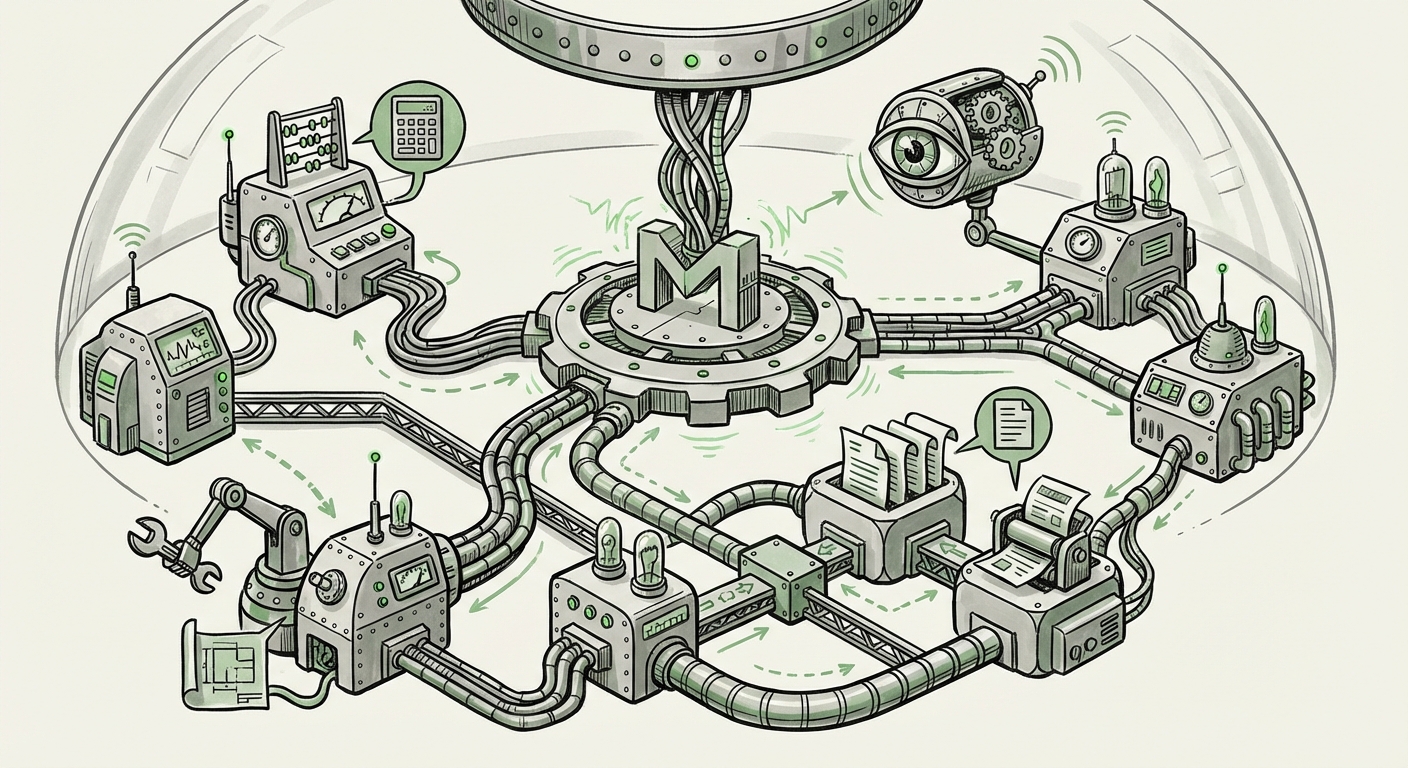
The businesses that will do best over the next several years are not the ones that replace humans with AI, and not the ones that refuse AI entirely. They are the ones that use AI to handle the boring, high-volume parts of a job so that humans can spend all their time on the high-trust parts. In matchmaking, that means software doing scheduling, screening, background checks, reminders, and follow-ups, while the matchmaker does the listening and the deciding. The human becomes the product. The AI becomes the plumbing.
Why This Matters Beyond Dating
Swap the word "matchmaker" for a few others and the pattern travels fast.
Recruiters are already living this. When any candidate can generate a tailored cover letter in ten seconds, resumes stop differentiating people. Firms that once relied on keyword filters are rediscovering the value of a human who has actually met the candidate and will stake their name on the hire.
Real estate agents, wealth advisors, and insurance brokers face the same shift. The informational part of their job, explaining options, comparing products, drafting documents, is being automated. The relational part, reading a family's real priorities, knowing which property will actually suit them, being the person you call at a bad moment, is not.
Customer support and healthcare navigation show it too. AI handles the first ninety percent of interactions well. The last ten percent, the part where someone is scared, confused, or making a life decision, is where customers still want a human and will pay for one.
The general lesson: AI tends to hollow out the middle of a profession and leave the two ends, pure automation and pure human trust, more valuable than before. If your business lives entirely in the middle, that is where the pressure will come from.
The Risks Nobody Should Ignore
This trend is real, but it is not a guaranteed happy ending for the human side of the market.
- Trust premiums invite fakes. If people will pay for a "real human matchmaker," some will sell them a human-sounding service that is really a chatbot with a nice landing page. Regulation and reputation systems will lag behind for years.
- Only wealthy people get the human layer. If human judgment becomes a luxury good, access divides by income. That is already visible in concierge medicine, private tutoring, and elite recruiting. AI may widen that gap rather than close it.
- Matchmakers who refuse AI will lose on cost. A purely manual practice cannot scale and cannot compete on price with automated alternatives. The human premium only works if it is genuinely better, not merely slower.
- The AI tools themselves are getting better at trust. Voice, video, and behavioural signals are improving fast. The "no human, no trust" advantage is a window, not a permanent moat.
Actionable Insights: What to Do With This
Whether you run a services firm, a marketplace, or a product team, the matchmaker story suggests a few concrete moves.
- Audit where your value actually sits. List every task your team does. Mark which ones are volume work and which are trust work. Automate the first aggressively and reinvest the savings into the second.
- Make your humans visible. Names, faces, real bios, direct contact, and accountability. In a world of synthetic everything, a verifiable human is a feature you can market.
- Price the human layer separately. Do not bundle premium human attention into a cheap all-you-can-eat plan. Let customers who want it pay for it, and let the automated tier serve everyone else.
- Use AI to buy your humans more time. Scheduling, research, drafting, summarising, follow-up reminders. Every hour of admin you remove is an hour of judgment you can sell.
- Design for the trust gap. If you run a marketplace, add verification and human vouching. The next competitive battleground is not selection, it is certainty.
- Watch the counter-trends. Every wave of automation sparks a demand for the analogue version: vinyl, film cameras, handwritten notes, and now human matchmaking. That demand is small but remarkably durable, and it commands a premium.
The Bigger Picture
For a decade, the dominant story about AI was substitution. Machines will do what people do, only cheaper. That story is partly true, and it is where most of the anxiety comes from. But the matchmaker moment points to something more interesting: AI is not just replacing human work, it is re-pricing it.
Tasks that were once valuable because they were hard now become commodities. Tasks that were once undervalued because they were soft, listening, judging, vouching, caring, being accountable, become the expensive part. The future of AI is not a world without people in it. It is a world where people are concentrated precisely where their presence is the point.
That is a genuinely optimistic reading, with a hard condition attached. The businesses and professionals who thrive will not be the ones who resist automation, nor the ones who hand everything over to it. They will be the ones who use AI to strip away everything that does not require a human, so the human part is unmistakable, and worth paying for.
The AI boom is sending new business to matchmakers. If you look past the romance, it is sending a message to everyone else too.