Why Enterprise Agentic AI Needs an Evidence Standard, And What It Means for the Future of AI
Something important is changing in the way companies use artificial intelligence. For the last few years, most AI in the workplace looked like a very smart text box. You typed a question. It typed back an answer. A human being then decided what to do with that answer. The machine suggested; people acted.
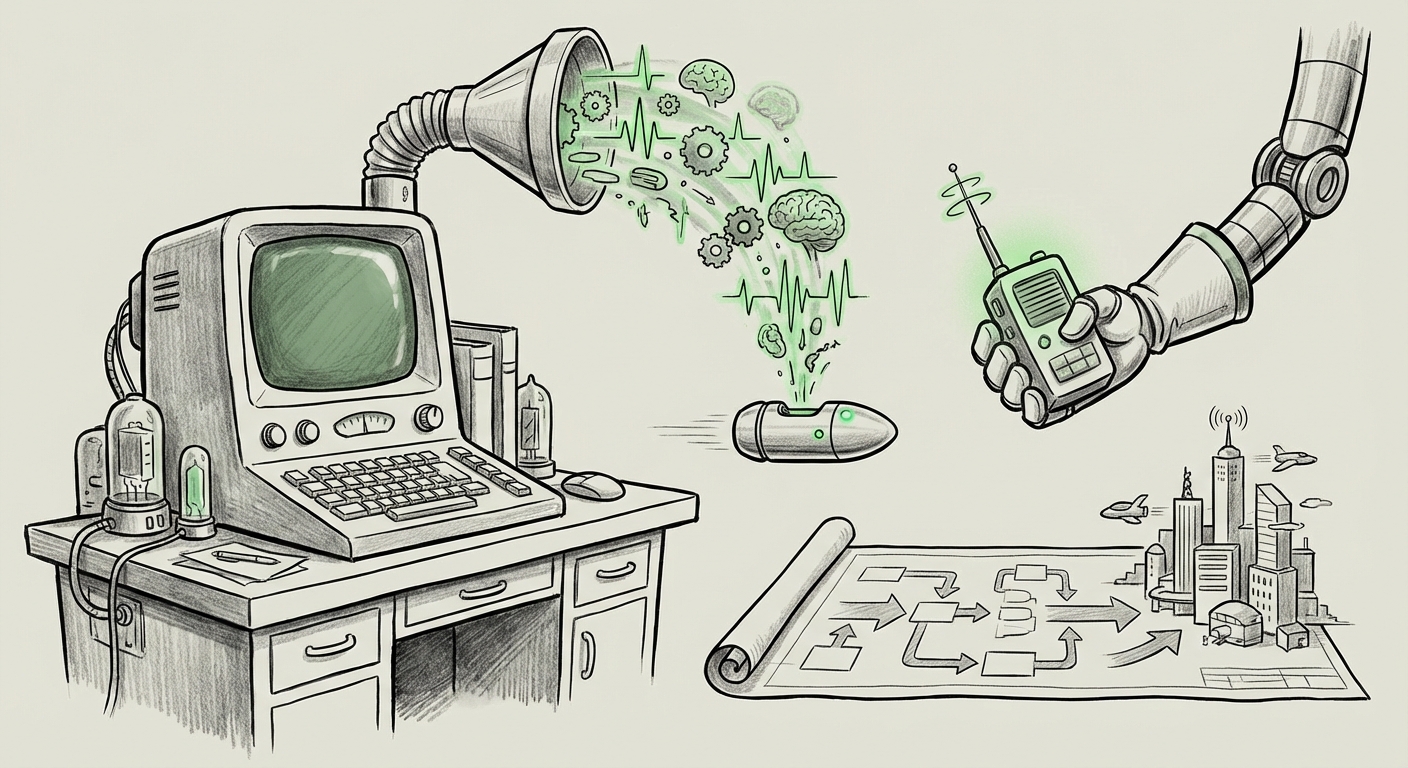
That era is ending. A new class of AI systems, commonly called agentic AI, no longer just suggests. It acts. It books the meeting, files the ticket, moves the money, edits the record, sends the email, queries the database, and calls other software tools on its own. It plans a series of steps and carries them out, often without a person watching each move.
This is a huge leap in usefulness. It is also a huge leap in risk. And it has created a problem that the AI industry has not yet solved: when a machine does something on its own, how do you prove what happened?
That is the case for an evidence standard for enterprise agentic AI, a shared, testable definition of what proof an AI agent must leave behind when it acts. Without one, companies are essentially running autonomous systems on trust, vibes, and a folder full of log files nobody can read.
The Shift From Chatbots to Agents That Actually Do Things
It helps to be clear about what makes agentic AI different from the AI most businesses already run.
A traditional AI assistant is a single turn. It receives an input and produces an output. If the output is wrong, a person catches it before anything real happens. The cost of a mistake is a bad paragraph.
An agent is a chain. It receives a goal, decides on a plan, picks tools, runs steps, checks results, and keeps going until the goal is met or it gives up. It may run for minutes, hours, or longer. It may call a dozen different systems. It may hand work to another agent. The cost of a mistake is a wrong payment, a bad compliance filing, a leaked record, or a contract signed by software.
Those are not the same kind of risk. And yet, in most enterprises today, both are governed by roughly the same thin layer of oversight: a policy document, a usage guideline, and a hope that the vendor's dashboard shows something useful.
The Trust Gap: Logs Are Not Evidence
Here is where the argument gets sharp. Many companies believe they already have this covered because their AI tools produce logs. They do not.
A log is a record that something happened. Evidence is a record that can be trusted, understood, and defended. Those are very different things, and the gap between them is where enterprise AI projects quietly fail audits, stall in procurement, and get pulled back by legal teams.
Think about what a normal log gives you. A timestamp. A user ID. Maybe a message. Now think about what a regulator, an auditor, a customer, or a judge would actually ask:
- Who authorized this action? Not which API key was used, which person, in which role, gave permission for this class of action?
- What exactly did the agent see? Which documents, records, and data did it read before deciding?
- What did it decide, and why? What was the reasoning path, and which policy rules were checked along the way?
- Which model, and which version? Was this the agent that was approved, or one that changed under you last Tuesday?
- What tools did it call, and what came back? Did the payment system confirm, or did the agent assume it worked?
- Where did a human step in? Who approved, when, and did they see the right information to approve meaningfully?
- Can this record be tampered with? If someone wanted to hide a mistake, could they?
Almost no agent stack on the market today answers all of those questions cleanly, in one place, in a form a non-engineer can read. That is the gap an evidence standard would close.
What an Evidence Standard Would Actually Require
An evidence standard is not a product and not a regulation. It is a shared agreement about what a complete proof-of-action looks like, the way financial reporting has standards, or the way software supply chains now have bills of materials. Its value comes from being boring, common, and checkable.
A workable standard would likely require every agent action to produce a structured record covering:
1. Identity and authority
Which agent acted, which human or policy granted it authority, what scope that authority covered, and when it expires. Agents need their own identities, separate from the people who deployed them, with clear limits.
2. Intent and instruction
The goal the agent was given, in the original words, plus any system instructions and guardrails in force at that moment. When something goes wrong, the difference between "the agent misunderstood" and "the agent was told the wrong thing" matters enormously.
3. Inputs and context
What data the agent pulled in, and, crucially, its source and freshness. An agent acting on a stale customer record is a different failure than one acting on a forged document.
4. Decision trace
The plan, the steps taken, the alternatives considered, and the policy checks that fired. This does not require exposing raw model internals; it requires a readable account of the reasoning path and the rules applied.
5. Tool calls and side effects
Every external action, its parameters, and the system's response. This is the part that most often goes missing, and it is the part that proves whether the real world actually changed.
6. Human oversight points
Where a person was required to approve, who they were, what they saw, and how long they had to look. A rubber-stamp approval is not oversight, and evidence should be able to show the difference.
7. Model and version pinning
Which model, which version, which configuration, which evaluation results. If you cannot say which build acted, you cannot reproduce anything.
8. Tamper-evidence and retention
Records that are append-only or cryptographically sealed, kept for a defined period, and exportable to a third party without a vendor's help.
Put together, that is a chain of custody for machine action. It lets a company reconstruct a decision months later, hand a clean file to an auditor, and answer a customer's question without an engineering team spending a week archaeology-diving through logs.
Why This Matters for the Future of AI
The evidence question is not a side issue. It is likely to become one of the main forces shaping how AI is deployed over the next several years, for three reasons.
First, it decides where autonomy is allowed to go. Every enterprise has a set of actions it will never hand to software without proof of control: payments above a threshold, changes to health or financial records, anything touching employment decisions, anything that speaks to a regulator. The faster companies can produce reliable evidence, the faster they can safely grant more autonomy. Evidence becomes the currency of permission.
Second, it changes what "AI vendor" means. Buyers will stop accepting capability demos as the main evaluation and start asking for artifacts: show me the record my auditor will see. Show me how I export it. Show me what happens when your model changes. Vendors that build evidence in from the start will win deals that others cannot even qualify for. This is a repeat of what happened with security questionnaires, a nuisance at first, then a hard gate.
Third, it moves AI governance from paperwork to engineering. Today, AI governance is largely policy documents and review boards. An evidence standard makes governance observable. You can measure it, test it, and report on it the way you report on uptime or financial controls. That shift, from claimed compliance to demonstrated compliance, is the difference between governance that survives contact with reality and governance that does not.
Practical Implications for Businesses
Procurement gets a new checklist
Ask vendors for a sample evidence record from a real multi-step task. Ask how it is stored, how long it is kept, whether it is tamper-evident, and how you get it out if you leave. A vendor that cannot produce this is telling you something important.
Contracts need evidence clauses
Terms should define what the vendor must record, how quickly you can access it, and what happens to the evidence when a model is updated or a contract ends. Right now, most AI contracts are silent on this, which means the customer carries the risk without the proof.
Risk tiers should drive requirements
Not every agent needs the same rigor. A research assistant that drafts internal summaries needs light evidence. An agent that touches money, customers, or regulated records needs full chain-of-custody. Tiering keeps the standard practical instead of paralyzing.
Operations need an evidence habit
Teams should review agent evidence regularly, not only after an incident. Spot-check traces, look for skipped approvals, and treat missing evidence as a defect to be fixed, the same way you would treat a failed backup.
Security teams gain a new surface
Agents hold credentials and call tools, which makes them attractive targets. Evidence records become both a detective control and a forensic asset when something goes wrong.
The Societal Angle
Beyond the enterprise, evidence standards matter because autonomous systems are starting to make decisions that affect people's lives, who gets a loan review, whose claim is flagged, whose account is frozen. When a person is harmed by an automated action, "the system decided" is not an acceptable answer.
A common evidence standard gives individuals and regulators something to examine. It does not guarantee fairness or correctness, but it makes accountability possible. Without it, automated harm becomes impossible to trace, and impossible to contest. That is a very bad place for a society to end up.
There is also a competitive angle. If evidence requirements emerge piecemeal, one regulator here, one large buyer there, companies will face a patchwork. A shared standard, developed openly and early, is cheaper and less confusing for everyone, and it gives smaller vendors a clear target to build toward.
Actionable Steps to Take Now
- Inventory your agents. List every system that can take action without a human in the loop. Most organizations are surprised by how many exist.
- Define your own minimum evidence spec. Use the eight areas above as a starting draft, tailored to your risk tiers.
- Run a reconstruction test. Pick one agent action from three months ago and try to fully explain it to someone who was not there. Time how long it takes and what you cannot answer.
- Write it into contracts. Add evidence, export, retention, and model-change notification clauses to every AI agreement.
- Assign an owner. Evidence is not a security problem, a legal problem, or a data problem, it is all three, and it needs one accountable owner.
- Design for evidence from day one. Retrofitting proof onto an agent after launch is far more expensive than instrumenting it at build time.
Conclusion
Agentic AI is the most useful and most consequential shift in enterprise software in a decade. It turns AI from an advisor into a worker. But workers need accountability, and accountability requires proof. The enterprises that move fastest will not be the ones that hand the most autonomy to machines. They will be the ones that can show, clearly, quickly, and verifiably, what those machines did and why.
An evidence standard is how that becomes normal rather than heroic. It is the unglamorous plumbing that lets autonomy scale safely. The companies and vendors that treat evidence as a first-class feature, not an afterthought bolted on for auditors, will set the pace for everyone else.