Claude Can Now Write CUDA Kernels, And Teach Open Models to Do It Too
Something quietly important just happened in the world of AI-assisted software. Claude was set loose on CUDA kernels, the tiny, highly specialized programs that run directly on graphics chips, and it produced working code. Then came the second act, the one that matters far more: the same process was used to teach open models how to do it.
That two-step move is worth pausing on. It is not just a story about a chatbot writing code. It is a story about how knowledge at the very bottom of the computing stack, the hard, low-level, expert-only kind, can now be captured by a frontier model and passed down to smaller, freely available ones. In other words, the most locked-up skills in tech are starting to become teachable at scale.
The Basics: What Is a CUDA Kernel, and Why Should You Care?
Most people never think about what happens inside a computer chip. But the modern AI boom sits on top of it. Graphics processing units, or GPUs, do the heavy math behind every chatbot, image generator, and recommendation engine. To make those chips go fast, engineers write programs called kernels.
Think of a GPU like a warehouse with thousands of workers. A kernel is the set of instructions telling all those workers exactly what to do at the same time. Get the instructions right, and the warehouse hums. Get them slightly wrong, and most of the workers stand around waiting, or worse, the whole thing crashes.
CUDA is the language used to write those instructions for Nvidia chips. It is famously fiddly. You have to think about memory movement, thread scheduling, and how data flows between the main processor and the GPU. Small mistakes can cost enormous amounts of speed. That is why experienced CUDA engineers are rare, expensive, and heavily fought over.
For years, this was considered one of the last strongholds of human expertise, the kind of work you could not hand to an AI because the feedback loop was too unforgiving. A wrong answer in a chatbot is embarrassing. A wrong answer in a kernel is a silent performance disaster.
What Actually Happened
The experiment did two things, in sequence.
Step One: Let the Model Write the Kernel
Claude was given the task of writing CUDA kernels, the low-level GPU code described above. The result was working, useful kernels rather than vague pseudocode. That alone would be a notable milestone: an AI system operating not at the level of web pages and blog posts, but at the level of hardware-aware optimization.
The reason this is harder than it sounds is that kernel writing has no forgiving middle ground. Code either produces the correct numbers or it does not. It either uses the chip well or it wastes it. There is no "close enough."
Step Two: Turn the Teacher into Training Data
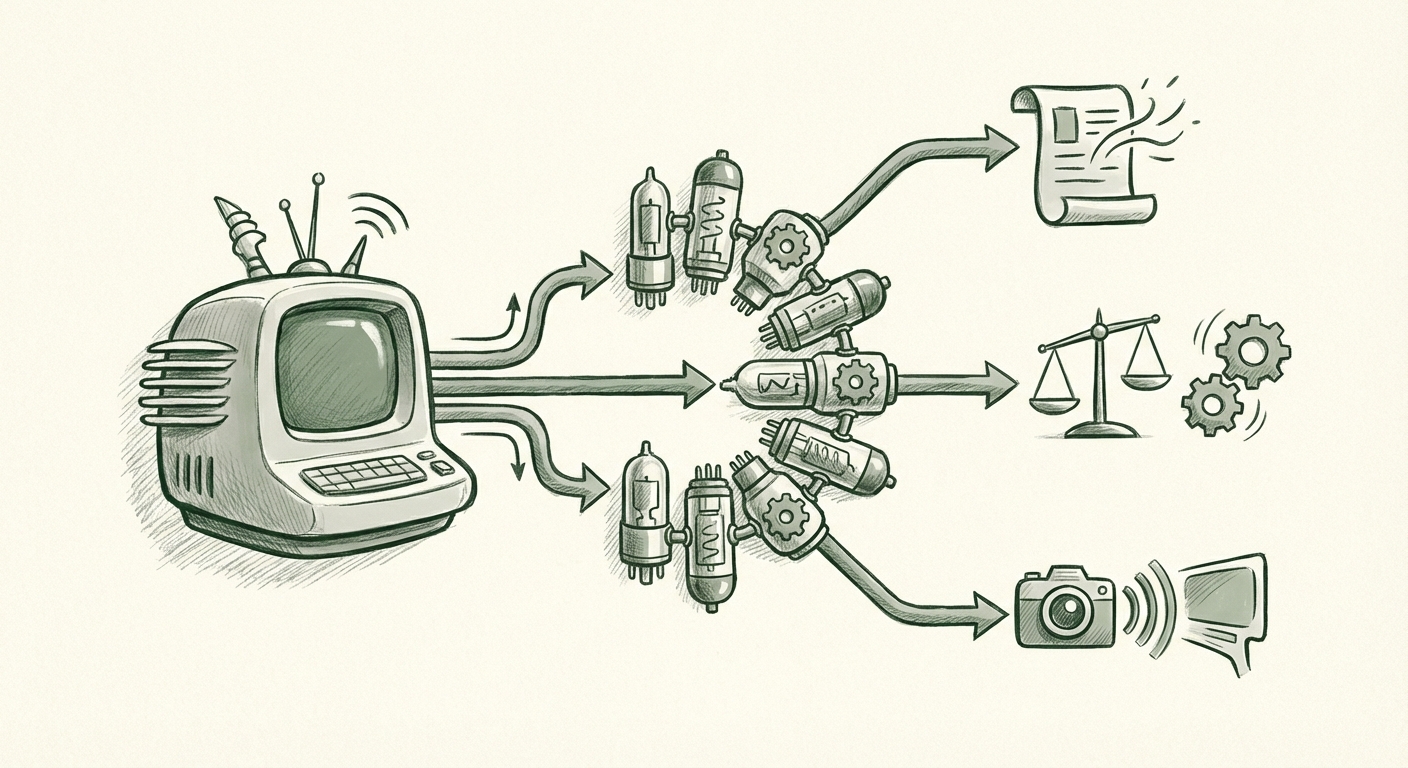
The second step is the one with long-term consequences. The work was then used to teach open models, publicly available AI models that anyone can download, run, and modify, how to write CUDA kernels too.
This is a familiar pattern dressed up in new clothes. A large, expensive model solves a hard problem. Its solutions become examples. Those examples become training material for smaller models that cost far less to run. The technical term is distillation, and it has quietly become one of the most important forces in AI.
The difference here is the domain. Distillation has mostly been applied to language, summarization, and reasoning. Applying it to GPU kernel programming means the thing being copied is not style or phrasing, it is hard engineering judgment.
Why This Matters for the Future of AI
1. The Talent Bottleneck Starts to Loosen
The number of people on Earth who can write high-performance GPU code is small. The number of companies that need fast AI infrastructure is enormous. That gap has been one of the biggest hidden costs in the industry.
If open models can be taught to write decent kernels, the supply of that skill stops being limited by the number of human specialists. It becomes limited by the number of GPUs you can run the model on, a much easier problem to solve.
2. Frontier Models Become Apprenticeship Engines
This experiment hints at a new job for the biggest, most expensive models. Instead of only answering questions for end users, they become trainers of the next generation of models. A frontier system explores a hard problem, generates high-quality worked examples, and those examples lift the open ecosystem up behind it.
That creates a conveyor belt: hard problem, solved once at the frontier, taught downward, made cheap and common. Each pass through the loop drags yesterday's cutting-edge capability into today's free tier.
3. The Moat Moves
When specialized knowledge becomes teachable, it stops being a moat. Companies that built their advantage on "we have the CUDA team" will find that advantage thinner than they expected.
The new moat is elsewhere: proprietary data, distribution, deep integration with customers, and the ability to verify that AI-generated low-level code is actually correct. The last one is underrated and will be covered shortly.
4. AI Starts Optimizing the Ground It Stands On
There is a self-reinforcing loop buried in this story. AI runs on GPUs. GPUs need kernels. If AI can write and improve kernels, then AI can help make the hardware it runs on faster.
That is a genuine feedback cycle, and it is one of the clearest signs that AI is moving from a tool you use to a participant in its own supply chain.
Practical Implications for Businesses
For teams that are not building chips or compilers, the lesson is still direct.
Cost of Inference and Training
Better kernels mean the same hardware does more work. For any company paying a cloud bill for AI workloads, efficiency gains in low-level code translate directly into lower operating costs. Historically, those gains came from a handful of very expensive specialists. Now they can come from a model plus a good test suite.
Speed of Experimentation
When writing optimized GPU code takes days instead of months, teams can try more ideas. More attempts at the same cost means faster learning, the single biggest determinant of who wins in a fast-moving field.
The New Must-Have Skill: Verification
Here is the part that should worry any leader planning to lean on this. A kernel that runs is not the same as a kernel that is correct. AI-generated low-level code can look right, pass a simple test, and still be subtly wrong in edge cases or slower than what a human expert would write.
The businesses that benefit most will be the ones that pair AI code generation with serious automated testing, performance benchmarking, and human review for anything that touches production infrastructure. The scarce skill is shifting from writing the code to proving it.
What About Open Models in the Building?
Because the knowledge is being transferred into open models, companies now have a choice they did not have before. They can run kernel-writing help on their own hardware, keep their code and workloads private, and avoid sending sensitive material to an outside provider. For regulated industries, that is often the difference between "we can't use this" and "we can."
What This Means for Society
The broader pattern here is compression of expertise. Every year, more of what used to require a decade of specialized training becomes something a small team, or a single person with good tools, can attempt.
That is mostly good news. It spreads capability outward from a few well-funded labs to students, startups, and researchers in places that never had a CUDA team. Problems that were ignored because they were too expensive to solve become solvable.
But it also raises fair questions. If the teaching model comes from a small number of frontier systems, then a small number of companies end up shaping what the open ecosystem knows and how it thinks. Access to the teacher becomes a form of leverage. And when AI systems start generating training material for other AI systems, the question of who checks the quality of that material becomes a public-interest question, not just an engineering one.
Actionable Takeaways
- Audit where specialized skills are your bottleneck. Low-level performance work is no longer the safest place to hide a competitive advantage. Look for other domains with clear right-or-wrong feedback and lots of expert examples, those are next.
- Build the test harness before you build the generator. If you plan to use AI for infrastructure code, invest first in benchmarks, correctness checks, and a review process. Generation is getting cheap; trust is not.
- Treat open models as a serious option. Distilled open models can now carry genuinely specialized knowledge. Evaluate them for privacy-sensitive and cost-sensitive workloads instead of defaulting to the largest hosted model.
- Use frontier models as teachers, not just tools. Have your best model produce worked examples, annotated solutions, and internal documentation, then fine-tune smaller models on that output for everyday use.
- Watch the efficiency story, not just the capability story. Cheaper, faster inference changes what products are economically possible. That is where the real business shifts will show up first.
The Bigger Picture
What makes this moment notable is not that an AI wrote GPU code. It is the sequence: a frontier model did hard work, and then that work was turned into a lesson for models anyone can download.
That is the shape of the next few years. Capability appears at the top, gets demonstrated, gets distilled, and shows up at the bottom, cheaper, more widely available, and embedded in tools people already use. The gap between "state of the art" and "freely available" is closing faster than most organizations' planning cycles.
For the people who write low-level code, the change is real but not fatal. The job shifts from typing out kernels to specifying what they must do, verifying what comes back, and owning the parts that require judgment about trade-offs. For everyone else, the message is simpler: the specialist skills you assumed you could never afford may soon be sitting on your laptop, waiting for a good problem.