Meta's AI Comeback: The Real Reason It Changes Everything
In late 2026, Meta's return to the artificial intelligence race is not just another headline in the crowded world of tech news. The actual reason behind the company's renewed push changes everything, not because it introduces a new model or a new product, but because it shifts the very foundation of how AI will be built, distributed, and used by billions of people.
For the past few years, the AI conversation has been dominated by a single question: who has the biggest model? Companies raced to train larger and larger systems, pouring billions into compute and data. But that era is ending. The real battle is no longer about raw model size. It is about who controls the interface between AI and the user. And that is exactly where Meta's return becomes a big shift.
The Shift from Model Wars to Distribution Wars
When Meta pulled back from the public AI race, many assumed the company had fallen behind. But the move was not a retreat, it was a repositioning. The actual reason Meta got back in is that the company realized the future of AI would not be won by whoever builds the smartest model in a lab. It will be won by whoever owns the pipelines that deliver AI to everyday life.
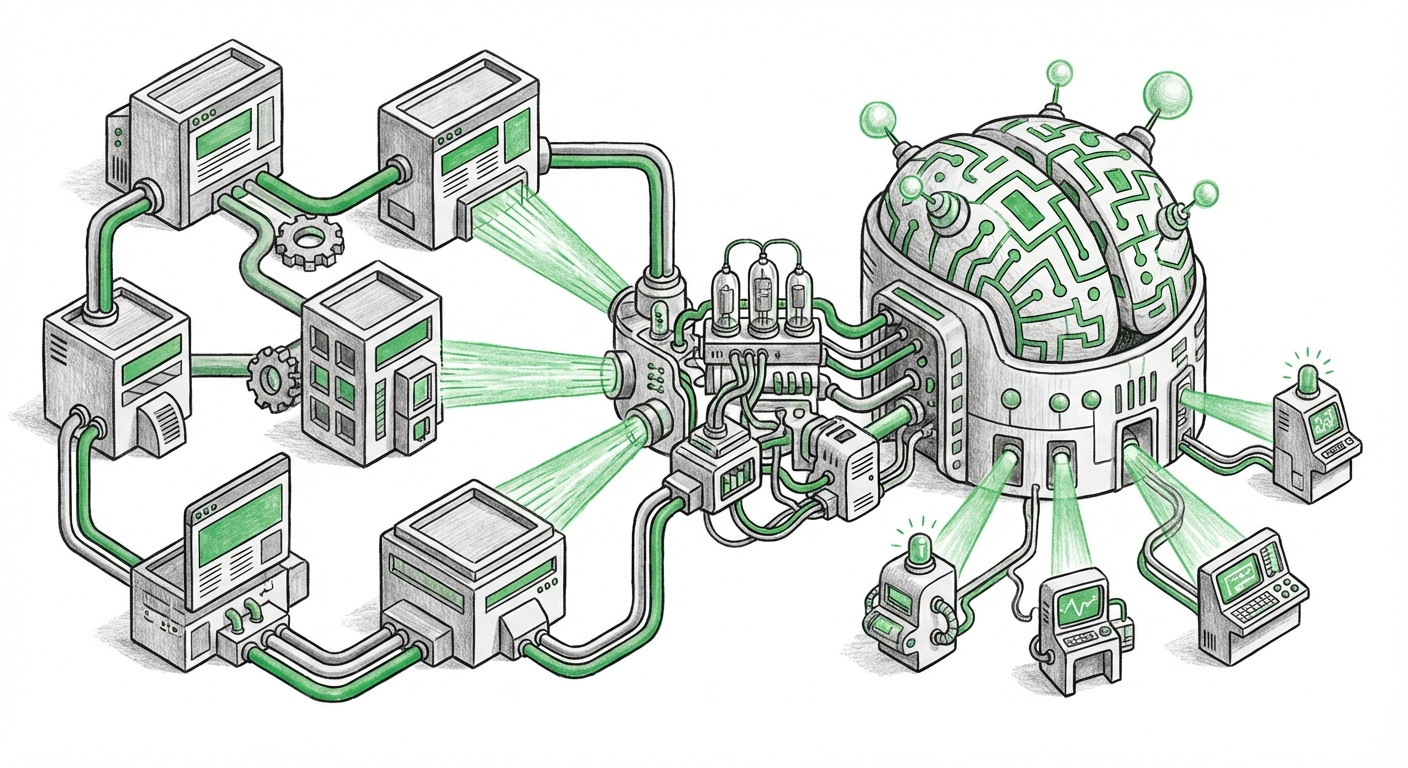
Think about how you use AI today. You might chat with an assistant, generate an image, or get a summary of a document. But the most powerful AI experiences of tomorrow will be woven directly into the apps you already use: your social feed, your messaging threads, your shopping cart, your calendar. Meta's advantage is not in having the most advanced research paper. It is in having the distribution channels that reach billions of people where they already are.
This is why the company's re-entry matters. It signals that the AI race has moved from the lab to the living room. The winners will not be the ones with the biggest parameter count. They will be the ones who can put useful AI in front of the most users with the least friction. And Meta, with its global network of social platforms, has one of the most powerful distribution engines in history.
Why Data and Feedback Loops Matter More Than Ever
The second part of the real reason is data. Not just the data used to train models, but the data that flows back from users every second. The most valuable AI systems are not static, they learn and improve from real-world interactions. Meta's platforms generate an enormous stream of human behavior: what people like, what they ignore, how they talk to each other, what they create, and what they share. That data is the fuel for a virtuous cycle: better AI leads to better user experiences, which leads to more engagement, which leads to more data.
This feedback loop is the hidden engine of the AI race. Companies can buy compute. They can hire researchers. But they cannot easily replicate the organic, real-time data that comes from billions of daily interactions. That is why Meta's return is not about catching up on a leaderboard. It is about plugging AI directly into the world's largest social feedback loop and letting it learn at a scale no pure-play AI lab can match.
For businesses, this has a clear implication: the AI tools that will dominate the next five years will not be the ones that are simply the smartest. They will be the ones that are the most integrated into existing workflows and user habits. If you are building an AI product, ask yourself not just how good your model is, but how easily it fits into the places where people already spend their time.
The Open-Source Gambit and Its Discontents
Another critical piece of the puzzle is Meta's approach to open-source AI. The company has long been a champion of releasing models and tools for others to use, modify, and build upon. On the surface, this looks like generosity. But the actual reason is strategic: by making its AI freely available, Meta turns every developer and every startup into an extension of its ecosystem. The more people build on Meta's AI, the more the company's standards become the default.
This is a classic platform play. It is the same logic that made Android so powerful in the mobile era. By opening up the underlying technology, Meta can commoditize the model layer while keeping control of the distribution and data layers. Competitors who keep their models closed must fight for every user. Meta, by contrast, can let a thousand developers experiment, and then surface the best experiences to its own massive audience.
But this strategy is not without risks. Open-source models can be misused, and regulators are watching closely. There is also the risk that Meta's open-source releases end up benefiting its rivals more than its own products. Yet the company seems willing to take that bet. The reason is simple: in a world where model quality is rapidly converging, the real moat is not the model itself. It is the ecosystem that surrounds it.
What This Means for Businesses
If you run a business, Meta's re-entry into the AI race should change your planning in three practical ways.
First, expect AI to become invisible. The next wave of AI will not be a separate app you open. It will be built into the tools you already use, your customer service platform, your marketing dashboard, your collaboration software. Meta's push will accelerate this trend by normalizing AI inside social and messaging experiences. Businesses that prepare their data and workflows for embedded AI will have a head start.
Second, rethink your data strategy. The companies that win with AI will not just have more data, they will have better feedback loops. That means creating ways for your products to learn from user behavior in real time, within privacy boundaries. If your AI system cannot improve from the interactions it has, it will fall behind systems that can.
Third, watch the open-source ecosystem closely. Meta's open-source releases will lower the cost of experimenting with AI. Small and mid-sized businesses that could never afford to train their own models will be able to build on top of free, powerful foundations. That is a huge opportunity, but it also means the competitive bar will rise. When everyone has access to the same base technology, the differentiator becomes your data, your user experience, and your speed of iteration.
What This Means for Society
The broader societal impact is just as significant. When a company with billions of users integrates AI deeply into social interaction, the effects ripple through how people communicate, consume information, and form opinions. On the positive side, AI can help translate languages, summarize complex discussions, and surface relevant content. It can make digital spaces more accessible and more useful.
On the challenging side, the same feedback loops that make AI smarter can also amplify biases, spread misinformation, and create filter bubbles. Meta's return puts these issues front and center. The company will need to balance its competitive ambitions with responsible deployment. Regulators, civil society, and users will all be watching. The actual reason Meta got back in may be strategic, but the consequences will be social.
This is why the story is not just about one company. It is about the next phase of the internet, one where AI is not a separate destination but an invisible layer that shapes what we see and how we interact. The companies that control that layer will have enormous influence. That is the real reason this matters.
Actionable Insights
- Build for integration, not isolation. Design your AI products to plug into existing platforms and workflows. The standalone AI app is giving way to embedded intelligence.
- Invest in feedback loops. Create mechanisms for your AI to learn from real user interactions. Even simple signals like thumbs up or down, or implicit behavior like click-through rates, can be powerful if you use them consistently.
- Experiment with open-source models. Do not assume you need a proprietary model to compete. Use open-source foundations to prototype quickly and cheaply, then differentiate on data and experience.
- Prepare for regulation. As AI becomes more embedded in social platforms, expect more scrutiny. Build transparency and user control into your AI features from the start.
- Watch the distribution players. The next big AI breakthroughs may not come from a pure AI lab. They may come from companies that already own the channels where people spend their time.
Conclusion
Meta's return to the AI race is not a story about catching up. It is a story about changing the rules. The actual reason the company got back in is that the game has shifted from building the best model to owning the best distribution and feedback loops. That shift changes everything, for competitors, for businesses, and for society.
The companies that understand this new reality will stop asking “How smart is our AI?” and start asking “How deeply is our AI woven into the moments that matter?” That is the question that will define the next era of artificial intelligence. And Meta, with its massive reach and data engine, is betting that it already has the answer.