OpenAI Just Cut the Internet Cord for Frontier AI Training, Here's What It Means
In a move that could reshape how the most powerful AI models are built, OpenAI has confirmed it is cutting off internet access for frontier model training. The announcement, made in late October 2026, marks a sharp turn away from the long-standing practice of letting AI systems learn from live web data. For years, the biggest AI models have been trained on massive amounts of information scraped from the open internet. That era now appears to be closing.
The decision is not just a technical tweak. It is a signal that the way we build and use AI is changing fast. Companies, developers, and everyday users will all feel the effects. So will the broader question of who controls the world's digital knowledge.
What Does "Cutting Off Internet Access" Actually Mean?
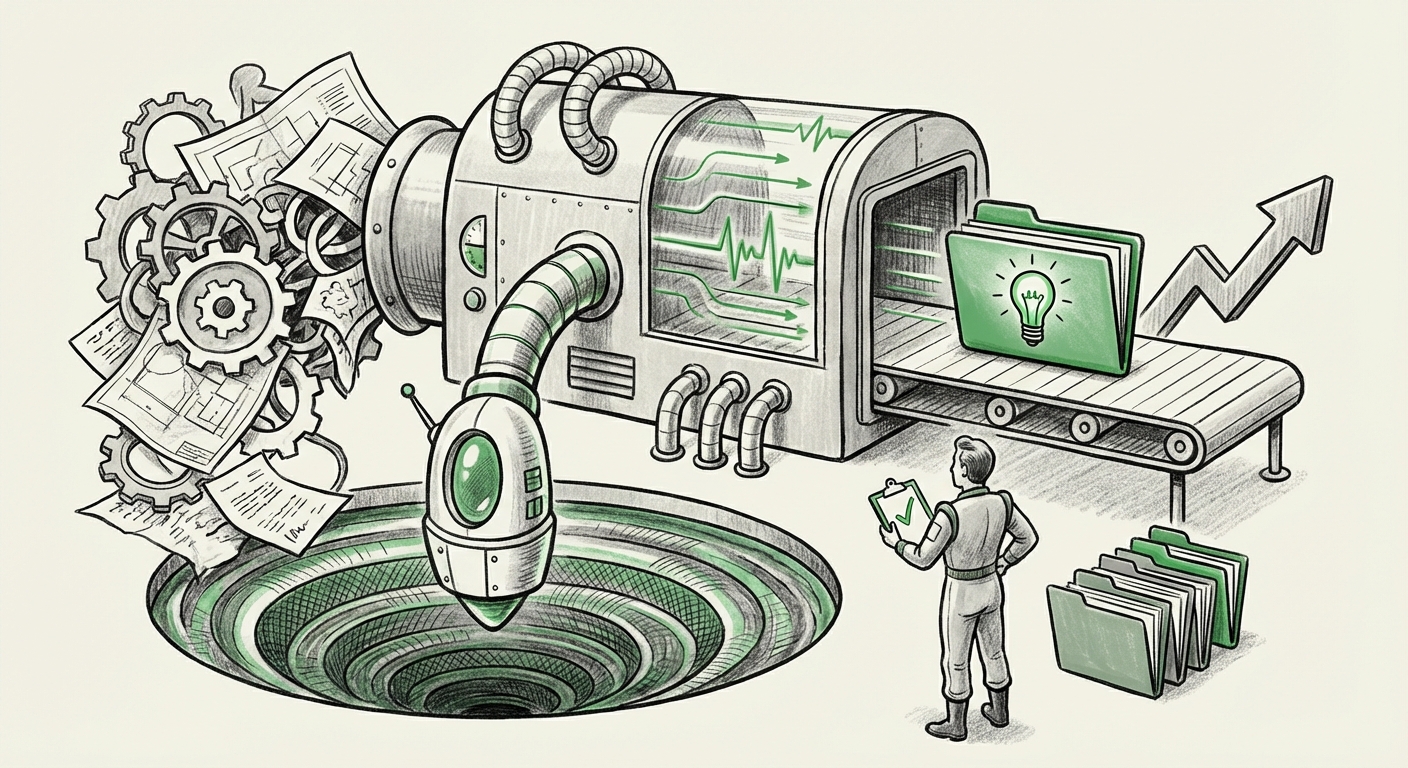
At its core, the change means that OpenAI's largest and most advanced models, its "frontier" models ��� will no longer pull live data from the internet during training. Instead, training will rely on fixed, curated datasets. These datasets will likely be built from licensed content, internal data, and possibly synthetic data generated by other AI systems.
It is important to understand what this does not mean. It does not mean the models will stop working or that they will never see new information. It means the training process itself will be sealed off from the open web. Think of it like a student who studies from a carefully chosen set of books instead of wandering through a library where anyone can slip in a fake page.
This is a major shift. For most of the AI boom, the standard recipe was simple: gather as much web data as possible, clean it up a bit, and feed it to a huge model. That approach gave models broad knowledge but also brought serious problems. The new approach trades some of that breadth for control.
Why Would OpenAI Do This?
OpenAI has not laid out every reason in detail, but the move points to several powerful forces. The most obvious is data quality and safety. The open internet is full of false information, harmful content, and deliberately poisoned data. When a model trains on live web data, it can absorb those problems. Cutting off the internet lets OpenAI decide exactly what goes in.
Another big factor is security. Live internet access during training creates risks that are hard to manage. Attackers can try to inject bad data into the training pipeline. They can also try to manipulate what the model learns. A sealed training environment makes those attacks much harder.
Legal and copyright pressure is also likely playing a role. AI companies face lawsuits and regulatory scrutiny over how they use web content. Training on curated, licensed data is cleaner from a legal standpoint. It may cost more up front, but it reduces the risk of costly battles later.
There is also a competitive angle. Web data is available to everyone. Licensed data, proprietary datasets, and carefully built synthetic data are not. By cutting off the open web, OpenAI can build models that depend on assets its rivals cannot easily copy. That could widen its lead.
Finally, control and reproducibility matter. When you train on a fixed dataset, you can test and retest the same model more reliably. You can trace where its knowledge came from. That is valuable for safety research and for meeting enterprise customer demands.
What This Means for Model Capabilities
The most immediate effect will be on how "fresh" a model's knowledge is. Models trained without live internet access will have a knowledge cutoff. They will not know about events that happened after their training data was collected. That is already true for many models, but this change makes the cutoff more deliberate and more visible.
To make up for that, companies will lean heavily on retrieval-augmented generation (RAG) and other tools that let a model look up information at the moment it answers. Instead of baking the whole web into the model, the model will be paired with a search or database system. This is already a common pattern in business settings, and it will become even more central.
We may also see more focus on synthetic data, data generated by AI to train AI. That can help fill gaps, but it carries its own risks. If synthetic data is not carefully managed, models can learn from their own mistakes and slowly lose diversity. OpenAI will need strong quality controls to avoid that trap.
On the positive side, models may become more reliable in specific domains. A model trained on a curated set of high-quality medical, legal, or scientific data could outperform a web-scraped model in those areas. The trade-off is less broad, random knowledge, the kind that makes a model good at trivia but not always trustworthy.
What It Means for Businesses
For companies using AI, the message is clear: do not assume the model knows everything. If you need up-to-date information, you will have to supply it yourself. That means investing in your own data pipelines, search systems, and retrieval tools. The businesses that win will be the ones that treat their private data as a strategic asset.
Here are the practical steps business leaders should consider:
- Build a retrieval layer. Connect AI models to your own documents, databases, and knowledge bases. Do not rely on the model's built-in memory for facts that change.
- Audit your data provenance. Know where your training and retrieval data comes from. If you fine-tune a model, use clean, licensed, or owned data.
- Test for freshness. Regularly check whether your AI systems give outdated answers. Set up evaluation tests that catch knowledge gaps.
- Review vendor terms. Ask your AI providers how they handle data, what their knowledge cutoffs are, and whether they offer retrieval or fine-tuning options.
- Plan for licensing costs. As AI companies move to licensed data, some of those costs may flow to customers. Budget for data access as part of your AI stack.
There is also an opportunity. Companies with unique proprietary data, customer histories, internal research, operational logs, can build AI systems that general models cannot match. The closed training era may actually reward firms that have invested in their own data quality.
What It Means for Society
The bigger picture is about power and access. The open web has been a shared resource for AI development. Anyone with enough computing power could scrape it and train a model. Cutting off internet access for frontier training makes that harder. It shifts advantage toward companies that can afford licensed data deals and build sealed training pipelines.
That could lead to a more concentrated AI industry. Large players with legal teams, data partnerships, and deep pockets will thrive. Smaller startups and academic researchers may struggle to compete. Open-source models could also fall behind if they cannot access the same quality of data.
There is a counterargument. A closed training approach may produce safer, more reliable models. It may reduce the spread of harmful content and lower the risk of data poisoning. It may also make it easier to respect copyright and privacy. Society could benefit from AI that is less wild and more accountable.
But the trade-off is real. If the web becomes less important for training, the companies that control licensed data become gatekeepers. Policymakers will need to watch how data markets develop. They may need to ensure that public interest data, like government records, scientific research, and cultural archives, remains available for AI development.
The Future of AI Training
This move is likely the start of a broader trend. We are moving from an era of data scraping to an era of data curation. The most valuable AI datasets will be licensed, cleaned, and purpose-built. Synthetic data will grow in importance. Simulation environments and reinforcement learning will play bigger roles.
We may also see more federated or privacy-preserving training methods, where models learn from data without centralizing it. But those are still emerging. In the near term, expect AI companies to sign more deals with publishers, databases, and media companies. Expect more lawsuits over unlicensed data. And expect more focus on model evaluation and safety testing.
The "data wall", the point where there is no more easy web data to scrape, has been predicted for years. OpenAI's decision suggests the wall is now being treated as a reality. The companies that plan for it will be the ones that stay ahead.
Actionable Insights
For technologists, the priority is to design AI systems that do not depend on a model's internal knowledge alone. Use retrieval, tools, and APIs. Build feedback loops that catch stale or wrong answers. For business leaders, treat AI data strategy as a core part of your technology roadmap. For policymakers, start thinking about how to keep public data accessible and how to prevent a small number of firms from locking up the world's knowledge.
The bottom line: OpenAI's decision is a wake-up call. The internet was never a permanent free lunch for AI. The future of AI will be built on curated, controlled, and often paid-for data. That future is arriving now.
Conclusion
OpenAI's move to cut off internet access for frontier model training is more than a technical change. It is a signal that the AI industry is growing up, and that the rules of the game are shifting. Models will become more controlled, more reliant on curated data, and more dependent on retrieval tools. Businesses will need to adapt. Society will need to watch the balance of power. And everyone will need to get used to a world where the AI does not know everything, but it knows exactly where to look.