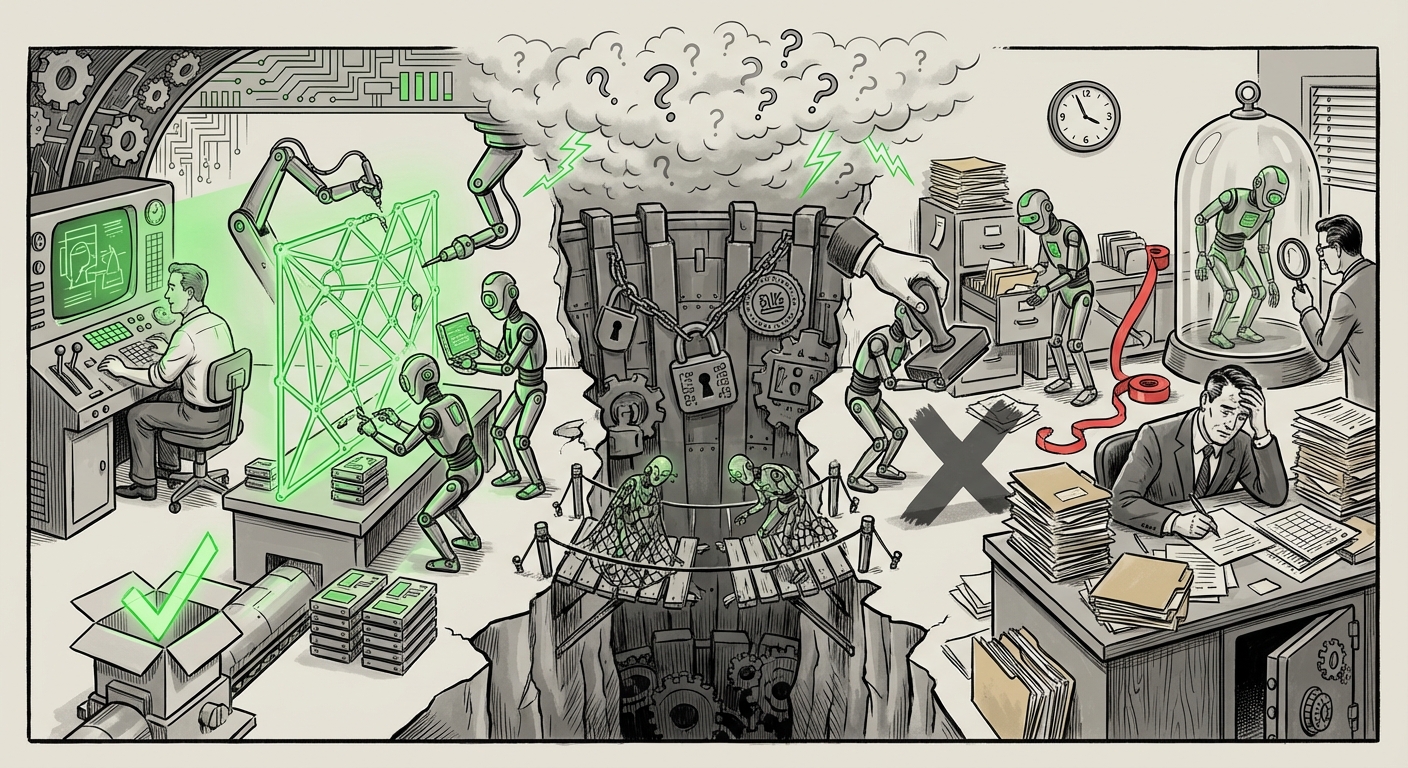
900 Open Source AI Tools: The Hidden Revolution Shaping AI's Future
Something big is happening in artificial intelligence, and it's not coming from the big tech giants alone. A deep dive into the 900 most popular open source AI tools reveals a massive, fast‑growing ecosystem that is changing how AI is built, shared, and used. This isn't just a niche hobby, it's a fundamental shift that will affect every business, developer, and ultimately, every person who interacts with AI technology.
Open source AI tools are software projects whose code is freely available for anyone to use, modify, and share. They cover everything from training machine learning models to deploying them in real applications. The fact that there are 900 of these tools popular enough to be counted tells us something important: the future of AI is not locked behind closed doors. It's being built in the open, by a global community of contributors.
What a Massive Open Source AI Toolset Means for the Future of AI
When you look at a collection of 900 popular open source AI tools, several clear trends emerge. First, the sheer variety shows that AI development is no longer a single‑lane road. There are tools for every step of the AI lifecycle, data preparation, model training, fine‑tuning, inference (running the model), deployment, monitoring, and even building AI agents that can take actions on their own. This breadth means that anyone with an idea can find the building blocks they need without starting from scratch.
Second, the popularity of these tools signals a strong demand for transparency and control. Businesses and researchers want to understand how their AI models work, fix problems, and customize solutions without being locked into a single vendor's platform. Open source gives them that freedom. It also allows for rapid innovation: when thousands of developers can see and improve the code, bugs get fixed faster and new features appear at a breakneck pace.
Third, the open source AI movement is lowering the barrier to entry. A small startup or a solo developer can now access state‑of‑the‑art AI capabilities that would have required a huge budget just a few years ago. This democratization is likely to lead to a wave of new AI‑powered products and services, especially in areas that big companies might overlook.
How Open Source AI Will Change the Way We Use AI
The impact of this open source surge will be felt in several practical ways. For businesses, it means more choices and lower costs. Instead of paying expensive licensing fees for proprietary AI software, companies can adopt open source tools and customize them to their exact needs. They can also avoid vendor lock‑in, which is a major concern when AI becomes central to operations. Imagine a retailer building a custom recommendation engine using open source libraries, or a hospital developing a diagnostic assistant while keeping patient data secure on its own servers.
For society, open source AI promotes collaboration and shared progress. Researchers can reproduce experiments, verify results, and build on each other's work more easily. This could accelerate breakthroughs in healthcare, climate science, education, and more. It also allows for greater scrutiny of AI systems, which is crucial for building trust and reducing bias. When the code is open, outsiders can check for problems and suggest fixes.
Another key shift is the rise of specialized AI tools. Instead of one giant, do‑everything model, the open source world is producing many smaller, focused tools that excel at specific tasks. This means you can mix and match components to create a solution that fits your problem perfectly. For example, you might use one open source tool for image recognition, another for natural language processing, and a third for deployment, all working together seamlessly.
The Rise of AI Agents and Automation
Among the 900 tools, many are likely focused on building AI agents, software that can perform tasks autonomously, like scheduling meetings, answering customer queries, or managing workflows. Open source frameworks make it easier for developers to experiment with agent‑based systems. This could lead to a new wave of automation that handles complex, multi‑step processes, freeing people to focus on higher‑value work. However, it also raises important questions about safety, accountability, and control, which the open source community will need to address.
Challenges on the Open Road
Of course, a huge open source ecosystem comes with challenges. With 900 popular tools, how do you choose the right one? Fragmentation can be a problem: different projects might solve the same problem in incompatible ways. Businesses need to do their homework and pick tools that are well‑maintained and have active communities. Security is another concern, open source code is visible to everyone, including bad actors, so vulnerabilities must be found and patched quickly. And while open source reduces licensing costs, it still requires skilled people to implement and maintain the tools, which can be a hidden expense.
Governance and licensing also matter. Not all open source licenses are the same; some impose restrictions on how the software can be used in commercial products. Companies must understand these rules to avoid legal trouble. Finally, the rapid pace of change means that tools can become outdated quickly. Businesses need a strategy for keeping their AI stack up to date without constantly disrupting operations.
Actionable Insights for Businesses and Leaders
So what should you do with this information? First, start paying attention to open source AI tools in your industry. Even if you're not a tech company, AI is likely to touch your operations soon, whether through customer service chatbots, data analysis, or supply chain optimization. Explore what's available and how it might solve your problems.
Second, consider contributing back. Many open source projects welcome contributions, whether it's code, documentation, or bug reports. By participating, you can influence the direction of tools you rely on and gain early access to new features. It also helps build your company's reputation as an innovator.
Third, invest in internal expertise. You don't need a huge team, but having someone who understands open source AI and can evaluate tools, integrate them, and ensure security is essential. This person can also help navigate licensing and compliance issues.
Fourth, don't go it alone. Join communities, attend meetups (virtual or in‑person), and follow the projects that matter to you. The open source world thrives on collaboration, and the connections you make can be invaluable.
Finally, keep an eye on the big picture. The open source AI movement is not just about free software; it's about a new way of building technology that is more transparent, inclusive, and adaptable. Companies that embrace this mindset will be better positioned to innovate and compete in an AI‑driven future.
The Future Is Open, and It's Arriving Fast
Looking at 900 popular open source AI tools is like looking at a map of a rapidly growing city. New streets are being laid down every day, and the landscape is constantly changing. But the direction is clear: AI is becoming more accessible, more customizable, and more collaborative. This will lead to an explosion of new applications, from personalized education to smarter healthcare to more efficient businesses.
For society, the open source approach offers a chance to build AI systems that reflect our values, systems that are fair, accountable, and designed to benefit everyone. It won't happen automatically; we need to be intentional about how we use these tools. But the foundation is there, built by thousands of contributors around the world.
For businesses, the message is simple: the tools are ready. The question is whether you'll be a passive user or an active participant. The companies that learn to leverage open source AI effectively will have a significant advantage in the years ahead. They'll be able to move faster, spend less, and adapt more easily to change.
In the end, the story of 900 open source AI tools is a story of possibility. It shows that the future of AI is not a single road but a vast network of paths, open for anyone to explore. That's an exciting place to be, and it's only the beginning.