Apollo Says AI Has Delivered "Zero Financial Payoff" Outside Tech: What It Means for the Future of AI
For three years, the story of artificial intelligence has been a story of spending. Companies raced to buy chips, hire specialists, and sign cloud contracts. The promise was simple: AI would cut costs, boost output, and reshape how business gets done. Now a blunt assessment from Apollo is throwing cold water on that promise. The firm says AI has delivered "zero financial payoff" outside the tech industry.
That is not a small claim. It lands at the exact moment when boards, investors, and everyday workers are asking the same question: where is the money? This article breaks down what the finding really means, why it may be happening, and what smart organizations should do next. It also looks at what this signals for the future of AI and how it will actually be used.
The Headline: Spending Is Real, Returns Are Missing
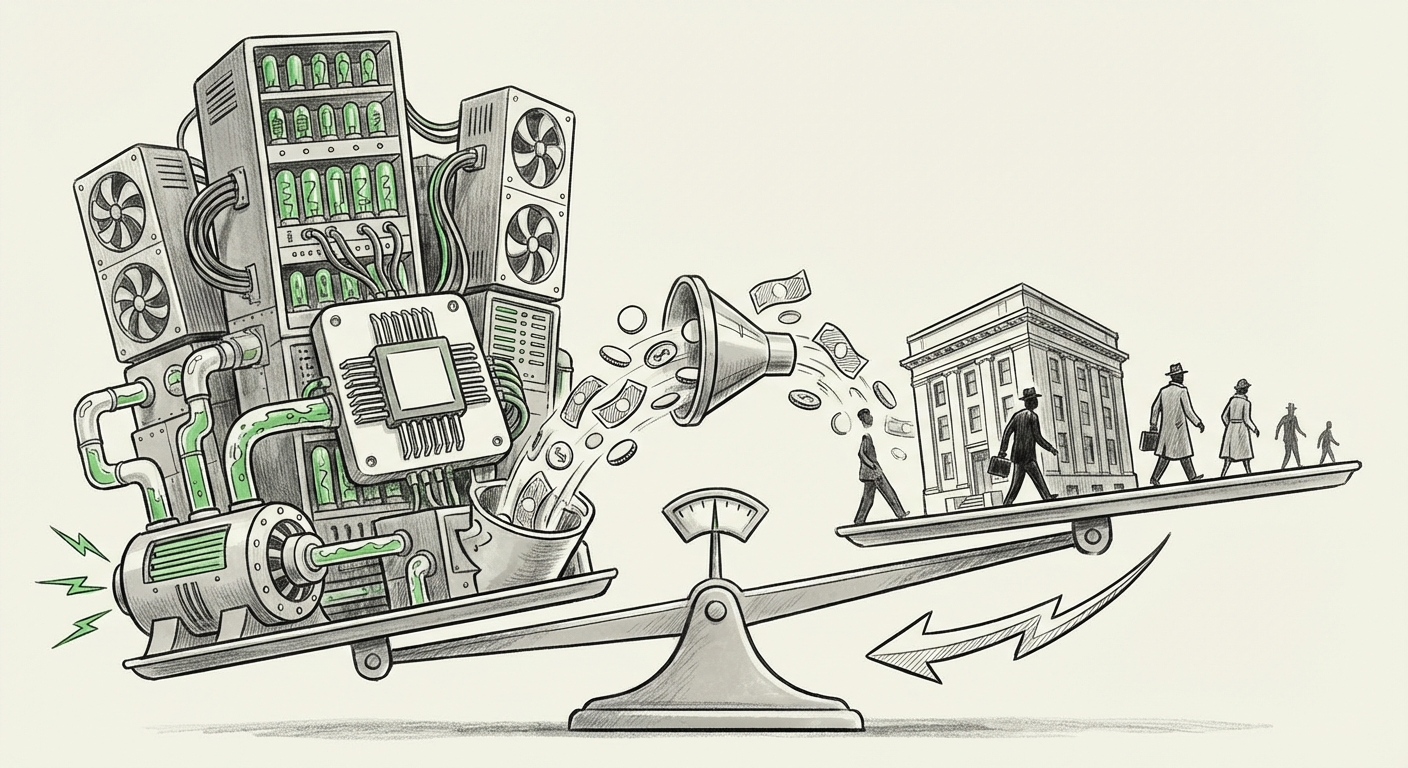
The core of the finding is a gap. Money is going out. Results are not coming back in, at least not yet, and at least not outside the technology sector. Tech companies see returns because AI is their product. They sell the chips, the cloud capacity, the models, and the tools. For them, the AI boom is revenue.
Everyone else is a buyer. Banks, retailers, manufacturers, hospitals, logistics firms, and government agencies are spending on AI tools and talent. According to Apollo, those buyers have little financial gain to show for it. The investment is real. The payoff is not.
This matters because the last few years have been sold on a simple idea: adopt AI or fall behind. That message drove budgets. It drove hiring. It drove a wave of pilots and proofs of concept. If the payoff is truly zero outside tech, then a lot of that spending was a bet that has not paid off.
Why the Gap Exists
The finding is not surprising once you look at how AI gets deployed. Several forces explain the missing returns.
1. The Gains Are Hidden in the Tooling Layer
When a company buys an AI product, most of the value is captured by the seller. The buyer gets a license and a workflow. The vendor gets the margin. In earlier tech waves, the same pattern appeared, but gains eventually spread as tools got cheaper and easier to use. AI is still early in that spread.
2. Pilots Do Not Equal Profits
Many organizations are running experiments, not production systems. A chatbot on a help page or a summary tool for analysts can look impressive in a demo. That does not mean it shows up on a profit and loss statement. Pilots often run in parallel with old systems, which means added cost rather than replaced cost.
3. The Hard Work Is Organizational
AI does not fix a broken process. It makes a process faster, including a bad one. Real gains require redesigning workflows, retraining staff, cleaning up data, and changing how decisions get made. That work is slow, unglamorous, and easy to skip. When companies skip it, they buy technology and get no benefit.
4. Measurement Is Weak
Few firms have a clear way to measure AI's financial impact. If you cannot separate AI's effect from other changes, you cannot prove a return. That does not mean value is absent. It means value is invisible, which in a budget meeting amounts to the same thing.
5. Costs Keep Moving
AI systems need data, compute, integration, security, and human oversight. Each carries a price. Savings in one area can be eaten by costs in another. The net effect can be flat, which matches what Apollo describes.
The Tech Sector Is the Exception, and That Is the Point
It is worth being precise about what "outside the tech industry" means. The tech industry is selling picks and shovels. Its financial payoff comes from other companies' spending. That is a valid business, and it has been a very good one. But it creates a structural problem. If buyers never see returns, the buying slows down.
This is the real risk in the Apollo finding. It is not that AI is useless. It is that the current model depends on a buyer who is not getting paid back. A market built on that cannot grow forever. At some point, budgets reset, pilots get cancelled, and vendors face harder questions.
That does not mean a crash. It means a shift. The next phase of AI will be judged differently. Instead of asking what a model can do, buyers will ask what it earns, saves, or protects. That is a healthier question, and it will push the industry toward more useful work.
What This Means for the Future of AI
The "zero payoff" finding points to several changes already taking shape.
Narrow Beats Broad
General-purpose tools impress in demos. Narrow tools pay the bills. Expect more investment in AI built for a specific job, such as claims processing, inventory forecasting, or contract review. These tools are easier to measure and easier to tie to money.
Integration Becomes the Product
The winners in the next phase will not just sell models. They will sell the plumbing that connects AI to real systems, real data, and real decisions. Value will come from fit, not from raw capability.
Proof Replaces Promise
Buyers will demand before-and-after numbers. Vendors who cannot show them will struggle. This is good news for serious adopters. It forces the field to mature and separates real tools from noise.
Human Work Gets Redesigned, Not Removed
The biggest gains will come from changing how people work, not from replacing them wholesale. AI that drafts, checks, and sorts can free up time. Capturing that time as savings requires planning. Without it, the benefit evaporates.
The Cost of Compute Stays in the Conversation
As long as running AI costs money, the financial case stays fragile. Efficiency gains in models and hardware will matter. So will pricing models that share risk between vendor and buyer.
Practical Implications for Business Leaders
If AI spending has not yet produced returns, what should a leader do? The answer is not to stop. It is to change how you buy and deploy.
- Pick one process and own the number. Choose a workflow with a clear cost or revenue line. Set a baseline before you start. Track it after.
- Budget for the unglamorous work. Data cleanup, integration, training, and change management are where returns are won or lost. Fund them or expect nothing.
- Kill pilots that cannot be measured. A demo is not a business case. If you cannot state the financial outcome you expect, you are not ready to buy.
- Ask vendors for proof, not promises. Request case results from companies like yours. Be skeptical of broad claims.
- Start where errors are cheap. Early wins build trust and fund the harder work. Do not begin with your most sensitive process.
- Plan for oversight costs. Human review and monitoring are part of the total cost. They belong in the business case.
These steps are not glamorous. They are the difference between spending on AI and gaining from it.
What It Means for Workers and Society
The finding also has a human side. If financial gains are slow to appear, pressure on jobs may be slower than headlines suggest. That buys time, but it does not remove the need to adapt. The tasks most likely to change are repetitive and text-heavy: drafting, summarizing, sorting, and checking. Workers who learn to use AI tools well will be more valuable, not less.
For society, the message is about patience and honesty. AI is a powerful tool, but tools do not pay for themselves. Public and private spending should come with clear goals and public reporting. When returns are claimed, they should be shown.
There is also a risk worth naming. If returns stay weak outside tech, enthusiasm could swing hard the other way. Companies might cut programs that were starting to work. The better path is steady, measured adoption with clear targets, so progress survives the mood swings.
How AI Will Actually Be Used From Here
The next stage of AI will look less like a revolution and more like plumbing. It will be built into everyday systems and judged by ordinary metrics. Expect these patterns:
- Back-office automation in finance, claims, and compliance, where volume is high and rules are clear.
- Assistants that sit inside existing tools rather than separate apps, reducing training time.
- Forecasting and planning where small accuracy gains compound into real money.
- Quality and safety checks where AI catches problems humans miss at scale.
- Customer support triage that routes and drafts, with humans handling the hard cases.
Notice what is missing from that list: grand promises of transformation. The future of AI is likely to be quieter, more measurable, and more useful. That is a better story, even if it is a less exciting one.
The Bottom Line
Apollo's finding is a warning, not a verdict. It says the spending has run ahead of the returns. That is a familiar pattern in technology. Railroads, electricity, and early computing all saw investment surges before productivity showed up. The gains came when organizations rebuilt how they worked around the new tool.
AI will likely follow the same path. The question is not whether the technology is capable. It is whether companies are willing to do the hard work that turns capability into cash. Those that do will find real returns. Those that buy tools and hope will keep posting zero.