Hugging Face and Cerebras Bring Gemma 4 to Real-Time Voice AI: What It Means for the Future of AI
Something important just shifted in how people will actually talk to machines. Hugging Face and Cerebras have joined forces to bring Gemma 4 into real-time voice AI. On the surface, that sounds like a technical milestone, one model, one chip maker, one platform. But look closer, and you see the outline of a much bigger change: for the first time, fast, open voice AI is starting to look like a public utility rather than a premium product locked behind a big company's doors.
This matters because voice is the way most of us actually prefer to communicate. Typing is a workaround. Talking is natural. The reason we don't spend all day talking to our software isn't that we don't want to, it's that the delay has always been too awkward. When a machine takes too long to answer, the magic dies. It stops feeling like a conversation and starts feeling like waiting.
Bringing Gemma 4 into a real-time voice pipeline attacks that delay problem directly. It's a signal that the AI industry is moving from a race about "how smart" to a race about "how fast, how open, and how cheap."
Why Voice Is the Next Big Battleground
Most AI interaction today still happens in a text box. That works well for research, coding, and long-form writing. But a huge share of human tasks are conversational by nature: calling a doctor, asking about a bill, learning a new subject, coordinating a team, driving a truck, walking around a warehouse.
Real-time voice changes the shape of the tool. Instead of a "prompt and wait" experience, you get something closer to a dialogue. And dialogue enables a few things that text simply cannot:
- Hands-free work. Mechanics, nurses, farmers, and delivery drivers can get help while their hands are busy.
- Instant translation. Talk in one language, hear it back in another, with timing fast enough to sound like a person.
- Accessibility. People who struggle with reading, typing, or vision gain a much more natural way in.
- Natural tutoring. A learning session can be spoken and corrected in the moment, like a patient tutor who never gets tired.
None of that reaches its potential until response time feels instant. That's the whole game.
The Two Halves of the Story
To understand why this pairing is smart, it helps to see the two halves separately.
Hugging Face: The Open Doorway
Hugging Face is where a huge part of the world's AI community builds, shares, and experiments with models. It's the difference between a model that lives inside one company's walled garden and a model that thousands of developers can download, test, and adapt to their own needs.
Putting Gemma 4 into that ecosystem matters because it lowers the barrier to entry. A small startup, a hospital's IT team, or a university lab doesn't need to build a model from scratch. They start from something strong, then tune it to their own language, industry, or region. That is how AI becomes local, cheap, and diverse instead of a monoculture.
Cerebras: The Speed Layer
The second half is hardware speed. Real-time voice has a brutal timing budget. A conversation moves in quick back-and-forth turns, and if the machine falls behind, people notice right away. They don't just notice, they distrust it.
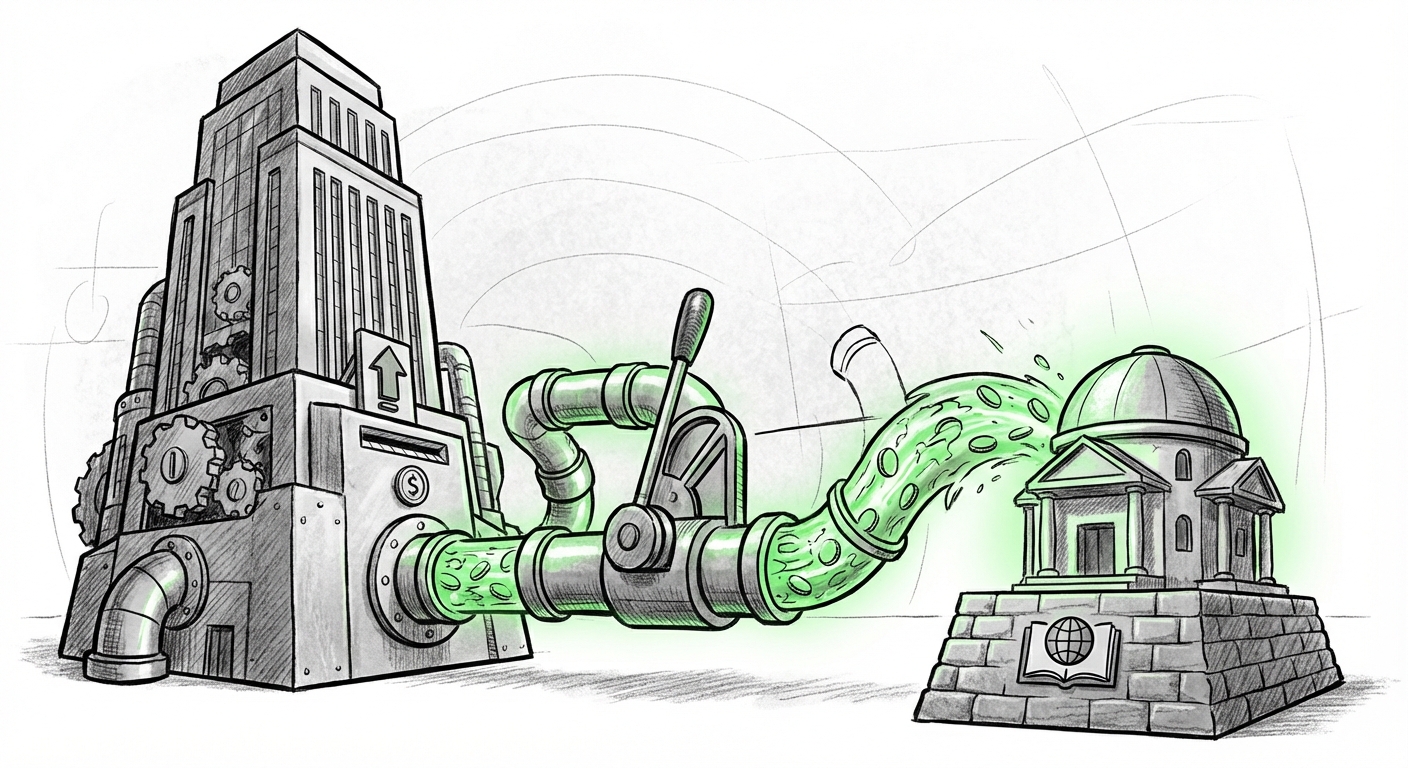
Cerebras is known for designing chips aimed squarely at squeeze-everything-else-out speed. That is exactly what a voice pipeline needs. The core idea here is simple: a strong open model plus a very fast compute layer equals a voice assistant that feels alive instead of sluggish.
When you combine an open distribution channel with a performance layer, you get something more valuable than either piece alone: accessible speed.
The Real Meaning: Open Models Are Becoming the Default Stack
The deeper trend here is not one announcement. It is that the "default" way to build AI applications is changing.
A couple of years ago, the assumption was that serious AI meant paying a large provider for a closed model, and that was that. That picture is breaking down. Open models are getting close enough to the best closed models that, for many real tasks, the gap no longer decides success. What decides success is control: control over cost, control over data, control over where the model runs, and control over how fast it responds.
Voice makes this shift sharper because voice workloads are chatty and constant. A single conversation can generate a continuous stream of audio in and audio out. That means the cost per minute matters far more than the cost per prompt. High-volume voice AI built on a closed model can quietly become a very expensive line item. Open models hosted on fast infrastructure give companies a way to keep those costs predictable.
There's also a privacy angle. When you run an open model on infrastructure you control, customer audio doesn't have to travel as far. For hospitals, banks, and public services, that is often not a nice-to-have, it's a legal requirement.
What This Means for Businesses
For companies, this announcement reads as a green light on several practical fronts.
Customer service stops being a cost center and becomes a craft
Most people groan at phone menus. That's because rule-based phone systems are fragile and frustrating. A real-time voice AI can handle a genuine back-and-forth: clarifying, correcting, and rephrasing. When it works at low latency, customers stop noticing they're talking to software. That changes call volume patterns, staffing models, and the whole economics of support.
Products get a "conversation layer"
Expect a wave of products that add a talking assistant without rebuilding the app from scratch. Because the model and the compute are available as building blocks, a small team can ship a voice feature in weeks rather than quarters. That favors fast, focused companies over slow giants.
The latency budget becomes a design constraint
Teams will need to think about the whole pipeline, not just the model. Speech recognition, reasoning, and speech generation all need to fit inside a tiny window of time. Every millisecond of overhead is something users can feel. This is a new kind of engineering discipline, and the companies that master it will win on product experience.
Language coverage becomes a competitive edge
Open models are far easier to adapt to regional languages and dialects. For businesses serving customers outside a major language's home market, an adapted open voice model can be a genuine moat.
What This Means for Society
Speed plus openness isn't automatically good. It amplifies whatever we do with it. That's why we need to be clear-eyed about both sides.
The upside
When voice AI becomes cheap and fast, access expands. A person who reads slowly, a person who is blind, a person who speaks a language without much digital content, all of them gain better tools. Real-time voice with instant translation could make small languages far more usable in daily digital life. And a patient, never-tired tutor in every pocket is an educational story with enormous reach.
The risks
The same speed that makes voice assistants feel natural also makes automated calls feel natural. That can multiply robocalls, scams, and impersonation. A fast, convincing voice model in the wrong hands is a security problem, and the industry will need to invest heavily in verification, proving who is on the line and which calls are human.
There is also a jobs dimension, but it's less dramatic than headlines suggest. The likely outcome is not that voice AI replaces support teams wholesale. It's that routine, repetitive calls get handled automatically, while the remaining human roles become more complex, higher-value, and more dependent on judgment. That's a reskilling challenge as much as a job-loss story.
And there's the money question: who gets to run this? If speed is the new bottleneck, the companies that own or rent the fastest infrastructure gain a lot of leverage. The healthy counterweight is a rich ecosystem of open models that anyone can host. This partnership nudges in that direction.
Actionable Insights
If you're making decisions right now, here's what to do with this shift.
- Audit one high-volume call flow. Pick a single process, booking, triage, order status, and measure how much latency and how much cost a real-time voice layer would require. Start small, but start with real numbers.
- Plan for the full pipeline, not a single model. Budget your milliseconds across speech recognition, reasoning, and speech output. Set a hard target for total round-trip time and design around it.
- Treat open models as your baseline. Evaluate an open model like Gemma 4 before signing a long closed-model contract. Keep a closed option as a comparison, not as the default.
- Get privacy and retention rules in place early. Audio is sensitive data. Decide where it flows, how long it's stored, and what you can strip out before processing.
- Build a voice verification strategy now. If you use voice for identity or transactions, assume fraudsters will too. Layer in checks that don't rely on a voiceprint alone.
- Test with people, not benchmarks. Humans forgive small errors and never forgive awkward silence. Measure satisfaction alongside speed.
The Bigger Picture
The real story here isn't the model name in the headline. It's that the pieces needed for natural, affordable voice AI are coming together in public, an open model ecosystem on one side, a performance layer on the other, and a growing army of developers in the middle.
For years the AI race was about raw capability: who scores highest, who writes best, who answers hardest questions. That still matters, but it's no longer the only axis. The next phase will be won on speed, cost, and control, the things that decide whether AI becomes a product people actually use or a demo they admire from a distance.
Real-time voice is the clearest test of that transition, because the human ear is an unforgiving judge. It knows instantly whether it's talking to something alive or something lagging. Bringing Gemma 4 into real-time voice work is a meaningful step toward systems that pass that test, openly, and for everyone.