From DeepSeek to AI+: How the Open-Source AI Ecosystem Will Reshape Business and Society
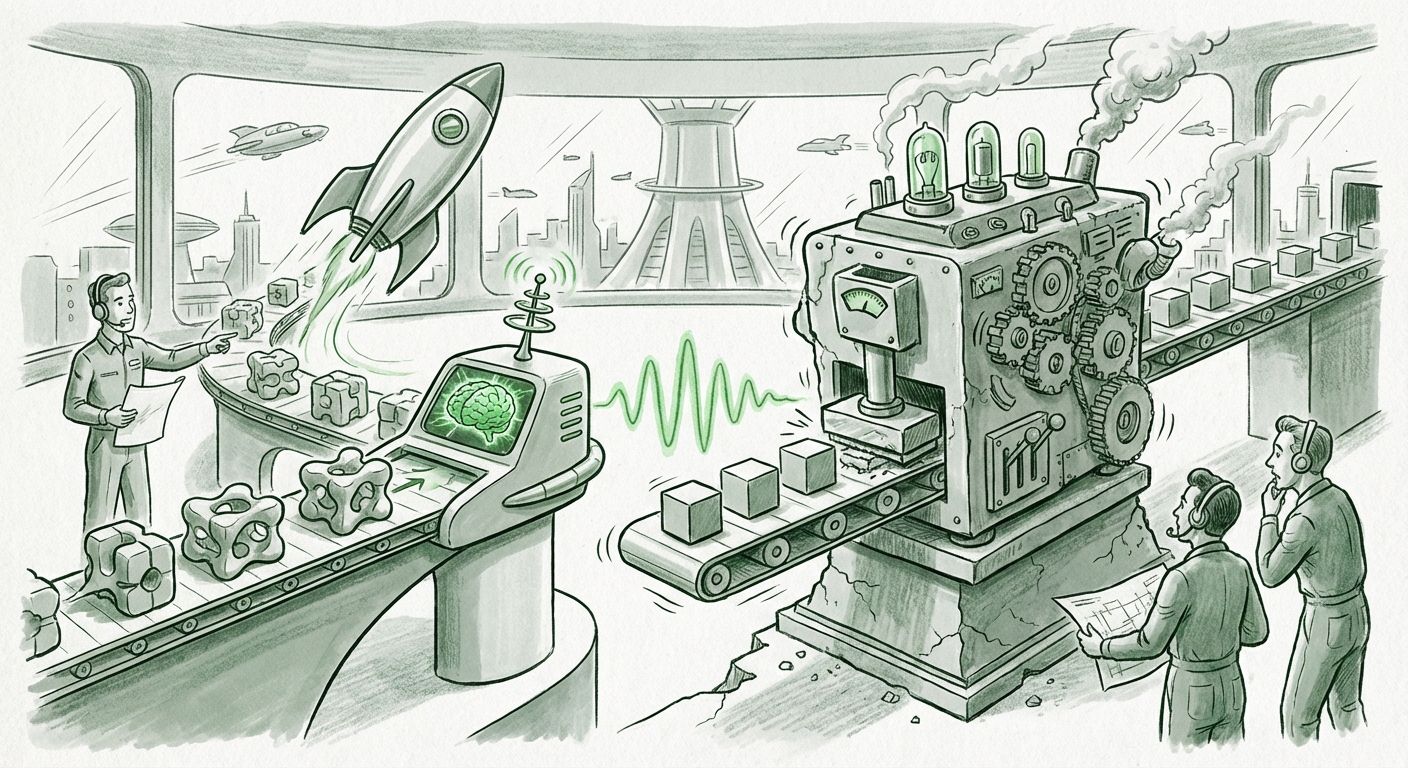
Something important is happening in artificial intelligence. The story is no longer just about one big model or one big company. It is about an entire ecosystem that is becoming open, shared, and deeply connected to the rest of the economy. The path from DeepSeek to what many now call AI+ captures this shift. It is a move from building impressive AI models to weaving AI into everything people and businesses do.
This change matters to everyone. For technical teams, it means new tools and new choices. For business leaders, it means lower costs, faster experiments, and new risks. For society, it means big questions about access, safety, and who gets to benefit. This article breaks down what the open-source AI ecosystem looks like now, why DeepSeek changed the conversation, what AI+ really means, and how to prepare.
The Open-Source AI Ecosystem Is Growing Up
Open-source AI used to feel like a research project. A small group would release a model. Others would download it, test it, and move on. That era is ending. Today, the open-source AI ecosystem is a full stack of building blocks. It includes models, training tools, data sets, deployment software, safety checks, and community support. Each piece makes the others stronger.
This matters because open source is no longer a side road. It is becoming a main road for AI adoption. Companies can take an open model, adapt it to their own data, and run it in their own environment. They do not have to send everything to a closed service. They can inspect how it works. They can choose where it runs. They can keep control of their data. That is a big deal for regulated industries, governments, and any business that worries about privacy and lock-in.
The ecosystem is also becoming more organized. Communities are writing shared standards for model cards, licensing, safety testing, and evaluation. That may sound boring, but it is how open source becomes trustworthy. When everyone agrees on how to describe a model and how to test it, buyers can compare options. Developers can build once and deploy many times. The whole market moves faster.
Why DeepSeek Changed the Conversation
DeepSeek became a turning point because it showed that open models could be serious contenders. It focused attention on a simple idea: you do not need a closed, giant system to get strong AI results. Open models can be powerful, adaptable, and cost-effective. That idea changed the mood in boardrooms and engineering teams alike.
The deeper impact was psychological. Before DeepSeek, many people assumed that the best AI would always come from a few large closed labs. After DeepSeek, that assumption cracked. Teams began to ask different questions. Can we run this ourselves? Can we fine-tune it on our own data? Can we avoid paying per query forever? Can we keep our data inside our own walls? These questions are now normal.
DeepSeek also made the global nature of AI impossible to ignore. Open models cross borders. They are downloaded, studied, and improved by people all over the world. That spread is a strength and a challenge. It speeds up innovation. It also makes governance harder, because no single country or company controls the technology.
From DeepSeek to AI+: The Next Phase
The phrase AI+ points to the next phase. It is not about AI as a separate industry. It is about AI added to every industry. Think of it like electricity. Electricity is not a sector you visit. It is inside factories, homes, hospitals, and offices. AI+ is the same idea for intelligence.
In the AI+ phase, AI stops being a special project. It becomes a normal part of products and workflows. A farm uses AI to spot crop stress. A bank uses AI to flag fraud. A hospital uses AI to help read scans. A school uses AI to personalize practice. A logistics company uses AI to plan routes. The AI is not the headline. The outcome is.
This phase depends on the open ecosystem. If every company had to build its own model from scratch, AI+ would be slow and expensive. Open models, shared tools, and common standards lower the barrier. They let small companies and public agencies join in. They let local languages and local needs be served. They let innovation happen at the edges, not just at the center.
What This Means for Businesses
For business leaders, the open-source AI ecosystem creates real choices. You can build, buy, or blend. You can use a closed service for speed and convenience. You can use an open model for control and cost. You can run a small model on your own hardware for simple tasks and use a larger service for hard ones. That flexibility is new, and it is valuable.
Cost is a big driver. Open models can reduce the cost of experimentation. Teams can test ideas without a large contract. They can fail fast and try again. That changes how companies innovate. AI becomes less of a big bet and more of a steady habit.
Control is another driver. Open models can be fine-tuned on private data and run inside a company’s own systems. That helps with privacy, security, and compliance. It also reduces vendor lock-in. If one provider changes prices or terms, a company has alternatives. That bargaining power matters.
But there are new risks. Open does not mean safe. A model can be copied, misused, or deployed without proper testing. Companies need their own guardrails. They need clear policies for data use, model evaluation, and human review. They need people who can maintain and monitor the system. The savings from open models can disappear if the company is not ready to manage them.
Practical Steps for Business Leaders
- Start with a clear use case. Do not adopt AI because it is trendy. Pick a problem with a measurable outcome.
- Compare open and closed options. Look at cost, control, quality, and support. The right answer may be a mix.
- Invest in data hygiene. Open models are only as good as the data you use to adapt them.
- Build a safety layer. Add testing, monitoring, and human review before anything goes live.
- Train your people. Engineers need model skills. Managers need judgment about when to use AI and when not to.
- Plan for maintenance. Open models need updates, patches, and evaluation. Budget for that work.
What This Means for Society
The open ecosystem can widen access. A small startup in a developing country can use the same base model as a large corporation. A local language community can adapt a model to its own needs. A public school can experiment without a huge budget. That is a hopeful direction.
But access is not the same as fairness. Open models still need compute, data, and skilled people. Those resources are not evenly spread. Without care, open AI could create a new gap between those who can adapt models and those who can only consume them. Policy makers have a role here. They can support public compute, open data, and digital skills. They can also set clear rules for safety and accountability.
Transparency is another benefit. Open models can be inspected. Researchers can test them for bias. Journalists can ask harder questions. That does not solve every problem, but it helps. Closed systems can be important too, but open systems give the public a way to check the work.
Society also needs to talk about jobs. AI+ will change tasks in almost every industry. Some tasks will be automated. Others will be augmented. New jobs will appear. The transition will be uneven. The best response is not to stop the technology. It is to help people learn, adapt, and move into new roles. Open tools can play a part by making skills and training more widely available.
The Challenges Ahead
The open-source AI ecosystem still has hard problems. Safety is one. Open models can be downloaded by anyone. That is the point, but it also means misuse is hard to stop. The community needs better testing tools, clear licenses, and shared norms. Quality is another. Not every open model is good. Buyers need ways to compare them without running expensive tests themselves.
Fragmentation is a risk. Too many standards, too many formats, and too many licenses can slow everyone down. The ecosystem needs common ground. Sustainability is a third challenge. Training and running AI takes energy and water. Open models can be efficient, but they can also be used wastefully. The industry needs better measurement and better habits.
Finally, there is the question of governance. Open models cross borders. Rules in one country may not apply in another. The world needs ways to share best practices without killing innovation. That is a delicate balance. It will require cooperation between governments, companies, researchers, and civil society.
Actionable Insights for the Road Ahead
For technical teams, the message is to build with portability in mind. Use open standards. Keep your data clean. Test models on your own tasks. Do not assume that a bigger model is always better. A smaller, well-tuned model can win on cost and speed.
For business leaders, the message is to treat AI as a capability, not a purchase. Invest in people, process, and governance. Start small. Measure results. Scale what works. Keep your options open. The open ecosystem gives you more choices, but it also asks more of you.
For policy makers, the message is to support openness and safety together. Fund public compute and open data. Set clear rules for high-risk uses. Protect privacy. Invest in skills. Do not try to pick winners. Try to build a level playing field.
For everyone else, the message is to stay curious. AI+ will touch your work, your services, and your community. You do not need to be an engineer to have a voice. Ask questions. Demand transparency. Push for systems that help people, not just systems that impress them.
Conclusion: The Ecosystem Is the Story
The journey from DeepSeek to AI+ is not a straight line. It is a shift in how AI is built, shared, and used. The future will not be shaped by one model alone. It will be shaped by an ecosystem: open models, shared tools, common standards, and communities that keep improving them. That ecosystem is already changing the economics of AI. It is lowering barriers and raising new risks.
The winners will not be the companies with the biggest model. They will be the companies that learn fastest, govern well, and build trust. The same is true for countries and communities. Open-source AI gives us a rare chance to make AI more accessible and more accountable. It is up to us to use that chance well.