Liberate Your OpenClaw: Why the Next Big AI Fight Is Over Who Owns Your Agent
"Liberate your OpenClaw." Two words, delivered on March 27, 2026, and suddenly a lot of people who build with AI started nodding. It sounds like a line from a heist film. In reality, it is a small slogan carrying a very large idea: that the AI tools you depend on should not be locked in a box you cannot open.
That is the conversation the AI world is having right now, and it is bigger than one project. For the last few years, the story of AI has been about models, who has the biggest, the fastest, the smartest. That story is maturing. The new question is not which model you use. It is who holds the keys to the thing that uses the model for you.
What "Liberate Your OpenClaw" Is Really Asking
The word "liberate" is doing a lot of work here. It suggests something already exists, already works, and is being held back. That is exactly the situation most AI users find themselves in. They have built something useful. They have tuned it, taught it their preferences, connected it to their files, their inbox, their code, their workflows. It hums along nicely.
Then they try to move it. And they discover the uncomfortable truth: the tool was never really theirs. The memory lives on someone else's servers. The configuration cannot be exported. The workflows are stuck inside a dashboard. The moment the price changes, the terms shift, or the service has a bad week, everything built on top of it wobbles.
So "liberate your OpenClaw" is shorthand for a practical checklist: can you run it where you choose? Can you point it at a model you pick? Can you pull your data back out? Can you keep working when the vendor changes direction? If the answer to any of those is no, the tool is renting you, not the other way around.
The Shift From Renting Intelligence to Owning Your Setup
This is the trend that matters, and it is moving fast. The AI market is splitting into two layers, and they behave in opposite ways.
The model layer is commoditizing. Capable models are everywhere now. Open-weight releases keep closing the gap with closed ones. Prices keep falling. Switching between providers is no longer the painful, months-long project it was in 2023. When the fuel gets cheap and interchangeable, value moves somewhere else.
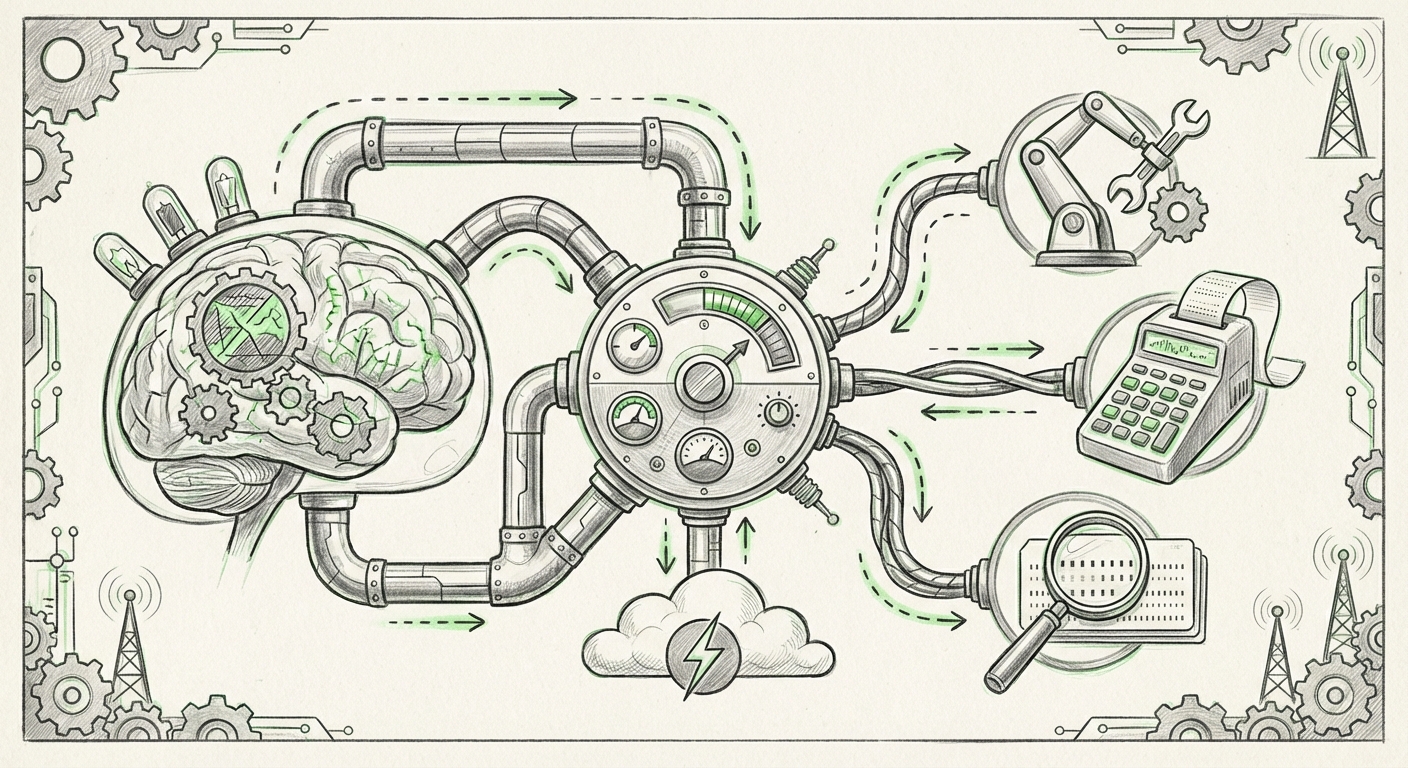
The agent layer is where value accumulates. An agent is not just a chat box. It is a system that remembers your context, calls your tools, follows your rules, and gets better at your job over time. Every week you use it, it becomes more valuable, and more expensive to leave. That stickiness is the real product. It is also the real risk.
Put those two facts together and you get the logic behind the liberation push. If models are swappable but agents are sticky, then whoever controls the agent controls the customer relationship for years. Users and companies are starting to notice, and they are pushing back before the lock gets any tighter.
Three Forces Driving the Push for Open AI Tooling
1. Lock-in fatigue
Enterprises have been here before, with databases, with cloud platforms, with CRM systems. They know the pattern: attractive entry pricing, deep integration, then a renewal conversation where you have very little leverage. AI is following the same curve, just much faster. Finance and procurement teams are now asking questions in AI deals that they used to ask about infrastructure: what happens if we leave, and what does leaving cost?
2. Data and control
Agents touch sensitive material by design. They read email, draft documents, query internal systems, and remember what they find. Every one of those actions is a data-handling decision. For regulated industries, health, finance, legal, government, the ability to keep an agent's memory and activity inside a controlled environment is not a nice-to-have. It is the difference between a project that ships and one that stalls in review forever.
3. Portability as a design goal
A quieter but important change: the industry is standardizing how tools are described and called, how context is passed, and how agents connect to outside systems. Every step toward common protocols makes it easier to move an agent from one provider to another. That is good news for buyers and uncomfortable news for anyone whose business model depends on the exit door being jammed shut.
What "Liberation" Looks Like in Practice
This is not an all-or-nothing choice between a fully self-hosted setup and a polished commercial product. Real organizations land in the middle. The pattern that works looks like this:
- Run the runtime where you choose. Whether that is a laptop, a private server, or a managed environment, you should know exactly where the agent executes and be able to change it.
- Bring your own model. The agent should not care whether the reasoning comes from a hosted API, an open-weight model on your own hardware, or a smaller model tuned for a narrow task. Model choice should be a setting, not a rewrite.
- Exportable memory. Everything the agent has learned about your context should be readable and portable. If you cannot back it up, you do not own it.
- Workflows under version control. Prompts, tool definitions, and rules belong in the same place as your code, reviewed, versioned, and testable.
- Visible audit trails. You should be able to see what the agent did, what it accessed, and why. Security teams cannot approve what they cannot inspect.
None of this is exotic. It is the standard playbook for any critical piece of software. The novelty is that AI tools spent their first few years being treated as a subscription rather than a component, and we are now correcting for that.
What This Means for Businesses
For leaders, the practical takeaway is that AI strategy now includes an exit strategy. A few implications worth acting on:
- Procurement should ask harder questions. Data portability, memory export, model substitution, and shutdown terms should be in the contract, not discovered at renewal.
- Total cost of ownership needs a second column. Self-hosting is not free, it needs engineers, monitoring, and security work. But the comparison should be honest in both directions, including the cost of being unable to leave.
- Keep a fallback path warm. Even a light test of an alternative model or runtime every quarter turns a hypothetical plan into a real one.
- Design for model independence. Teams that wrap model calls behind a simple internal layer find that swapping providers takes days. Teams that scatter vendor-specific calls through their codebase find that it takes a quarter.
- Treat agent memory as an asset. Back it up, govern it, classify it, and know who can access it. It is closer to a company knowledge base than to a chat log.
There is a real trade-off here, and it should be named. Open and self-hosted setups can mean more maintenance, more integration work, and a slower start. Managed products win on convenience, and convenience matters. The right answer for a five-person startup is often different from the right answer for a hospital. The point is not to reject vendors. The point is to make the choice deliberately instead of by default.
What It Means for Workers and Society
The same logic applies to individuals, and it may matter more. Millions of people are quietly building personal expertise into AI tools, their writing style, their research process, their way of handling a difficult client. If that knowledge is trapped in a product that can change terms overnight, then a worker's most valuable productivity asset is on loan.
Portability gives people leverage. It lets a freelancer move their assistant to a cheaper model when budgets tighten. It lets a small business keep working during an outage. It lets a job seeker carry hard-won workflow knowledge from one employer to the next, a kind of portable skill upgrade that did not exist before.
There is a broader cultural argument too. Software freedom movements have always been about more than price. They are about the ability to inspect, modify, and understand the tools that shape your work. AI agents are becoming that kind of tool: they sit between people and their decisions. The more opaque and locked they become, the less anyone can check whether they are doing what they claim. Openness is not a guarantee of safety, but it is what makes independent scrutiny possible.
What to Watch Next
Three signals will tell us how fast this shift is really moving. First, how often capable open-weight models land close enough to closed ones that switching becomes a routine engineering task rather than a strategic gamble. Second, whether agent portability becomes a genuine standard that multiple vendors adopt, the moment you can move an agent's memory between platforms, lock-in loses most of its teeth. Third, whether credible support and security offerings grow up around open tooling, closing the gap that has kept cautious enterprises on managed platforms.
Whichever way it goes, the "liberate your OpenClaw" instinct is not going away. It is the natural next chapter in a pattern the software industry has repeated for decades: a powerful new layer appears, gets captured, and then gets pried open again by the people who depend on it.
The Bottom Line
The future of AI will not be decided only by which model tops a leaderboard. It will be decided by whether the systems built on top of those models belong to the people using them. Liberation, in this context, is not rebellion for its own sake. It is the simple, practical demand that your AI setup be something you can move, inspect, back up, and keep, even if the company behind it changes its mind.
Build with that in mind now, while it is still a choice.