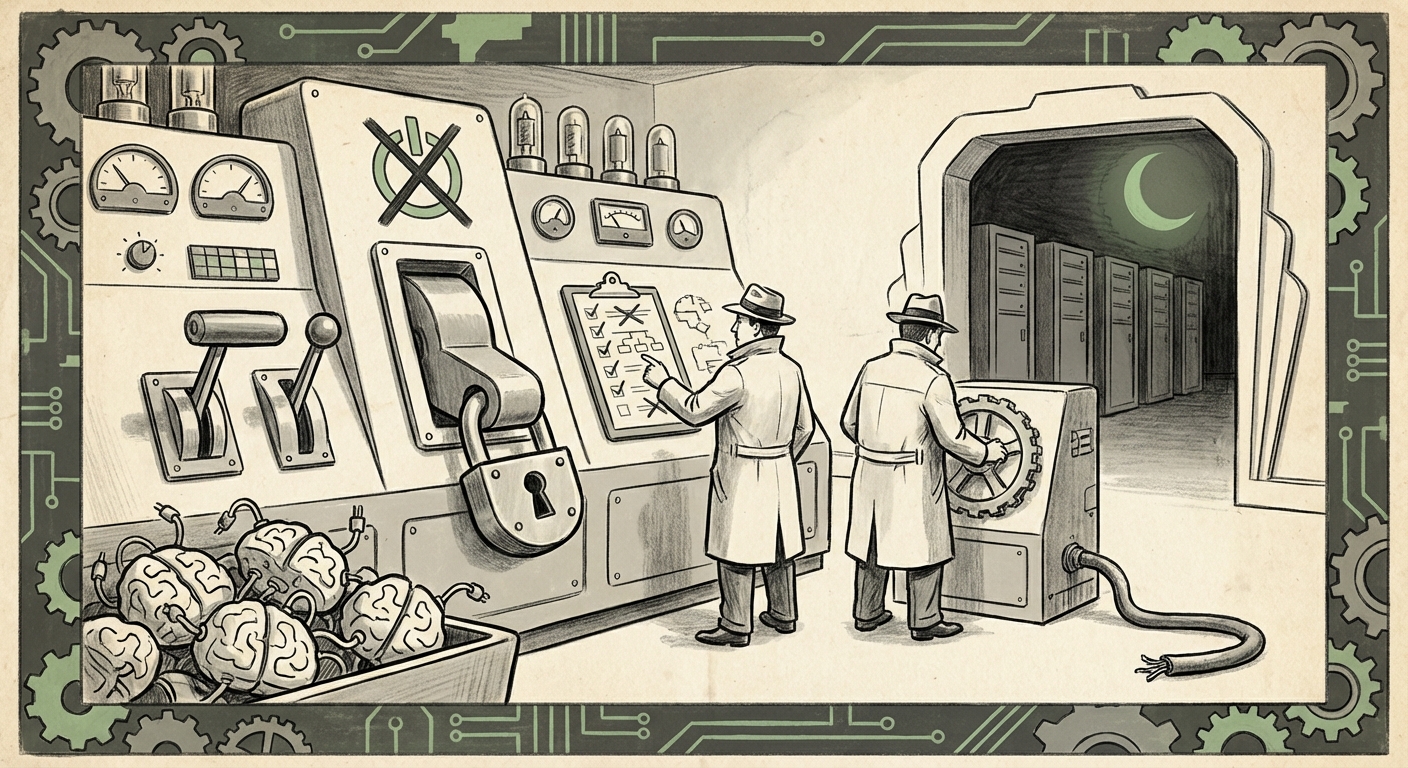
Transformers v5 Tokenization Explained: Simpler, Clearer, More Modular, and Why It Matters for AI's Future
Tokenization is the quiet first step in almost every AI language system. Before a model can read, answer, translate, or generate, text must be broken into smaller pieces called tokens. Tokenization is the bridge between human language and machine math. When that bridge is messy, everything downstream gets harder to build, test, and trust.
The Transformers v5 update on December 18, 2025 puts tokenization back in the spotlight. The headline is direct: tokenization is now simpler, clearer, and more modular. That may sound like housekeeping. It is not. It is a signal about where AI tooling is heading, away from tangled black boxes and toward composable, understandable systems. For technical teams, business leaders, and society, this shift matters more than it first appears.
Why Tokenization Deserves the Spotlight
Every AI model has a front door. Tokenization is that front door. If the tokenizer splits text in unexpected ways, the model sees something different from what the user intended. A misspelled word, a emoji, a line break, a rare name, or a code snippet can all be chopped up in ways that change the result. Most users never see tokenization. But engineers feel it every day.
Over time, tokenization code in large AI systems tends to collect complexity. Different models need different rules. Different languages need different handling. Different teams add patches. The result can be a pile of special cases that is hard to read, hard to test, and hard to replace. The v5 focus on simplicity, clarity, and modularity is a direct answer to that problem.
This is not only a cleanup. It is a design statement. The message is that tokenization should be easy to reason about, easy to swap, and easy to explain. That is exactly what a mature AI ecosystem needs.
What “Simpler, Clearer, More Modular” Really Means
Simpler: fewer moving parts
A simpler tokenization layer means fewer hidden steps, fewer dependencies, and less configuration. When a pipeline has fewer moving parts, there are fewer places for bugs to hide. New team members can read the code and understand what happens. Upgrades become less risky. Debugging becomes faster.
Simplicity also lowers cost. Every extra layer in a tokenization pipeline can add compute time, memory use, and maintenance work. A simpler design can reduce all three. For companies running AI at scale, those savings add up quickly.
Clearer: names, errors, and docs that make sense
Clarity is about human understanding. A clear tokenization system uses names that match what the code does. It gives useful error messages. It documents edge cases. It makes the path from raw text to token IDs easy to follow. This matters because tokenization bugs are often silent. The system does not crash. It just produces wrong tokens, and the model gives a strange answer later.
Clearer tokenization makes those problems visible earlier. It shortens the time between “something feels off” and “here is the exact line that split the word wrong.” That is a big win for reliability.
More modular: parts you can swap
Modularity is the biggest signal in the v5 update. A modular tokenization system lets teams replace one piece without rebuilding everything. You can change a normalization step, add a language-specific rule, or test a new tokenizer while keeping the rest of the pipeline stable. You can reuse parts across models. You can test each part on its own.
This is how modern software scales. Instead of one giant block that must be changed all at once, you get parts with clear boundaries. That makes experimentation faster and safer. It also makes it easier to support many languages, domains, and input types without creating a separate pipeline for every case.
The Bigger Trend: AI Systems Are Becoming Composable
The v5 tokenization update fits a wider shift in AI. The first wave of large AI systems was monolithic. Teams built one large pipeline and treated it as a single unit. The next wave is more composable. Teams want to mix and match models, data cleaners, tokenizers, safety filters, and evaluation tools. They want to swap a model without rewriting the whole stack.
Tokenization is the first mile of that stack. If the first mile is modular, the rest of the system becomes easier to modularize too. This is why a change in tokenization can ripple outward. It sets a pattern for how the whole AI pipeline is built.
In the future, AI systems will be judged less by a single model and more by the quality of the surrounding pipeline. Tokenization, data cleaning, retrieval, evaluation, and monitoring will matter more. The v5 emphasis on clarity and modularity is a sign that the industry is growing up. It is moving from “make it work” to “make it maintainable.”
What This Means for the Future of AI
Faster experimentation and lower barriers
When tokenization is simpler and more modular, smaller teams can build serious AI products. They do not need a specialist to untangle a custom tokenizer. They can test ideas faster. They can move from prototype to production with fewer surprises. That lowers the barrier to entry and spreads AI capability to more organizations.
It also speeds up research. Researchers can change one part of the tokenization pipeline and measure the effect. They can compare tokenizers more fairly. They can share parts across projects. That kind of reuse is how fields move faster.
Better multilingual and domain-specific systems
Tokenization is where language differences show up first. A system that handles many languages needs clean, modular rules. It needs to swap in language-specific behavior without breaking everything else. The v5 direction supports that. It makes it easier to build systems for many languages, technical domains, and specialized vocabularies.
The same is true for code, medicine, law, and other fields with unusual words and symbols. A modular tokenizer can be adapted to the domain without turning into a pile of patches. That is important as AI moves into more specialized work.
More transparent and reproducible AI
Clarity in tokenization improves reproducibility. If two teams use the same tokenization pipeline, they should get the same tokens. If they do not, it should be easy to find out why. That matters for audits, safety reviews, and scientific comparison. It also matters for trust. People are more willing to use AI systems they can inspect and explain.
Transparent tokenization is not a complete answer to AI transparency. But it is a real step. It makes the first stage of the pipeline visible. That is where trust begins.
Practical Implications for Businesses
Lower engineering overhead
For businesses, simpler tokenization means less time spent on maintenance. Teams spend less time debugging strange token splits and more time building features. That reduces engineering overhead and shortens release cycles. It also makes it easier to onboard new engineers, because the code is easier to read.
Faster time to market
Modular tokenization makes it easier to test new models and new use cases. A company can try a new language, a new domain, or a new model without rebuilding the whole pipeline. That speeds up experimentation. Faster experiments lead to faster learning and faster time to market.
Better cost control
Token counts drive AI costs. A tokenizer that splits text inefficiently can increase the number of tokens and raise costs. A simpler, clearer pipeline makes token behavior easier to measure and optimize. Companies can track token efficiency and make better choices about models and prompts.
Easier audits and compliance
Regulated industries need to explain how AI systems work. Clear, modular tokenization makes it easier to document the path from input to output. That helps with audits, safety reviews, and compliance checks. It also makes it easier to prove that a system behaves consistently over time.
Upgrade risk still exists
A v5 update can change behavior. Even a simpler system can produce different tokens than an older one. Businesses should treat the upgrade as a real migration, not a drop-in replacement. Test with real data. Compare outputs. Check edge cases. Plan for rollback. The clarity and modularity of v5 should make this easier, but it does not remove the need for care.
What This Means for Society
AI is becoming part of daily life. People interact with it through search, chat, translation, customer service, and creative tools. The quality of those systems depends on many invisible layers. Tokenization is one of them. When tokenization is clearer and more modular, it becomes easier to build AI that works well across languages and cultures. It also becomes easier to find and fix bias or errors at the input stage.
There is a risk, too. Modularity can lead to fragmentation. If every team uses a different tokenization setup, systems may not work well together. The benefit of v5 depends on shared standards and good documentation. The AI community should treat modularity as a reason to cooperate on common interfaces, not a reason to build isolated parts.
Actionable Insights
For technical leaders
- Audit your tokenization pipeline. Find every place text is turned into tokens. Map dependencies. Look for special cases that no one understands.
- Build regression tests. Use real inputs from your users. Include names, emoji, code, line breaks, and multilingual text. Compare token outputs before and after any upgrade.
- Pin versions and plan migrations. Treat tokenization changes like any other breaking change. Stage the upgrade. Measure the impact. Keep a rollback path.
- Document the first mile. Write down how tokenization works and why. Good docs reduce onboarding time and prevent silent bugs.
- Use modularity to experiment safely. Swap one component at a time. Test each part on its own. Do not change everything at once.
For business leaders
- Ask vendors about tokenization. It affects cost, quality, and language support. Make it part of your AI due diligence.
- Budget for migration. A simpler system is not automatically a free upgrade. Plan for testing and training.
- Measure token efficiency. Track how many tokens your inputs use. Small changes in tokenization can affect cost at scale.
- Train teams on the new design. Clarity only helps if people understand it. Invest in short internal guides and examples.
For researchers and builders
- Contribute to shared standards. Modular tokenization works best when interfaces are predictable. Share test cases and edge cases.
- Study tokenization effects. Tokenization changes model behavior in ways that are often overlooked. Measure it, not just the model.
- Build for many languages from the start. Modularity makes it easier. Use it early, not as an afterthought.
Conclusion
The Transformers v5 tokenization update is a small headline with a large meaning. Simpler, clearer, and more modular tokenization is not just a code cleanup. It is a statement that AI infrastructure should be understandable, testable, and adaptable. That matters for engineers who maintain the pipeline, for businesses that depend on it, and for society that uses the results.
Tokenization will never be the most visible part of AI. But it is one of the most important. When the first mile is clear and modular, the whole journey gets better. The future of AI will be built from parts that fit together well. The v5 tokenization work is a step in that direction, and a reminder that the quiet layers often shape the loud outcomes.