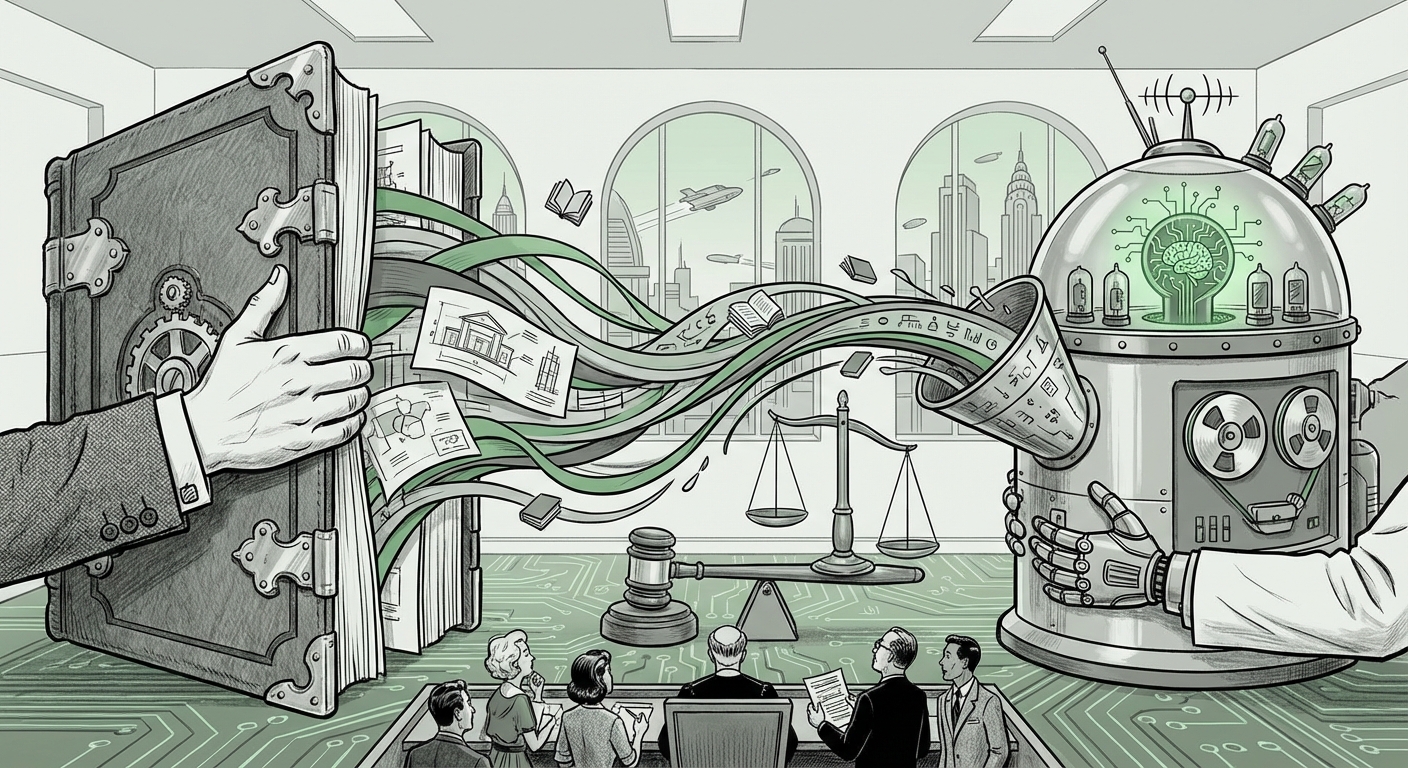
Don't Throw Away Your Old Speakers, Use Them for Your TV Instead (and What That Teaches Us About AI)
Most of us have a pair of dusty speakers somewhere. Maybe they sat on a shelf next to a stereo system years ago. Maybe they came with a computer. Maybe they were part of a home theater setup that got replaced by a single soundbar. The standard move is to toss them, or let them sit in a closet until a move forces the decision.
There is a much better answer: don't throw away your old speakers, use them for your TV instead. Flat-panel televisions have become spectacular at picture quality and quietly terrible at sound, because the screen is thin and the speakers have nowhere to live. Meanwhile, a decent pair of older speakers is often better than what you would buy new for the same money, except you already own them.
On the surface this is a small weekend project. Underneath, it is a near-perfect example of a much larger shift in the technology industry, one that AI is about to accelerate, complicate, and in some ways rescue.
The Simple Idea: Good Sound, Zero Shopping
The pitch is refreshingly practical. Older speakers and receivers were built to last decades. They handle bass, midrange, and dialogue with a physical presence that a slim TV cannot match. The only thing they lack is a modern way to connect.
That gap is easy to close. A small amplifier or receiver with an optical or HDMI connection can turn passive speakers into a TV audio system. A Bluetooth receiver can do the same for speakers that were never meant to talk to a television. A streaming stick or media box plugs into the TV and handles the apps. For a fraction of the cost of new hardware, a forgotten pair of speakers becomes the front end of a very good living room setup.
The details matter, matching power to the speakers, checking which inputs the TV offers, remembering that optical connections often need a separate setting for volume control, and dealing with the occasional audio delay that makes lip-sync look wrong. But none of it is hard. It is the kind of project that takes an evening and pays off for a decade.
Why This Story Lands Right Now
The reason this advice matters beyond one living room is that the technology industry has spent the last several years teaching people that new hardware equals new capability. That was true when each generation of a device was dramatically better than the last. It is far less true today, when the physical parts, screens, drivers, chips, improve slowly and most of the visible change happens in software.
AI is pouring gasoline on that trend. Almost every product launch now leads with AI features. Cameras that clean up images. Audio systems that adjust to the shape of your room. TVs that sharpen low-quality video. Headphones that filter out the world. The features are real and sometimes excellent. But they are increasingly delivered by software, running on a phone, a streaming device, or a small add-on box, not by the part of the product you actually touch.
When value moves to software, the hardware in your closet stops being obsolete and starts being an opportunity.
What This Means for the Future of AI
1. AI Turns Old Hardware Into a Subscription to Better Features
The most important shift is that AI lets an old device borrow intelligence from somewhere else. A pair of speakers from 2009 cannot run a neural network. But the phone in your pocket, the streaming puck under the TV, or a low-cost bridge device can, and that processing can shape and correct the sound those speakers produce.
That is a meaningful change in how consumers should think about upgrades. Instead of replacing the whole system, you upgrade the piece that holds the intelligence. The speakers stay. The brain gets swapped. This is a healthier model for buyers, and a harder one for companies that depend on selling complete replacements every few years.
2. The AI Upgrade Treadmill Is Meeting Its Limits
Every device category is now marketed as an "AI" product. For a while, that label alone justified a purchase. That era is ending, for a simple reason: the gap between last year's hardware and this year's hardware is smaller than the gap between last year's software and this year's software.
Consumers are beginning to notice. The rational move is not to buy the newest box, but to buy the cheapest thing that can access the newest capabilities. Often that thing is a small companion device, a streaming stick, an adapter, an app, rather than a full replacement. The old-speaker-to-TV trick is an early, low-stakes version of a question every household will face: what do I actually need to replace, and what just needs a smarter connection?
3. The Living Room Becomes an Ambient AI Layer
The living room audio system is quietly becoming the sensory hub of the home. Voice assistants, sound-event detection, and room-aware audio all depend on the same two things: speakers to make sound and microphones to hear it. As those capabilities mature, a home's audio setup stops being a passive accessory and starts being infrastructure.
That reframes the disposal decision. A speaker that can be connected is not just a speaker, it is a potential node in a home system that listens for smoke alarms, recognizes when someone arrives, or adjusts dialogue volume for a viewer who struggles to hear. The hardware you almost threw out may be the cheapest way to extend that layer into another room.
4. AI Is Solving the Exact Problem That Makes Old Audio Usable
Here is the irony. The biggest complaint about modern TV sound is not that it lacks loudness. It is that dialogue gets buried under music and sound effects. That complaint is precisely what modern audio processing is built to fix, separating speech from background, boosting clarity, and adapting to the acoustics of the room.
So the same wave of AI that makes new hardware attractive is also making old hardware more usable than it has ever been. A pair of aging speakers plus smart processing can outperform a cheap new soundbar. That is not a niche trick. It is a template for how AI will extend the useful life of a huge range of physical products.
The Business Case: Longevity Is Becoming a Strategy
For companies, the reuse trend creates both risk and opportunity.
- Risk: if a device's useful life extends because software can be bolted on later, replacement cycles lengthen. Businesses built on frequent hardware refreshes need a new reason for customers to buy.
- Opportunity: the same shift opens up markets in bridging hardware, adapters, refurbishment, software subscriptions, and support. The company that sells the bridge to modern AI features can win customers who never would have bought a full system.
- Design pressure: modular ports, published connection standards, and long software support become selling points. A product that can be upgraded is easier to recommend than one that must be replaced.
- Trust as a feature: customers increasingly reward brands that help them keep things working. Advice content, compatibility guides, and clear upgrade paths build loyalty far more effectively than another launch event.
There is also a practical regulatory dimension. E-waste rules in many regions are tightening, and the cost of disposal is shifting toward manufacturers. Designing products that survive a second life is no longer just good manners, it is increasingly a line item on a balance sheet.
What It Means for Society
The affordability angle is easy to miss. Good audio is not a luxury for everyone who uses it. Clear dialogue matters for older adults, for people with hearing loss, and for anyone watching in a second language. A cheap way to reuse existing speakers is a cheap way to improve accessibility.
There is a climate angle too. Every device that stays in service longer is one fewer device manufactured, shipped, and eventually landfilled. The environmental benefit of reuse is not abstract, it is one of the most effective levers available to ordinary households, and it costs almost nothing to pull.
Finally, there is a skills angle. Projects like connecting old speakers to a TV are small acts of technical confidence. They teach people that the technology around them is understandable, not magical. In a world where AI systems are increasingly opaque, that instinct is worth protecting.
Actionable Takeaways
For households
- Before buying new audio, check what you already own. Passive speakers plus a small amplifier can usually beat a budget soundbar.
- Look at your TV's outputs first. Optical and HDMI audio connections are the easiest path; older TVs may need an adapter.
- Fix dialogue clarity before you fix volume. Much of the problem is processing, not power.
- Keep one "bridge" device, a streaming box or Bluetooth receiver, as your upgrade path instead of replacing the whole system.
For businesses
- Assume customers will keep hardware longer than your roadmap expects, and design support, software, and accessories accordingly.
- Sell the upgrade path, not just the replacement. Bridging products are a growth category hiding in plain sight.
- Publish compatibility information. Clear guidance is a competitive advantage in a market full of confusion.
- Treat repairability and modularity as brand assets, not compliance chores.
For developers and product teams
- Design AI features to run on companion devices, not only on the newest flagship hardware.
- Build for the low end. The processing that improves a cheap pair of speakers reaches far more people than the processing that only works on premium gear.
- Expect the home to become a network of sensors and speakers. Interoperability will matter more than raw specification.
The Bigger Picture
The advice to keep your old speakers and hook them to your TV is useful on its own terms. It saves money, sounds better, and keeps useful things out of the trash. But it also captures something bigger about where AI is taking us.
For the last decade, the story of consumer technology was replacement. New device, new features, new reasons to spend. The next decade will be shaped more by extension, by software that reaches back into hardware you already own and makes it better, and by products designed to be upgraded rather than discarded.
The companies and households that understand this early will spend less, waste less, and get more out of the devices they already have. The ones that don't will keep buying new speakers, and keep wondering why the sound in the living room still isn't quite right.