Why AI Won't Kill SaaS, And What That Really Means for the Future of AI
Every big technology wave arrives with a funeral announcement attached. The cloud was going to kill the data center. Mobile was going to kill the desktop. And now, according to a loud and growing chorus, AI agents are going to kill SaaS, software as a service.
The logic sounds tidy. If an AI agent can log into a tool, click through the screens, and finish the job, why pay for rows of seats? If a model can generate a working internal app in an afternoon, why buy software at all? The story is simple, dramatic, and, in the way that matters most �� mostly wrong.
The better read is that AI does not erase software as a service. It changes what SaaS is for. The companies that understand this shift early will get more value from both. The ones that rip out working systems chasing the hype will spend years rebuilding what they already had.
The Case for the Funeral: Why the "AI Kills SaaS" Story Spread
The bear case is not silly. It rests on three real observations.
First, agents can now operate software without a human hand on the mouse. A model that can read a screen, fill a form, and follow a process steps into the seat that used to belong to a person. If work gets done by machines, per-user pricing starts to look less like a fair proxy for value and more like a penalty for automation.
Second, building software got cheaper. AI-assisted development lowers the cost of making a small tool for a narrow job. When a team can spin up something "good enough" in a day, the low end of the software market feels exposed.
Third, AI promises consolidation. Instead of ten dashboards, why not one agent that pulls from all of them? In that world, the interface layer, the part customers actually look at, loses value fast.
Each point contains a grain of truth. Together, they are used to argue that the whole category cracks. That is where the reasoning breaks down.
Why the SaaS Obituary Is Premature
A system of record is not the same as a system of work
The part of software that AI threatens is the surface: the buttons, the menus, the dashboards. The part that AI desperately needs is the foundation: the place where truth lives. The ledger, the customer history, the inventory, the ticket trail, the audit log. An agent can draft an invoice. It cannot decide, on its own, that the invoice is legally correct, properly approved, and reconciled against the books. That work needs a system of record with rules, permissions, and history built in.
AI is a magnificent doer. It is a poor place to keep the truth. That distinction alone keeps most core software firmly in place.
Trust, compliance, and the audit trail
The more work AI does, the more people want to know exactly what it did. Who approved this change? What did the agent see? Where did that number come from? Regulated industries do not get to wave that away. Software companies have spent years building the permission models, retention policies, certifications, and logging that answer those questions. A homegrown agent stack does not inherit any of that. It has to earn it, one audit at a time.
In other words, AI raises the bar for governance, and governance is exactly what mature software sells.
Integration is the messy middle nobody wants to rebuild
Software rarely works alone. It plugs into payment rails, identity providers, messaging, storage, analytics, and a dozen other services. Those connections are unglamorous and endlessly fiddly. They are also the reason replacement projects run over budget. An AI-built tool can replicate a screen in a day. Replicating a decade of edge cases, integrations, and quiet bug fixes is a different task entirely.
Distribution beats novelty
Buying software is not just a technical choice. It is a trust choice. Companies buy from vendors with support desks, security reviews, contracts, and a roadmap. A clever agent workflow does not come with a help line at three in the morning. Distribution, the sales motion, the partner network, the institutional memory of what customers actually need, does not disappear because a model got better at writing code.
The economics run the other way
Running AI is not free. Inference costs money, latency costs patience, and reliability costs engineering. SaaS spreads those costs across thousands of customers and years of optimization. An agent that replaces a seat often just moves the cost from a subscription line to a compute line, and adds a new dependency on whoever serves the model. Cheaper to build is not the same as cheaper to own.
The Real Shift: SaaS Becomes the Backbone for Agents
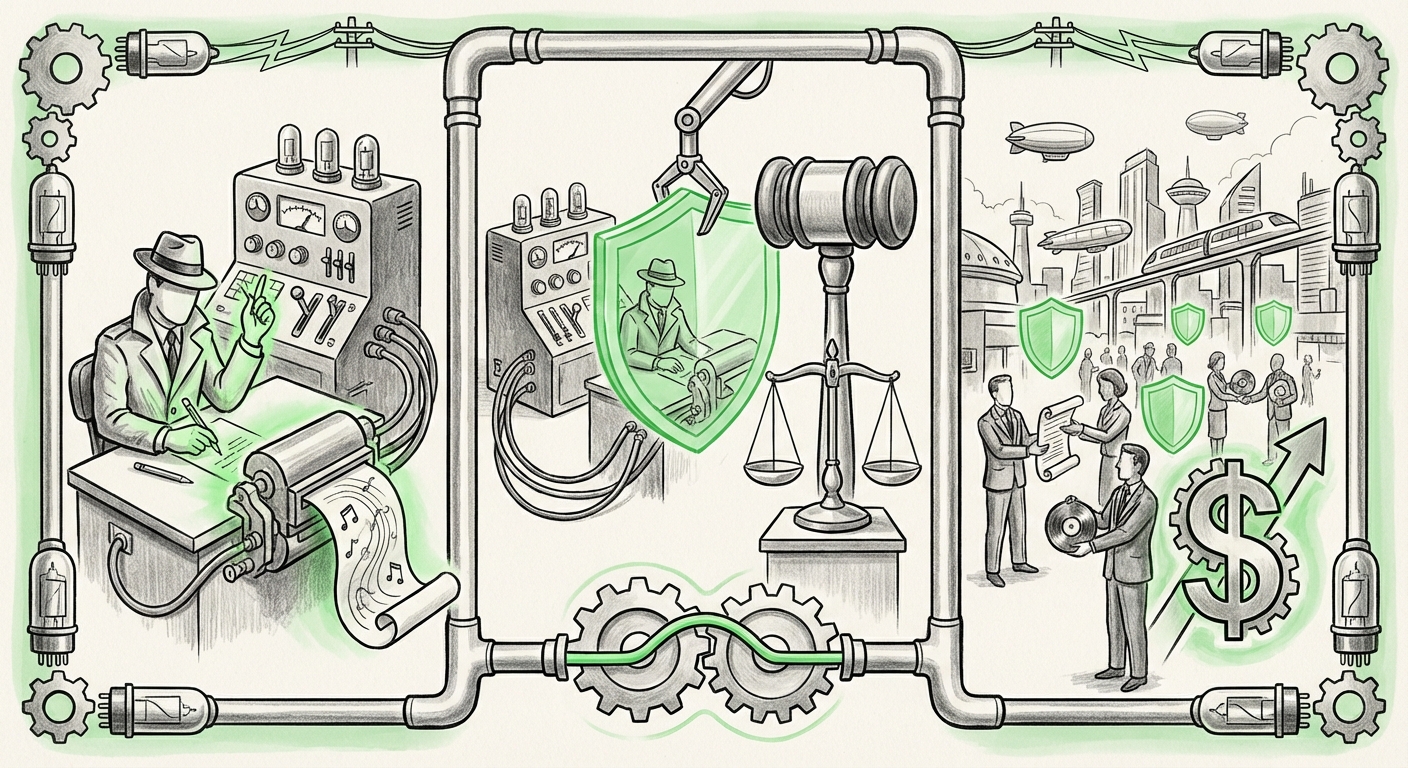
Here is the more interesting story. The rise of AI does not delete software as a service. It turns SaaS into infrastructure for agents.
When an AI agent needs to schedule, reconcile, file, approve, or report, it needs a system that accepts structured instructions and returns trustworthy results. That is a software platform with a clean interface, an API, in plain terms. The winning products of the next few years will be the ones designed to be driven by machines as well as people: headless, permission-aware, rate-limited, and fully logged.
In that world the human interface stops being the product. It becomes one of several doors into the product. A finance team might still open a dashboard, but an agent might touch the same system a thousand times a day. The customer relationship does not vanish, it moves down the stack.
Pricing will bend, not break
The seat-based model is already under strain. Expect three models to coexist: seats for the humans who still need a workspace, consumption pricing for the work machines perform, and outcome pricing for results a customer can measure directly. Each has trade-offs. Consumption pricing aligns with usage but makes budgets harder to predict. Outcome pricing is the most honest but the hardest to define and defend in a contract. Most vendors will end up blending all three.
The practical consequence for buyers is simple: your renewal negotiation now has a new subject. Ask what agent access costs, how it is metered, and what happens when an automated workflow does the work of five seats.
What This Means for the Future of AI
If the "AI kills SaaS" framing is wrong, what does the corrected picture tell us about where AI is heading?
AI's value is capped by the systems it can act on. A brilliant model with no reliable way to read and write business data is a clever demo. The bottleneck in enterprise AI is not intelligence. It is access, trust, and clean process. That is why so much of the real work is happening in integration and governance rather than in model headlines.
Competitive moats move toward data and workflow. When everyone can call the same class of models, the differentiator becomes what the model can see and what it is allowed to change. Proprietary process knowledge and well-structured data are the durable assets. Generic interface polish is not.
Agents become users, and that reshapes design. Software will need to handle machine traffic: identities for agents, scoped permissions, deterministic behavior, sensible error messages an agent can act on, and cost controls so a runaway loop does not become a runaway bill. This is a new design discipline, and it is being written right now.
Small, embedded AI wins quietly. The most successful AI will not be a chatbot bolted onto a product. It will be a feature inside a workflow, a suggestion, a draft, a check, a shortcut, where the model adds judgment without ever holding the keys to the record.
A Practical Playbook for Businesses
What should leaders actually do with this? A few concrete moves:
- Audit before you automate. Map which systems hold the truth and which merely display it. Automate the display layer first; leave the record layer to the vendors who maintain it.
- Demand API-first contracts. When renewing software, ask for documented interfaces, agent-friendly authentication, and clear terms for machine access. Make it a line item in procurement.
- Don't rip and replace. The biggest risk right now is spending a fortune rebuilding working systems because a demo looked impressive. Extend before you replace.
- Invest in governance early. Logging, permissions, and approval steps are cheaper to build before an incident than after one.
- Measure outcomes, not activity. Track hours saved, error rates, and cycle time. If an AI workflow cannot show a number, it is a hobby, not a strategy.
- Keep humans at the decision points. Let agents prepare and propose. Keep people on approval for anything that touches money, customers, or compliance.
What to Watch Next
Three signals will tell you how this plays out. Watch how major software vendors price machine access, that reveals whether they see agents as customers or competitors. Watch whether procurement teams start writing agent clauses into contracts, which would confirm that the buyer's model has changed. And watch whether the loudest "AI replaces everything" claims survive contact with an audit trail. Most will not.
Conclusion
The "AI kills SaaS" story is appealing because it is simple. Reality is more useful: AI turns software into the substrate that intelligence runs on. Agents need somewhere trustworthy to read from and write to. They need permissions, history, and a place to land the work. That is not a death sentence for software as a service. It is a promotion.
The businesses that win will be the ones that stop treating AI and their software stack as rivals and start treating them as a pair, brains and backbone. The companies that lose will be the ones that tore down the backbone to chase the brain, and then discovered the brain had nowhere to stand.