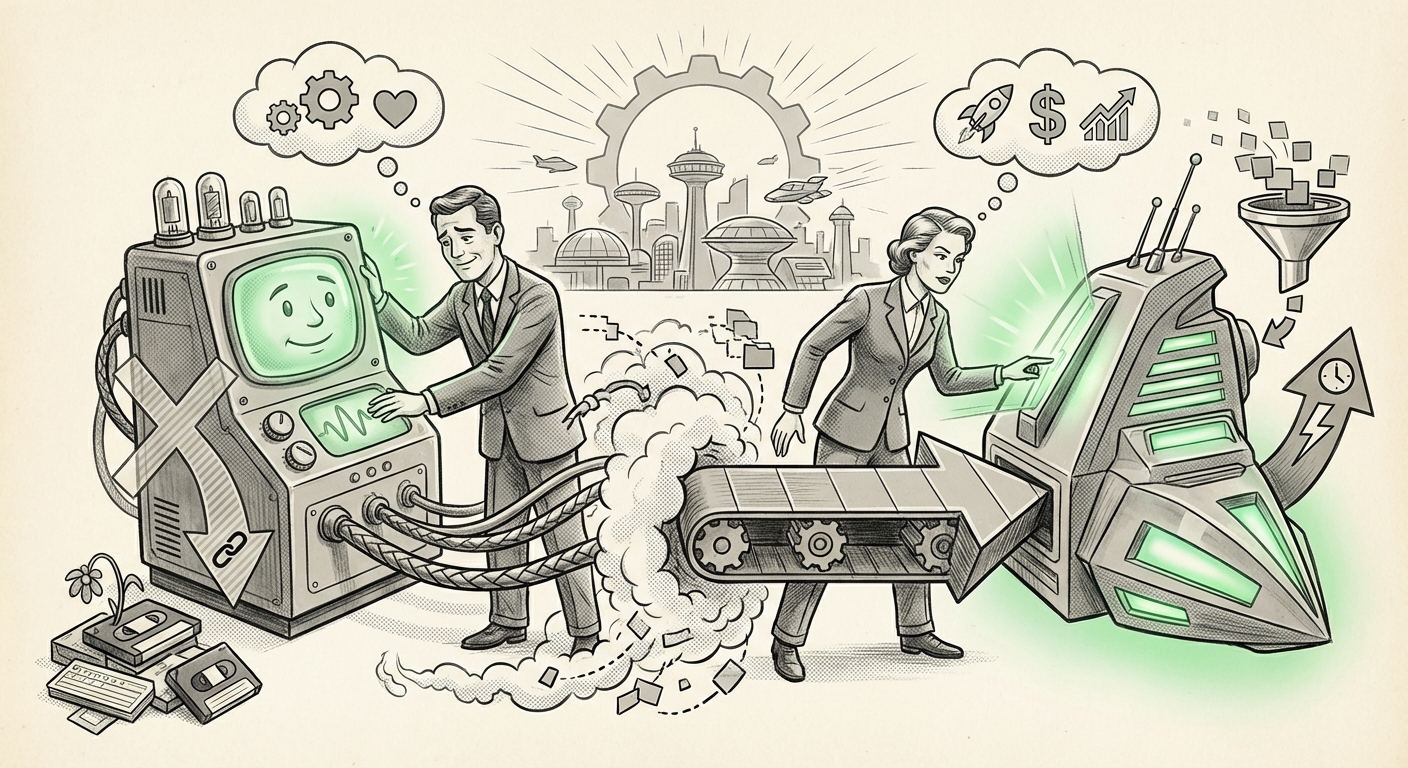
Why the Future of Agentic AI Is All About the Harness, Not Just the Model
For the past few years, the AI conversation has been simple: whose model is smarter? Companies compared benchmarks, counted parameters, and argued about which chatbot gave better answers. That race still matters. But the ground is shifting under it.
The real story now is not the model sitting in the middle. It is everything wrapped around the model. Engineers have a name for that wrapping. They call it the harness. And as AI moves from answering questions to actually doing work on its own, the harness is quietly becoming the most important piece of the whole system.
You can have the smartest model on the planet. If it is bolted into a weak harness, it will still fail at real jobs. Meanwhile, a good harness can take a solid, unremarkable model and turn it into something that reliably completes an entire workflow. That imbalance is the story of the next phase of AI.
What Exactly Is an AI Harness?
A harness is the scaffolding that turns a raw model into a working agent. Think of the model as an engine. The harness is the steering, the brakes, the dashboard, the fuel lines, and the safety belts. Without it, you have power but no control.
In practical terms, a harness handles several jobs at once:
- The loop. It decides how the agent plans, acts, checks its own work, and then decides whether to keep going or stop.
- The tools. It gives the agent access to search, databases, code execution, file systems, internal company systems, and anything else it needs to do real work.
- The memory. It manages what the agent remembers, what it forgets, and what context it sees at each step.
- The guardrails. It sets limits on what the agent is allowed to do, spend, touch, or send.
- The feedback. It runs tests, checks output against rules, and retries when something breaks.
- The paper trail. It logs every step so humans can see what happened and why.
None of these pieces are glamorous. All of them decide whether an agent is useful or a liability.
Why the Harness Now Becomes the Main Event
Chatbots are forgiving. If a chatbot gives you a slightly wrong answer, you notice and move on. Agents are not forgiving. An agent that books flights, files reports, updates customer records, or moves money has real consequences. One bad loop can turn into a thousand bad actions before anyone notices.
That is why the industry is moving from "prompt engineering" to harness engineering. The hard problems have changed shape:
1. Reliability beats raw intelligence
Businesses do not buy intelligence. They buy outcomes they can count on. A model that is right 95% of the time sounds great, until you realize the remaining 5% fails silently across thousands of tasks. Harnesses fix this with retries, verification steps, and handoffs to humans when confidence drops. That plumbing, not the model, is what gets success rates into the high nineties.
2. Context is the new bottleneck
Agents fail most often because they lost track of something, not because they were not smart enough. Good harnesses manage context carefully. They decide what the model sees at each step, what gets summarized, what gets stored, and what gets thrown away. This is closer to plumbing than to poetry, and it delivers more value than most model upgrades.
3. Tools are where the value lives
An agent without tools is a very expensive writer. An agent with clean, well-documented access to a company's systems is a digital employee. The harness is what turns one into the other. It defines the tools, checks permissions, handles errors, and formats results so the model can actually use them.
4. Trust requires visibility
Nobody lets an autonomous system near critical work without being able to see what it did. Harnesses that record every step, every tool call, and every decision create the audit trail that risk teams demand. That record is often the difference between a pilot that gets approved and one that dies in committee.
The Economics: Where the Value Is Shifting
Here is the strategic insight. Models are becoming more alike. Capability gaps between top systems keep narrowing, and switching costs keep falling. What does not commoditize is the harness built around a specific business.
Your company's workflows, data, permissions, approval chains, and quirks are unique. A harness tuned to those realities is hard to copy. It is also where the compounding happens. Every fix, guardrail, and tool integration makes the next agent easier to launch. Over a year, that adds up to something a competitor cannot buy off the shelf.
This flips the usual buying question. Instead of asking "which model is best?", the smarter question is "which system lets me swap models freely while keeping my harness intact?" Model portability is becoming a core design requirement, not a nice-to-have. Teams that lock their logic into one vendor's wrapper will feel stuck the moment a better or cheaper model arrives.
What This Means for Businesses: A Practical Playbook
The harness shift changes how leaders should plan, budget, and buy. A few moves stand out.
Treat the harness as a product, not a script
Early agent projects are often a pile of prompts and glue code. That works for a demo and falls apart in production. Give the harness an owner, a roadmap, and a test suite. Version it. Review changes. It is infrastructure now, and it deserves the same discipline as any other system that touches customer data.
Start narrow, then widen the loop
The best first agents do one job end to end inside one system, with a human reviewing the output. Narrow scope means fewer tools, fewer failure modes, and faster learning. Once the harness proves it can handle that one job, expanding is mostly configuration, not reinvention.
Build a harness scorecard for vendors
When evaluating agent platforms, ask harder questions than "how smart is the model?" Use a checklist:
- Can I swap models without rewriting my workflows?
- How does it handle mistakes, retries, and partial failures?
- What permissions and spending limits can I set per agent?
- Can I see a full trace of every action the agent took?
- How does a human step in, approve, or stop a run?
- What does testing and evaluation look like before launch?
- Where does my data live, and who can it reach?
If a vendor cannot answer these clearly, the demo may be impressive but the deployment will be painful.
Budget for the boring parts
Teams routinely underestimate the cost of evaluation, logging, permissions, and human review. In practice, those "boring" pieces consume a large share of the effort, and they are exactly the parts that make an agent trustworthy. Plan for them from day one instead of bolting them on after the first incident.
The Risks Nobody Escapes
A stronger harness is not a magic shield. It changes the shape of the risk.
Agents with tools can do real damage at speed. A misconfigured permission or a looping retry can multiply a small error into a large one before anyone checks. Harnesses need hard stops: spending caps, action limits, and required human approval for irreversible steps. The general lesson from every automation wave applies here, the faster the system, the more important the brakes.
There is also a subtler risk: over-trust. When an agent succeeds ninety-nine times, people stop checking. The harness has to keep checking even when humans stop. Automated verification and regular sampling of live runs are the safety net for the moment attention fades.
The Bigger Picture: The Harness Becomes the Platform
Look ahead and the pattern is clear. The model is turning into a replaceable part, powerful, but interchangeable. The harness is turning into the platform: the layer where integrations, memory, governance, evaluation, and business logic live.
That has two big consequences. First, the companies that win with AI will be the ones that get very good at building and maintaining harnesses, not the ones that chase every new model release. Second, a new set of skills becomes valuable, people who can design agent loops, write solid tool interfaces, and build evaluation systems. This is closer to systems engineering than to prompt writing, and demand for it is only going up.
For workers, the message is reassuring in a strange way. The harness is where human judgment gets encoded. Every guardrail, approval step, and exception rule is a decision made by a person about how work should be done. The more autonomous the agents, the more human design decisions get baked in up front.
Conclusion: Stop Staring at the Engine
The race for better models is not over, but it is no longer the whole race. The next phase of AI belongs to the teams that treat the harness as the product, the ones that build reliable loops, clean tool access, strong guardrails, and visible logs. That is where the gap between a flashy demo and a system that actually runs the business will be won or lost.
If you are planning an agent project this year, spend less time asking which model to use and more time asking what happens when it goes wrong, how you will know, and who steps in. Answer those questions well, and you will have built something far more durable than a better prompt. You will have built a harness.