Iran's Economy Set to Shrink More Than 25% Under U.S. Blockade, and That Is Now an AI Story
Bessent did not mince words. In late October 2026, the U.S. official said Iran's economy will shrink by more than 25% under the American blockade. That is not a recession. That is a collapse-scale contraction, the kind of number usually reserved for wartime or the breakup of a currency system. For anyone who covers artificial intelligence, the immediate instinct is to file it under geopolitics and move on.
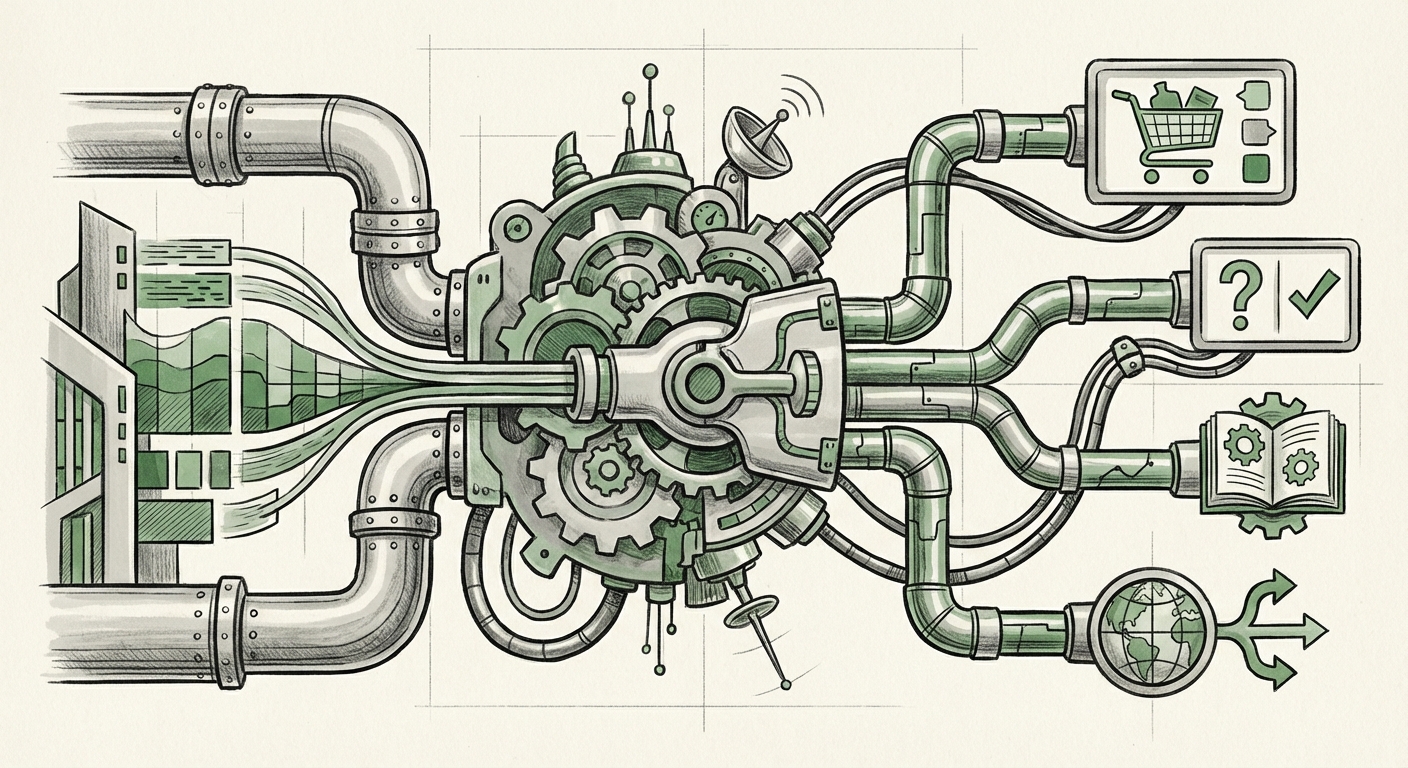
That instinct is wrong. A 25%-plus economic contraction is a stress test for every assumption the AI industry runs on: that compute can be bought, that cloud regions are reachable, that models can be trained on globally sourced data, and that talent moves freely to wherever the work is. When a single economy is cut off from those flows, we get a rare, real-world experiment in what AI looks like after the global supply chain is severed. The results are already visible, and they matter far beyond Iran's borders.
The Number That Reframes Everything
A contraction of more than 25% is roughly the scale of the worst peacetime economic collapses of the last century. For a technology sector, it means three things at once: imported hardware becomes unaffordable, foreign software subscriptions become impossible to pay for, and the local currency becomes an unreliable unit for pricing anything, including cloud bills.
This is where AI stops being a story about frontier models and becomes a story about survivability engineering. The big labs measure progress in benchmark points and parameter counts. An economy under blockade measures progress in whether a model can run on hardware you already own, in a building with unreliable power, without a credit card that works abroad.
That mismatch is the heart of the story. The AI industry has spent a decade optimizing for scale. Blockades optimize for scarcity, and scarcity produces a different kind of technology.
Compute Is the New Chokepoint, and Chokepoints Change Behavior
Modern AI is built on a narrow set of physical dependencies: advanced chips, high-bandwidth memory, fab capacity, and the data centers that tie them together. Those are exactly the goods that export controls target first, because they are concentrated, traceable, and hard to substitute.
What happens when an economy is pushed off that supply chain? Not a shutdown of AI use. Something more interesting:
- Smaller models get serious. When you cannot rent a thousand GPUs, a well-quantized model that fits on the hardware you have becomes a strategic asset rather than a compromise.
- Inference moves to the edge. Local deployment stops being a latency optimization and becomes a way to keep working when connectivity is unreliable.
- Gray markets appear. Compute, like every other controlled good in history, finds a way to move. Some of it arrives through third countries, some through resold accounts, some through stolen capacity.
- Efficiency research gets funded for the wrong reasons, and still pays off. Constraints force creativity that well-funded labs often skip.
The lesson for the rest of the world is uncomfortable. The techniques being invented under pressure, aggressive compression, offline-first inference, low-power deployment, are the same techniques that will matter for every company trying to put AI on a device, in a factory, or in a rural clinic. Constraint is a research agenda.
The Import-Substitution Playbook for AI
When imports get expensive or illegal, economies historically shift to making things at home. AI is no different, and we should expect the same pattern to play out in software.
Language becomes infrastructure
Foreign models are trained mostly on English and a handful of other high-resource languages. For a country cut off from overseas APIs, local-language performance stops being a nice-to-have and becomes a national capability question. Translation, speech recognition, document processing, and customer service in the local language have to be built domestically or not at all. Expect localized models, locally curated datasets, and locally hosted inference to be treated as strategic infrastructure, the way electricity and water are.
Fraud, compliance, and cash-flow AI get the budget
In a shrinking economy with volatile prices, the highest-value AI applications are not chatbots. They are the unglamorous ones: detecting counterfeit documents, screening transactions, forecasting cash flow under inflation, spotting theft in supply chains, and automating back-office work as firms cut headcount. This is where AI earns its keep when budgets are collapsing, cost avoidance, not cost expansion.
Energy math changes the model choice
Data centers are power-hungry. In an economy under severe strain, power is expensive, unreliable, or rationed. That pushes AI workloads toward smaller, more efficient models and toward places where energy is cheap and stable. AI capacity, in other words, starts to follow the same logic as heavy industry: it moves toward reliable electricity.
Talent Flight and the Data Drain
Economic collapse of this magnitude reliably produces emigration, and the people who leave first are usually the most mobile and most skilled, engineers, researchers, doctors. For AI, that means a compounding loss. Models improve through people who know how to train them, and those people are exactly the ones with options abroad.
The flip side is a diaspora effect. Skilled people who leave do not disappear; they build networks, consult remotely, and sometimes return. Historically, constrained tech ecosystems have produced outsized innovations because the people who stay develop a bias toward practical, resource-light solutions.
There is a data problem too. Models need data, and closed societies tend to restrict it, through network controls, through local data-hosting rules, through simple lack of digital commerce. A country can be rich in people and poor in usable training data at the same time. That mismatch is what makes data governance, not just compute, a strategic question in every sanctions regime going forward.
Sanctions Compliance Is Becoming an AI Problem
Here is the part most businesses outside the region will actually feel. A blockade does not just cut off the target economy; it creates a global compliance burden for everyone who touches it. Banks, shippers, insurers, cloud providers, and payment processors all have to know who their customers really are.
As the formal economy shrinks, activity migrates to informal channels, intermediary traders, front companies, resold cloud accounts, and layered ownership. Human compliance teams cannot keep pace with that volume. The result is a surge in demand for AI systems that can:
- Map beneficial ownership across messy corporate records
- Screen transactions in real time against shifting control lists
- Detect patterns of resale and re-export in hardware supply chains
- Flag anomalous cloud usage that looks like a sanctioned end user
- Read and classify documents in multiple languages at scale
There is a real cost here, and it is not just financial. Automated screening generates false positives, and false positives freeze legitimate businesses, a small exporter, a hospital, a research lab. Every compliance AI deployed without careful tuning makes the blockade's blast radius larger than intended. Whoever builds the best sanctions-screening AI also decides, in practice, how tightly the blockade bites.
The Automated State and the Information Fight
Governments under extreme economic pressure tend to tighten control over information. AI gives them new tools: automated content classification, facial recognition, translation of intercepted communications, and systems that predict where unrest might form.
But the same technology cuts both ways. Citizens and independent journalists use translation tools, offline messaging, and locally hosted models to work around restrictions. The result is an arms race inside an economy that can barely fund either side, a preview of how AI will be used in every low-trust environment from now on. For platform companies, this is a direct operational problem: how do you serve users in a jurisdiction where connectivity is intermittent, payments are impossible, and the local government wants your models monitored?
The Bifurcation of AI Is Accelerating
The bigger trend here is not about one country. It is about the emergence of two AI stacks.
On one side sits the high-compute frontier: enormous clusters, enormous budgets, and a supply chain that depends on a small number of manufacturers and a small number of allied governments. On the other sits a resilient stack: small models, local hardware, offline operation, and data that never crosses a border. The first stack wins benchmarks. The second wins in places where the first cannot legally or physically go.
Most of the world is in neither camp. Middle powers, emerging markets, and multinational companies are being forced to hedge, building on American or allied platforms while quietly developing local alternatives in case access is withdrawn. A 25%-plus contraction in one economy is a warning shot for every government that has assumed its cloud region will always be available.
What Businesses Should Do Now
The practical takeaways extend far past the region:
- Stress-test your AI supply chain. Ask which models, APIs, and chips your products depend on, and what happens on day one if any of them become unavailable.
- Design for degraded connectivity. Offline-first features, local inference fallbacks, and portable model weights are no longer exotic; they are insurance.
- Invest in model portability. Avoid deep lock-in to a single provider's proprietary fine-tuning format. The ability to swap models is a risk control.
- Treat compliance AI as a governance issue. Screening systems need human review, audit trails, and clear escalation paths, or they will quietly strangle legitimate commerce.
- Watch the efficiency frontier. Techniques proven under scarcity, quantization, distillation, small-model deployment, will migrate into mainstream products.
- Plan for payment and identity friction. If you sell AI services globally, expect more customers who cannot pay by card and cannot be easily verified.
The Future of AI Looks More Like This Than We Admit
The industry's mental image of AI progress is a straight line upward: more compute, bigger models, wider deployment. A 25%-plus economic contraction under blockade is a reminder that this line runs through political terrain. Technology does not float above geopolitics; it is delivered by ships, chips, cables, and bank transfers, every one of which can be interrupted.
What emerges on the other side is not a world without AI. It is a world with many different AIs, shaped by what each society can physically obtain. Some will be enormous and centralized. Others will be small, local, and stubbornly resilient. The companies and countries that understand both, and can operate in both, will be the ones that thrive as the global AI stack splits apart.
Bessent's projection is a number about one economy. The lesson is about every economy that has built its digital future on the assumption that the pipes will always stay open.