Winning Big Enterprise AI Customers: Databricks Co-Founder’s Playbook and the Future of AI Adoption
Big enterprises are the holy grail for AI companies. They have the data, the budgets, and the complex problems that AI can solve. But selling to them is hard. Sales cycles stretch for months. Security reviews are brutal. And a single misstep can kill a deal. That is why the recent focus on how Databricks’ co-founder wins large enterprise customers is more than just a sales story. It is a window into what the future of AI adoption will look like, and what every AI vendor and business leader needs to understand.
The headline itself is telling: Databricks co-founder shares his secrets for winning big enterprise customers. This is a company built on open-source data and AI technologies. Its co-founder is not a traditional enterprise salesperson. He is a technologist. So when someone with that background talks about winning large accounts, it signals a shift. The era of selling AI as a shiny experiment is ending. The era of selling AI as a must-have, deeply integrated business tool is here.
Why Big Enterprise Customers Are the Ultimate Test for AI
Small businesses and individual developers can adopt AI tools quickly. They can swipe a credit card and start using a model in minutes. But large enterprises are different. They have legacy systems, strict compliance rules, and layers of approval. They also have the most valuable data, and the most to lose if something goes wrong.
Winning a big enterprise customer means passing a series of tests:
- Security and privacy: Can the AI system keep sensitive data safe? Does it meet industry regulations like HIPAA or GDPR?
- Integration: Will it work with existing databases, cloud platforms, and business intelligence tools?
- Scalability: Can it handle millions of users and petabytes of data without breaking?
- Measurable ROI: Can the vendor prove that the AI will save money or make money, not just impress people in a demo?
- Trust: Will the vendor be around in five years? Can they support the product when things go wrong?
These are not new challenges for enterprise software. But AI adds new twists. Models can be unpredictable. Data can be biased. And the technology changes so fast that buyers worry about picking a winner that becomes obsolete. That is why the Databricks co-founder’s focus on enterprise customers matters. It shows that the winners in AI will not be the companies with the flashiest models. They will be the companies that master the unglamorous work of building trust with big organizations.
The Playbook: What It Really Takes to Win Enterprises
While the specific details of any one co-founder’s advice are proprietary, the broader patterns are clear from years of enterprise AI deals. Winning big customers requires a different mindset than winning developers or small businesses.
1. Sell outcomes, not algorithms
Enterprise buyers do not wake up wanting a transformer model. They want to reduce customer churn, detect fraud faster, or automate a tedious workflow. The most successful AI vendors start with the business problem and work backward to the technology. They speak the language of the CFO, not just the data scientist.
2. Embrace the proof-of-concept graveyard
Many AI pilots never reach production. The reason is usually not the model, it is the process. Data is messy. Teams are siloed. IT and business units do not agree on success metrics. Vendors that win enterprises are the ones that help customers navigate this maze. They treat the pilot as a joint project, not a product demo.
3. Build for the whole organization
An AI tool that only works for one team will not get a company-wide contract. Winning vendors design for collaboration. They offer governance features, role-based access, and audit trails. They make it easy for IT to manage and for business users to get value. In other words, they act like an enterprise software company, not a research lab.
4. Be patient and persistent
Enterprise sales cycles are long. A deal can take a year or more. Vendors that succeed are the ones that invest in relationships early. They attend industry conferences. They publish case studies. They offer free trials that are actually useful. They do not disappear after the first “no.”
These principles are not secrets. But they are hard to execute. That is why the Databricks co-founder’s perspective is valuable. He comes from a company that has walked this path. Databricks grew by serving large enterprises with data and AI platforms. Its co-founder knows that the technology is only half the battle.
The Databricks Signal: From Tech-First to Customer-First
The fact that a technical co-founder is talking about winning enterprise customers is a signal of maturity in the AI industry. In the early days of deep learning, the focus was on benchmarks and research papers. Today, the focus is on deployment, adoption, and return on investment.
This shift has big implications. It means AI companies can no longer afford to be purely technology-driven. They need sales teams that understand complex procurement. They need support teams that can handle mission-critical incidents. They need legal teams that can negotiate data processing agreements. In short, they need to become real businesses.
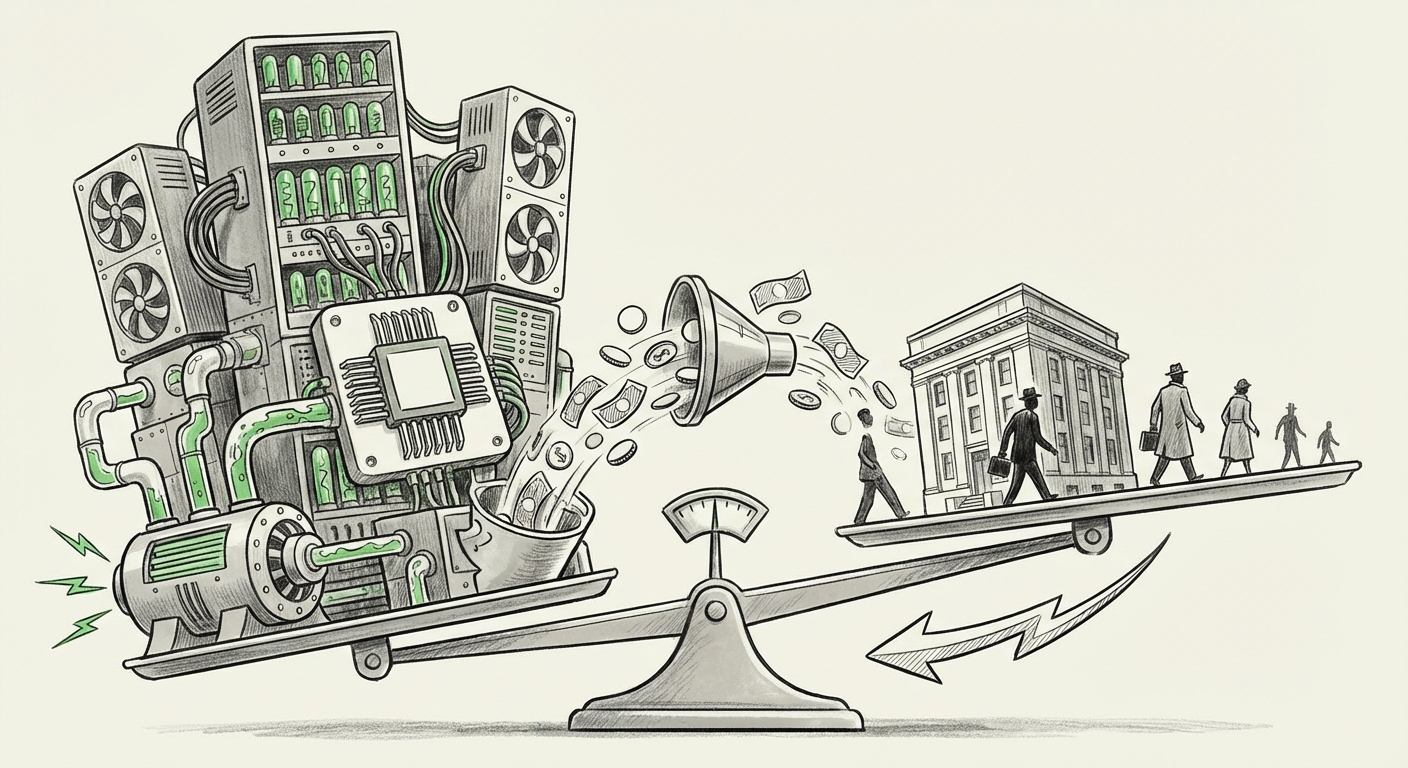
For enterprises, this is good news. It means vendors are competing on reliability and service, not just model accuracy. It also means buyers have more power. They can demand proof, ask for references, and negotiate contracts that protect their data. The balance of power is shifting from the AI vendor to the AI customer.
What This Means for the Future of AI
The enterprise focus will shape how AI evolves in several key ways.
AI will become embedded, not standalone
In the future, most enterprises will not buy a separate “AI tool.” They will buy software that happens to include AI. The AI will be woven into customer relationship management, enterprise resource planning, and analytics platforms. That is already happening. The winners will be vendors that make AI invisible and useful, not loud and flashy.
Trust and governance will be differentiators
As AI moves into core business processes, enterprises will demand strong governance. They will want to know how models make decisions. They will want to audit outputs. They will want to ensure that data is not leaking. Vendors that build these features early will win. Vendors that treat governance as an afterthought will lose.
The market will consolidate
Many AI startups are competing today. But enterprises do not want to manage dozens of vendors. They prefer a few strategic partners. That means the AI market will likely consolidate. Companies with strong enterprise sales, support, and integration will acquire or outcompete point solutions. The Databricks co-founder’s playbook, if it is about building deep relationships, points toward this future.
AI will be sold like enterprise software, not like a consumer app
Consumer AI products rely on viral growth and low friction. Enterprise AI relies on trust, contracts, and custom work. The companies that try to sell AI like a consumer app will struggle with big customers. The ones that adopt the rhythms of enterprise software, with pilots, proof points, and procurement, will thrive.
Practical Implications for Businesses and Society
For business leaders, the message is clear: do not rush into AI purchases. Define your use cases. Involve IT and security from the start. Ask vendors for references from similar companies. Start with a small pilot that has clear success metrics. And be prepared to invest in change management. AI does not work on its own.
For AI vendors, the message is equally clear: the technology is not enough. You need to understand your customer’s business. You need to be patient. You need to build trust. And you need to think about the long term. The enterprises that buy AI today will be your customers for a decade or more, if you earn it.
For society, the enterprise shift is a good thing. Large organizations are where AI can have the biggest impact on jobs, services, and economic growth. But it also means that the risks of AI, bias, privacy, security, will be tested at scale. That is why the enterprise focus must come with strong ethical and regulatory guardrails. Companies that win big customers will also need to win public trust.
Actionable Insights
For AI vendors:
- Invest in security certifications and compliance early. It is a cost of entry for enterprise deals.
- Build a customer success team that understands the customer’s industry, not just the product.
- Offer a clear path from pilot to production. Do not leave customers stranded after the proof of concept.
- Partner with systems integrators and cloud providers. They already have enterprise relationships you can leverage.
For enterprise buyers:
- Create an AI governance committee. Include legal, security, IT, and business leaders.
- Start with a problem that has a measurable cost or revenue impact. Avoid “innovation theater.”
- Ask vendors how their model handles edge cases, bias, and failures. If they cannot answer, walk away.
- Plan for integration costs. They often exceed the cost of the AI software itself.
Conclusion
The Databricks co-founder’s focus on winning big enterprise customers is a signpost for the AI industry. The easy wins are over. The next phase of AI growth will be won by companies that can navigate complex organizations, build trust, and deliver measurable results. That is harder than building a clever model. But it is also more valuable, for vendors, for customers, and for society.
As AI becomes more powerful, the stakes will only rise. Enterprises will demand more, not less. The vendors that listen, adapt, and treat large customers as partners will shape the future of how AI is used in the real world. The secrets to winning those customers are not magic. They are the fundamentals of enterprise sales, plus a deep understanding of what AI can uniquely do. That combination is rare. But it is the key to the next wave of AI adoption.