GLM-5.2 and the Return of the Critic: What This Open Coding Model Means for AI
On July 11, 2026, a new open coding model called GLM-5.2 arrived with a clear message: it put the critic back into reinforcement learning. That may sound like a small technical detail. It is not. The critic is one of the most important ideas in how machines learn from feedback. Bringing it back into a coding model could change how AI systems get better at writing, fixing, and testing software. It also has big effects for developers, businesses, and anyone who depends on software.
This article explains what GLM-5.2's approach means in plain terms. It looks at why a critic matters, why open coding models are important, and what leaders should do now. The short version: the next wave of AI coding tools will be judged less on flashy demos and more on whether they can learn reliably from real feedback. A critic is a key part of that reliability.
What Is a Critic in Reinforcement Learning?
Reinforcement learning, or RL, is a way to train an AI by letting it try things and learn from the results. Think of a dog learning a trick. The dog does something, gets a treat or a correction, and adjusts. In AI, the "dog" is a model. The "treat" is a reward signal.
But rewards are often delayed and noisy. In coding, a model might write 50 lines of code. The final reward is simple: the tests pass or they fail. That single signal does not tell the model which lines were good and which were bad. This is called the credit assignment problem. If the model gets a bad score, how does it know which choices caused the problem?
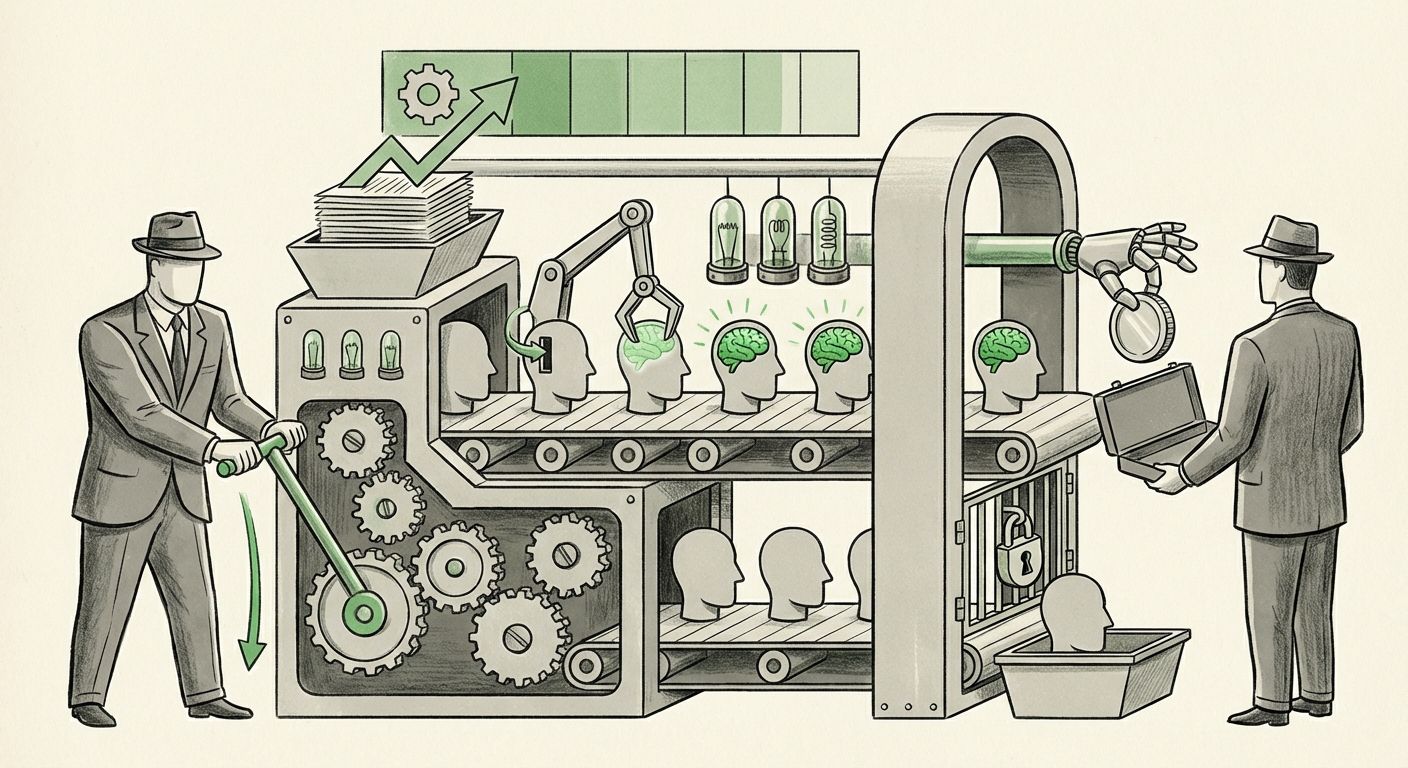
A critic helps solve this. In actor-critic methods, the "actor" is the model that takes actions, such as writing code. The "critic" is a second model that estimates how good the current situation is. It acts like a coach who watches each move and says, "That was a strong step" or "That path is risky." The critic does not replace the final reward. It gives the model a faster, smoother learning signal along the way.
Many recent AI systems have leaned on simpler reward models or preference data. These methods can work well, but they often lose the step-by-step guidance a critic provides. GLM-5.2's headline idea is to bring that guidance back for coding. The model is described as an open coding model that put the critic back into RL. That makes the learning loop more stable and more informative, especially for tasks where success is hard to measure until the end.
Why Coding Is the Perfect Testing Ground
Coding is a great place to test this idea. Code has clear feedback. It runs or it does not. Tests pass or fail. A compiler catches errors. A security scanner flags problems. A human reviewer can judge style and clarity. This mix of hard signals and soft judgment is ideal for a critic.
A critic can learn to predict which code changes are likely to pass tests, which ones introduce bugs, and which ones are inefficient. It can also help with multi-step tasks. Imagine an AI agent fixing a bug. It reads files, forms a plan, edits code, runs tests, and tries again. A critic can score each step. That helps the agent recover from a wrong turn instead of repeating it.
For businesses, this matters because software is where AI is already delivering real value. Coding assistants are used to draft functions, write tests, explain errors, and review changes. The better these tools get at learning from feedback, the more they can do without constant human hand-holding. A coding model with a strong critic could become a more reliable teammate, not just a fast autocomplete.
What "Open" Adds to the Story
GLM-5.2 is described as an open coding model. "Open" can mean different things. It may mean the model weights are available for others to use, inspect, or adapt. It may mean the training approach or code is shared. The exact license and access terms matter, and teams should check them before building products. But the broader trend is clear: open models are putting pressure on closed systems.
Open coding models give developers more control. A team can run the model on its own infrastructure, keep sensitive code inside its network, and customize the model for its own codebase. That is a big deal for banks, hospitals, government agencies, and any company with strict data rules. It also lowers the cost of experimentation. A startup can try an open model without a large contract or a long sales cycle.
When an open model also brings a technical advance like a better RL critic, the impact grows. It means the method is not locked inside one company's product. Researchers can study it. Developers can test it. Competitors can improve on it. Over time, that can speed up the whole field.
What This Means for the Future of AI
1. RL Is Getting More Practical
For a while, reinforcement learning was seen as powerful but hard to tame. It needed massive compute, careful tuning, and stable reward signals. Newer methods made training simpler, but sometimes at the cost of fine-grained learning. GLM-5.2's focus on the critic suggests a middle path. It keeps the stability benefits of a critic while making the approach work for modern coding models.
If this works well, expect more AI teams to revisit actor-critic methods. The critic could become a standard part of training for coding agents, not a niche trick. That would make AI systems better at long tasks that require planning, recovery, and self-correction.
2. Coding Agents Will Get More Autonomous
Today's coding assistants are helpful, but they still need a lot of guidance. They can write a function, but they may miss edge cases. They can suggest a fix, but they may break another part of the code. A critic helps the model judge its own work at each step. That is a step toward agents that can take a task like "fix this failing test" and work through it with less supervision.
This does not mean humans disappear. It means the human role shifts. Developers will spend less time typing boilerplate and more time setting goals, reviewing plans, and checking risky changes. The best teams will learn to work with agents the way a manager works with a junior engineer: clear instructions, good tests, and careful review.
3. Open Models Will Keep Closing the Gap
The gap between open and closed AI models has been shrinking. GLM-5.2 adds to that story. When an open model tries a meaningful technical idea, it gives the whole market a new baseline. Companies that sell closed coding tools will need to show clear advantages in quality, speed, security, or integration. Buyers will have more choices and more bargaining power.
For AI builders, the lesson is that openness is not just about price. It is about trust and adaptability. Teams want to know what the model is doing, where their data goes, and how they can fix problems. Open models make those questions easier to answer.
4. Evaluation Becomes the Bottleneck
As models get better at learning from feedback, the hard part moves to measurement. If you cannot tell whether code is good, you cannot train a critic well or judge a model fairly. Businesses will need strong evaluation systems: unit tests, integration tests, security checks, performance benchmarks, and human review. The quality of your evaluation data may become as important as the model itself.
This is a practical insight that many teams miss. They spend weeks comparing model outputs by hand. Instead, they should invest in automated tests and clear acceptance criteria. That makes it easier to try new models, including open ones, and to know which one actually helps.
Practical Implications for Businesses
For Engineering Leaders
- Run a small pilot. Pick one or two codebases and a few clear tasks, such as writing tests or fixing bugs. Measure success with pass rates, review time, and developer satisfaction.
- Check the license. "Open" does not always mean unrestricted. Review commercial use, redistribution, and attribution terms before you build a product.
- Plan for data control. If code sensitivity is high, test whether the model can run in your own environment. Confirm how data is stored and logged.
- Build evaluation first. Strong tests and benchmarks make model comparisons faster and more honest. Do not rely on demos alone.
For Developers
- Use the model as a pair programmer, not an oracle. Ask it to explain its plan. Review each step. Keep tests close.
- Give clear context. The best coding models still need good instructions, file context, and examples. Better inputs lead to better outputs.
- Learn to spot overconfidence. A model can sound sure and still be wrong. A critic improves learning, but it does not remove the need for human review.
For Business and Product Leaders
- Think about build vs. buy. Open coding models can lower costs and increase control, but they require engineering effort. Weigh that against the convenience of a managed service.
- Prepare for agentic workflows. Coding agents will need permissions, audit logs, and guardrails. Set those policies before agents touch production code.
- Upskill teams. The winners will be teams that can write good specs, design good tests, and review AI-generated code quickly.
What This Means for Society
Better coding models can widen access to software. Small businesses, schools, and nonprofits can build tools that once required large engineering teams. That is a positive. But it also raises risks. If more code is generated by AI, security and quality must be checked carefully. Open models help here because more people can inspect them. But openness is not a guarantee of safety. It is a starting point.
There is also a labor question. Coding assistants do not replace all developers, but they change the job. Routine work shrinks. Review, design, and system thinking matter more. Schools and training programs should teach those skills, not just syntax. Companies should invest in continuous learning so workers can move up the stack rather than out the door.
Actionable Insights: What to Do Now
- Test GLM-5.2 against your real work. Use a small set of tasks with clear pass/fail criteria. Compare it with your current tools on quality, speed, and cost.
- Treat the critic as a design pattern. Whether or not you use this model, ask vendors how their systems learn from feedback. A strong feedback loop is a sign of a serious product.
- Invest in test coverage. Better tests make AI coding tools more useful and safer. They also help you measure progress.
- Set a data policy for AI coding tools. Decide what code can leave your network, what must stay local, and how you will audit usage.
- Watch the open model ecosystem. New releases will come quickly. Build a lightweight process to evaluate them without disrupting your teams.
- Prepare for more autonomous agents. Start with low-risk tasks, clear boundaries, and human approval for sensitive changes.
The Bigger Picture
GLM-5.2 is a reminder that AI progress is not only about bigger models or more data. It is also about better learning methods. Putting the critic back into reinforcement learning is a return to an old idea, but applied to a new problem. That pattern, combining proven ideas with modern scale, is often how real breakthroughs happen.
For the AI industry, the message is that reliability matters. Users do not just want a model that can write code. They want one that can learn from mistakes, recover from failure, and work within clear limits. A critic helps with all three. For businesses, the message is to stay practical. Try open models. Measure carefully. Invest in tests and skills. For society, the message is to keep both openness and safety in view. The tools are getting stronger. The choices about how we use them are getting more important.