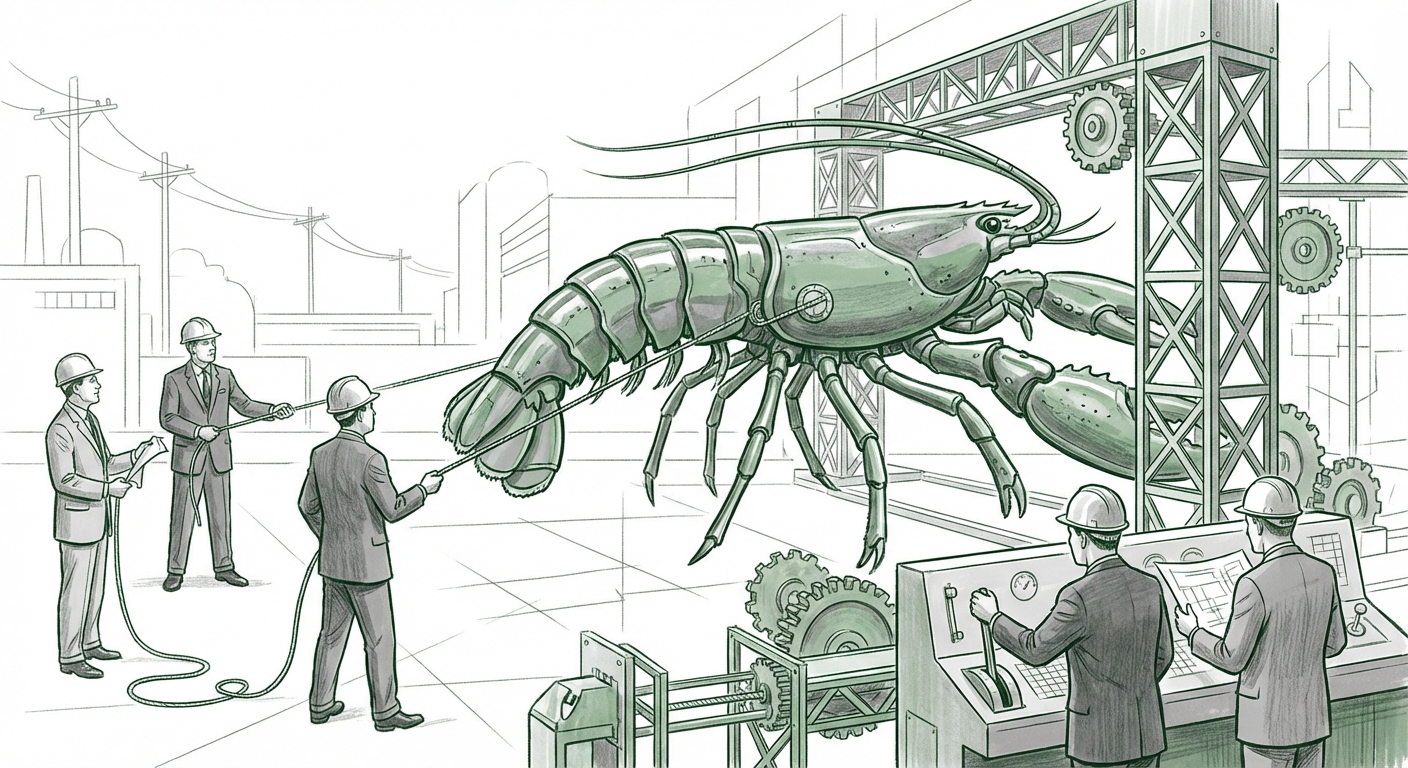
Why AI Fails in Production: The Workloads Nobody Plans For
Artificial intelligence can look flawless in a demo. Then it meets real users, real data, and real traffic, and things fall apart. The live workshop “Why your AI fails in production: The workloads nobody plans for” tackles a painful truth: most AI failures are not caused by bad models. They are caused by workloads and operational realities that teams never planned for.
That gap between a clever prototype and a dependable production system is where the future of AI will be won or lost. This article breaks down what that workshop title points to, why it matters, and what businesses and society should do next.
The Production Gap: When Demos Meet Reality
In a lab, an AI model sees clean data and a narrow set of requests. In production, it faces messy inputs, sudden spikes in demand, changing user behavior, and systems that were never built to support it. The workshop’s focus on “workloads nobody plans for” shines a light on this gap.
Think of it like opening a restaurant after perfecting one dish for friends. The kitchen works fine for ten guests. Then a hundred show up at once, half of them ask for substitutions, and the dishwasher breaks. The recipe was never the problem, the operational load was.
For AI, those unplanned workloads often show up in familiar places:
- Inference demand that is spiky and unpredictable. A model may handle a few test requests per minute, then face thousands per second after launch. Teams often size their infrastructure for average use, not for the long tail or the viral moment.
- Data pipelines that keep growing. Production data is not a static file. It streams in, changes shape, and drifts over time. Someone has to clean it, validate it, store it, and feed it back for retraining.
- Monitoring and observability. A model that silently degrades is worse than one that crashes. But many teams have no way to see hallucinations, bias, drift, or security attacks until users complain.
- Human review and escalation. Real systems need fallback paths when the AI is unsure or wrong. That means human-in-the-loop workflows, queues, and service-level agreements that nobody budgeted for.
- Cost management at scale. Token costs, GPU hours, storage, and egress fees can explode once real traffic arrives. A prototype that costs pennies can become a production line item that shocks finance.
- Integration with legacy systems. AI rarely lives alone. It must talk to databases, CRMs, ticketing systems, and security layers, each with its own quirks and limits.
None of these workloads are glamorous. They do not show up in a research paper. But they are exactly what determines whether an AI product survives contact with the real world.
Why These Workloads Stay Hidden
Most AI teams are rewarded for model accuracy, not operational readiness. A data scientist is praised for a better benchmark score. An engineer is praised for shipping a demo. Nobody gets a promotion for writing a runbook about retraining pipelines, until the system breaks.
This creates a blind spot. Teams plan for the model but not for the system around the model. The workshop title captures that blind spot in a single phrase: the workloads nobody plans for.
There is also a cultural gap. Machine learning teams often come from research backgrounds. Infrastructure teams come from operations. The two groups speak different languages. Production AI needs both, and it needs them to plan together from day one, not after the first outage.
What This Means for the Future of AI
The next wave of AI adoption will not be decided by who has the biggest model. It will be decided by who can run AI reliably at scale. That shifts the focus from model-centric thinking to system-centric thinking.
1. MLOps and LLMOps become the main event
As AI moves from experiments to core business processes, the tools and practices around deployment, monitoring, and governance will matter more than raw model performance. The workshop’s emphasis on unplanned workloads is a signal that the industry is growing up. The question is no longer “Can we build an AI?” It is “Can we operate it?”
2. AI teams will need new roles and skills
Production AI needs people who understand both models and operations. That means platform engineers, reliability engineers, data quality specialists, and AI product managers who can plan for failure. The future workforce will not treat AI as a solo sport.
3. Cost and sustainability will shape design
Unplanned inference workloads can burn through budgets and energy. Future AI systems will be designed with cost controls, caching, model routing, and efficient serving from the start. The most successful companies will treat AI compute as a managed resource, not an infinite tap.
4. Trust will depend on observability
Society will not accept AI that fails silently. Regulators, customers, and employees will demand transparency. That makes monitoring, logging, and audit trails essential, not optional. The workloads nobody plans for include the work of proving that AI is behaving as intended.
Practical Implications for Businesses
For business leaders, the workshop title is a warning and a checklist. If your AI strategy stops at model selection, you are likely underestimating the work required to run it.
Budget for the invisible work. The production workload includes data engineering, monitoring, human review, security, and ongoing evaluation. These are not one-time costs. They are ongoing operating expenses that should be planned like any other part of the business.
Design for failure from the start. Ask what happens when the model is wrong, slow, or unavailable. Build fallbacks, guardrails, and escalation paths before launch. A system that fails gracefully is far better than one that fails silently.
Stress test with real traffic patterns. Synthetic tests often miss the messy reality of production. Load testing should include spikes, long-tail requests, and adversarial inputs. The goal is to find the unplanned workloads before your users do.
Create cross-functional ownership. AI reliability cannot sit with one team. It needs collaboration between data science, engineering, operations, security, and business stakeholders. The workshop’s focus on unplanned workloads is a reminder that production AI is a team sport.
Actionable Insights: A Production Readiness Checklist
If you are preparing to move AI into production, start with these practical steps:
- Map every workload. List what the system will do at launch and what it will need to do at 10x scale. Include inference, data processing, monitoring, retraining, and human review.
- Instrument everything. Track latency, error rates, model drift, cost per request, and user feedback. If you cannot measure it, you cannot manage it.
- Set cost guardrails. Use quotas, alerts, caching, and model routing to prevent runaway spending. Review costs weekly after launch.
- Build a feedback loop. Create a clear path for users and reviewers to flag bad outputs. Feed those signals back into evaluation and retraining.
- Plan for human escalation. Decide which decisions require a human in the loop. Staff the queues and set response times before you need them.
- Run game days. Simulate outages, data drift, and traffic spikes. Practice your response as a team. The unplanned workload is easier to handle when you have rehearsed it.
Conclusion: The Real AI Race Is Operational
The workshop “Why your AI fails in production: The workloads nobody plans for” points to a turning point. The AI industry has spent years proving that models can be clever. The next phase is about proving they can be dependable.
That means treating production workloads as first-class citizens. It means planning for the spiky traffic, the messy data, the silent failures, and the human fallbacks. It means accepting that the hardest part of AI is not building the model, it is running it in the real world.
For businesses, the message is clear: invest in the unglamorous work. For society, the payoff is AI that earns trust through reliability, not hype. The future of AI will be built by teams that plan for the workloads nobody else sees.