Apple's 2025 Developer Update: What It Means for the Future of AI
On June 9, 2025, Apple opened its annual developer conference with one clear message: the tools people use to build software are changing as fast as the software itself. For anyone who builds apps, runs a business that depends on apps, or simply uses a phone every day, the question on everyone's mind is the same, where does artificial intelligence fit into all of this, and what happens next?
What follows is a breakdown of the trends this update points toward, what they mean for the future of AI, and how businesses and everyday people should prepare. No hype. No jargon. Just a clear look at where things are heading.
The Big Shift: AI Is Moving From Apps Into the Operating System
For the past few years, AI lived mostly in apps. You opened a chatbot, typed a question, and got an answer. But the pattern now sweeping the industry, and reflected in the way platforms are being opened up to developers, is different. AI is slowly becoming part of the foundation itself, not a separate destination you visit.
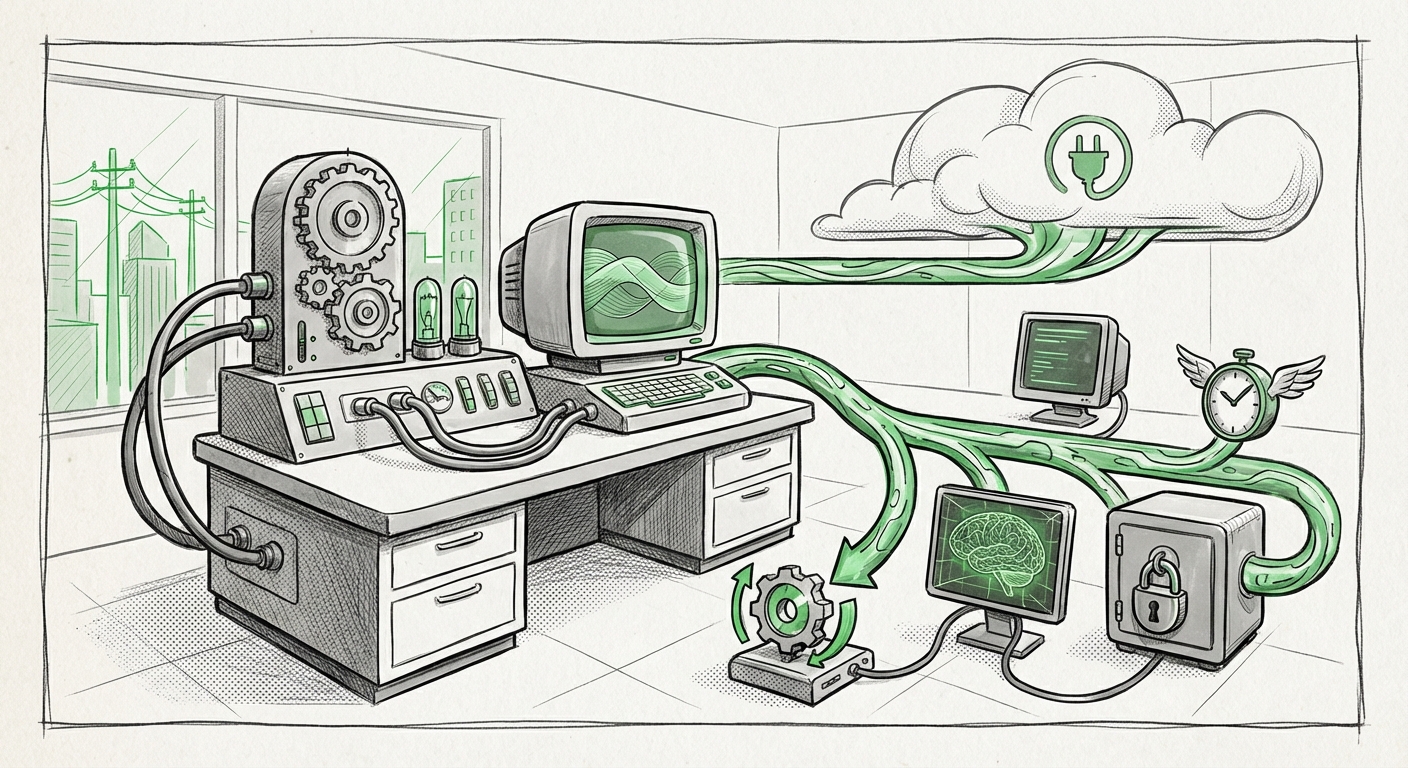
Think of it like electricity. In the early days, factories had to build their own power plants. Eventually, power became a utility you simply plugged into. AI is heading in the same direction. Instead of every app building its own smart features from scratch, developers will increasingly tap into intelligence baked into the device and the operating system.
That is the single most important thing to understand about developer announcements like this one. The headline items always get the attention, but the real story is the plumbing, the tools, software kits, and behind-the-scenes systems that developers use to build everything else. When those tools change, everything downstream changes too.
On-Device AI Becomes the New Default
One of the most consequential trends in this space is the move toward running AI models directly on the device instead of sending every request to a distant data center. The advantages are obvious once you spell them out:
- Speed. No round trip to a server means near-instant responses. A feature that felt laggy can suddenly feel seamless.
- Privacy. When data stays on the phone or laptop, it never has to travel to a company's servers. That matters for personal photos, health records, messages, and work documents.
- Reliability. On-device features keep working when the network is slow, spotty, or unavailable.
- Cost. Running models on hardware you already own is far cheaper at scale than paying for cloud computing on every single request.
The trade-off is size. Small models that fit comfortably on a phone are not as powerful as the massive models running in data centers. That has produced a hybrid pattern now common across the industry: handle quick, local tasks on the device, and route the heavy lifting to the cloud when it is truly needed.
For developers, this split is the design challenge of the decade. Choosing what runs where is no longer a technical footnote, it is a core product decision that affects speed, cost, privacy, and user trust all at once.
What This Means for Developers Building With AI
The most practical takeaway from this update is about leverage. When a major platform ships AI capabilities at the system level, individual developers no longer need a research team and a giant budget to add smart features to their apps. They can borrow capabilities that someone else already spent billions building.
That levels the playing field in a way that is genuinely new. A two-person studio can now build features that would have required a well-funded machine learning department just a few years ago. The differentiator is shifting from who can build the model to who understands the problem worth solving.
Three skills will matter most in this new world:
- Product judgment. AI can generate ten options in a second. Knowing which one is actually good for the user is a human skill.
- Trust design. Users need to know when AI is acting on their behalf, what data it can see, and how to undo something that went wrong.
- Cost awareness. Every AI call has a price, whether in battery life, money, or latency. Developers who manage that trade-off well will build products that feel light and fast instead of clunky and expensive.
Privacy as a Product Feature, Not a Footnote
There is a strategic angle here that businesses often miss. For years, privacy was treated as a legal checkbox, something you handled in a policy document nobody read. The rise of on-device AI flips that. Privacy becomes something you can actually market, because it changes how the product works.
A photo search that happens entirely on your phone is a different promise than one that uploads your library to a server. An assistant that can read your calendar without sending it to the cloud is a different level of trust. As AI touches more personal data, the companies that can say "this never left your device" will hold a real advantage.
This also points to a growing divide in the AI industry. Some players push hard toward centralizing AI in massive cloud systems. Others push compute to the edges, phones, laptops, even headphones and watches. Both models will exist, but they serve different needs. The edge-first approach wins on trust and speed; the cloud-first approach wins on raw capability. The smart money is on a blend of both.
The Business Implications: What Companies Should Do Now
If you run a business, the temptation is to wait and see. That is usually the wrong move with platform shifts, because the companies that treat them as a line item tend to fall behind the ones that treat them as a strategy.
A practical starting checklist:
- Audit where AI already touches your customer journey. Chatbots, search, recommendations, support tickets, fraud checks. You likely have more AI in place than you think.
- Map your data flows. Know what leaves a device and what stays. This is a legal need, a security need, and increasingly a marketing asset.
- Rebuild one workflow, not ten. Pick the single process where speed and privacy matter most, claims processing, field service, customer intake, and redesign it around local, instant intelligence.
- Budget for inference, not just development. Building an AI feature is a one-time cost. Running it is a forever cost. Model that before you ship.
- Train people on the interface, not the model. Most workers will never touch a model directly. They will touch the assistant, the summary button, the suggested reply. That is where adoption lives or dies.
A note for smaller teams
The good news for small and mid-sized companies is that platform-level AI reduces the barrier to entry dramatically. You do not need to train a model. You need to understand your customers better than anyone else and apply the tools that now sit within easy reach.
Risks Worth Watching
It would be dishonest to present this as all upside. Three risks deserve attention.
First, over-trust. When AI is woven into the operating system, it becomes invisible. Invisible tools are convenient but easy to stop questioning. Systems that summarize, suggest, and decide need clear boundaries and easy off switches.
Second, uneven access. On-device AI usually requires newer hardware. That means the best features may arrive first for people who can afford new devices, widening a gap that already exists. Businesses that serve broad audiences should plan for older hardware instead of assuming everyone upgrades.
Third, homogenization. If every app draws on the same platform intelligence, products risk feeling identical. The antidote is proprietary data and a sharp point of view, the two things a platform company cannot hand you.
Conclusion: The Quiet Part Is the Important Part
The most important thing about a developer update is rarely the flashiest demo. It is the set of tools underneath, the ones that determine what thousands of teams will be able to build over the next two years. On June 9, 2025, those tools moved another step toward a world where intelligence is assumed rather than added.
That world will be faster, more private by default, and far more accessible to small builders. It will also demand more judgment from the people designing it. The winning products of the next few years will not be the ones with the most AI features. They will be the ones where the AI disappears into the experience so completely that users simply say: this just works.