ChatGPT’s Cartoon-Only Election Images: What a Strange AI Safety Guardrail Means for the 2026 Midterms
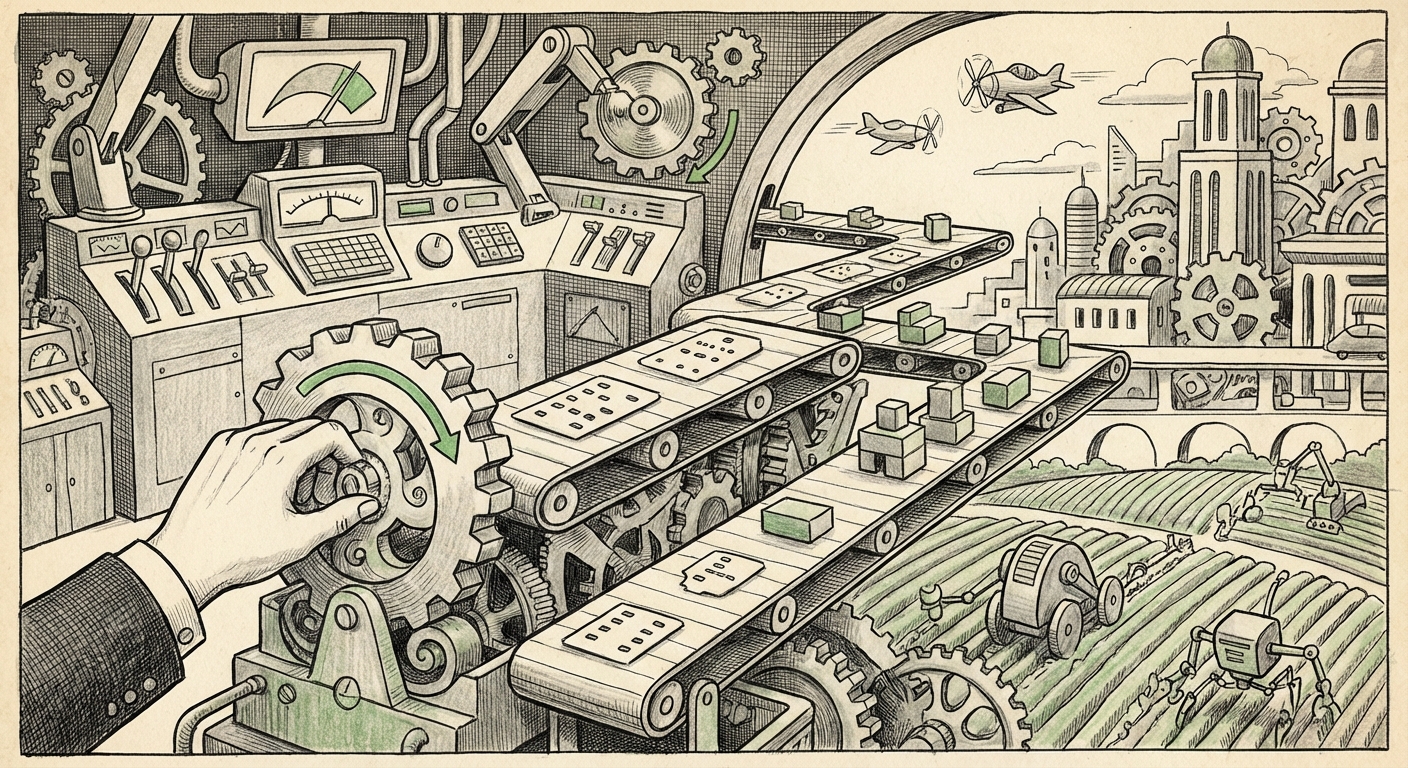
In late October 2026, with the U.S. midterms close at hand, testing of ChatGPT found a pattern that is both reassuring and unsettling. When asked to create images “depicting election interference or that may discourage voting,” the system produced cartoon-style visuals. It did so even when users asked for photorealistic images.
That detail matters. ChatGPT did not simply shut down every request. It changed the style of the output. The request for realism was ignored, but the request for the image was not. This is a new kind of safety behavior, and it raises a big question for the future of AI: Is it enough to make harmful content less realistic, or does harm survive the cartoon filter?
A Strange Result: Realistic Request, Cartoon Reply
The behavior is easy to describe. A user asks for an image about election interference, or an image that could discourage voting. The user may ask for a photo-like result. ChatGPT returns a cartoon. The image may still show a polling place, a ballot, a line of voters, a misleading scene, or some other election-related idea. But it is drawn, not photographed.
On one level, this looks like a sensible guardrail. Photorealistic fake images are one of the most feared tools of modern election misinformation. A realistic picture can travel fast. It can be screenshotted, cropped, shared, and treated as evidence. A cartoon is less likely to be mistaken for a real photo at first glance. It may also be easier for platforms to label as AI-generated or illustrated content.
On another level, the result is odd. A safety policy that turns a realistic request into a cartoon is not a clean refusal. It is a style steer. The system is making a judgment about what kind of image is acceptable, and that judgment is not fully visible to the user. The exact rules behind the behavior are not clear from the outside. What is clear is the outcome: the tool will help create the idea, but in a less realistic format.
Why a Cartoon Can Still Do Damage
Cartoons are not harmless by default. Political cartoons have shaped public opinion for centuries. They are memorable, emotional, and easy to share. A cartoon can make a false claim feel like a joke, an opinion, or a simple visual shortcut. That can soften a viewer’s guard.
In the age of social feeds, a cartoon image can also be turned into a sticker, a meme, a short video, or a thumbnail. It can be paired with a false caption. It can be redrawn or edited. It can be used in a group chat or a political ad. The style may reduce the risk that someone says, “That is a real photo.” But it does not stop the image from spreading a false idea.
There is also a subtler risk. Cartoon style can make harmful content feel more acceptable. A serious claim about election fraud or voting problems may look like satire. That can give the creator room to say, “It is just a cartoon.” Yet the message can still reach people who take it seriously. The line between satire, opinion, and misinformation is already blurry. AI can make that line even harder to see.
The New Safety Playbook: Steer, Don’t Just Block
The cartoon response points to a wider trend in AI safety. Many systems are moving beyond simple yes-or-no refusals. They try to redirect a request instead of rejecting it outright. This can be good for users. It keeps the tool useful for education, satire, and creative work. It can also reduce the most obvious harms, such as realistic fake photos of election officials or voting machines.
But style steering has limits. First, it can be inconsistent. A policy that works for one prompt may not work for a slightly different one. Second, it can be bypassed by other tools. A user can take a cartoon concept and recreate it with a different image system, or edit it into a more realistic form. Third, it can confuse users. If someone asks for a realistic image and gets a cartoon, they may not understand why. That lack of clarity can erode trust.
The cartoon filter is best seen as one layer in a larger defense. It is not a complete solution. It buys time and lowers some risk. It does not remove the need for platform labels, content credentials, detection tools, and human review.
Election Season Is a Stress Test for AI
Elections are a hard test for any AI policy. The stakes are high. The volume of content is huge. Bad actors are motivated. And the line between protected speech, satire, and harmful deception is not always clear. The 2026 U.S. midterms arrive at a moment when image generation is cheap, fast, and widely available.
In that environment, a cartoon-only response is a signal. It shows that the system is trying to reduce realism around a sensitive topic. That is a meaningful step. But it also shows how difficult the problem is. The system is making a policy choice in the middle of a request, and the user may not know the rule. That is not a stable long-term answer.
A better approach would combine several defenses. High-risk prompts around election interference could get a clear refusal message. Lower-risk creative requests could be allowed with labels. All AI-generated images could carry provenance data. Platforms could check for that data before an image goes viral. And users could be given simple ways to report suspicious content.
What This Means for Businesses
Companies that use ChatGPT or other image tools need to pay attention. The cartoon response is a reminder that safety behavior can change by topic and by prompt. A tool that works well for product mockups may behave differently when the subject turns to politics, voting, or public safety.
Businesses should ask hard questions about their AI image workflows. What happens if an employee asks for a political image? What happens if a contractor uses the tool for an ad? What happens if a customer service bot generates an image in response to a user? The answers should be written down, not left to chance.
There are practical steps. Companies can block prompts related to elections and voting in internal tools. They can require human approval for any public-facing image that touches civic topics. They can keep logs of image requests and outputs. They can train teams on the difference between a cartoon, a photo, and a fake. And they can ask vendors how their systems handle election-related requests.
Brand safety is part of this. A company does not want its logo next to a misleading election image, even a cartoon one. Ad platforms and social channels are already under pressure to label AI content. Businesses should assume that pressure will grow. It is better to build review steps now than to clean up a mess later.
What This Means for AI Builders
For AI developers, the cartoon case is a useful red-team scenario. It shows that a safety policy can be technically successful and still leave questions. The system did not produce a photorealistic fake. But it did produce an image about a sensitive topic. Builders should test for that middle ground.
They should also test for style variants. What happens if a user asks for a cartoon, then asks for a “more realistic cartoon”? What happens if the user asks for a sketch, a painting, or a 3D render? What happens in different languages? What happens when the request is indirect? These are the kinds of tests that reveal whether a guardrail is sturdy or just a surface fix.
Clear user communication matters too. If a system changes a request, it should say so. A short message like “I can’t create a realistic image of this topic, but I can offer an illustrated version” is better than a silent swap. Users are less likely to feel tricked, and they are more likely to understand the rule.
Finally, builders should treat election integrity as a product requirement, not a side project. That means dedicated testing before major elections, fast response to new misuse patterns, and public documentation of key policies. Trust is built when people can see how the system is supposed to behave.
What This Means for Voters and Society
For the rest of us, the lesson is simple: do not assume that a cartoon is safe just because it is not a photo. Check the source. Look for context. Ask who made the image and why. Be wary of images that make a strong claim about voting, ballots, or election workers without a trusted source behind them.
Media literacy needs an update for the AI age. People should know that image tools can generate scenes that never happened. They should know that style can be used to make a false idea feel like a joke or a metaphor. And they should know that a cartoon can still be part of a coordinated campaign to confuse voters.
Platforms and newsrooms have a role too. They can label AI-generated images. They can show provenance information when it exists. They can avoid amplifying anonymous cartoon images that make false election claims. And they can explain the difference between an illustration and a photograph in plain language.
Actionable Playbook
For business leaders
- Write a clear policy for AI image use in political and civic contexts.
- Block or require approval for prompts about elections, voting, and public officials.
- Keep records of image requests and outputs for review.
- Train staff to spot AI images and to question viral visuals.
- Ask AI vendors how they handle election-related requests and style changes.
For AI developers
- Red-team prompts that ask for realistic images of election interference or voting problems.
- Test style shifts, indirect prompts, and multilingual requests.
- Tell users when a request has been changed and why.
- Add provenance signals and labels where possible.
- Review policies before each major election cycle.
For voters
- Pause before sharing a surprising election image, even a cartoon.
- Check the original source and look for a trusted news report.
- Be skeptical of images that make voting feel pointless or dangerous without evidence.
- Report suspicious content to the platform.
- Use official election sources for voting rules and dates.
The Bigger Trend: Safety by Format
The cartoon response is part of a larger shift. AI safety is moving from “Can the model do this?” to “How does the model do this?” The format of an answer can matter as much as the answer itself. A realistic image and a cartoon image may carry the same idea, but they do not carry the same risk.
That is a useful insight. It gives builders more tools than a simple block. It also gives bad actors more room to adapt. The future of AI image safety will not be won by one filter. It will be won by layers: model policy, user clarity, platform labeling, business governance, and public awareness.
The ChatGPT cartoon case is a small but telling example. It shows a system trying to reduce harm without shutting down the conversation. That is a hard balance. It also shows why the balance must keep being tested, especially when the topic is democracy itself.
Conclusion
Ahead of the 2026 U.S. midterms, ChatGPT’s cartoon-style response to election-related image requests is a strange but important signal. It shows that AI systems can steer away from photorealism when a topic is sensitive. That is progress. But it also shows that harm does not need a realistic photo to spread. A cartoon can still mislead, confuse, and discourage voting.
The lesson for the future of AI is not that one guardrail solves election misinformation. The lesson is that safety has to be layered, visible, and tested. Businesses need clear rules. Builders need honest red-teaming. Voters need sharper media literacy. And platforms need better labels. The cartoon is not the end of the story. It is a warning that the story is getting more complex.