DigitalOcean's Learning and Data Services: How Self-Improving AI Agents Will Change Business
DigitalOcean has launched Learning and Data Services to enable self-improving AI agents. That sentence sounds simple, but it points to a big shift in how AI will be built and used. For the past few years, most AI tools have been like very smart helpers that stay the same after you deploy them. They can answer questions, write text, and follow instructions, but they do not get better at their job unless people step in to tune them, retrain them, or rebuild them.
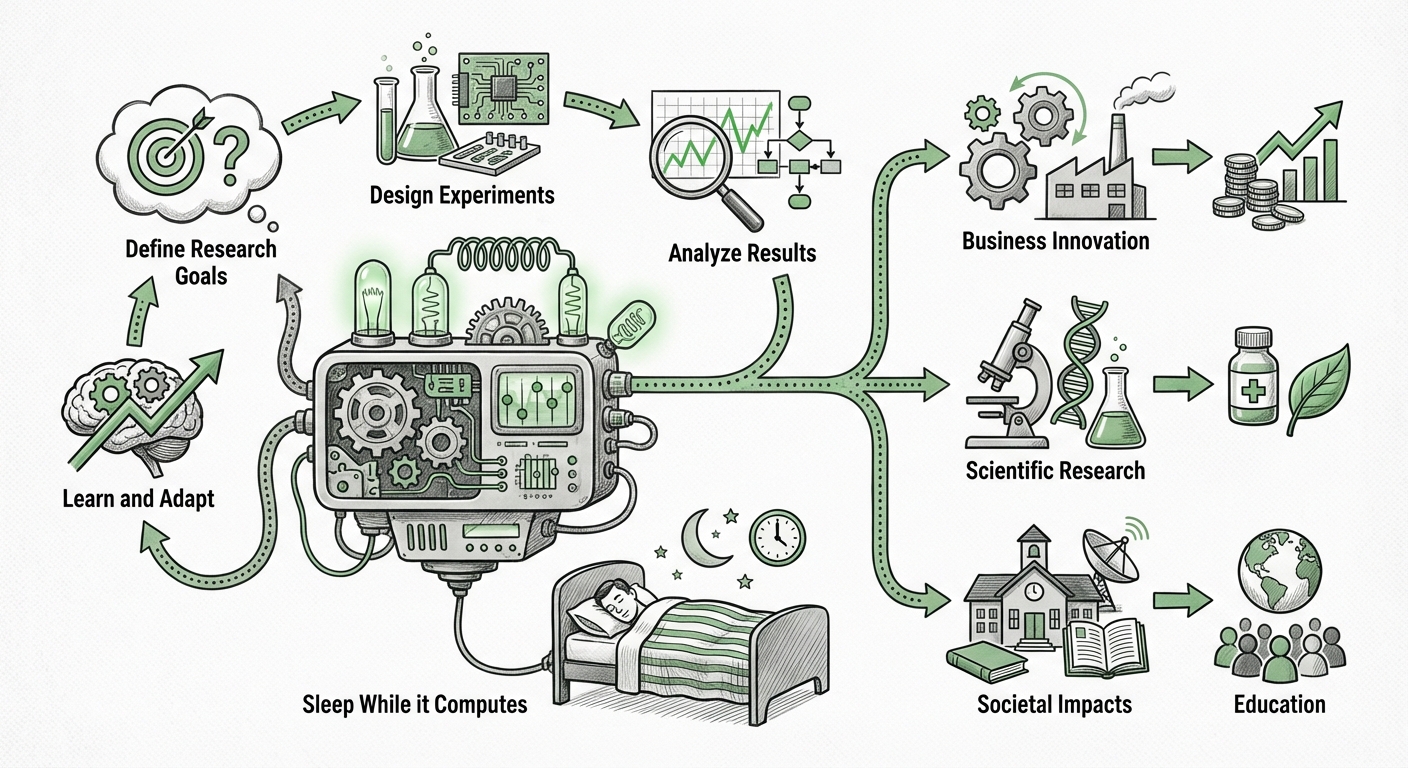
The new direction is different. A self-improving AI agent is designed to learn from its own work. It can use data, feedback, and results to improve over time. DigitalOcean's launch is a signal that cloud providers are moving beyond selling raw computing power. They are starting to sell the full loop that makes AI useful: data, learning, testing, and improvement. That loop may become the most important part of the AI stack.
What the Launch Signals
The name of the launch tells the story: Learning and Data Services. Learning services are about helping AI systems improve. Data services are about giving those systems the right information to learn from. Put together, they aim to support agents that can get better as they work.
This matters because most AI agents today are not truly self-improving. They may look impressive in a demo, but they often fail when the real world changes. A customer support agent may handle common questions well, then struggle when a new product launches. A coding agent may write good code for one project, then miss the patterns of another. A research agent may summarize documents well, then miss the context that makes a decision correct. In each case, the agent needs feedback and fresh data to improve.
The launch also shows where the cloud market is heading. Basic compute and storage are becoming more competitive and more commoditized. The next battle is over the tools that make AI reliable over time. That means managed data pipelines, feedback loops, evaluation tools, memory systems, and safety controls. DigitalOcean's move places it in that conversation.
Why Self-Improving Agents Are the Next Big Step
Today, many AI projects follow a simple pattern. A team builds a prototype, connects it to a model, and tests it on a small set of examples. If the prototype looks good, the team launches it. Then the real world arrives. Users ask unexpected questions. Data changes. Costs rise. The agent makes mistakes that no one saw in testing. The team goes back to the drawing board.
Self-improving agents aim to shorten that cycle. Instead of treating AI as a fixed product, teams treat it as a system that learns. The system collects feedback, measures results, and updates its behavior. It may improve its prompts, its retrieval, its tool use, or its decision rules. In some cases, it may help create better training data for future versions.
But self-improvement is not magic. It needs several things to work well:
- Clean data: The agent needs accurate, relevant information. Bad data leads to bad learning.
- Clear goals: The agent needs to know what “better” means. That requires metrics and human judgment.
- Feedback loops: The system needs a way to capture what worked and what failed.
- Testing: Changes must be checked before they reach users. Without tests, improvement can become drift.
- Guardrails: The agent needs limits so it does not learn the wrong lesson or cause harm.
DigitalOcean's Learning and Data Services are aimed at this set of needs. The launch does not mean every agent will suddenly improve itself without help. It means the building blocks for that kind of system are becoming easier to access.
The Data Layer Is the Real Battleground
Data is often described as the fuel for AI. That is true, but it is not specific enough. For self-improving agents, the important data is not just a large pile of documents. It is the right data at the right time, plus feedback about what happened.
Imagine a support agent that handles returns. It needs product data, policy data, and customer history. It also needs to know which answers solved the problem and which ones led to follow-up complaints. If the agent can learn from that feedback, it can improve. If it cannot, it will repeat the same mistakes.
This is why data services matter so much. They help teams collect, clean, store, and serve data to AI systems. They also help teams manage the feedback that makes learning possible. The companies that build strong data loops will have a big advantage. They will be able to improve their agents faster and at lower cost.
There is also a business reason. Data creates stickiness. When a company's data, feedback, and evaluation history live inside a cloud platform, moving to another platform becomes harder. That can be good for the provider and risky for the customer. Businesses should think carefully about data portability and exit plans from the start.
What This Means for Businesses
The biggest impact may be on access. In the past, only large companies with big AI teams could build complex learning systems. They had the data engineers, the machine learning experts, and the budget. Managed services can lower that barrier. Smaller teams can use shared tools to build agents that improve without building every piece from scratch.
That does not mean the work disappears. It changes. Teams will need people who can curate data, design feedback loops, write good evaluations, and watch for risks. The job moves from “build a model” to “run a learning system.”
Here are some practical areas where self-improving agents could matter:
- Customer support: Agents learn from resolved tickets and improve answers over time.
- Internal operations: Agents learn company processes and get better at routing requests, summarizing documents, and flagging issues.
- Software development: Agents learn a team's coding patterns, review feedback, and common fixes.
- Sales and marketing: Agents learn which messages resonate and which leads need follow-up.
- Research and analysis: Agents learn which sources are reliable and which summaries are useful.
The common thread is feedback. If a business can capture what “good” looks like and feed that back into the system, it can build an agent that improves. If it cannot, the agent will stay stuck at its first version.
Risks and Guardrails
Self-improving systems raise real risks. An agent that learns from the wrong signal can get worse, not better. A support agent might learn to close tickets quickly instead of solving problems. A sales agent might learn to push discounts instead of building trust. A coding agent might learn to copy bad patterns because they appear often in the codebase.
There is also the risk of drift. Small changes can add up. An agent that works well in January may behave differently in June. Without monitoring, teams may not notice until customers complain or costs spike.
Security is another concern. Agents that can learn and act may be able to change their own behavior. That is powerful, but it needs controls. Teams need audit trails, permission limits, rollback options, and human review for high-stakes decisions. They also need to protect sensitive data used in learning. A feedback loop is only safe if the data inside it is safe.
Finally, there is the question of accountability. If an agent improves itself, who is responsible when it makes a mistake? The answer cannot be “the AI did it.” Businesses need clear ownership, clear rules, and clear ways to explain what happened.
How to Prepare
Businesses do not need to wait for perfect tools. They can start preparing now. The first step is to pick a narrow use case with clear success metrics. A broad agent that does everything is hard to improve. A focused agent that handles one workflow is easier to measure and fix.
Next, build a feedback habit. Capture what users do after the agent responds. Log corrections, complaints, and successful outcomes. Turn that raw feedback into test cases. Over time, those test cases become the agent's report card.
Then, set guardrails before scaling. Decide what the agent can and cannot do. Add human review for risky actions. Monitor behavior after launch. Review costs and performance on a regular schedule. Treat the agent like a product that needs ongoing care, not a one-time project.
Finally, think about data ownership. Ask where the learning data lives, who can access it, and how it can be exported. Managed services can be a great shortcut, but they should not become a trap.
The Future of AI Agents
The move toward self-improving agents is likely to shape the next phase of AI. The first phase was about models that could generate text and images. The next phase is about systems that can act, learn, and improve inside real workflows. That is harder, but it is also more valuable.
Cloud providers will compete on how well they support that loop. The winner will not just have the fastest chips or the cheapest storage. It will have the best tools for data, feedback, evaluation, and safety. DigitalOcean's launch is an early sign of that competition.
For businesses, the message is clear. Self-improving AI is not just a technical upgrade. It is a new way of running AI. It requires better data, better measurement, and better governance. The companies that build those habits early will get more value from agents. The ones that skip them will get more surprises.
The future of AI will not be built on one big launch. It will be built on many small loops of learning. DigitalOcean's Learning and Data Services are one step in that direction. The real work is still up to the teams that use them.
Conclusion
DigitalOcean's launch of Learning and Data Services to enable self-improving AI agents marks a shift from fixed AI tools to systems that can get better over time. That shift could make AI more useful for customer support, operations, software development, and more. But it also raises the bar for data quality, testing, security, and human oversight. The businesses that succeed will be the ones that treat AI as a learning system, not a one-time product. They will start small, measure clearly, and build guardrails before they scale.