AI Boom Pullback Warning: Gary Gensler Says the AI Rally Won't Run Forever
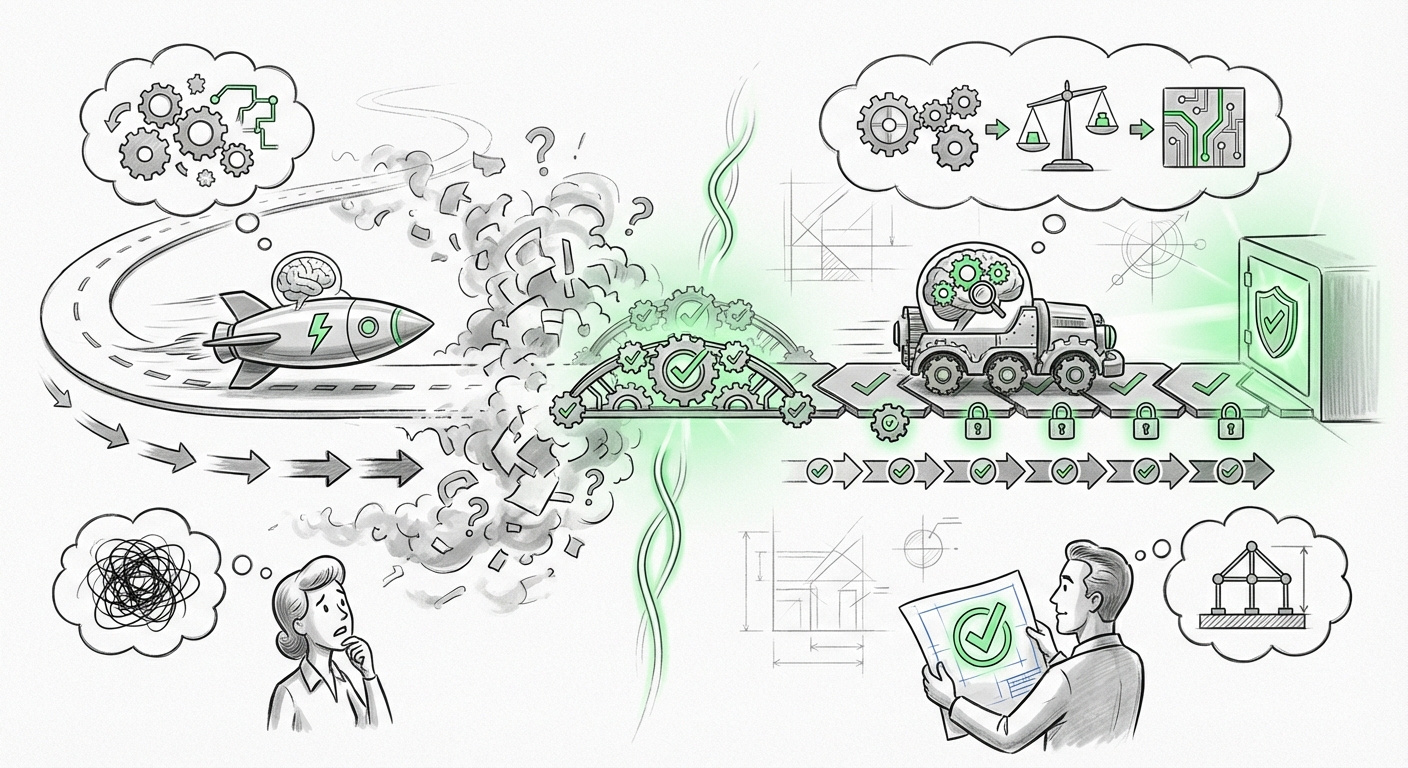
Every big technology wave arrives with a story that feels unstoppable. Railroads, electricity, the internet, mobile phones, and now artificial intelligence. Each one lifted real businesses, created real wealth, and then at some point hit a wall, a period where the excitement outran the money actually being made. Former SEC Chair Gary Gensler is now warning that AI is heading toward one of those moments. In his view, the AI boom will pull back.
That is not a prediction that AI is a fad. It is a warning about timing, pricing, and risk. And for anyone building a business on top of AI, or an investment portfolio, it is worth taking seriously.
Why a Warning From Gary Gensler Carries Weight
Gary Gensler is not a tech skeptic. He spent years at the center of financial market oversight as the former chair of the U.S. Securities and Exchange Commission. Before that, he worked in banking and taught about finance and technology. When someone with that background looks at a market and says "this is getting ahead of itself," it is not a hot take. It is a risk assessment.
His warning lands at a very specific moment. AI has moved from research labs into the center of the global economy in a short span of time. Companies that supply chips, cloud capacity, and AI models have become some of the most valuable businesses in the world. Investors have poured money into anything with "AI" in the description. New data centers are being announced at a pace that would have sounded absurd just a few years ago.
Gensler's point is not that the technology is fake. It is that markets have a long history of pricing in a perfect future before that future actually shows up. When expectations run that far ahead of cash flow, the correction can be sharp.
The Signals Hiding in Plain Sight
You do not need a secret model to see where the pressure points are. Several patterns in today's AI economy are the same ones that appeared before earlier tech pullbacks.
1. The market is concentrated in a handful of names
A large share of the value created by the AI boom sits with a small group of companies. That means broad market indexes and retirement accounts are quietly exposed to a narrow set of businesses. If those few companies stumble, the pain spreads far beyond tech investors.
2. The spending is enormous and the returns are still being proven
Building AI systems is capital intensive. Chips, power, land, cooling, and talent all cost real money. The businesses paying those bills expect a payoff. That payoff is arriving for some, but not yet at the scale the spending implies. Closing that gap is the central question of the next few years.
3. Deals are getting creative
When money moves in circles, where the same players invest in each other, buy each other's capacity, and count the results as growth, it becomes harder for outsiders to see the true state of demand. Financial overseers have historically watched these patterns closely, because they can hide risk until the moment it surfaces.
4. Everyone is using the same word to mean different things
"AI company" has become a marketing label. Some businesses have genuine technology and durable customers. Others have a press release. In a hot market, both get funded. In a pullback, the difference becomes obvious very fast.
What a Pullback Would Actually Look Like
A pullback does not mean the lights go out. It usually means a reset. Here is what to expect if Gensler's warning plays out.
- Valuations compress first. Stock prices fall before revenue does. Companies with strong businesses but high prices can drop sharply and still be fine.
- Weak players consolidate. Startups that raised money on the label rather than the product will struggle to raise again. Some will be acquired cheaply. Others will shut down.
- Spending gets disciplined. AI budgets move from "explore everything" to "prove the return." Procurement teams get more power. Pilot projects get cut.
- Talent shifts. Hiring slows at speculative companies and continues at profitable ones. The engineers stay in demand; the hype-driven roles do not.
- Regulation catches up. After every cycle, the rules tighten. Expect more focus on disclosure, on AI's use in financial markets, and on how automated systems make decisions that affect people.
The important pattern: the technology keeps improving through all of this. The internet did not stop mattering after the early 2000s. It became more important, just with fewer companies and clearer business models.
What This Means for the Future of AI
If the boom pulls back, the future of AI looks different in three specific ways.
AI becomes a utility, not a spectacle
The most likely outcome is that AI fades into the background the way electricity did. You do not buy "electricity" as a product anymore; you buy lighting, heating, and factories that run. AI is heading the same way. The winners will not be the loudest AI companies. They will be the businesses whose products simply work better because AI is inside them.
Efficiency beats scale
During a boom, the answer to every problem is "use more compute." After a pullback, the answer becomes "use less compute to get the same result." That shift is already visible in the push toward smaller, cheaper, more specialized models. A pullback would accelerate it, and make AI far more affordable for small businesses, schools, clinics, and local governments that cannot afford enterprise-scale systems.
The regulatory conversation gets serious
Gensler's background is in market oversight, and that lens matters. As AI systems take on tasks in lending, trading, insurance, hiring, and health care, the question of who is accountable becomes unavoidable. Expect more rules on disclosure of AI use, more scrutiny of automated decision-making, and more pressure on companies to explain how their systems reach conclusions.
Practical Implications for Businesses
The worst response to a pullback warning is panic. The second worst is ignoring it. The right response is to build for both scenarios.
Separate the hype from the ledger
Go through every AI initiative and answer one question: what changed in the last quarter because of this? If the answer is "nothing measurable," you have a candidate for cutting. If the answer is "we handle more customers with the same team," you have something to protect and expand.
Diversify your AI exposure
If your entire strategy depends on one vendor, one model, or one cloud provider, you are exposed to their pricing decisions and their business risks. Build in the ability to switch. Keep your data portable. Treat model providers as suppliers, not as partners who will always be there at the same price.
Build the boring parts now
Data quality, permissions, audit logs, and clear internal policies are unglamorous. They are also what separates companies that survive a correction from companies that scramble. When budgets tighten, the organizations with clean data and clear rules can keep shipping while others restart from scratch.
Keep hiring for judgment
AI tools make execution cheaper. That makes judgment more valuable, not less. The people who can tell whether an AI output is right, useful, and safe become the bottleneck. Invest there.
What It Means for Workers and Society
A market pullback and a technology shift are two different things, and it is important not to confuse them. A correction in AI stocks would not undo the technology. It would change who profits from it and how fast it spreads.
For workers, the near-term effects are likely to be mixed. Some AI-related roles cool off. Demand grows for people who can apply these tools inside ordinary jobs, customer support, logistics, accounting, legal research, health administration. The pattern from earlier technology waves holds: the jobs that disappear and the jobs that appear are rarely the same jobs, and the transition is uneven.
For society, a pullback could actually be healthy. It would slow the rush to deploy systems before they are tested. It would give regulators time to write rules that reflect how the technology actually works. And it would reduce the risk that a single company's failure takes down a large slice of household savings.
Actionable Takeaways
- Treat Gensler's warning as a planning input, not a prophecy. Nobody can time a market. You can control how exposed you are.
- Audit your AI spending against measurable outcomes this quarter, not next year.
- Avoid single-vendor dependence in models, cloud, and data storage.
- Invest in data hygiene and governance while budgets are still open.
- Watch the financial plumbing, circular deals and concentrated ownership are early warning signs worth tracking.
- Keep building. A pullback rewards companies with real products and punishes companies with real stories.
The Bottom Line
The AI boom has produced genuine breakthroughs and genuine excess at the same time. Gary Gensler's warning points at the second part. Booms pull back. That is what booms do. The technology does not vanish when the enthusiasm cools, it usually gets cheaper, more useful, and more deeply embedded in daily life.
The businesses and people who come out ahead will not be the ones who called the top or the ones who ignored the risk. They will be the ones who kept building real things while everyone else was arguing about the price.