The Next Phase of AI: How Autonomous Agents Will Change the Way We Work
For the last few years, most people met artificial intelligence through a chat box. You typed a question. The model typed back. It felt like magic at first, then it felt normal, and then it started to feel a little limited. A good answer is helpful, but it does not file the report, update the ticket, or follow up with the customer.
That is the wall the industry is now climbing. The big story in AI is no longer about who has the smartest chatbot. It is about whether AI systems can actually do things, take a goal, break it into steps, use tools, check their own work, and finish the job with a human only glancing over their shoulder. This shift is usually called the move toward agentic AI, and it is the most important change on the horizon for businesses and for the people who work in them.
From Answering Questions to Completing Tasks
A chatbot responds. An agent acts. The difference sounds small, but it changes everything about how AI gets used.
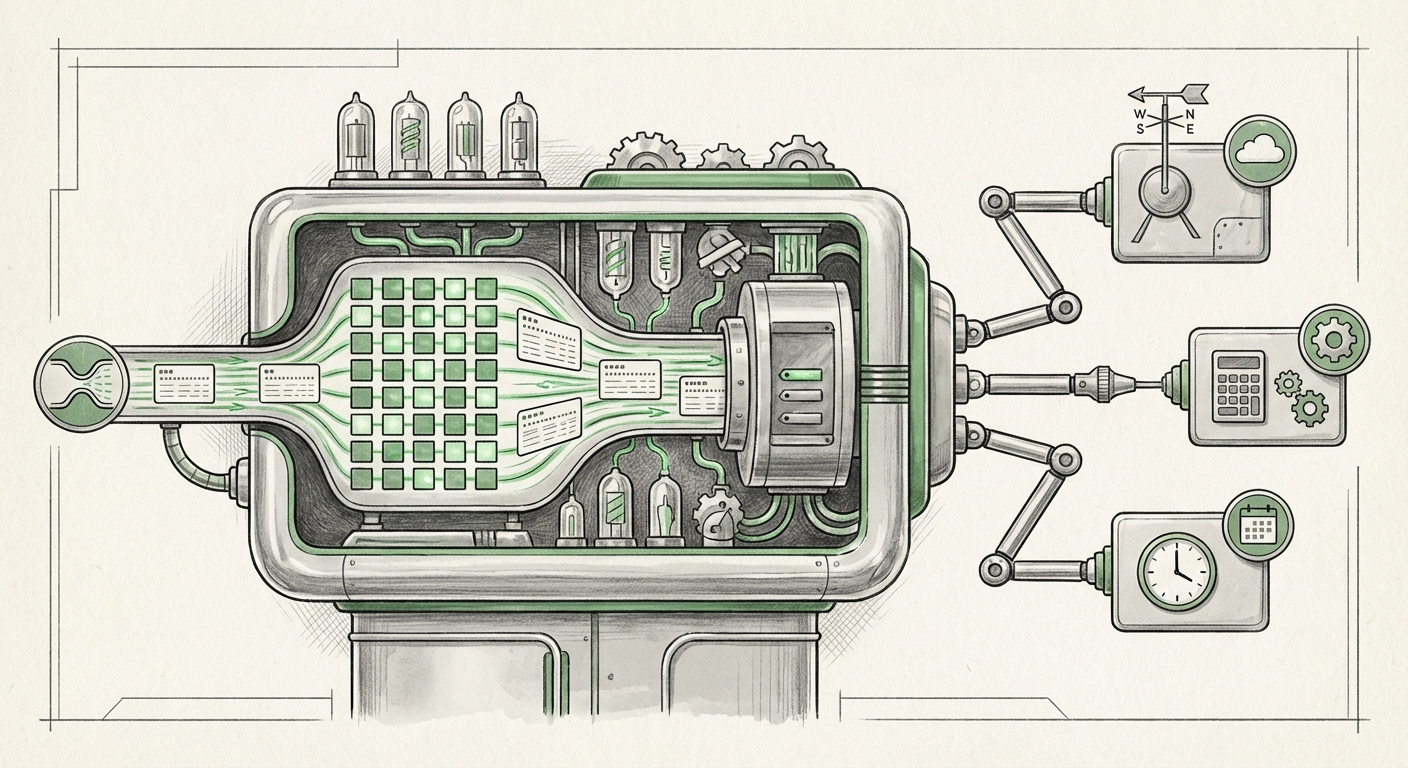
An agentic system can be given a target like "get this invoice matched and approved." It then plans its own route: it reads the document, pulls data from a finance system, checks the numbers against a contract, spots a mismatch, asks a clarifying question, and routes the result to the right person. Most of that happens without anybody typing a prompt.
This matters because the value of AI moves from speed of information to completion of work. A faster answer saves a minute. A finished task saves an entire job function, the reading, the copying, the clicking, the waiting. That is where the real money sits, and it is why so much development effort is now pointed at making models reliable enough to be trusted with multi-step work rather than single replies.
Why reliability, not cleverness, is the bottleneck
Early chat models could be impressive and wrong in the same breath. For casual use, that was a tolerable trade-off. For a system that books travel, moves money, or sends emails on your behalf, it is a dealbreaker. The industry's focus has therefore shifted toward things that sound less exciting: better tool use, stronger memory, the ability to verify results, and clear rules for when the AI should stop and hand control back to a person.
The winners in this phase will not simply be the ones with the most capable model. They will be the ones whose systems fail safely, explain what they did, and know their own limits.
Costs Are Falling, and That Changes the Math
Another quiet force is reshaping the market. The price of running AI has been falling fast, while capability has been rising. When something gets cheaper and better at the same time, adoption stops being a strategic bet and starts being a basic cost decision.
Falling costs do three things. First, they make it practical to run AI on high-volume, low-value work that never made economic sense before, reading every support ticket, summarising every meeting, tagging every document. Second, they push intelligence into smaller, cheaper models that can run on a laptop or a phone, which raises hard questions about privacy and control in a good way. Third, they make it possible to run several agents at once, each checking the others, which is the cheapest known path to higher accuracy.
For business leaders, the practical takeaway is simple: do not lock in long-term assumptions about today's AI prices. Build systems that can swap models as the cost curve keeps bending.
The New Unit of Work Is the Workflow
Most companies still think about AI one tool at a time. A writing assistant here, a coding helper there. That framing is already out of date.
Agents live inside processes. Their value depends on how well they connect to the systems where work actually happens, the customer database, the ticketing system, the finance ledger, the shared drive. An agent with a brilliant brain and no access to your systems is just a very expensive chat box.
This is why the hard work of AI adoption is increasingly plumbing, not prompting. Companies are spending real effort on clean data, well-documented APIs, clear permissions, and audit trails. It is unglamorous, and it is the difference between a demo that dazzles and a deployment that lasts.
The "human in the loop" question
Every organisation adopting agents has to make the same decision: where does the human sit? The answer should vary by risk. A system drafting marketing copy can run mostly unattended. A system approving payments or interacting with patients cannot. The useful mental model is a dial, not a switch, start with AI that suggests, move to AI that acts and reports, and only then allow AI that acts without asking. Raising the dial should follow evidence, not enthusiasm.
Trust Is Becoming a Product Feature
As AI takes on more real work, two things matter more than raw intelligence: can I see what it did, and can I stop it?
Expect the language of enterprise software to change accordingly. Vendors will compete on audit logs, explainability, permission controls, and clear statements about what their systems will never do. Regulators in many regions are moving toward requiring transparency about when a person is talking to a machine and how automated decisions get made. Compliance teams that once asked "is this safe?" are now asking "show me the trail."
There is also a security dimension that deserves attention early. An agent with permission to act is also a system that can be tricked into acting. The same access that lets it send an email or move a file can be abused if the instructions it receives are malicious. Designing agents with the smallest possible set of permissions is not paranoia; it is basic hygiene.
What It Means for Jobs, and Why "Replacement" Is the Wrong Frame
The jobs conversation tends to swing between two lazy extremes: everything will be automated, or nothing will change. The reality is messier and more interesting.
AI is very good at the parts of a job that are repeatable and well-described. It is still weak at the parts that require judgment, context, relationships, and accountability. Most jobs are a mix of both. So the near-term effect is not wholesale replacement but task reshuffling. The boring third of a role shrinks. The human parts grow. And new roles appear, people who design agent workflows, review their output, and clean up when they go wrong.
The organisations that handle this well will do two things: they will train people to supervise and direct AI systems rather than compete with them, and they will be honest about which tasks are changing. Silence breeds anxiety, and anxious teams adopt new tools badly.
A Practical Playbook for the Next Twelve Months
For teams wondering where to start, a few moves tend to pay off regardless of which vendor or model you end up using:
- Pick a boring workflow. Choose a process that is high-volume, well-documented, and painful. Success there builds credibility for everything that follows.
- Map the data before the model. If the agent cannot reach the information it needs in a clean, permissioned way, no amount of model quality will save the project.
- Define the stopping rule up front. Decide in advance what the agent must never do alone, and what triggers a handoff to a human.
- Measure time saved and errors caught. Track both. A system that is faster but wrong more often is a net loss.
- Keep your options open. Build so you can swap models and providers as prices and capabilities shift.
- Write the rules down. A short, clear internal policy on what AI may touch beats a long one nobody reads.
- Tell your customers. People forgive a lot when they know a machine is involved. They do not forgive finding out later.
What to Watch Next
Three signals will tell you how fast this is really moving. First, watch whether agents start completing long tasks, hours of work, not minutes, without human rescue. That is the true test of reliability. Second, watch the price of running a capable model. Continued declines will push AI into everyday business processes the way cloud computing did. Third, watch the standards emerging around agent identity, permissions, and accountability. Whichever frameworks settle first will shape how the whole market builds.
The most likely outcome is not a dramatic takeover. It is a slow, uneven absorption, agents quietly taking over the tedious middle of work while people move up to supervision, judgment, and design. The companies that win will be the ones that treat this as an operations problem rather than a technology demo, and the people who win will be the ones who learn to direct the machines rather than race them.
Conclusion
AI has spent its first mainstream chapter proving it can talk. The next chapter is about whether it can be trusted to work. That shift, from answering to acting, will rewire how businesses structure processes, how they staff teams, and how they earn customer trust. The technology will keep improving on its own. The harder and more valuable work is organisational: clean data, clear rules, sensible guardrails, and people trained to supervise systems that never get tired and never fully grow up. Start small, measure honestly, and keep the human dial in your own hands.