What a Celebrity Family Allegation Reveals About AI, Reputation, and Child Safety Online
On October 28, 2026, a story broke that a former TLC reality star, Karen Derrico, is facing a serious claim from her ex. According to the allegation, he says she has been spending time with a man who inappropriately touched their daughter. These are claims. They have not been proven in a courtroom, and they involve a child, which makes them exactly the kind of story that spreads fastest and gets checked least.
You might wonder why an AI and technology column would open with a family dispute. The answer is simple: this story is not really about one family. It is a live test of how fast-moving claims travel through machines that now write, rank, summarize, and recommend the news we read. The way this single allegation moves through search engines, social feeds, and AI chatbots over the next few weeks will tell us more about the future of AI than most product launches will this year.
The New Middleman Between a Claim and an Audience
Not long ago, a story like this moved in a straight line. A reporter heard something, made calls, wrote it up, and an editor decided what could be published. Human beings stood at every gate. That is no longer true.
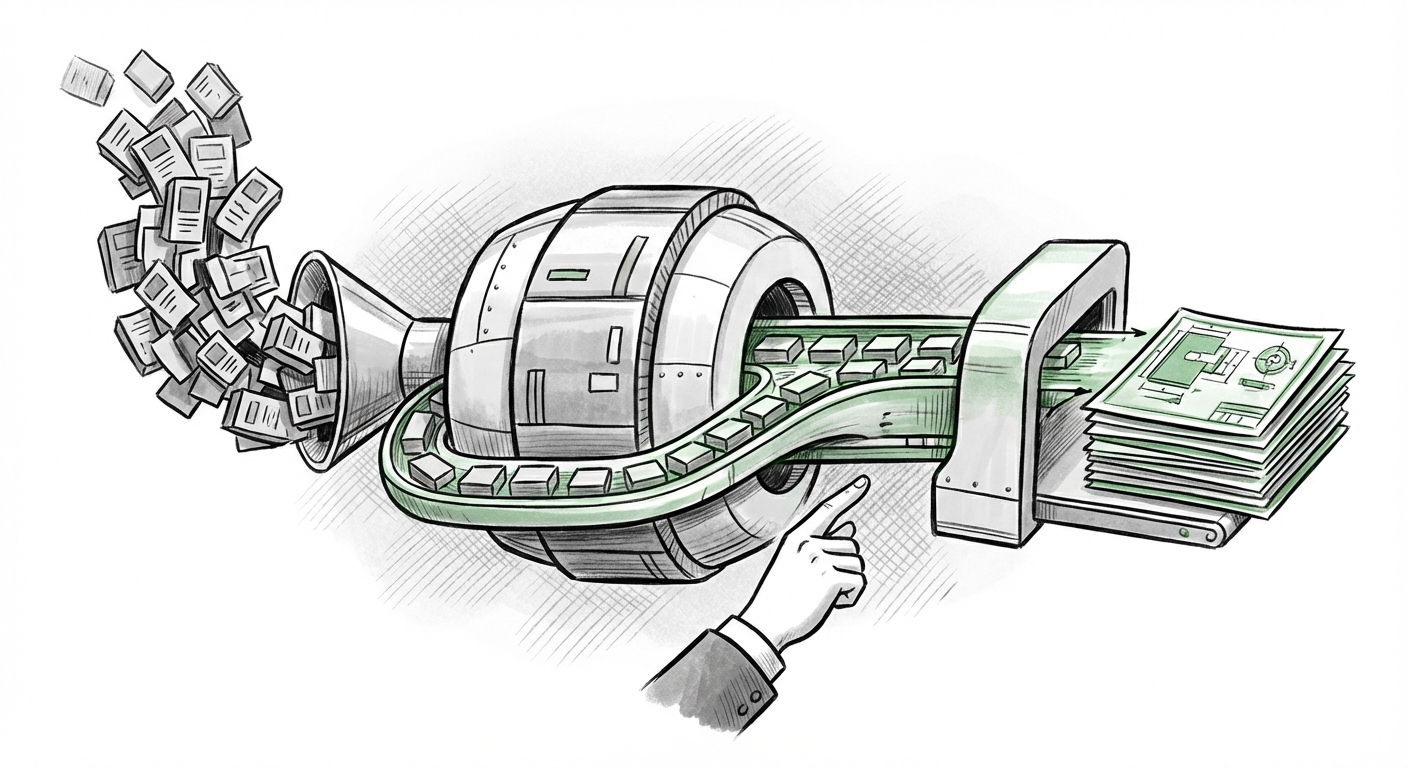
Today, the path looks different. A single report goes out. Within minutes, automated systems pick it up. Summarizer tools condense it into two sentences. Recommendation engines push those two sentences to people who never see the full context. Chatbots answer questions about it using fragments pulled from wherever they can find them. By the time a reader encounters the claim, the original nuance, that these are allegations, that a child is involved, that no court has ruled, may be gone.
This is the core problem of the AI news era, and it is not a technical bug. It is the natural result of building systems that optimize for speed and engagement rather than accuracy and care.
Why Allegations Are the Hardest Test Case
An allegation is a special kind of information. It is real, someone really did say it, but it is not the same as a fact. AI systems are famously bad at this distinction. A language model trained to predict likely text will happily write "Karen Derrico is spending time with a man who..." because that is a fluent continuation of the sentence. It does not automatically add "allegedly" or "her ex claims" unless it has been carefully built to do so.
Multiply that by millions of queries and you get reputational damage at machine speed. A person can be found by search engines, summarized by chatbots, and labeled by recommendation algorithms long before any of the claims are tested. And once that association is baked into training data, it can echo for years.
The Child Safety Problem AI Has Not Solved
The most uncomfortable part of this story is the involvement of a child. Minors are supposed to get special protection. In the analog world, courts and editors built guardrails around them. In the AI world, those guardrails are thin.
Consider what happens when a parent, a neighbor, or a curious teenager asks a chatbot: "What happened with Karen Derrico's daughter?" A well-built system should recognize this as a sensitive query involving a minor and respond with restraint. A poorly built one will confidently assemble a narrative from fragments, some of them wrong, some of them cruel.
This is not hypothetical. It is the daily reality of how AI assistants handle questions about real people. The technology has gotten very good at sounding certain. It has not gotten equally good at knowing when to say less.
Three Gaps That Matter
- No age awareness. Most models do not know or care whether the subject of a query is an adult or a child. They treat all names the same way.
- No allegation tagging. Systems rarely carry a clean label that says "this is an unproven claim" from the source through to the answer.
- No memory of harm. If a false or damaging claim gets repeated enough, it becomes statistically "normal" in the model's world, and therefore more likely to be repeated again.
The Deepfake Question Nobody Wants to Ask
Any story about a family dispute and a child now comes with a second layer of risk: synthetic media. When a claim is this serious and this personal, bad actors have a strong incentive to manufacture "evidence." A fake voice clip. A fake screenshot. A fake photo.
AI generation tools have made this cheap and fast. AI detection tools have not kept pace. That mismatch puts enormous pressure on the people closest to the story, and it puts even more pressure on the platforms that host it. A viral fake can outrun a correction by days. For a family, those days are everything.
The practical lesson is that provenance matters more than ever. Systems that track where a piece of media came from, who captured it, when, and whether it has been altered, are becoming essential infrastructure, not a nice-to-have feature.
What This Means for Businesses
Most companies will never deal with a celebrity custody dispute. But every company now faces the same underlying risk: a claim about them, true or not, can be amplified by AI systems faster than their communications team can respond.
A Practical Playbook
1. Monitor what AI says about you, not just what search says. Run regular queries against major chatbots and AI search tools using your brand name plus difficult terms. You will often find answers you did not expect. Fix the sources, not just the symptoms.
2. Keep a clean, citable record. AI systems favor sources that are structured, consistent, and easy to parse. A clear fact page, updated regularly, is now a reputation asset in a way it never was before.
3. Build an allegation policy before you need one. Decide in advance how your organization responds to unproven claims. Speed matters, but so does precision. A response that overstates certainty can make things worse.
4. Treat sensitive data about minors and families as a separate category. If your systems touch personal information about children, they need stricter rules, more human review, and clearer escalation paths.
5. Log and label. If your organization publishes anything about real people, tag allegations clearly in your own data. That label can travel with the content into AI systems that ingest it.
The Human Cost of Machine Speed
It is easy to talk about these issues in the abstract. It is harder to remember that behind every viral claim is a person, in this case, a child, who did not choose to become a dataset.
What makes this moment different from previous media revolutions is the removal of friction. A rumor used to have to travel through people who might stop it. Now it travels through systems that have no concept of stopping. The only friction left is the friction we deliberately design in.
That means the future of AI will be shaped less by raw model capability and more by editorial judgment encoded into products. The companies that get this right will win trust. The ones that do not will keep producing confident answers to questions nobody should be answering confidently.
Where This Goes Next
Expect three shifts in the near term.
First, allegation-aware AI. Systems that automatically detect and preserve claim language, "alleged," "claims," "according to", will become a standard feature rather than an afterthought. This is a solvable engineering problem, and it is a huge trust win.
Second, minor-protection layers. As regulators focus on children's data and online safety, expect AI products to add hard limits on how they discuss identifiable minors. This will be uncomfortable for some builders and long overdue for others.
Third, provenance as a product. Tools that verify where media came from will move from niche to mainstream. In a world where a fake clip can end a career or damage a family, proof of origin becomes as valuable as the content itself.
Conclusion
The claim involving Karen Derrico and her ex is a human story first. It deserves careful, restrained treatment, and the people at its center deserve privacy, especially the child. But it is also a mirror. It shows us exactly what happens when machines built to summarize everything encounter information that should be handled with care.
The future of AI will not be decided by who builds the smartest model. It will be decided by who builds the most careful one. Speed is easy now. Restraint is the hard part, and restraint is what will separate the tools people trust from the tools people fear.