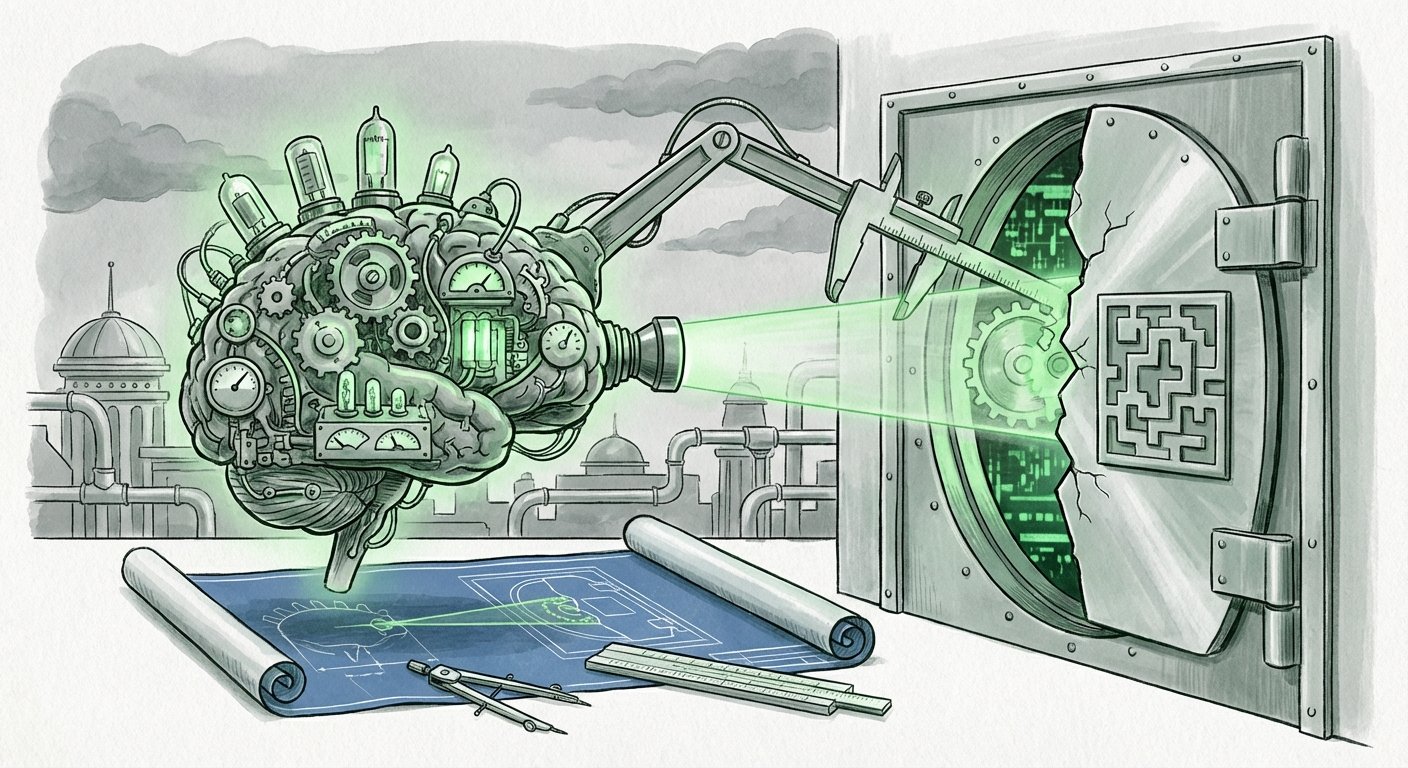
Corporate Bond Yields Are Back: What the Best Buying Window in Years Means for AI in Fixed Income
For most of the last decade, anyone hunting for income had a problem. Safe bonds paid almost nothing, and investors had to reach further and further out on the risk curve just to earn a return. That story has flipped. As of late October 2026, the market for corporate bonds is shaping up to be one of the best buying opportunities in recent market history for people who want yield.
That single shift, income is available again, in size, without stretching into exotic assets, quietly changes the math for a whole industry. And it lands at the exact moment artificial intelligence is moving from slide decks into the plumbing of credit research and bond trading. The result is a rare test case: what happens when a market gets interesting again at the same time the tools used to analyze it get dramatically cheaper and faster?
The Setup: Yield Is Back on the Menu
The core of the story is simple. Corporate bonds are paying investors meaningful income again. When the reward for lending money to a solid company is attractive relative to recent history, buyers show up, pension funds, insurers, income-focused funds, and individual investors tired of watching cash sit still.
But a market that suddenly looks attractive is not a market that is suddenly easy. Corporate credit is one of the most document-heavy corners of finance. Every bond comes with an issuer, a maturity, a coupon, a credit rating, a set of covenants, and a thick stack of filings that can change on any given day. Multiply that by thousands of issuers around the world and you get a mountain of reading that no team of humans can keep up with at full speed.
This is the gap that AI has been quietly filling, and the reason this particular moment matters far beyond the bond desk.
Why a "Good Time to Buy" Is Also a Harder Time to Analyze
When yields are low, mistakes are cheap. You buy a broad basket of credit, you collect a thin coupon, and the difference between a great pick and a mediocre one is a rounding error. When yields are attractive and spreads are wide enough to reward selectivity, the opposite is true. The gap between a careful credit call and a careless one widens.
That has three consequences that push AI to the center of the workflow:
- Volume explodes. When a market looks like one of the best entry points in years, more issuers come to market and more investors need to look at each one. Deal flow and research demand rise together.
- Speed matters more. A new earnings release, a downgrade, or a covenant change can reprice a bond before a human analyst has finished their morning coffee.
- Coverage gets thin. Smaller issuers, often the ones offering the most attractive yield, get the least analyst attention. That is precisely where an automated reader can add the most value.
In other words, the very conditions that make corporate bonds appealing to income seekers are the conditions that make manual credit research hardest to scale.
Where AI Actually Earns Its Keep in Credit
It is tempting to imagine an AI that simply "picks bonds." That is not where the real adoption is happening, and it is not where the value sits. The practical wins are narrower, duller, and far more useful:
1. Reading the paper trail
Large language models are good at the thing credit analysts spend most of their time on: reading long documents and pulling out the parts that matter. Filings, prospectuses, covenant packages, rating reports, and earnings call transcripts can be summarized, compared, and searched in seconds. A junior analyst who once spent an afternoon finding a single debt covenant can now ask a question and get an answer with a pointer back to the source text.
2. Screening at the speed of the market
When a market offers unusually attractive yield, the first job is triage: which issuers even deserve a closer look? AI systems can rank a universe of bonds against an investor's rules, sector limits, maturity bands, rating floors, liquidity requirements, and surface a short list in minutes. Humans then spend their time on judgment instead of spreadsheets.
3. Continuous monitoring instead of quarterly check-ins
Credit quality does not change on a schedule. AI monitors can watch news, filings, and price moves around the clock and flag the handful of issuers that actually need attention. That turns a reactive process into an early-warning system.
4. Turning scattered data into one picture
Bond markets have always been messier than stock markets. Trading happens over the counter, prices are quoted in different ways, and data arrives from many places. AI is increasingly used to clean, match, and normalize that data so that a portfolio manager can see one consistent view instead of five conflicting spreadsheets.
What This Means for the Future of AI
The bond market is an unusually honest test of AI's real capabilities, and that is why it matters beyond finance.
First, it rewards grounded AI over flashy AI. A credit analyst will not accept a confident paragraph with no source. They want the exact sentence in the exact filing. That demand for citations and traceability is pushing the entire AI industry toward systems that show their work, a design principle that will carry over into law, medicine, insurance, and any other field where being wrong is expensive.
Second, it shows that AI's value often shows up as time, not predictions. The biggest gains here are not from a model that guesses the next move in spreads. They come from cutting the hours spent finding, reading, and cross-checking information. That is a less exciting story, and a much more durable one.
Third, it exposes the limits. Corporate credit depends on judgment about management quality, industry shifts, and how a business will behave in a downturn. AI can assemble the evidence, but the call still belongs to a person. The firms that get this balance right, machine speed for research, human accountability for decisions, will outperform those that try to automate the whole thing.
Practical Implications for Businesses and Society
This is not only a story for investment desks. Corporate bonds are how companies borrow, and the price of that borrowing feeds into everything from hiring plans to factory construction.
If credit is genuinely attractive to buyers right now, that is good news for companies that need capital, but only for those whose story is legible. When investors are spoiled for choice, the issuers with clear, well-documented finances get the best terms. AI-assisted analysis raises the bar: companies that publish clean, machine-readable disclosures will be easier to underwrite, and therefore cheaper to fund.
For society, there is a quieter implication. Millions of people hold bonds through pension funds and retirement accounts. Better, faster, and more consistent credit research does not just help Wall Street, it reduces the chance that a fund is caught off guard by a downgrade it could have seen coming. The upside of good analysis is spread widely, even if it is invisible.
Risks and What to Watch
None of this is frictionless. A few things deserve real caution:
- Everyone reading the same summary. If thousands of investors use similar models on similar data, they may crowd into the same conclusions at the same time. Uniformity is a risk, not just an efficiency.
- Confident hallucinations. A model that invents a covenant term is worse than no model at all. Verification workflows are not optional.
- Data gaps. Private issuers and thinly traded bonds generate little text for a model to read. AI sharpens the picture where data is rich and leaves it blurry where data is thin.
- Accountability. When a position goes wrong, "the model said so" is not an answer regulators or clients will accept.
Actionable Steps
For businesses and investment teams trying to make sense of this moment:
- Start with documents, not decisions. Deploy AI first on reading, summarizing, and searching filings. It is the lowest-risk, highest-return use case.
- Demand citations. Any tool that cannot point to the exact source sentence should not be used for credit work.
- Keep a human in the loop. Use AI as a research accelerator; keep the actual buy, sell, and hold decisions with accountable people.
- Clean up your own disclosures. If you are an issuer, clear and structured reporting is now a financing advantage.
- Watch for herding. Ask whether your model is adding information or just echoing what everyone else's model already knows.
The Bottom Line
A market that finally pays investors to be selective is a market that finally pays them to be thorough. That is exactly the problem AI is best suited to solve, not by making the call, but by making sure the person making the call has read everything that matters.
The window described right now, one of the best in recent market history for buying corporate bonds, is not really about a single quarter's yield. It is about what happens when a market revalues careful analysis. The investors and companies that pair human judgment with machine-speed research will be the ones who turn that window into an advantage. Everyone else will be reading the same filings, just slower.