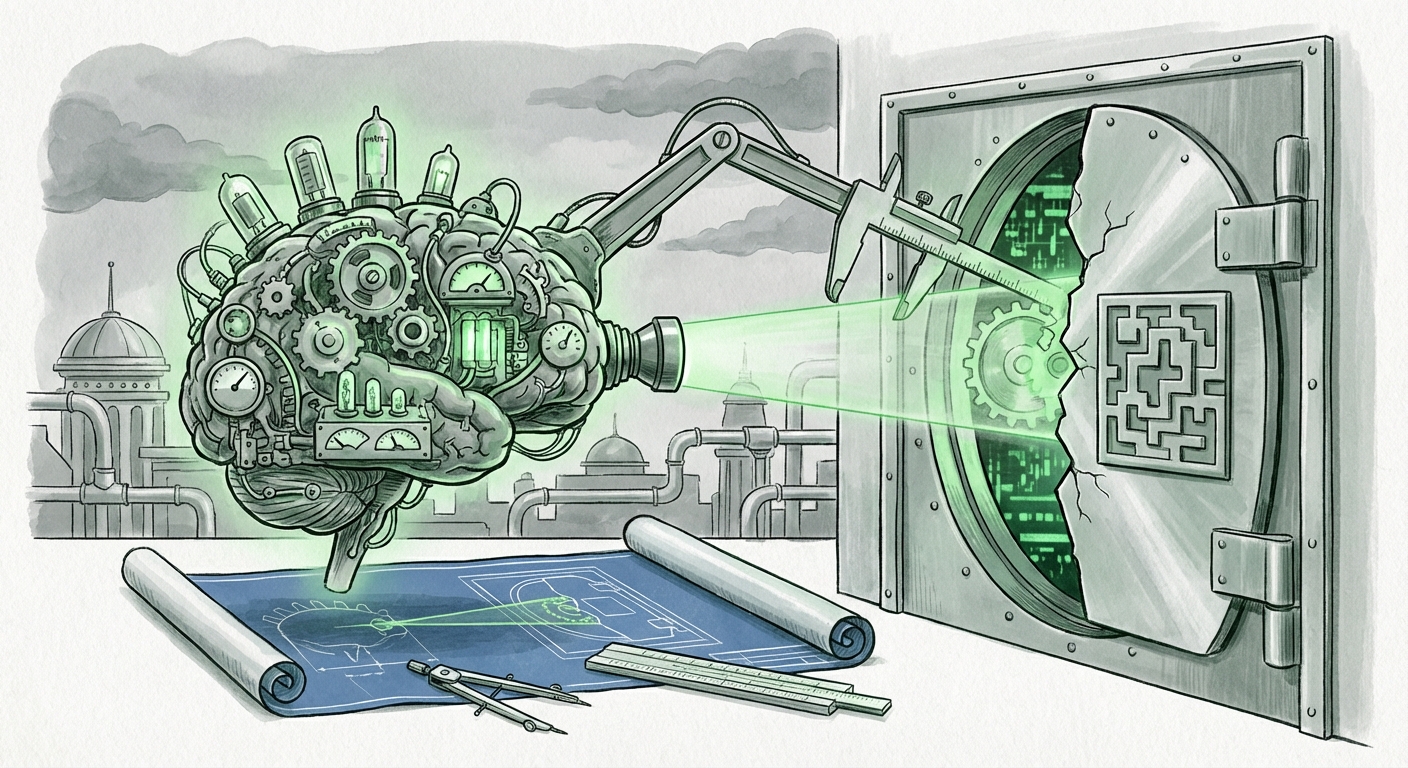
Benchmark Optimization in Speech Recognition: Why High Scores Can Hide Real-World AI Risk
Speech recognition has become part of everyday life. It turns voicemails into text, helps call centers route customers, lets doctors dictate notes, and gives people with disabilities a faster way to use computers. As the technology improves, the race to prove which system is best has become just as important as the technology itself.
That race depends on benchmarks, standard tests that compare systems on the same data. Benchmarks help researchers track progress and help businesses choose tools. But they also create a tempting problem. When a score becomes the goal, teams may optimize for the test instead of for real-world use. The result can be a system that looks excellent on paper and struggles in the noisy, messy, accent-filled reality of daily life.
That is the heart of measuring benchmark optimization in speech recognition. The question is not whether benchmarks are useful. They are. The question is whether we can tell the difference between a system that truly understands speech and a system that has learned how to score well on a particular test.
Why Speech Recognition Benchmarks Matter
Benchmarks give the AI field a shared yardstick. In speech recognition, one common measure is word error rate, or WER. It counts how many words a system gets wrong compared with a human-written transcript. Lower is better. A single number is easy to compare, easy to report, and easy to put on a leaderboard.
That simplicity is powerful. It helps researchers see whether a new idea is better than an old one. It helps buyers compare vendors. It helps the public follow progress. Without shared tests, every claim would be a matter of opinion.
But a simple number can also hide a lot. A system may do well on clean, read speech recorded in a quiet room. It may do poorly on a noisy call center line, a regional accent, a child’s voice, or a medical term it has never seen. If the benchmark does not include those conditions, the score can be accurate and misleading at the same time.
What Benchmark Optimization Looks Like
Benchmark optimization happens when a team improves its score on a specific test without making the system better at the general task. It can be intentional or accidental. In speech recognition, it can take several forms.
1. Tuning to the test set
Teams often use the same public test set again and again. Each attempt gives feedback. Over time, the model may be adjusted to fit that exact data. The score goes up, but the system may not improve on new audio from the real world.
2. Data overlap and leakage
If training data includes audio that is very similar to the test set, the system may have already seen the answers. This can happen through public data collection, recycled datasets, or weak checks on data sources. The model looks smarter than it is.
3. Picking the best run
A team may train many models and report only the best result. That is a form of selection. It can make performance look stronger than what a normal user would get on the first try.
4. Optimizing the metric, not the task
Word error rate treats all words the same. But in a real application, some words matter more. Getting a name, a drug, or an account number wrong can be far worse than missing a filler word. A system can improve its WER while getting more important details wrong.
5. Ignoring the long tail
Average scores can hide weak spots. A system may be excellent for most speakers and poor for people with certain accents or speech patterns. If the benchmark is mostly one kind of speaker, the average hides the harm.
These problems do not mean every high score is fake. Many systems are genuinely strong. The point is that a score alone cannot tell you which kind of system you are looking at. You need to measure how much of the result comes from real ability and how much comes from test-specific optimization.
How to Measure Benchmark Optimization
The first step is to stop treating a public benchmark as the final word. A public test is useful for comparison, but it should be paired with tests that the model has never seen. Here are the most practical ways to measure the gap.
Use a private holdout set
A private test set is not shared with vendors or researchers. It is collected from real use cases and kept separate from training. If a system scores well on the public benchmark but poorly on the private set, that gap is a warning sign. The size of the gap is a direct measure of benchmark optimization.
Rotate and refresh test data
A fixed test set becomes stale. New accents, new devices, new background noises, and new vocabulary appear all the time. Rotating test data makes it harder to overfit. It also gives a more honest picture of current performance.
Test across conditions
A strong evaluation should include clean speech, noisy speech, far-field audio, phone calls, different microphones, different accents, different age groups, and domain-specific terms. Reporting one average hides too much. Reporting results by condition shows where the system is strong and where it fails.
Compare against a strong baseline
A new system should be compared with the best available alternative on the same data. If the comparison is only against an old or weak baseline, the gain may look bigger than it is.
Track task success, not just word error rate
In real products, the goal is rarely perfect transcription. The goal is a successful task: a customer issue resolved, a note filed correctly, a command understood. Measuring task success and user correction rates gives a clearer view of value than WER alone.
Check for data contamination
Teams should document where training data came from and test for overlap with evaluation data. This is not just a technical check. It is a basic honesty check. Without it, benchmark results are hard to trust.
What This Means for Businesses
For companies buying speech recognition, the lesson is simple: do not buy on a leaderboard score alone. Run a pilot on your own audio. Use real recordings from your customers, including the messy ones. Test the accents, background noises, product names, and technical terms that matter to your business.
Ask vendors for results on data that was not used for training. Ask how they measure performance across different user groups. Ask what happens when audio quality drops. Ask about latency and cost, because a system that is slightly more accurate but far slower or more expensive may be the wrong choice.
After deployment, keep measuring. Real-world performance can drift as new devices, new vocabulary, and new customer behavior appear. A one-time benchmark is a snapshot. A monitoring plan is a safety net.
This matters most in high-stakes settings. In health care, a transcription error can affect a patient’s record. In finance, a misheard number can cause a real problem. In legal and public safety work, accuracy and accountability are not optional. In those areas, a benchmark score should be the start of the conversation, not the end.
What This Means for Society
Speech recognition can widen access. It can help people with disabilities use technology, help students learn, and help small businesses serve customers in more languages. But if evaluation is weak, the benefits can be uneven.
People with non-standard accents, older speakers, children, and people with speech differences are often under-represented in benchmark data. If a system is optimized for a narrow test set, those users may be poorly served. That is not just a technical issue. It is a fairness issue.
There is also a trust issue. When a product claims high accuracy, people expect it to work. If the claim comes from a narrow benchmark, trust can be broken quickly. Good evaluation protects users and protects the reputation of the technology itself.
The Future of AI Evaluation
The future of AI evaluation is likely to move away from one-time leaderboards and toward continuous, real-world testing. Static benchmarks will still matter, but they will be one part of a larger picture. We are likely to see more private evaluations, more rotating test sets, more reporting by user group, and more focus on task success.
This shift will affect every area of AI, not just speech. Language models, image systems, and agents all face the same problem: a test can become a target. The more a benchmark is used to rank systems, the more pressure there is to optimize for it. The answer is not to stop measuring. The answer is to measure better.
For speech recognition, the next stage is likely to be more realistic evaluation. That means audio from real environments, not just clean studios. It means tests that reflect how people actually speak. It means measuring not only what the system hears, but what it does with what it hears.
Actionable Insights
- For AI teams: Keep a private test set that no one tunes on. Rotate it regularly. Report results by accent, noise level, and domain. Publish limitations, not just best scores.
- For buyers: Pilot with your own audio before signing a contract. Set acceptance criteria based on your real tasks, not on a public leaderboard.
- For researchers: Separate development data from final test data. Avoid repeated tuning on the same test set. Share evaluation methods so others can check the work.
- For product leaders: Track user correction rates and task success after launch. A model that scores well but forces users to fix every third sentence is not a good product.
- For policymakers: Support independent evaluation and transparency. Avoid rules that reward a single score. Encourage testing that reflects real users and real conditions.
Benchmarks are not the enemy. They are one of the best tools we have for making progress visible. But they work only when we understand their limits. The real goal is not a better score on a test. The real goal is a system that works for the people who use it, in the places where they use it, with the voices they actually have.
Measuring benchmark optimization in speech recognition is a step toward that goal. It asks a hard question: are we getting better at speech, or just better at the test? The answer will shape which systems get built, which products get bought, and which users get served well. In the future of AI, honest measurement may matter as much as raw model power.