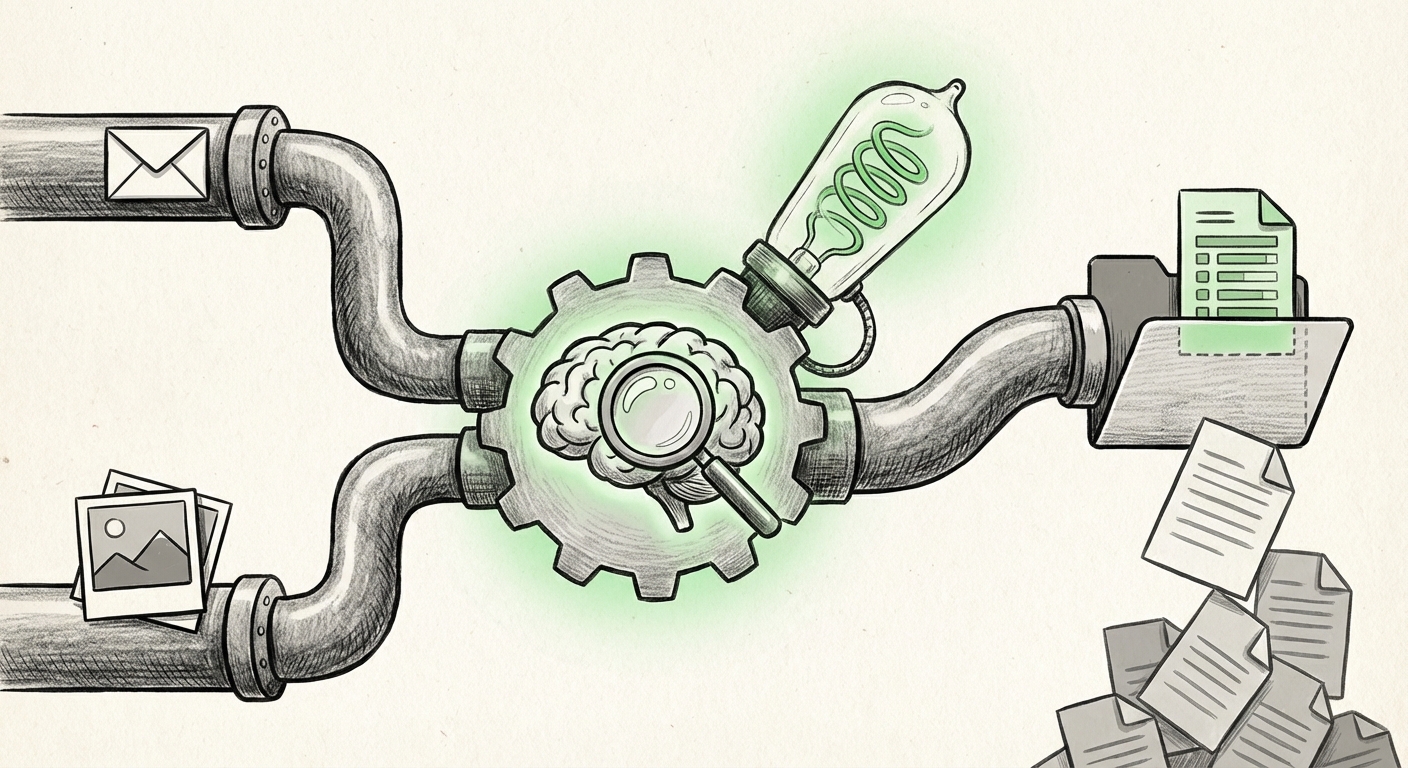
Self-Building Labs: AI Agents Are Now Running the Whole Lab
Something strange and important happened in the world of science on October 28, 2026. Labs stopped being places where humans do the work and machines help. Instead, a new class of laboratory is emerging that builds itself, and hands AI agents the keys to everything inside.
This is not a small upgrade to how research gets done. It is a change in who, or what, holds the controls. The labs are being designed so that AI agents can plan experiments, run the equipment, adjust their own setups, and even rebuild parts of the lab when a new question demands it. Humans set the goals. The agents handle the rest.
What "Self-Building" Actually Means
The phrase sounds like science fiction, so it helps to break it down. A traditional automated lab is a fixed set of robots and machines wired to do one kind of task. Change the research question and you often need to rebuild the room, re-engineer the tools, and rewrite the software.
A self-building lab flips that. The lab is treated as a flexible system that AI agents can reconfigure on their own. When a new experiment needs a different layout, a different sequence of steps, or a different instrument setup, the agents can make those changes without waiting for a human to redesign the workflow.
In other words, the lab becomes a kind of living system. It adapts to the question instead of forcing the question to fit the room. And critically, the agents are not just following a script, they are trusted with the keys to the whole lab, from scheduling to execution to reconfiguration.
Why This Is a Turning Point for AI
For years, the story of AI in science has been about narrow wins. A model predicts a protein shape. A model suggests a molecule. A model sorts through data faster than a person can. Each of these was valuable, but each was also a single step in a much longer chain that still depended on human hands.
Self-building labs change the unit of automation. The unit is no longer a single task, it is the entire research loop. That means AI is moving from being a tool inside science to being an operator of science.
This has three big consequences:
- Speed compounds. When agents can run experiments around the clock and rebuild the lab for the next question, the pace of discovery stops being limited by human working hours.
- Search gets wider. Agents can test many more combinations of conditions than any human team could manage, which means more chances to stumble onto something surprising.
- Trust becomes the bottleneck. Once AI holds the keys, the hard question is not whether it can run the lab, it is whether we can verify what it did and why.
The Trust Problem Nobody Can Skip
Handing over the keys sounds efficient. It also sounds risky, and for good reason. If an AI agent can reconfigure a lab, it can also make a change that a human did not expect. If it can run a long chain of experiments on its own, the reasoning behind each step can become hard to follow.
This is where the real design work sits. Self-building labs only make sense if they come with strong guardrails: clear goals set by humans, limits on what the agents are allowed to change, and records detailed enough that a person can reconstruct what happened afterward.
The labs that succeed will be the ones that treat transparency as a feature, not an afterthought. An agent that can explain its own choices is far more valuable than one that simply gets results fast.
What This Means for Businesses
You do not need to run a chemistry lab to feel the effects of this shift. The pattern behind self-building labs, AI agents that own a whole workflow and can reshape it, is spreading into ordinary business operations.
1. Workflow ownership is the new automation
Most companies today automate tasks. The next step is letting AI agents own an entire process end to end, including the ability to change how that process works when conditions shift. Think of supply chain planning, quality testing, or customer onboarding handled by an agent that can redesign its own steps.
2. The org chart gets flatter in odd places
When an agent can run a full loop, the middle layers that existed mainly to coordinate handoffs start to shrink. That does not mean fewer people, it means people move toward setting goals, checking results, and handling exceptions.
3. Governance becomes a competitive advantage
Companies that can show clear oversight of autonomous agents will win trust faster than those that cannot. Audit trails, permission boundaries, and human checkpoints are becoming business assets, not just compliance costs.
4. Experimentation gets cheaper
If agents can test many options quickly, the cost of trying something new drops. That rewards organizations that are good at asking sharp questions, because the bottleneck moves from doing the work to deciding what is worth doing.
What This Means for Society
The social stakes are just as real. Science that runs faster could mean new medicines, better materials, and cleaner energy arriving sooner. That is the upside, and it is a big one.
But speed without understanding is a trap. If AI agents produce results that few people can interpret, the public's ability to trust scientific findings could weaken just as those findings become more important. The answer is not to slow down, it is to invest in explainability, independent checking, and scientists who are trained to supervise autonomous systems rather than operate equipment by hand.
There is also a talent question. The next generation of researchers will need to be good at directing agents, not just running experiments. That is a different skill set, and it belongs in university programs now, not later.
Actionable Steps to Take Today
Whether you lead a company, a research group, or a team of five, the self-building lab trend offers clear lessons you can act on right away.
- Map one full loop. Pick a process your team runs end to end and document every step. You cannot hand a loop to an agent until you understand it yourself.
- Set the boundaries first. Decide what an agent may change on its own and what requires a human sign-off. Write it down before you deploy anything.
- Demand logs, not just results. Require any autonomous system to produce a record a person can follow. If it cannot explain itself, it is not ready.
- Reward good questions. As execution gets cheaper, the value shifts to choosing the right problems. Train your people for that.
- Start small but start now. Give an agent a contained loop with tight limits. Learn from the friction before scaling up.
The Bigger Picture
The shift toward self-building labs is really a shift in where trust is placed. For a century, we trusted trained humans to hold the keys to the lab. Now we are deciding, step by step, whether to hand those keys to agents that can act faster and wider than any person could.
That decision will not be made once. It will be made thousands of times, in small choices about what to automate, what to check, and what to keep in human hands. The organizations and societies that get those choices right will not just move faster. They will be the ones whose results people actually believe.
The lab of the future may build itself. But the judgment about what it should build, and whether to trust what it finds, still belongs to us.