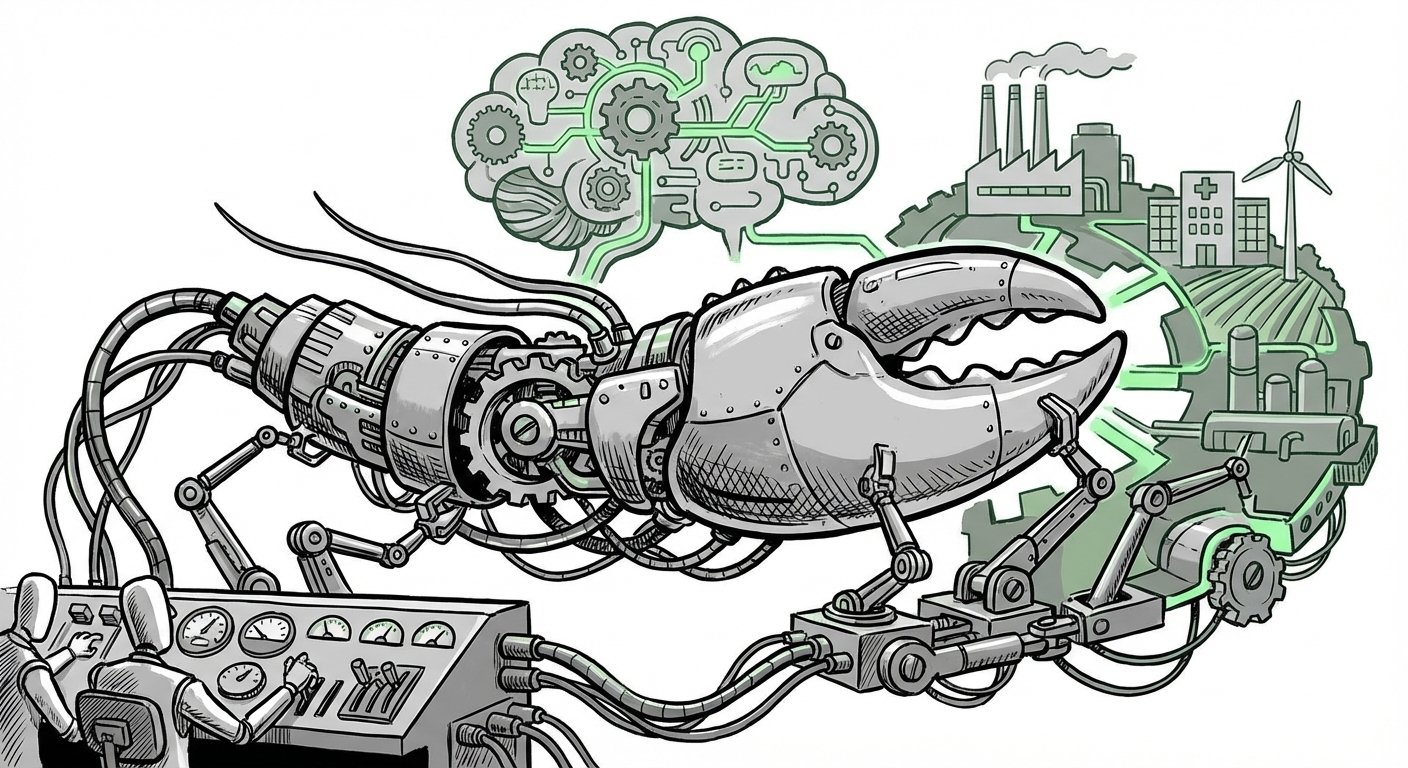
DoorDash Moves Earnings to October 29 Ahead of a $17 Billion Instacart Deal: What It Means for the Future of AI
DoorDash has changed its plans. Its third-quarter earnings release, once set for November 4, will now land before the market opens on October 29. That is a small change on a calendar and a very big signal about what is coming next.
The move arrives alongside reports of an imminent deal worth roughly $17 billion to acquire Instacart. A company does not usually rush its numbers forward by six days for no reason. When a blockbuster deal is close, leaders want to talk to investors on their own schedule, in their own words, before the news leaks out in pieces. They want one clear story instead of two messy ones.
For anyone watching artificial intelligence, this story matters more than it first appears. It is not really about quarterly numbers. It is about what happens when two of the largest delivery and grocery networks on the continent become one. And that is, at its core, a story about data, logistics, and machine learning at a scale few companies can match.
Why a Moved Earnings Date Is a Real Signal
Public companies treat earnings dates like train schedules. Investors plan around them. Analysts build models around them. So moving a date means something.
In practice, an earlier release gives a company three advantages. First, it lets leadership frame the quarter themselves before a transaction dominates the headlines. Second, it lets them explain the logic of a deal to long-term shareholders while the numbers are fresh in everyone's mind. Third, it takes away the risk of a leak forcing a rushed announcement on a day no one planned for.
That tells us the company believes the deal news cycle and the earnings news cycle should be handled together. The message is: judge our quarter and our big bet as one plan, not two separate events.
Two Delivery Networks Become One Giant Training Set
Here is the part most people miss. Delivery apps look simple on the surface, you tap a button, food arrives. Underneath, they are some of the most data-hungry systems in modern business.
Every order produces a trail. What did the customer search for? What did they actually buy? What did they swap when an item was out of stock? How long did the restaurant take? Which driver was closest, and which route actually worked? Multiply that by millions of orders a day and you get a dataset that can teach a machine a great deal.
DoorDash brings restaurant demand and a nationwide courier network. Instacart brings grocery behavior, carts, substitutions, store inventories, and the strange, human logic of what people buy together. Put them side by side and you get something neither has alone: a picture of how households feed themselves across restaurants, grocery stores, and quick convenience runs.
That picture is the raw material for better AI. Not just chatbots, but forecasting models, recommendation engines, pricing systems, and routing brains that get smarter with every extra data point.
The Logistics Brain: Where AI Actually Earns Its Keep
Delivery is a math problem that never stops changing. You have orders appearing in real time, drivers moving through traffic, kitchens running late, and weather doing whatever it wants.
AI helps in a few concrete ways:
- Batching: Figuring out which orders can ride together without making anyone's food cold.
- Forecasting: Predicting when demand will spike, Friday night, a rainy Sunday, a game day, so drivers are in the right place before the rush.
- Routing: Choosing paths that balance speed, cost, and driver fairness, not just the shortest line on a map.
- Promise accuracy: Telling a customer "28 minutes" and actually meaning it. That single number drives trust more than any feature.
Each of these improves when the training data gets wider. More orders across more categories in more neighborhoods means fewer blind spots. A merged network would cover far more of the map, which is exactly what logistics AI needs.
Grocery Is the Hard Mode of Delivery
Restaurant food is forgiving. A burrito does not care if it sits for four minutes. Groceries are unforgiving. Produce has to be picked well. Frozen items have to stay frozen. Shoppers have to make judgment calls when the shelf is empty.
That complexity is where AI earns a real advantage, and where it can fail loudly. A model that suggests a bad substitution ("no milk? how about dish soap?") destroys trust instantly. A model that predicts a store is out of strawberries before the shopper walks in saves everyone time.
Grocery data is also unusually valuable because it is a direct read on household intent. What people buy at the store is a better signal of what they will want next week than almost anything else a company can observe. That has huge value not only for delivery, but for advertising, inventory planning, and supplier deals.
Ads and Personalization: The Quiet Profit Engine
Delivery apps have become advertising platforms. Brands pay to appear at the top of a search. Restaurants pay for placement. Grocery makers pay to be the suggested swap.
AI is what makes those ads work. The system has to guess, in a fraction of a second, which sponsored item a shopper will actually click and buy. Get it right and everyone wins: the brand gets a sale, the platform gets revenue, and the customer sees something useful instead of noise.
Combine two large ad networks and you get more places to show an ad, more data on what converts, and more chances to train the ranking models. This is often the most profitable use of AI in the entire business, far more profitable than any flashy demo.
Robots, Warehouses, and the Physical World
The next frontier is physical. Automated picking, micro-fulfillment centers, sidewalk delivery robots, and smarter store layouts all depend on the same foundation: clean data about what sells, where, and when.
Grocery is the best possible training ground for physical automation because products are standardized and demand is repetitive. The company that knows exactly which items move fastest in each neighborhood can place robots and small warehouses far more efficiently than one guessing from survey data.
This is where the AI story stops being about software and starts being about infrastructure. And infrastructure bets are the ones that take years to copy.
What This Means for the Wider AI Race
The last few years taught the tech world that building a great model is not the same as building a great business. Models are becoming easier to access. What is hard to copy is distribution, the everyday habit of millions of people opening an app to order dinner.
That is the real lesson here. A combined delivery giant would control a rare thing: a high-frequency, real-world feedback loop where AI predictions get tested millions of times a day and corrected immediately. No lab can buy that. You have to earn it one delivery at a time.
Expect three shifts to follow:
- AI moves from demo to default. The most valuable systems will be invisible, quietly choosing routes and rankings rather than writing essays.
- Data partnerships get strategic. Grocery, restaurant, and retail data become negotiating chips, not just byproducts.
- Agentic shopping arrives faster. Once an app knows your household deeply, letting an AI assistant reorder your weekly staples stops feeling futuristic.
A Practical Playbook for Businesses
You do not need a $17 billion deal to learn from this. Here is what any company can take away.
- Treat your operational data as an AI asset. Every order, ticket, return, and delay is training material. Clean it, label it, and guard it like inventory.
- Fix the boring metrics first. Delivery accuracy, stock accuracy, and forecast error matter more than any model brand name.
- Design for the handoff. AI works best when it hands a clean decision to a human, a substitution to approve, a route to confirm, instead of pretending humans are not there.
- Watch the ad layer. If your products sell through a marketplace, ranking algorithms decide your visibility. Learn how they work.
- Plan for consolidation. When big platforms merge, supplier terms, ad prices, and data access all shift. Build alternatives before you need them.
The Risks Worth Naming
Bigger data networks bring bigger questions. Grocery purchases reveal health conditions, family size, income level, and religious practice. Combining two deep profiles of household behavior raises real privacy stakes, and regulators will notice.
There is also the human side. Couriers and shoppers are already managed by algorithms that assign work, score performance, and set pay. Scale does not automatically make those systems fairer. In fact, the pressure to optimize gets stronger.
And there is model risk. A recommendation engine that is merely mediocre is annoying. A forecasting system that understaffs a city on a holiday, or a substitution engine that keeps guessing wrong, damages trust fast. The companies that win the next phase will be the ones that treat AI reliability as a product feature, not an afterthought.
The Bottom Line
Moving an earnings call from November 4 to October 29 is a scheduling detail. But paired with a reported $17 billion deal for Instacart, it marks a bigger moment: the delivery industry is consolidating around data and AI as its core advantage.
The future of AI will not be decided only in research labs. It will be decided in kitchens, grocery aisles, and traffic jams, where models get tested against real hunger and real deadlines, millions of times a day. The companies that own those moments will own the feedback loop. And the feedback loop, more than any single model, is what compounds.