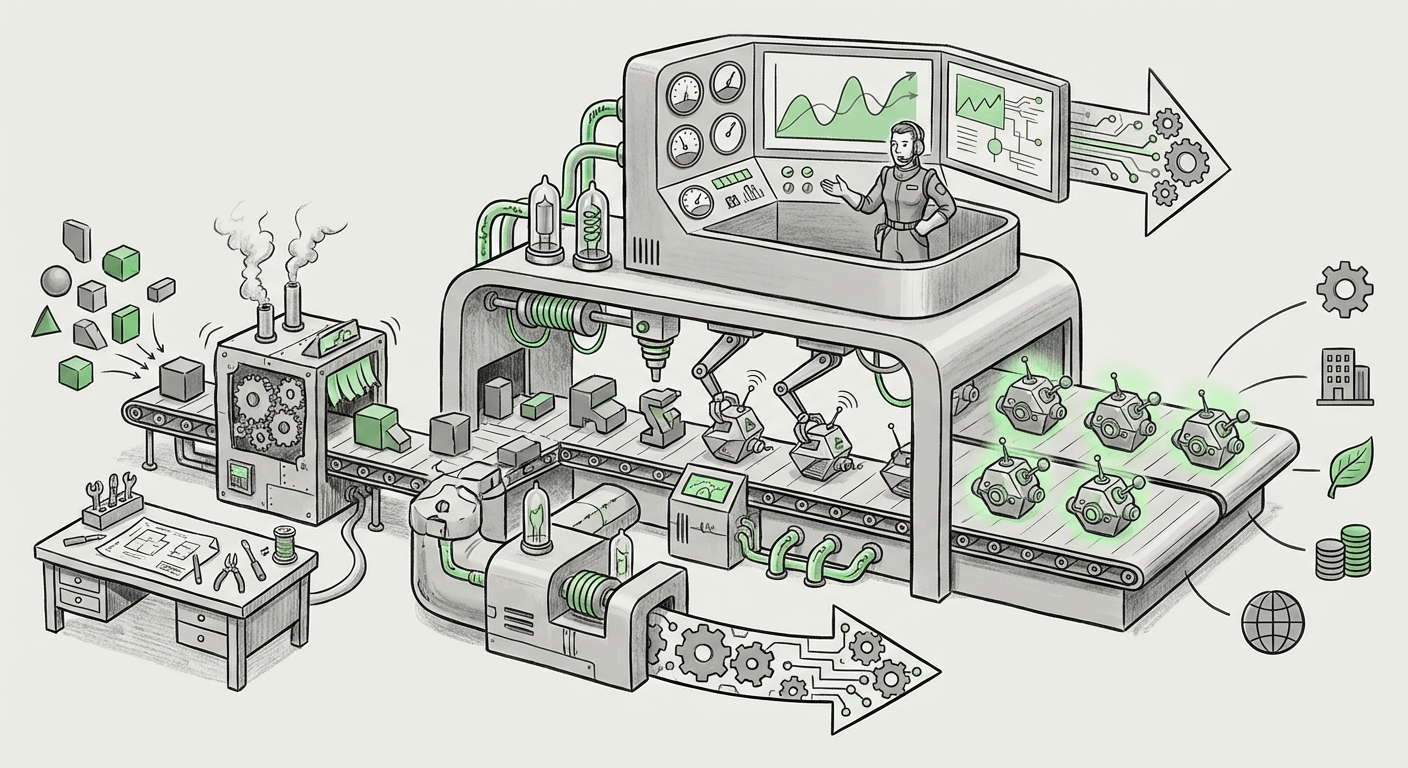
How to Make Artificial Intelligence More Environmentally Sustainable: A Roadmap for Green AI
Artificial intelligence is transforming industries, automating tasks, and unlocking new insights. But this power comes at a cost. Training large AI models and running them at scale consumes massive amounts of electricity, and most of that energy still comes from fossil fuels. As AI becomes more embedded in our daily lives, its environmental footprint is growing fast. The good news: we can make AI more sustainable without sacrificing its benefits. This article explores the key strategies, business implications, and future trends that will define the green AI movement.
The Environmental Cost of AI: Training and Inference
Every AI model, from a simple recommendation engine to a large language model, has an environmental price tag. Training a model involves feeding it huge amounts of data and adjusting millions or billions of parameters. This process runs on powerful computers for days or weeks, guzzling electricity. Inference, the act of using a trained model to make predictions, also adds up. When millions of users query an AI system every day, the energy demand can be enormous.
Most of this energy is consumed in data centers. These facilities need electricity to power servers and even more to keep them cool. If the electricity comes from coal or natural gas, the carbon emissions are significant. Even with renewable energy, the sheer scale of AI workloads strains power grids. Without intervention, the AI boom could undermine climate goals.
Strategies for Sustainable AI
Making AI greener requires action at every stage: hardware, software, and operations. Here are the most promising approaches.
Energy-Efficient Hardware
The foundation of sustainable AI is efficient hardware. Chipmakers are designing processors specifically for AI workloads that deliver more computations per watt. For example, specialized chips like GPUs and TPUs are constantly improving in energy efficiency. But hardware alone isn’t enough. Companies can also extend the life of existing hardware through better maintenance and recycling, reducing the environmental cost of manufacturing new devices.
Renewable Energy and Carbon-Aware Computing
Powering data centers with renewable energy is a critical step. Many tech companies have pledged to run their facilities on 100% clean energy, but matching energy use with renewable generation hour-by-hour is challenging. Carbon-aware computing offers a solution: schedule AI training or batch jobs for times when the grid is greener, say, when solar or wind power is abundant. This flexibility can dramatically cut emissions without changing hardware.
Algorithmic Efficiency and Model Compression
Better algorithms can achieve the same accuracy with far less computation. Techniques like model pruning (removing unnecessary parameters), quantization (reducing the precision of numbers), and knowledge distillation (training a small model to mimic a large one) can shrink models dramatically. Smaller models mean faster inference, lower energy use, and the ability to run on edge devices instead of energy-hungry data centers. Researchers are also developing more efficient training methods, such as sparse training and few-shot learning, which reduce the data and compute needed.
Sustainable Data Centers and Cooling
Data centers can be designed to use less energy. Free cooling, which uses outside air instead of air conditioning, works in cooler climates. Liquid cooling, which is more efficient than air cooling, is gaining traction for high-density AI racks. Waste heat from servers can even be reused to warm nearby buildings or greenhouses. Additionally, improving server utilization, keeping servers busy rather than idle, avoids wasted energy.
The Role of Business and Policy
Sustainability isn’t just an environmental imperative; it’s a business opportunity. Companies that adopt green AI practices can save money on energy bills, comply with upcoming regulations, and enhance their brand reputation. Investors and customers increasingly demand environmental responsibility, so sustainability can be a competitive differentiator.
Business Incentives: Cost Savings and Brand Value
Energy is a major operating cost for AI-intensive businesses. Efficiency improvements directly reduce expenses. For example, model compression can lower cloud computing bills while also cutting emissions. Renewable energy contracts can stabilize long-term energy costs. And publicly committing to sustainable AI can attract talent and customers who care about the planet.
Regulatory Pressures and Standards
Governments are starting to regulate AI’s environmental impact. Some regions require large data centers to report energy use and emissions. Others offer tax incentives for green computing. We can expect more rules mandating efficiency standards or carbon disclosure. Companies that prepare now will avoid costly retrofits later. Industry standards for measuring AI’s carbon footprint are also emerging, which will make it easier to compare and improve.
Future Implications: How Sustainable AI Will Be Used
The push for green AI will reshape how AI is built and deployed. In the future, sustainability will be a design principle, not an afterthought.
Green AI as a Competitive Advantage
Companies that master efficient AI will be able to offer cheaper, faster services. They’ll also be better positioned to win contracts from environmentally conscious clients. Startups focused on energy-efficient algorithms or carbon-aware scheduling could disrupt established players. In short, sustainability will become a key performance indicator for AI systems.
Enabling Environmental Applications
AI itself can help the environment. It can optimize energy grids, improve climate modeling, and monitor deforestation. But these benefits only count if AI’s own footprint is small. By making AI sustainable, we ensure that its positive environmental impact outweighs its costs. For example, AI-powered smart grids can reduce waste, but only if the AI itself runs on clean energy.
The Path to Net-Zero AI
Achieving net-zero AI, where the emissions from AI are fully offset or eliminated, is ambitious but possible. It requires a combination of renewable energy, efficient hardware, optimized algorithms, and carbon offsets for residual emissions. Some organizations are already piloting “carbon-negative” data centers that sequester more carbon than they emit. While these are early steps, they point the way forward.
Conclusion
Artificial intelligence and environmental sustainability are not opposites. With intentional effort, we can build AI systems that are powerful, affordable, and green. The strategies are clear: use efficient hardware, power it with renewables, write smarter algorithms, and operate data centers responsibly. Businesses that embrace these practices will save money, reduce risk, and lead the next wave of innovation. The future of AI depends on it, and so does the planet.