Neurosymbolic Planning, Time-Series Forecasting, and Home Robots: The Three AI Trends That Will Shape 2027
Something important is happening in artificial intelligence right now, and it does not look like another leap in chatbot conversation. As of October 2026, three research threads are getting serious attention: neurosymbolic planning, time-series forecasting, and robots built for the home. On the surface they seem unrelated. One is about logic and decision-making, one is about predicting numbers, and one is about machines that walk around your living room.
Look closer and they tell one story. AI is moving out of the sandbox. It is being asked to plan in the real world, to predict things where being wrong costs money, and to physically act in places where people live. That is a much harder job than writing a poem. This article breaks down each trend, explains why they are arriving together, and lays out what businesses and ordinary people should actually do about it.
What Is Neurosymbolic Planning, and Why Should You Care?
Most modern AI runs on neural networks. These are pattern-spotters. Show a model millions of examples and it gets remarkably good at recognizing faces, reading text, or guessing the next word. Remarkably good, though, is not the same as guaranteed correct. Neural networks are confident even when they are wrong, and they struggle with hard rules like "never schedule two trucks in the same dock" or "never prescribe a drug the patient is allergic to."
Neurosymbolic planning is a marriage of two very different ways of thinking. The neural half handles the messy, fuzzy parts: seeing what is in a room, understanding a written request, estimating what is likely to happen next. The symbolic half handles the crisp parts: rules, logic, and step-by-step search through possible plans. Symbolic planners have been around for decades. They are slow and they break when reality gets fuzzy. Neural networks are fast and flexible but cannot promise to follow a rule.
Put them together and you get something neither could do alone: an AI system that can look at a messy situation, form a plan of action, and still guarantee that certain things never happen. In practice this means a system that can show its work, here is the plan, here is why each step was chosen, here is the rule it had to obey.
Why this matters more than it sounds
The biggest blocker to putting AI in charge of anything valuable is not intelligence. It is trust. A company will not hand over a supply chain to a system that cannot explain a decision or promise a hard constraint. A hospital will not let software decide on a care plan if it might break a safety rule. Neurosymbolic planning is one of the few credible paths to AI that is both capable and accountable. That is why it keeps showing up on research agendas, it addresses the exact gap that stops pilots from becoming production systems.
Time-Series Forecasting: The Quiet Workhorse Gets an Upgrade
Forecasting gets far less attention than generative AI, but it quietly runs a huge share of the economy. How many units will we sell next month? How much power will the grid need at 6 p.m.? When will this machine break? How many staff do we need on Friday? Every one of those is a time-series problem, predicting what comes next from a sequence of past measurements.
For years, teams built a separate custom model for each dataset. That is expensive and slow, and each model needs its own tuning and maintenance. The direction of travel now is toward general-purpose forecasting models that learn patterns from many different series and can be pointed at a new one with far less hand-crafting. This mirrors what happened in language: instead of building a model per task, you start with something that already understands sequences and adapt. What changes for business? Three things stand out.
- Speed to value. Companies with modest data science teams can get useful forecasts without a year-long build. Demand planning, staffing, and inventory become reachable for mid-sized firms.
- Better honesty about uncertainty. A forecast without a range is a guess dressed up as a fact. Modern approaches put more emphasis on saying how confident they are, which lets people plan for the bad case as well as the likely one.
- Fewer excuses. When forecasting gets easier, the bottleneck moves to data quality and to the human decisions that follow the number. That is where competitive advantage will sit.
There is a trap here worth naming. Forecasts fail quietly. If a model is trained on a stable period, it will look brilliant right up until the world changes, a new competitor, a supply shock, a shift in habits. Distribution shift is the technical term, and it is unforgiving. Anyone deploying forecasting at scale needs backtesting, drift monitoring, and a human who can override the machine.
Robots for the Home: The Hardest Test Lab There Is
Factories and warehouses are tidy. Everything is where it should be, lighting is consistent, and nothing unexpected wanders into the aisle. Homes are the opposite. Floors are cluttered. Pets move without warning. Furniture gets rearranged. Children exist. A robot that works beautifully in a lab can fail instantly in a real kitchen.
That difficulty is exactly why home robotics is such a meaningful signal. Progress there means progress on the fundamentals: perception that handles mess, control that handles uncertainty, and hardware that is cheap enough and safe enough to sit in someone's living room. Falling sensor costs and better learned control policies are steadily pulling the home robot from science fiction toward product. It is not solved, cost, safety certification, battery life, and trust all remain genuine barriers, but the direction is now clear enough to plan around.
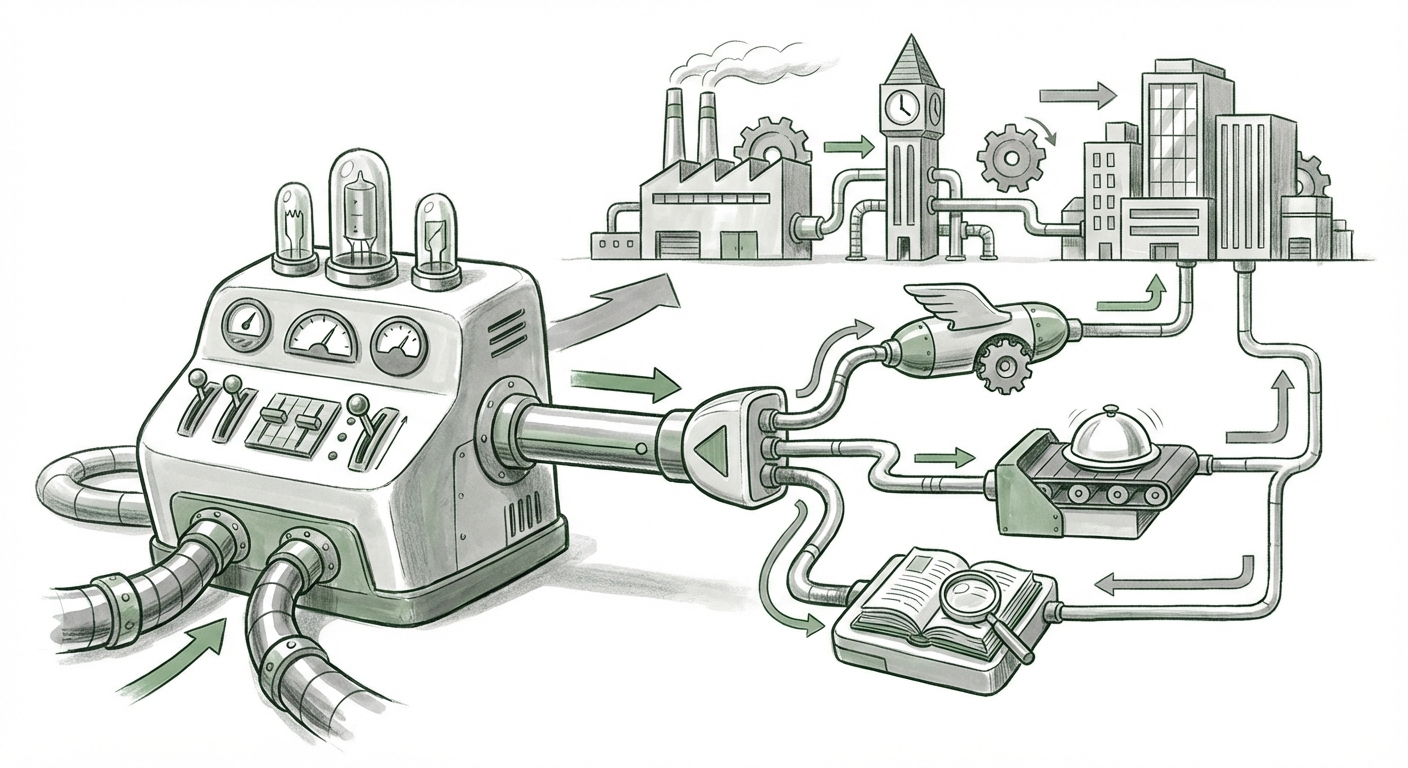
Notice how the threads connect. A home robot cannot be a pure neural network, because it must never, under any circumstances, hurt a person or knock over a stove. It needs hard safety rules that hold no matter what. It also needs to predict what happens next, is that person about to walk in front of me, will this cup slide off the edge? And it needs to plan a sequence of actions across a room over minutes. Neurosymbolic planning, forecasting, and embodied robotics are the same problem wearing three different hats.
The Bigger Picture: AI Moves From Impressive to Dependable
The through-line across all three developments is a shift in what the field is optimizing for. The last few years were about capability, can the model do something surprising? The next phase is about dependability, can the system be trusted when something real is at stake? That requires three things that pure deep learning does not naturally give you:
- Constraint satisfaction. The ability to promise that certain outcomes will never occur, and to prove it.
- Calibrated uncertainty. Knowing what you do not know, and saying so in numbers a human can act on.
- Physical and operational safety. Behaving predictably in environments that cannot be fully controlled.
This is a less flashy story than a new model that writes better prose. It is also the story that decides whether AI reshapes the economy or stalls in pilot purgatory.
What This Means for Businesses
1. Prioritize problems where being wrong is expensive
If a mistake costs nothing, a plain statistical model or an off-the-shelf tool is fine. The new techniques earn their keep where errors carry cost, regulation, or risk, scheduling, compliance-heavy workflows, energy management, maintenance planning. Those are the places to invest.
2. Ask vendors hard questions about explanation and constraints
Any system making consequential decisions should be able to explain a recommendation and demonstrate that hard rules hold. If a vendor cannot answer "what stops it from doing X?", that is your answer.
3. Fix your data plumbing before your models
Better forecasting methods do not rescue bad data. Clean, well-instrumented, timely data is still the real moat. The companies that win the next few years will be the ones whose data is already in order.
4. Plan for drift, not perfection
Every forecast and every learned model degrades when the world shifts. Budget for monitoring and human review from day one, not as a phase-two nice-to-have.
What This Means for Society
Home robots raise immediate practical questions about privacy, a machine that maps your house sees a lot, and about liability when something goes wrong. Neurosymbolic systems raise a subtler one: if a machine can explain its reasoning, who is responsible when that reasoning leads to a bad outcome? Forecasting raises a third: as predictions get better, organizations may start to treat them as certainties and stop questioning them. The healthiest posture is to treat these systems as very good advisors rather than oracles. They should sharpen human judgment, not replace the habit of asking why.
There is an upside worth keeping in view too. Home robotics could meaningfully help older people live independently for longer and take on chores that consume hours every week. Accessible, reliable automation is one of the few technologies that could give people back time rather than demand more of it.
Actionable Takeaways
- For leaders: audit your AI portfolio for "demo-shaped" projects. Ask which ones would survive a hard constraint or a wrong prediction. Fund those.
- For data teams: invest in backtesting and drift detection now. It is cheaper than explaining a bad forecast later.
- For product teams: design interfaces that show uncertainty, not just a single number. A range builds more trust than false precision.
- For anyone deploying automation: keep a human override that is genuinely usable, not decorative.
- For curious observers: watch the neurosymbolic thread. It is the least exciting and most consequential of the three.
Conclusion
October 2026 will not be remembered for a single breakthrough. It will be remembered, if things go well, as the point when the field got serious about reliability. Neurosymbolic planning is teaching AI to follow rules and explain itself. Time-series forecasting is making prediction cheap and honest enough to run the economy on. Home robots are forcing all of it to work in the messiest environment humans have ever built. None of these is finished. Together they point at exactly where AI has to go next: from tools that impress us to systems we can actually rely on.