AMD Open Robotics Hackathon: What It Means for AI, Edge Computing, and the Future of Robots
When a major chip company invites developers to build robots, it is more than a coding contest. It is a signal about where artificial intelligence is going next. The AMD Open Robotics Hackathon, announced on November 13, 2025, points to a future where AI leaves the screen and enters the physical world. That shift will change how businesses build products, how workers do their jobs, and how society thinks about automation.
This article breaks down the trends behind the event. It looks at why open robotics matters, why edge AI is becoming the new battleground, and what leaders should do now. The message is simple: the next wave of AI will not live only in cloud data centers. It will live in machines that move, sense, and act in the real world.
The Big Picture: AI Is Leaving the Screen
For years, most AI progress showed up in software. Chatbots wrote text. Image models made pictures. Recommendation engines sorted feeds. Those tools are powerful, but they mostly live on screens and in clouds. The next step is embodied AI, AI that has a body. Robots are the clearest example. They need to see, plan, move, and react in real time.
That is a much harder problem. A robot cannot wait two seconds for a cloud server to answer. It must process sensor data on the spot. It must handle uneven ground, moving people, and sudden obstacles. It must do this with limited power and limited heat. This is why robotics pushes AI in new directions: smaller models, faster chips, better sensors, and smarter software.
AMD's Open Robotics Hackathon sits right at this intersection. By inviting developers to work on open robotics, AMD is helping build the software and skills needed for this next phase. The event is small in name, but the trend it represents is large. AI is moving from thinking to doing.
Why 'Open' Robotics Changes the Game
Open robotics means shared tools, open-source software, common standards, and reusable designs. Instead of every company building every piece from scratch, teams can build on what others have already made. That lowers the cost of entry. It speeds up testing. It lets small teams compete with large labs.
Hackathons are a natural fit for open robotics. They bring developers together for a short, intense sprint. People share ideas. They reuse code. They learn what works and what breaks. The best projects often become startups, open-source projects, or hiring leads. For a chip company like AMD, the event also helps build an ecosystem. Developers who learn to build robots on a platform today may build products on it tomorrow.
This matters because robotics has long been closed and expensive. Industrial robots were big, costly, and locked into vendor systems. Open robotics is changing that. It is making robots more modular, more affordable, and easier to customize. The same shift happened in software with open-source. It is now happening in hardware and machines.
What open robotics makes possible
- Faster prototyping: Teams can test ideas without building every part from zero.
- Lower costs: Shared software and designs reduce重复 work and vendor lock-in.
- Better talent: Hackathons give developers hands-on skills that schools often cannot.
- Stronger standards: Common tools make it easier for robots to work together.
The Edge Is the New AI Battleground
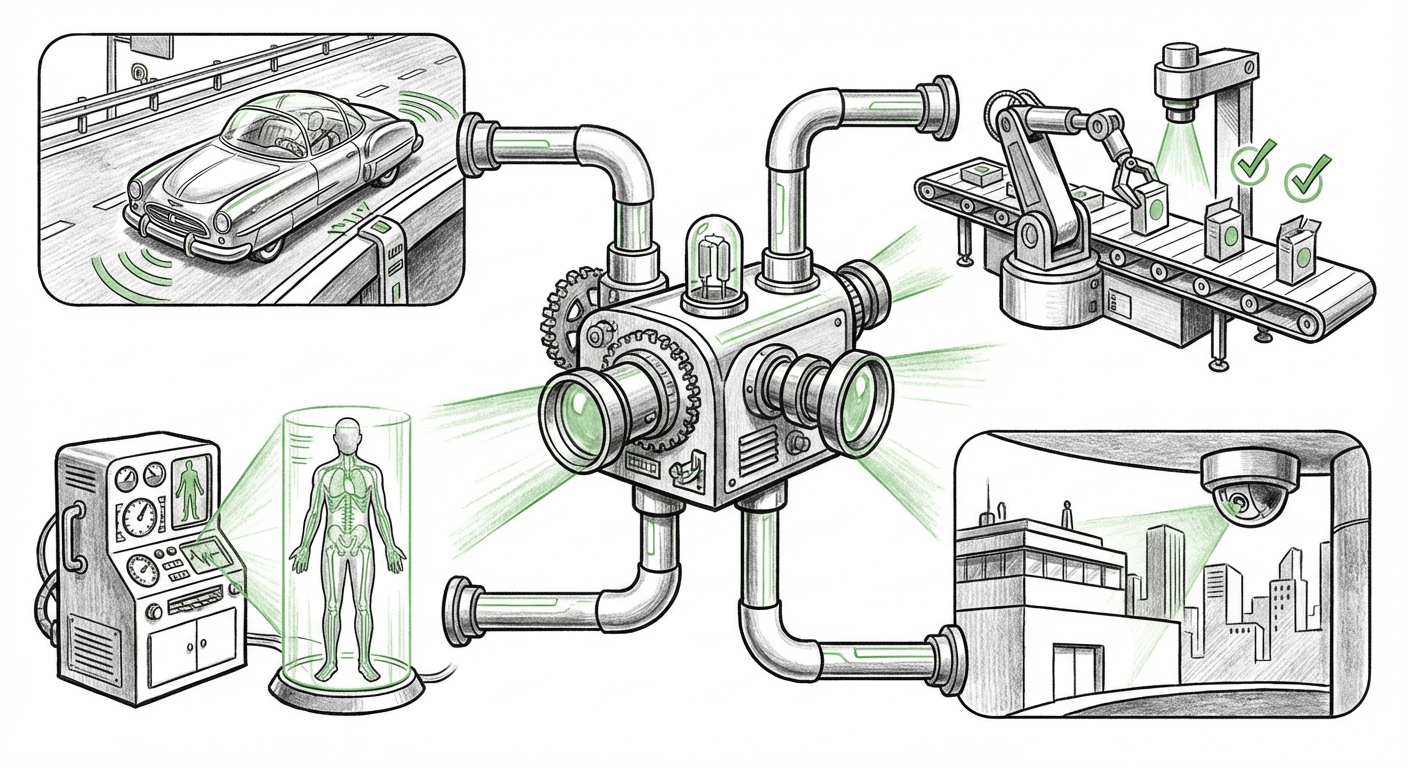
Edge AI means running AI on the device itself, close to where the data is created. For robots, this is not optional. A warehouse robot must avoid a fallen box without waiting for a remote server. A farm robot must spot a sick plant in a field with weak internet. A home robot must respond to a voice command instantly.
This is why chip companies care about robotics. Robots need a mix of processing: some for vision, some for motion, some for planning, and some for safety. They need chips that are fast, power-efficient, and reliable. They need software that makes it easy to use those chips. An open robotics hackathon helps test all of this in the real world.
The edge AI market is growing because cloud computing has limits. Sending every sensor reading to a data center costs money and adds delay. It also raises privacy concerns. For many tasks, it is better to process data locally. This is true for robots, cars, drones, cameras, and factory machines. The company that makes edge AI easy to build will win a large market.
AMD's move into open robotics suggests that the AI hardware race is spreading. It is no longer only about training huge models in data centers. It is also about running smart models on small devices. That shift will create new winners and new opportunities for developers.
What AMD's Move Signals About Competition
The hackathon is a signal that AMD wants a role in the robotics ecosystem. That role is not just about selling chips. It is about building a community of developers who know how to use AMD technology. In the AI world, hardware is only as good as the software and skills around it. Developers choose platforms that are easy to use, well documented, and supported by a strong community.
This is a common pattern in tech. Companies sponsor hackathons to seed new markets. They train developers early. They learn what customers need. They build goodwill. For AMD, open robotics is a chance to shape how robots are built before the market settles. The same playbook worked in cloud computing, mobile apps, and open-source software.
Competition in AI hardware is intensifying. Data centers get most of the headlines, but edge devices may be the larger long-term market. Robots, cars, and industrial machines are all becoming smarter. They all need compute. The companies that make it easy to build edge AI will have a strong advantage. The AMD Open Robotics Hackathon is a small but telling step in that direction.
Practical Implications for Businesses
Business leaders should not ignore this trend. Robotics and edge AI are moving from pilot projects to real operations. Warehouses use robots to move goods. Farms use robots to monitor crops. Hospitals use robots to deliver supplies. Factories use robots to inspect products. These systems are getting cheaper and easier to deploy.
Here is what this means in practice:
- Look for open platforms: Open robotics tools can reduce lock-in and speed up development. Ask vendors about standards and community support.
- Build edge AI skills: Your team needs to understand how to run AI on devices, not just in the cloud. This includes model optimization, power management, and real-time data handling.
- Start with small pilots: Do not try to automate everything at once. Pick one workflow, measure results, and scale what works.
- Plan for safety and security: Robots that move in the real world can cause harm. Build in testing, monitoring, and fail-safes from day one.
- Use hackathons as a talent pipeline: Sponsor or join events like this one. They are a low-cost way to find skilled developers and test new ideas.
There is also a cost angle. Open robotics can lower the price of entry. Small and mid-size companies can now build custom robots using shared software and affordable hardware. That was not possible a decade ago. The result will be more competition and more innovation.
What This Means for Society
The rise of open robotics will affect workers, communities, and public policy. Some jobs will change. Routine physical tasks may be automated. New jobs will appear in robot maintenance, data labeling, safety oversight, and system design. The transition will not be smooth for everyone. Training and education will matter.
There are also safety and privacy questions. Robots collect data as they move. They see homes, factories, and public spaces. Who owns that data? How is it protected? Who is responsible when a robot makes a mistake? These questions need clear rules. Open systems can help by making behavior easier to inspect and test. But openness alone is not enough. Companies and regulators must work together.
On the positive side, robots can do dangerous, dirty, and repetitive work. They can help in disaster response, elder care, and agriculture. They can make services more accessible. The outcome depends on how the technology is designed and deployed. Events like the AMD Open Robotics Hackathon can push the field toward useful, safe, and open solutions.
Actionable Insights for Leaders
If you want to prepare for the next wave of AI, here are concrete steps:
- Track open robotics projects: Follow open-source robotics software and standards. See which ones are gaining traction.
- Evaluate edge AI use cases: List tasks in your business that need fast, local decisions. Robots, cameras, and sensors are good starting points.
- Invest in simulation: Simulation lets teams test robots safely and cheaply before real-world deployment.
- Design for heterogeneous hardware: Your software should run on different chips, not just one vendor. Open standards help here.
- Prioritize data governance: Decide what data robots can collect, where it is stored, and who can access it.
- Engage the developer community: Sponsor hackathons, publish tools, and support open projects. This builds skills and trust.
These steps are not expensive. They are about awareness and planning. The companies that start now will be ready when robotics becomes a standard part of operations.
Conclusion: A Small Event with a Big Signal
The AMD Open Robotics Hackathon is one event on the calendar, but it points to a larger shift. AI is moving into physical machines. Open tools are lowering the barriers. Edge computing is becoming the place where AI does its most important work. For businesses, this means new opportunities and new risks. For society, it means a new round of debate about work, safety, and access.
The future of AI will not be built in one company or one data center. It will be built by many developers, working on open platforms, testing ideas in the real world. The hackathon model is a small version of that future. It is collaborative, hands-on, and fast. Leaders who understand this will be better prepared for what comes next.