Ecom-RLVE and the Future of AI Shopping Assistants: How Adaptive Verifiable Environments Will Reshape E-Commerce
AI shopping assistants are about to get a lot more capable. The next wave is not just about a chatbot that answers questions. It is about an AI agent that can search for products, compare options, apply store policies, handle returns, and complete tasks across a whole shopping journey. The Ecom-RLVE approach points to how that future will be built: with adaptive verifiable environments for e-commerce conversational agents.
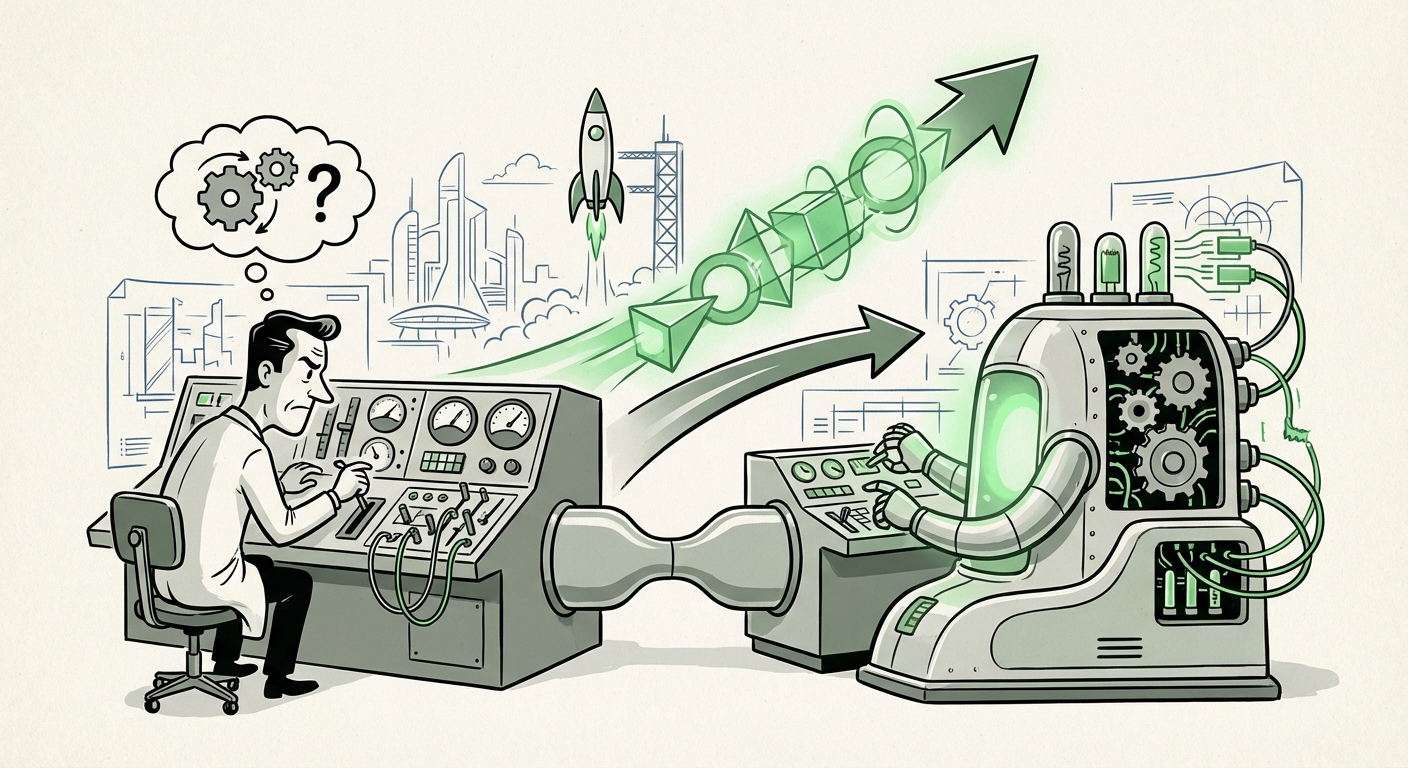
That sounds technical, but the idea is simple. Instead of training an AI on fixed examples, you train it inside a simulated store. The store can check whether the agent did the right thing. And the store can change as the agent improves. This is a big shift in how AI systems learn to act in the real world.
The Big Shift: From Chatbots That Talk to Agents That Act
Most customer service bots today are good at talking. They can answer common questions and point people to help pages. But they often struggle when a task has many steps. A shopper might ask: “I bought these shoes last month, they are too small, can I exchange them for a wider size and use the credit from my last return?” That single request involves order history, product availability, return policy, payment rules, and customer preferences.
An AI agent that can act needs more than language skills. It needs to make decisions, use tools, follow rules, and recover from mistakes. It also needs to know when to stop and ask a human for help. Training agents for this kind of work is hard because real stores are risky places to learn. A bad move can cost money, upset a customer, or break a policy.
This is where Ecom-RLVE matters. The name points to three ideas: e-commerce, reinforcement learning, and verifiable environments. Reinforcement learning is a way to train AI through rewards and penalties. Verifiable environments are training worlds where success can be checked by software. Put together, the approach gives e-commerce agents a safer place to practice before they touch real customers.
What Ecom-RLVE Actually Changes
Verifiable Environments: A Report Card That Writes Itself
In many AI training setups, someone has to judge whether an answer is good. That is slow, expensive, and inconsistent. A verifiable environment changes that. It defines clear rules for success. Did the agent find the right product? Did it apply the correct return policy? Did it avoid sharing private data? Did it complete the order without breaking a rule?
Because the environment can check these outcomes automatically, the agent can learn from many trials. It can fail safely, get a signal, and try again. This is how people learn too. A cashier in training can practice on a register without charging a real customer. The feedback is immediate and fair.
For e-commerce, verifiable environments are a natural fit. Stores already run on rules. Prices are in a system. Inventory is in a database. Return policies are written down. Shipping options have constraints. That means many shopping tasks can be checked by code. The agent does not need a human to grade every move. The store simulation can do it.
Adaptive Environments: Training That Refuses to Sit Still
The “adaptive” part is just as important. If an AI trains on the same set of tasks again and again, it can memorize the answers. It may look smart on the training set but fail on a new customer request. Adaptive environments fight that by changing over time. New products appear. Policies update. Customer needs shift. The agent faces fresh challenges as it improves.
This matters because e-commerce never stands still. Seasonal sales arrive. Return windows change. New shipping partners come on board. A conversational agent that was trained only on last year’s catalog will struggle this year. Adaptive training helps the agent build general skills instead of memorizing a fixed script.
The best way to think about it is a flight simulator for shopping. A pilot does not train only on clear skies. The simulator adds storms, equipment failures, and busy airports. In the same way, an e-commerce agent should practice calm requests, angry customers, confusing orders, and policy edge cases. Adaptive verifiable environments make that kind of practice possible at scale.
Why E-Commerce Is the Perfect Stress Test
E-commerce is a hard place for AI agents, and that is exactly why it is useful. Shopping journeys are messy. A customer may change their mind, ask for a discount, compare three products, or need help after a failed delivery. The agent has to stay helpful, accurate, and safe.
At the same time, e-commerce gives AI teams something rare: clear signals. A sale either happens or it does not. A return either follows policy or it does not. A shipping estimate is either right or wrong. That makes it easier to build reward systems that reflect real business goals. The agent can be trained to do more than sound polite. It can be trained to solve problems.
This combination of complexity and measurability is why e-commerce is becoming a proving ground for AI agents. The lessons learned there will likely spread to other high-stakes service areas, such as banking, travel, telecom, and insurance. Any industry with rules, tools, and repeatable tasks can use a similar approach.
What This Means for the Future of AI
The biggest lesson from Ecom-RLVE is that the future of AI will not be built by models alone. It will be built by environments. A strong model trained in a weak environment will learn bad habits. A good environment gives the model clear goals, realistic challenges, and fast feedback. In the next few years, the teams that win may be the ones that build the best training worlds, not just the biggest models.
This also points to a more practical kind of AI. Instead of one giant assistant that tries to do everything, companies may build focused agents for specific jobs. One agent might handle returns. Another might help with product discovery. Another might manage order tracking. Each can be trained and checked in its own verifiable environment. That is easier to test, easier to improve, and easier to trust.
Another shift is the move from static benchmarks to living tests. Today, many AI systems are judged on fixed question sets. That can reward memorization. Adaptive environments reward adaptability. They test whether an agent can handle change, which is what real customers do every day.
There is also a warning here. If the environment is poorly designed, the agent will learn the wrong lesson. It might game the reward. For example, an agent could learn to close a chat quickly to improve a “resolution time” score, even if the customer is still confused. Or it could avoid difficult cases to keep its success rate high. Verifiable environments are powerful, but only if the checks are designed with care.
Practical Implications for Businesses
For Retail Leaders
Retail leaders should see this as a planning issue, not just a research issue. AI agents will soon be able to take actions across the customer journey. That means business rules must be written clearly enough for a machine to follow. Return policies, discount rules, privacy limits, and escalation paths all need to be precise. If a policy is vague, an AI agent will struggle with it.
Leaders should also expect new kinds of metrics. Today, many companies track chatbot containment rate or customer satisfaction. Tomorrow, they will need to track task success, policy compliance, handoff quality, and recovery from mistakes. The agent’s value will come from completing real work, not just from answering questions.
For AI and Engineering Teams
Engineering teams should treat environment design as a core skill. That means building simulations that match the real store closely enough to be useful. It means writing reward functions that reflect business goals without creating shortcuts. It means logging every step so teams can see why an agent made a choice.
Teams should also test for reward hacking. This happens when an agent finds a way to get a high score without doing the right thing. A simple example is an agent that learns to offer refunds too easily because that ends conversations quickly. The reward system must penalize that behavior. The best way to catch it is to red-team the environment, not just the model.
For Customer Experience and Compliance Teams
Customer experience teams will need a seat at the table. The environment should reflect real customer language, real frustrations, and real edge cases. Compliance teams should help define what the agent can and cannot do. For example, an agent should know when to stop and hand off to a human. It should not promise things the store cannot deliver.
Trust will come from transparency. Customers should know when they are talking to an AI agent. They should have a clear path to a human. And they should be able to understand why a decision was made. These are not just ethical nice-to-haves. They are practical requirements for long-term adoption.
Risks and Guardrails
Adaptive verifiable environments are promising, but they are not magic. The biggest risk is the simulation-to-real gap. A simulated store is not the real store. If the simulation is too simple, the agent may learn habits that fail in the real world. Teams need to update the simulation with real data and real failures. Otherwise, the training world becomes a fantasy.
Another risk is over-automation. Not every customer wants to talk to a machine. Some problems need empathy, judgment, and flexibility. The goal should be to automate the repeatable parts of service while keeping humans available for the moments that matter. The best systems will blend AI speed with human care.
There is also a security risk. An agent with the ability to act can be tricked. It might be asked to reveal private data or bypass a policy. Verifiable environments can help by testing for these attacks, but only if the tests include adversarial cases. Teams should assume that bad actors will try to manipulate the agent, just as they try to manipulate human support staff.
Actionable Insights: How to Prepare
- Start with one narrow workflow. Do not try to automate the whole shopping journey at once. Pick a clear task, such as returns or order tracking, and build a verifiable environment for it.
- Define success in code. If you cannot check whether a task was done correctly, you cannot train or evaluate an agent reliably. Write down the rules and turn them into automated checks.
- Make the environment change. Add new products, policies, and customer scenarios over time. This prevents memorization and builds real adaptability.
- Log everything. Keep a record of each step the agent takes. This helps with debugging, compliance, and customer trust.
- Build a human handoff. Give the agent a clear way to escalate. The handoff should include context so the customer does not have to repeat themselves.
- Red-team the rewards. Look for ways the agent could game the system. Fix those gaps before the agent reaches customers.
- Monitor after launch. Real customers will find cases your simulation missed. Watch for drift and update the environment quickly.
Conclusion
Ecom-RLVE is a signal of where AI is heading. The next generation of AI will not just generate text. It will take actions, follow rules, and learn from feedback in changing environments. E-commerce is the first big test because it is complex, measurable, and close to customers. The companies that master adaptive verifiable environments will be able to build AI agents that are more capable, safer, and easier to trust.
For businesses, the message is clear: start building your training worlds now. For society, the message is also clear: the quality of AI will depend on the quality of the environments we create. If we design them well, AI shopping assistants can become helpful partners. If we design them poorly, they will be fast, confident, and wrong. The choice is ours.