Figure Drops Helix 2.5: What a Smarter Robot Brain Means for the Future of AI
When a robot company ships a new version of its software, most people shrug. When that software is the "brain" that lets a humanoid robot see a messy room, decide what to do, and move its hands to do it, the shrug is a mistake. Figure's release of Helix 2.5 is a small version number with a big signal behind it: the humanoid robotics race is no longer being won or lost on legs, motors, and battery packs. It is being won on the model.
That shift matters far beyond one company. It tells us where AI is heading next — away from chatbots that answer questions and toward systems that take action in the physical world. And it tells businesses something practical: the robots worth budgeting for are the ones that can be improved with a software update, not the ones that need to be replaced.
The Headline: A Software Drop, Not a Hardware Reveal
Helix 2.5 arrived in mid-September 2026 as an upgrade to Figure's robotics AI stack. The framing alone is the story. In the first wave of humanoid robot hype, every announcement was a hardware moment — a new body, a new hand, a new walking demo. Version numbers on the intelligence layer were an afterthought.
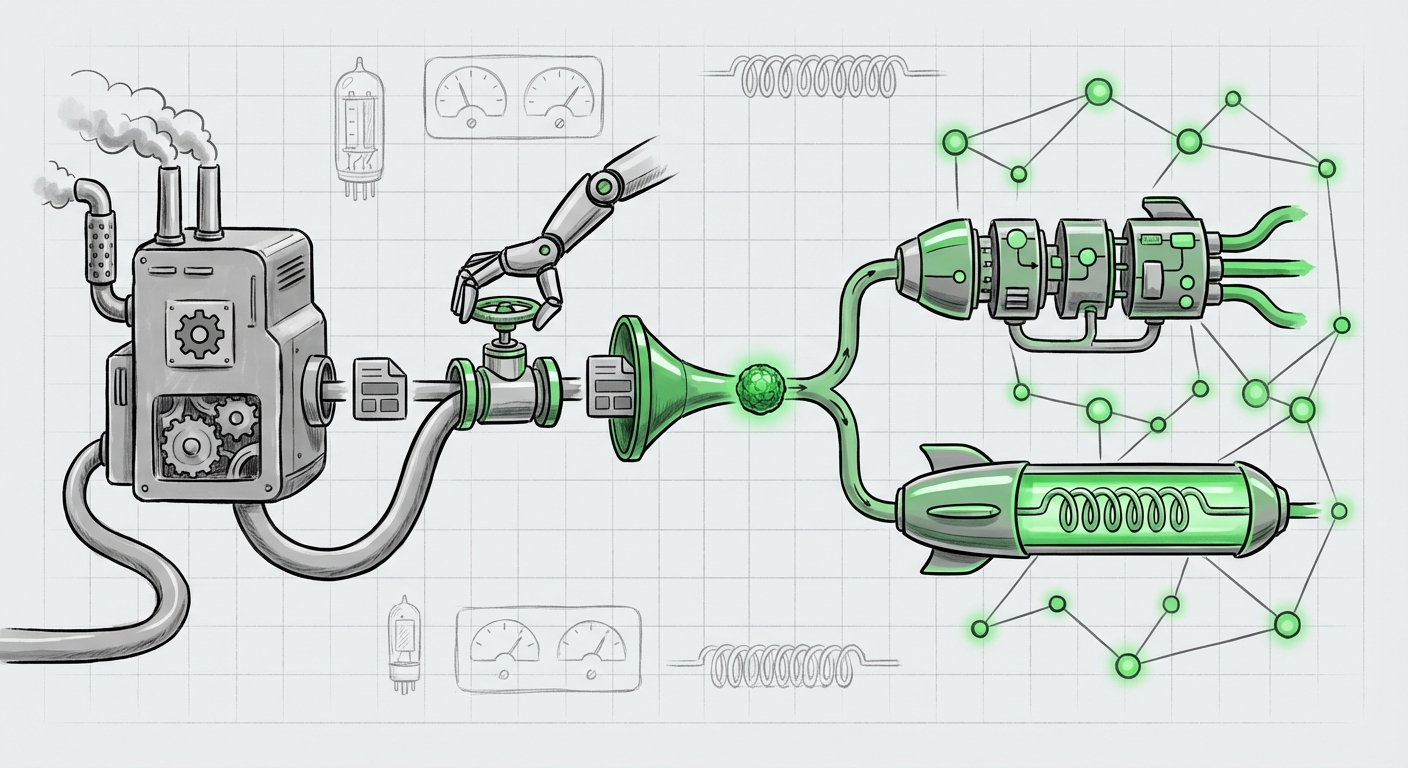
Now the version number is the headline. That inversion is exactly what happens in every maturing technology market. Early on, the physical artifact is the product. Later, the software is the product and the artifact becomes the delivery vehicle. Think about how phones stopped being judged by their shells and started being judged by their operating systems, or how cars became "software-defined." Humanoid robots are walking the same path, and they are walking it faster than most forecasts expected.
For anyone tracking AI trends, the takeaway is straightforward: the interesting releases in robotics are increasingly point releases. A "2.5" is not a marketing gimmick. It usually means the team found a training recipe that generalizes better, cleaned up failure modes, reduced the amount of hand-holding a robot needs, and pushed all of that to machines already in the field.
Why Helix 2.5 Matters More Than a New Body
Helix is Figure's "vision-language-action" model — a class of AI that connects what a camera sees, what a human asks for in plain language, and what the robot's motors actually do. This is the hardest problem in robotics, and it is the one that general-purpose AI has finally started to crack.
Here is the plain-English version of why this is hard. A chatbot can be wrong and simply say something silly. A robot can be wrong and drop a box, break a shelf, or hurt someone. Language models get graded on text. Action models get graded on physics. Helix 2.5 sits in that second, much less forgiving category.
So what does a point release in this space tell us?
- The data flywheel is spinning. Robot models improve when real deployments generate real experience. A 2.5 release implies the team has a pipeline from field to training to deployment that is fast enough to justify a version bump rather than a full relaunch.
- Generalization is the battleground. The goal is not a robot that can do one demo perfectly. It is a robot that can handle the thousand small variations of a task — a different box, a shifted pallet, a dimmer light — without an engineer stepping in.
- Reliability is becoming a software problem. When a robot fails, the fix increasingly lives in the model, not in a wrench.
That last point is the one business leaders should underline. Software-defined robots get better on the schedule of software. Hardware-defined robots get better on the schedule of manufacturing and shipping.
The Real Shift: AI That Acts, Not Just Answers
Step back from Figure and look at the shape of the industry. The last three years of AI progress were dominated by models that produce text and images. The next three are being dominated by models that produce outcomes in the world — robotic manipulation, autonomous driving, industrial control, agentic software that clicks and types on its own.
Helix 2.5 belongs to that second wave. It is a useful marker because humanoid robots are the most demanding test case for it. If a model can coordinate two arms, a torso, and a set of sensors while interpreting natural-language instructions in an unpredictable environment, that same architecture trickles down to simpler machines: warehouse arms, hospital delivery units, agricultural pickers, inspection drones.
In other words, progress at the humanoid frontier is a subsidy for every other kind of automation. This is why the release matters even to companies that will never buy a two-legged robot.
What It Means for the Robotics Industry
The strategic logic of the sector is being rewritten in three ways.
1. The moat moves to models and data
Hardware is copyable. Actuators can be sourced, chassis can be reverse-engineered, and contract manufacturers exist. What is genuinely hard to copy is a model trained on millions of real manipulation attempts across many environments, plus the operations engine that keeps that data flowing. A version like Helix 2.5 is a public statement that the moat is being dug in software.
2. Deployment becomes the product
Every robotics company now has to answer a question its investors did not ask two years ago: how many units are doing real work, and how much useful data does each one generate per shift? A robot that runs a demo is a marketing asset. A robot that runs a night shift is a data asset.
3. The pace of improvement gets faster than the pace of purchase cycles
This is the awkward one. If the brain improves every few months, a buyer who signs a three-year contract on a fixed capability set may feel obsolete quickly. Vendors that offer continuous model updates ��� and price them into the deal — will have a structural advantage over vendors that sell a fixed machine.
Practical Implications for Business
Strip away the hype and here is what Helix 2.5 signals for decision-makers in different seats.
Manufacturing and logistics
Keep your pilot programs alive even if early results were mediocre. The typical pattern with robotic AI is a slow start followed by a steep curve, because model capability compounds once data collection is in place. The mistake companies make is killing a pilot at month six, right before the version upgrades that would have made it work.
Facilities, healthcare, and hospitality
These are the environments where humanoids are most interesting precisely because they are unstructured. A model that handles variation is a model that can work in a building full of people, carts, and unpredictable clutter. Start with narrow, low-risk, high-repetition tasks and measure intervention rates — how often a human has to rescue the robot — rather than raw speed.
Software and integration partners
A capable robot brain creates demand for a whole layer above it: fleet management, safety monitoring, task authoring, integration with existing systems of record. Most enterprises will not build robot orchestration themselves. That gap is a business opportunity right now, and it is less crowded than the robot hardware market.
Investors
Watch release cadence, not demo videos. A company shipping meaningful model updates on a rhythm is a company with a working data loop. A company that ships one spectacular video a year and no version numbers is telling you something different.
For Society: Work, Safety, and Trust
The social questions do not get easier as the technology improves, but they do get more concrete.
Work. The realistic near-term effect is task displacement, not job elimination. The first tasks to go are the ones that are dull, repetitive, and physically taxing — moving totes, loading machines, scanning shelves. That is also where labor shortages are sharpest. The harder conversation is about the mid-skilled roles that supervise and maintain these systems: those jobs grow, but they need training pathways that most employers have not built.
Safety. A robot that improvises is more useful and more unpredictable. That trade-off has to be managed with conservative guardrails, clear slow-speed zones, and honest reporting of intervention rates. Regulators will eventually want evidence, not vibes.
Trust. The public judges robots on the worst clip they see, not the average performance. One widely shared failure can set an entire category back. Companies deploying humanoids should expect to be judged on transparency about what the machine cannot yet do.
The Roadblocks Nobody Skips
Enthusiasm is warranted, but a few bottlenecks stay stubborn no matter how good the model gets.
- Data scarcity for hands. Manipulation data is expensive to collect because it requires real physical attempts. Simulation helps, but the gap between simulated and real contact remains a tax on progress.
- Battery and uptime economics. A robot that needs frequent charging changes the math on any shift-based business case.
- Cost of failure. In a factory, a mistake is scrap. Around people, it is a liability event. Insurance and certification will lag the technology.
- Integration debt. Most buildings and warehouses were not designed for robots. Retrofitting workflows is often slower than improving the model.
Notice that none of these are solved by a version bump. That is precisely why a 2.5 release is a better signal than a flashy demo: it shows steady grinding on the parts that are actually hard.
Actionable Insights: What to Do in the Next 90 Days
- Reframe your robot business case around software. Ask vendors how often they ship model updates, how those updates reach your units, and what happens to your pricing when capability improves.
- Instrument your pilots properly. Track intervention rate, task completion rate, and cycle time per task. Without these numbers you cannot tell whether a version upgrade helped or whether your team just got better at working around the robot.
- Build the data pipeline before you need it. Even a small deployment should log what the robot attempts, what it fails, and how a human fixes it. That log is the asset.
- Pick narrow tasks with real volume. A robot doing one task a thousand times a week teaches you more — and generates more training value — than a robot doing ten tasks occasionally.
- Design the human role on purpose. Decide in advance who supervises, who maintains, and who gets trained. Retrofitting that later is where deployments stall.
- Set a review gate, not a deadline. Commit to a quarterly capability review with your vendor rather than a fixed go-live date you cannot move.
What to Watch Next
Three signals will tell you whether Helix 2.5 was an incremental tune-up or a genuine inflection.
First, the cadence. If version numbers start arriving on a predictable rhythm, the data flywheel is real. If a year passes with silence, it was a one-off push.
Second, the scope of tasks. Watch whether the improvements are happening in a narrow demo cell or in messy, real environments with customers. Generality is the whole promise of this model class.
Third, who else ships. A strong release from one company tends to force responses across the field within a couple of quarters. Competitive pressure on the intelligence layer is the clearest sign that the category is maturing rather than stalling.
Conclusion: The Version Number Is the Story
Figure's Helix 2.5 is not a dramatic announcement. There is no new body, no theatrical reveal — just a point release for a robot brain. That is exactly why it deserves attention. It shows a humanoid robotics market that is starting to behave like a software market: iterative, compounding, and governed by data loops rather than manufacturing runs.
For AI more broadly, the lesson is that the frontier has moved from generating words to generating actions. The companies that win the next phase will not be the ones with the best demo. They will be the ones whose machines get a little more capable every few months — quietly, repeatedly, and in the real world.