December 2025 Developer Update: What the Year-End Shift Means for the Future of AI
Every December, the developer world goes quiet in one way and loud in another. Product teams slow down. Conferences wrap up. And then, almost like clockwork, the big platform updates land, the "Hello Developer" style notes that tell builders what changed, what is coming, and what they should build next.
The December 2025 developer update is a good moment to stop and look at the bigger picture. Because what developers are being handed right now is not just a list of tools. It is a signal about where AI is going next, and how it will actually get used by real people in real companies.
Here is the honest read: AI has stopped being a demo. It is becoming the layer developers build on top of. And that shift changes everything about how software gets made, who gets to make it, and what it costs.
From Autocomplete to Co-Worker: The Big Move of 2025
Two years ago, AI in the developer tools was mostly a fancy autocomplete. You typed a line, it guessed the next one. Useful, but small. You still wrote the code.
By the end of 2025, the relationship has flipped. AI assistants now read whole codebases, suggest multi-file changes, write tests, explain errors, and propose fixes. The developer has become more like an editor and a reviewer. The model does more of the typing.
This is the single most important trend in the December 2025 developer conversation, even if it shows up as a dozen small features. Each new feature quietly pushes the human one step further up the stack. The work moves from "write this function" to "describe this outcome and check the plan."
Why this matters more than a single launch
Individual features come and go. The pattern is what counts. When tools make any single coding task cheap, the bottleneck moves somewhere else. It moves to review, testing, security, and deciding what to build at all.
That is a huge deal for teams. The hard part of software was never only typing. It was knowing what to type and proving it works. AI has now made the typing part much faster than the proving part. That gap is where the next wave of tooling, and the next wave of risk, will live.
Agents Are Becoming the New Interface
Across the 2025 developer scene, one word keeps coming back: agents. An agent is simply an AI that can take multiple steps on its own. It plans, uses tools, checks results, and tries again.
For developers, agents show up as code that can file a pull request, run a test suite, read the failure, and try a fix. For businesses, agents show up as workflows that can handle a support ticket from start to finish.
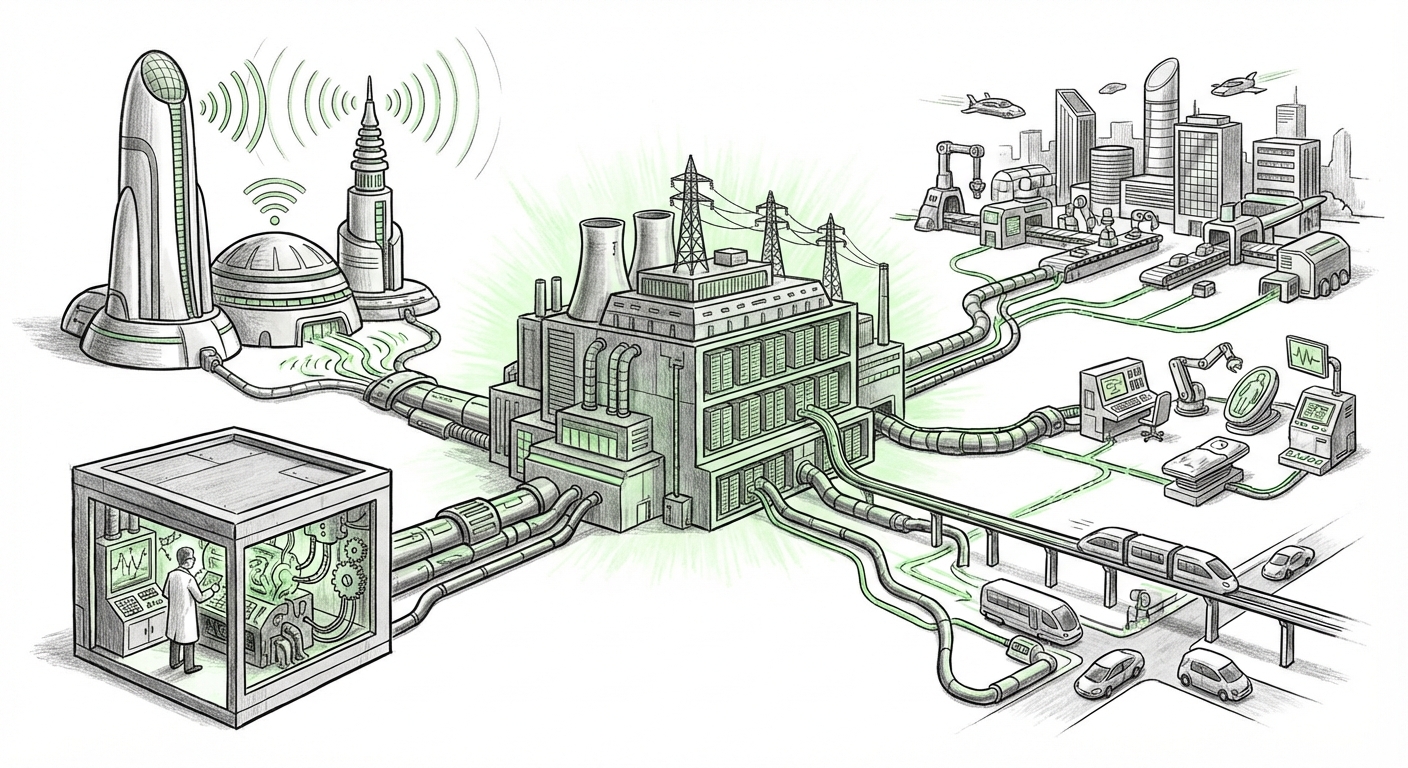
The year-end developer updates matter here because they are about plumbing, not magic. Agents need boring things: reliable APIs, clear permissions, logs, rate limits, and ways to stop a runaway task. The shift from "chat" to "agent" is really a shift from talking to software to trusting software to act.
That trust does not come from a better model alone. It comes from infrastructure. Expect 2026 to be less about who has the smartest model and more about who has the safest, cheapest, most observable way to let models do real work.
Cost Becomes Everyone's Problem
Here is a thing developers learn fast: a feature that is cheap to demo can be expensive to run. AI adds a new line to the bill, tokens, compute, and inference. Every user click can now cost real money in a way that a database read never did.
The mature conversation in late 2025 is no longer "can the model do it?" It is "can we afford to let every user do it, every day?" That question is reshaping design choices. Teams are mixing small fast models with large slow ones. They are caching answers. They are routing easy requests to cheaper paths.
For business leaders, this is a wake-up call. AI features are not free after launch. They scale with usage, not with seats. Budgets need to be built around cost per task, not cost per user. If your finance team cannot answer "what does one AI request cost us?", you are flying blind.
Open Models Keep the Pressure On
Another steady theme through 2025 is the growing strength of open and openly available models. They let teams run AI on their own hardware, keep data in-house, and avoid per-call fees. They are not always the best at everything, but they are good enough for many jobs.
That changes the market. When a strong free option exists, every paid model has to justify its price with real quality or convenience. For developers, this is good news: more choice, more control, more room to tune cost against quality.
For companies with strict data rules, health, finance, government, open models are often the only path forward. Being able to say "the model runs inside our walls" is not a technical detail. It is the difference between a project getting approved and a project dying in legal review.
Security and Review: The New Bottleneck
If AI writes more code, someone has to check more code. That is the quiet cost of the whole revolution. Code written by a machine still runs in production, and it can still have bugs, leak data, or open a door for attackers.
The most useful developer updates of late 2025 are the unglamorous ones: better logs, clearer permission scopes, safer defaults, and stronger review hooks. These are the features that make AI safe enough for a bank, a hospital, or a government office to actually deploy.
This is where hype meets reality. A model that is 90% right is amazing for a prototype and terrifying for a payment system. The winners in 2026 will be the teams that build good guardrails, human checkpoints, automated tests, and clear "stop" buttons, around fast AI.
What This Means for Businesses: Five Practical Moves
You do not need to be a machine learning team to act on this. You need to be clear about where AI helps and where it hides risk.
- Measure the unit cost. Track what one AI-assisted task costs, a support reply, a code review, a document summary. If you cannot measure it, you cannot improve it.
- Pick boring, high-volume work first. Summaries, drafts, ticket routing, test writing. Save the risky, high-stakes use cases for later.
- Keep a human in the loop where money or safety is involved. Treat AI output like a draft from a fast but very confident intern.
- Invest in review capacity. If AI produces twice as much code or content, your review process needs to keep up. Otherwise you are just moving the bottleneck.
- Ask about data handling early. Where does the data go? Is it stored? Can the model be run in-house? Ask before the pilot, not after.
None of these are exotic. That is the point. The companies that win with AI will not be the ones with the flashiest demos. They will be the ones with the cleanest process for turning AI output into trusted results.
What It Means for Society and Workers
The developer world is a preview. Whatever happens to software teams tends to reach other knowledge work a few years later. So when developers say "I spend more time reviewing and less time writing," other industries should listen.
The likely result is not mass replacement. It is a change in the shape of jobs. Less time producing first drafts. More time judging quality, setting direction, and handling edge cases. That is a real skill shift, and it favors people who can think clearly about goals and spot subtle mistakes.
There is a fairness question too. If the best AI tools cost money, big companies get faster while small ones fall behind. Open models and cheaper tooling help balance that. So does investment in training. A team that understands how to check AI work is worth far more than one that simply has access to it.
What to Watch in 2026
Based on where the December 2025 developer updates are pointing, a few things seem likely. Expect more tooling for watching and controlling AI, not just prompting it. Expect pricing models to keep shifting as open models push costs down. Expect agent features to arrive with more guardrails, not fewer, because that is what real customers demand.
And expect the definition of "developer" to keep stretching. When building software becomes more about describing intent and checking results, more people outside traditional engineering can take part. That is a big change, and it will not happen overnight. But the direction is clear.
The Bottom Line
December 2025 is not a turning point because of one launch. It is a turning point because the developer story has settled into a new normal. AI is now part of the toolchain. The interesting questions have moved on, to cost, trust, safety, and how to turn fast output into reliable work.
For builders, the message is simple: the speed is here, so build the process that keeps it safe. For business leaders, the message is just as simple: measure what AI costs, review what it produces, and choose the boring use cases first. The future of AI will not be won by the loudest demo. It will be won by the teams that can be trusted with it.