Meta and INCA Join Forces for Blind, Deafblind and Low-Vision Canadians: What This Means for the Future of AI
Something important just happened in the world of accessibility tech, and it says a lot about where artificial intelligence is heading next. Meta and INCA have announced a partnership to support people in Canada who are blind, deaf, deafblind or living with low vision. The announcement carries a simple but powerful idea in its title: the future belongs to everyone.
On the surface, this looks like one corporate partnership in one country. Look closer, and you see a bigger shift. AI is moving out of the chat window and into the physical world, into glasses, phones, canes, apps and everyday moments. And the groups that were once an afterthought in tech design are becoming the first users of some of the most interesting new tools.
Here is what the partnership signals, why it matters for the future of AI, and what businesses and builders should do about it right now.
The Core News: A Partnership Built Around Real People
The headline fact is straightforward. Meta and INCA are working together to support Canadians who are blind, deaf, deafblind or have low vision. The framing is not charity. It is inclusion, the idea that accessible design belongs in the mainstream of technology, not on a side shelf.
That framing matters. For years, accessibility features were treated as a compliance checkbox. A screen reader here, a caption file there. Useful, but bolted on after the product was finished. The new model flips that: build the technology with the disability community from the start, and everyone ends up with a better product.
Canada is a smart place to prove this out. It is a bilingual country with huge distances, dense cities and remote communities where services can be thin. If a tool works for a low-vision user in a busy Toronto subway station and for a deafblind user in a small northern town, it is probably a robust tool for everybody.
Why This Is Really a Story About Multimodal AI
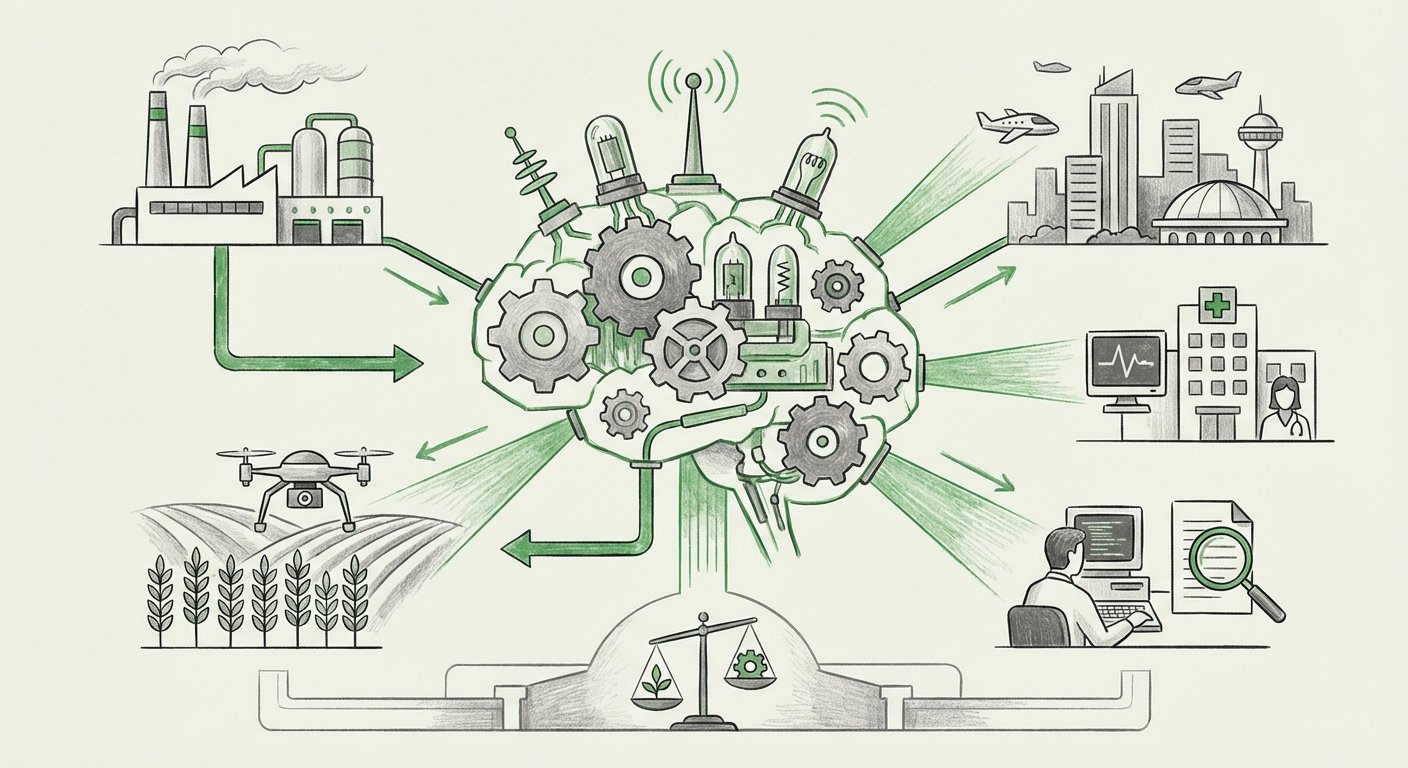
The most interesting AI systems today no longer just read and write text. They see, hear, speak and sense. This is often called multimodal AI, and it is the engine behind almost every serious accessibility breakthrough.
Think about what these systems can now do:
- Describe a scene. A camera plus a vision model can tell a user what is in front of them, a doorway, a bus number, a spilled cup, a person waiting to shake hands.
- Read the world out loud. Menus, medicine labels, street signs and mail can be turned into speech in seconds.
- Caption live sound. Speech-to-text has become fast and accurate enough to follow a conversation, a lecture or a doctor's appointment in near real time.
- Translate between senses. Sound can become vibration. Speech can become text. Text can become braille-ready output. AI is the translator in the middle.
- Guide movement. Computer vision can help a user find a door handle or avoid an obstacle, adding a digital layer to the white cane.
Each of these used to be a separate, expensive, single-purpose device. Now they are features that can live in software that runs on hardware people already own. That collapse in cost and complexity is the real revolution.
The Shift From "Assistive Tech" to "Just Tech"
There is a quiet but major change in how the industry talks about this work. The old label was assistive technology, a separate category, often funded separately, usually more expensive. The new label is simply technology.
Why the change? Because the features that make a device usable for a blind user are the same features that make it useful for everyone else. Voice control helps a driver with full sight. Live captions help a commuter in a noisy train. Object recognition helps a tourist who cannot read the local language. Scene description helps anyone in an unfamiliar place.
This is the "curb cut" effect, named after the ramps cut into city sidewalks. They were built for wheelchair users. They ended up helping parents with strollers, delivery workers with carts, travellers with suitcases and cyclists. Good accessibility design spreads benefits far beyond its first audience.
AI is now the biggest curb cut in tech. When Meta and INCA work together, they are not just serving one community. They are stress-testing features that will eventually reach hundreds of millions of users.
Why Companies Should Care: The Business Case
Leaders who treat accessibility as a cost are leaving money and product quality on the table. Consider the numbers that circulate in global disability research: people with disabilities make up a large share of the world's population, and their households control significant spending power. Add in aging populations, and the market for accessible design grows every single year.
There is also a talent story. Accessible products widen the pool of people who can do a job. A worker who cannot see a screen can still be a top analyst if the tools are built right.
And there is a risk story. Accessibility lawsuits and public backlash are real. So are procurement rules: governments and large enterprises increasingly demand accessible software before they will sign a contract. A product that fails an accessibility audit is a product that gets cut from the shortlist.
The Meta–INCA partnership shows the smarter path: partner with the community early, learn what actually works, and ship it.
The Hard Problems Nobody Should Ignore
It would be dishonest to present this as a solved problem. AI accessibility has real challenges, and the partnership model only works if those challenges are taken seriously.
Privacy and the Camera Problem
A device that constantly sees the world is a device that constantly collects data. Users need to know what is captured, where it goes and who can see it. For blind and low-vision users, "just turn off the camera" is not an option, the camera is the feature. That makes strong privacy defaults, on-device processing and clear consent essential, not optional.
Accuracy Where It Matters Most
A wrong caption is annoying. A wrong description of a crosswalk, a medication or a staircase can be dangerous. Systems need to know their own limits and say "I'm not sure" out loud. Confidence signalling is one of the most underrated design skills in AI right now.
Cost and Connectivity
Powerful features often mean expensive hardware and strong data plans. In a country as large as Canada, rural and remote users can be left behind. Affordable hardware, offline modes and low-bandwidth design are all part of real accessibility.
Language and Culture
Canada's bilingual reality matters. Speech and text tools need to work well in both English and French, handle accents, and respect local sign languages and Deaf culture. A tool that only half-works in one official language is not truly inclusive.
Co-Design, Not Guesswork
The biggest failure mode in accessibility tech is building without the community. Partnerships between a tech company and an organization like INCA are valuable precisely because they put lived experience in the room. Users are not test subjects at the end of the process; they are co-designers at the start.
What Comes Next for AI
Three trends are worth watching as this partnership unfolds.
1. AI moves onto your face and into your ears. Wearable AI is shifting from novelty to utility. The winning devices will not be the flashiest; they will be the ones that quietly help a user do something they could not do before.
2. Accessibility becomes a benchmark. Expect buyers and regulators to ask sharper questions. Can your product describe an image? Caption a live call? Work with a screen reader end to end? Accessibility will become a measurable quality score, not a marketing line.
3. Community partnerships become the R&D lab. Organizations that serve disability communities hold deep knowledge that no dataset contains. Companies that build real relationships with them will ship better products faster than companies that rely on guessing.
Actionable Steps for Businesses and Builders
If you build or buy technology, here is a practical starting list.
- Audit your current product. Run a screen reader through your core user journey. Try it with captions only. Record what breaks.
- Add accessibility to the definition of done. If a feature ships without an accessibility review, it is not finished.
- Test with real users. Hire people with disabilities as testers, designers and team members, not just as a focus group once a year.
- Design for confidence and error. Make AI say what it does not know. Always offer a fallback path.
- Protect privacy by default. Process on device where you can. Log less. Explain more.
- Plan for bilingual and multilingual users. Test in French and English from day one, not after launch.
- Track it as a metric. Measure task completion for users with assistive tech, and report it alongside all your other product numbers.
- Partner locally. Community organizations know the gaps. They will tell you where your product fails.
The Bigger Picture
The phrase at the heart of this announcement, the future belongs to everyone, is more than a slogan. It is a design principle. AI is getting powerful enough to change how people move through the world. The question is whether those changes reach the people who need them most, or whether they arrive last, costing more and working less well.
A partnership between Meta and INCA will not solve every accessibility gap in Canada overnight. But it points the industry in the right direction: build with the community, design for the hardest cases, and let the benefits spread outward. That is how technology stops being a divider and starts being a tool that truly belongs to everyone.