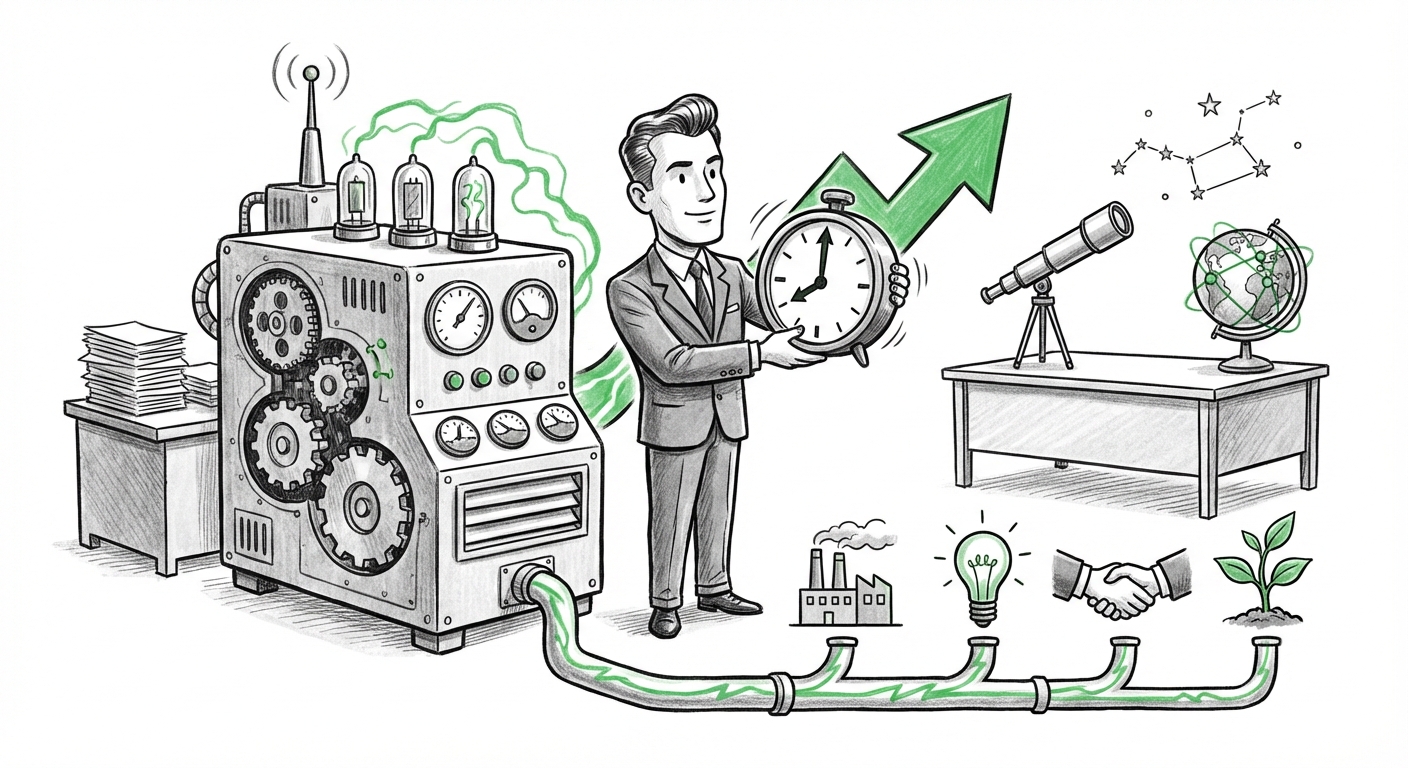
Human Checkpoints for AI Agents: Why Smplify Wants a Human in the Loop Before AI Touches Your Device Fleet
Imagine giving an AI assistant the keys to every laptop, phone, tablet, and connected terminal your company owns. It can install software, change settings, wipe a lost phone, push a security patch, or lock down a hundred machines at once. Now imagine it gets one instruction slightly wrong. That is the moment the entire promise of "agentic AI" runs into a very old human question: who signs off before the button gets pressed?
That question sits at the heart of what Smplify is building. The company is positioning itself around a single, pointed idea: put a human checkpoint between AI agents and your device fleet. Not a human doing the work. Not a human watching a dashboard. A human standing at the gate, approving or rejecting the actions an AI agent wants to take on real hardware that real people depend on.
It sounds simple. In practice, it may turn out to be one of the most important design decisions of the entire AI agent era.
The Agentic Shift Is Already Here, and It Wants Your Devices
For a few years, AI mostly lived in a chat box. You typed, it answered. The risk was mostly embarrassment. Then models got tools. They could browse, write code, and call other software. Today the frontier is agents: AI systems that plan a sequence of steps and then carry them out, one action at a time, without a human narrating each move.
The moment an agent can act, the blast radius changes. A wrong sentence is a wrong sentence. A wrong command, repeated across a fleet of devices, is an outage. Device fleets are exactly where the stakes get physical and expensive:
- A single misconfigured policy pushed to thousands of machines can lock out an entire workforce.
- A wipe command sent to the wrong group can destroy data that no backup can fully restore.
- A "helpful" software install can break the tools a sales team needs on the last day of the quarter.
- A routine settings change can quietly weaken security on devices that hold customer records.
IT and security teams already know this pain. They have spent decades building change management, approval tickets, and maintenance windows precisely because automation at scale is dangerous without guardrails. The new twist is that the automation is no longer a fixed script written by a human. It is a reasoning system that decides what to do next.
What a "Human Checkpoint" Actually Looks Like
A human checkpoint is a pause. The agent proposes, the human disposes. In the cleanest version of this model, an AI agent that manages devices would follow a loop like this:
- Observe. The agent reads the state of the fleet, which devices are out of compliance, which are unhealthy, which need attention.
- Plan. It decides on a set of actions: patch these devices, restart those services, retire this hardware.
- Propose. It writes the plan in plain language, with a clear list of affected devices and expected outcomes.
- Pause. A human reviews. The checkpoint can be a full approval, a scoped approval ("go ahead, but only for the finance group"), or a rejection with feedback.
- Execute and log. The action runs, and everything, the reasoning, the approver, the result, is recorded.
The important detail is that the checkpoint is not a brake on progress. It is the thing that makes progress possible. Companies will not hand broad device control to an AI system that acts without oversight. They will hand it to one that asks first. Approval is what converts a scary demo into a product an IT director can actually deploy.
Not every action deserves the same gate
The mature version of this idea is not one checkpoint for everything, that would be exhausting and would push teams to rubber-stamp. It is tiered autonomy:
- Low risk: read-only checks, inventory reports, and diagnostics can run freely.
- Medium risk: configuration changes and software installs might need a single approval or a sampled review.
- High risk: device wipes, security policy overrides, and mass rollouts require explicit human sign-off, sometimes from more than one person.
This mirrors how aviation, medicine, and finance already work. The human is not there to do every task. The human is there to own the decisions that cannot be undone.
Why Device Fleets Are the Perfect Proving Ground
Device management is an unusually good place to test human-in-the-loop AI, for three reasons.
First, the actions are concrete. "Install this update on these 40 laptops" is not a vague wish. It is a specific, checkable operation. That makes it easy for a human to review quickly and easy for a system to log precisely.
Second, the consequences are visible. If an agent makes a mistake, the team knows within minutes. That feedback loop is exactly what you want when teaching an AI system where its judgment can be trusted.
Third, the volume is brutal. A modern organization may manage thousands of endpoints across multiple operating systems, locations, and user groups. No human team can keep up by hand. This is the classic case where AI adds real value, and where unmanaged AI adds real risk. The checkpoint is the compromise that lets you have one without the other.
The Trust Gap: Why "Just Let It Run" Fails in the Enterprise
There is a tempting story that better models will simply make oversight unnecessary. That story misunderstands what enterprises are buying. They are not buying accuracy. They are buying accountability.
When something goes wrong, and something always goes wrong, a company needs to answer three questions: What happened? Who decided it? What did we learn? An autonomous agent that acts silently makes all three hard to answer. A checkpointed agent makes all three trivial, because a named human approved a specific action at a specific time.
This is also why the checkpoint model is likely to become a compliance requirement rather than a nice-to-have. Regulators and auditors are already moving toward demanding human oversight for automated decisions with material impact. Device fleets touch employee privacy, customer data, and business continuity. Expect the phrase "human in the loop" to appear in procurement questionnaires far more often in the years ahead.
What This Means for the Future of AI Agents
1. Oversight becomes a product, not a policy
For years, "human oversight" was a sentence in a governance document. The next phase turns it into software: approval queues, scoped permissions, audit trails, and replayable action logs. Companies that build the best review experience, fast, clear, low-friction, will win, because a checkpoint that takes ten minutes per action will be disabled by frustrated teams within a week.
2. The interface is the trust
An approval screen is where AI trust is actually built or lost. If a human sees a fuzzy summary and a big green button, they will click it without thinking. If they see the exact devices, the exact change, the likely impact, and the rollback plan, they will make a real decision. Design detail here is not cosmetic. It is the difference between genuine oversight and theater.
3. Autonomy will be earned incrementally
Expect a future where agents start with heavy supervision, then earn wider freedom as their track record proves out. This is how companies already treat new employees. It is a sensible way to treat new software too. Over time, routine decisions get auto-approved and humans focus only on the edge cases, which is precisely where human judgment is most valuable.
4. The human role shifts from operator to editor
IT teams will spend less time clicking and more time reviewing plans, setting policy, and handling exceptions. That is a genuine upgrade in the nature of the work, but it demands new skills: reading an AI's reasoning critically, spotting an over-broad plan, and knowing when to say no.
Practical Implications for Businesses
If you are evaluating agentic AI for infrastructure or device management, a few moves are worth making now.
- Map your irreversible actions. List everything that cannot be easily undone: wipes, key rotations, mass deletions, permission changes. These are your mandatory checkpoints.
- Start narrow. Give an agent read access first. Let it propose plans while humans execute. Trust grows from evidence, not enthusiasm.
- Demand logs you can read. Ask vendors to show you exactly what an agent did, why, and who approved it. If that answer is vague, walk away.
- Set approval thresholds in writing. Decide which actions need one approver, which need two, and which are never automated.
- Watch the friction. If approvals are slowing work to a crawl, redesign the workflow, don't quietly turn the checkpoint off.
- Keep a kill switch. Any system that can act at fleet scale needs a fast, tested way to stop it.
The Risks and Open Questions
The checkpoint model is not a cure-all. Three problems deserve honest attention.
Approval fatigue is real. Humans who approve hundreds of actions a day start approving without reading. The fix is risk-based routing and sampling, not more clicking.
Checkpoints can create false comfort. A human signature does not guarantee safety if the human cannot understand what they are approving. Explainability matters as much as the pause itself.
Speed matters too. Some incidents need an instant response. A system that always waits for a human may be too slow to contain a spreading threat. The answer is pre-authorized playbooks for known emergencies, humans set the policy in advance, and the agent executes within it.
The Bottom Line
The most interesting thing about putting a human checkpoint between AI agents and your device fleet is what it reveals about where this technology is heading. The goal was never to remove people from the loop. The goal is to remove drudgery from the loop while keeping judgment in it.
Agents that act fast and ask first will get adopted. Agents that act fast and ask never will sit in a pilot forever. The companies that figure out this balance, clear proposals, fast reviews, honest logs, earned autonomy, will get the productivity gains of AI without the horror stories. Everyone else will learn the same lesson the hard way, one wiped laptop at a time.