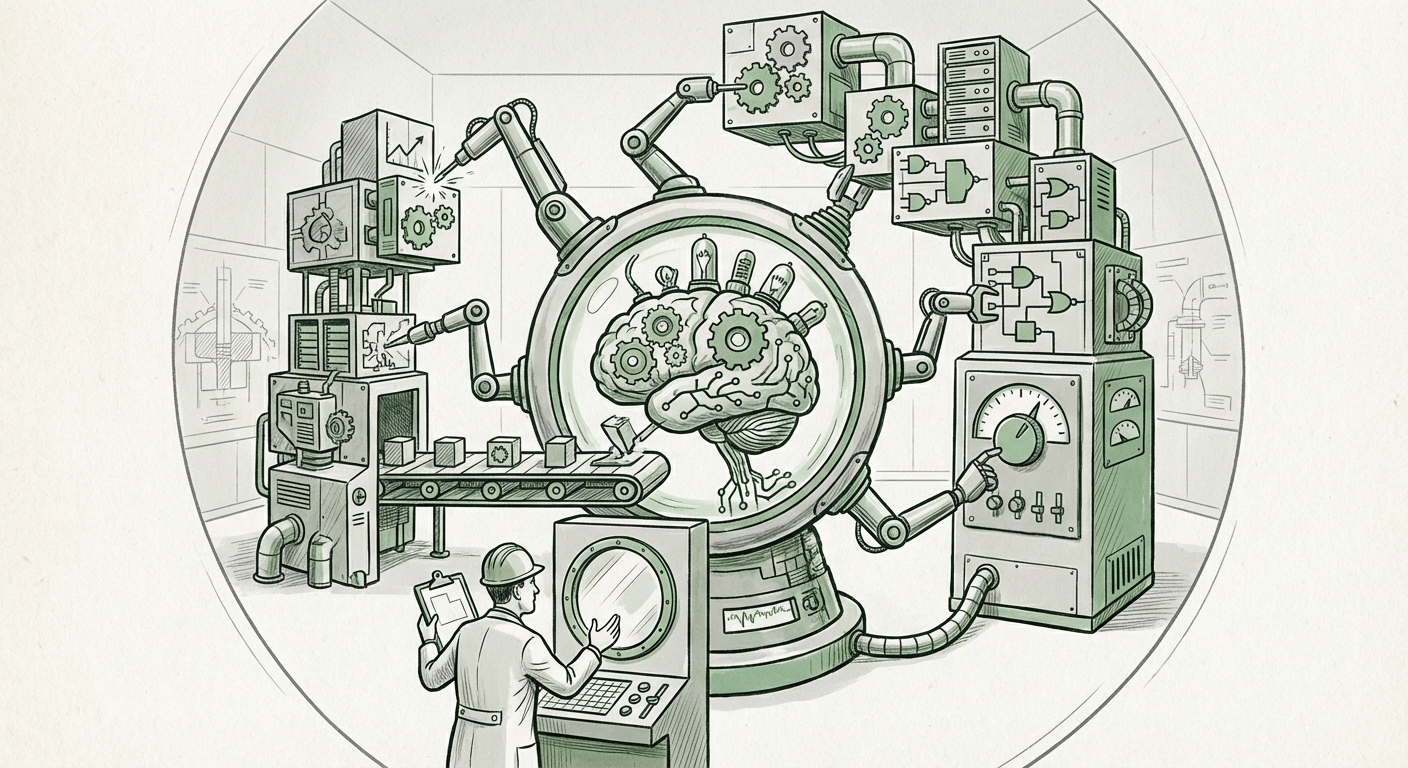
AI Reliance Is Rotting Your Brain: Here’s How to Fight Back
Artificial intelligence is everywhere. It writes our emails, suggests our next purchase, helps diagnose illnesses, and even creates art. For many of us, it has become the first place we turn when we need to think, decide, or create. But a growing chorus of concern suggests that this convenience comes at a hidden cost: our own cognitive abilities may be quietly deteriorating. The provocative idea that relying on AI is “rotting your brain” is more than just a catchy warning, it points to a real and measurable trend that could shape the future of how we work, learn, and live.
This article explores why our growing dependence on AI might be weakening our mental muscles, what that means for the future of the technology, and, most importantly, what we can do about it. The good news is that we are not helpless. With a few deliberate strategies, we can enjoy the benefits of AI without sacrificing our own intelligence.
The Cognitive Offloading Trap
Humans have always used tools to reduce mental effort. We write down phone numbers instead of memorizing them. We use calculators for arithmetic. We rely on GPS to navigate. This is called cognitive offloading, and it is a natural part of being human. But AI is different. It doesn’t just handle simple calculations or store facts, it performs complex reasoning, generates creative ideas, and even makes judgments. When we offload that kind of thinking, we risk losing the very skills that make us capable of independent thought.
Consider writing. If you always ask an AI to draft your emails, reports, or even your social media posts, you may gradually lose the ability to structure an argument, find the right words, or spot a weak sentence. The same goes for analysis: if an AI always summarizes data and tells you what it means, your own critical thinking muscles may atrophy. The warning that AI is “rotting your brain” is a vivid way of describing this process of skill decay through disuse.
This is not to say that AI makes us stupid overnight. But the risk is real, especially for younger people whose cognitive habits are still forming. If a student uses AI to solve every math problem, they may never develop the problem-solving strategies that come from struggle. If a professional uses AI to write every proposal, they may lose the ability to spot subtle errors or craft a persuasive narrative. Over time, the brain adapts: what you don’t use, you lose.
Why This Matters for the Future of AI
As AI systems become more capable, the temptation to rely on them will only grow. Today’s AI can pass exams, write code, and generate legal briefs. Tomorrow’s will be even more deeply integrated into our daily lives. But if we become passive consumers of AI outputs, we may lose the ability to evaluate those outputs critically. That is a dangerous combination: a powerful tool in the hands of people who no longer have the skills to check its work.
For businesses, the implications are significant. Companies are rushing to adopt AI to boost productivity, but they may be inadvertently eroding their workforce’s core competencies. An employee who always uses AI to draft client communications may eventually lose the ability to write a clear, compelling message on their own. A manager who relies on AI to analyze performance data may lose the intuition for spotting anomalies. In the short term, productivity might go up. In the long term, the organization’s human capital could weaken.
For society, the stakes are even higher. Education systems are already grappling with how to teach students in an AI-saturated world. If we don’t teach young people how to think critically with and without AI, we risk creating a generation that can prompt but cannot reason. Democracy depends on citizens who can evaluate information, weigh arguments, and make informed decisions. A population that outsources its thinking to machines is a population that is easier to manipulate.
Practical Strategies to Use AI Without Rotting Your Brain
The good news is that we can have our cake and eat it too. AI is a powerful tool, but we can use it in ways that strengthen rather than weaken our cognitive abilities. Here are some practical strategies for individuals and organizations.
1. Use AI as a sparring partner, not an answer machine
Instead of asking AI for the final answer, ask it to generate multiple perspectives, challenge your assumptions, or point out flaws in your reasoning. For example, if you’re writing a report, ask AI to critique your draft rather than write it for you. This keeps you in the driver’s seat and forces you to engage actively with the material.
2. Always verify and think critically
Never accept an AI output without checking it. AI can hallucinate facts, make logical errors, or reflect biases. By verifying, you not only catch mistakes but also keep your own fact-checking and reasoning skills sharp. Treat AI as a first draft, not a final product.
3. Schedule deliberate practice without AI
Just as athletes train without their gear sometimes, knowledge workers should regularly perform tasks without AI assistance. Write a memo by hand. Solve a problem without a chatbot. Do mental math. These small acts of cognitive resistance help maintain your skills and confidence.
4. Set boundaries for certain tasks
Decide which tasks you will always do yourself. For example, you might reserve brainstorming, personal communication, or strategic thinking for your own brain. Use AI only for tasks that are repetitive, low-stakes, or purely informational. This keeps you engaged in the work that matters most.
5. Learn how AI works
Understanding the basics of how AI models are trained and where they fail can help you use them more wisely. When you know that AI is predicting patterns rather than truly understanding, you are less likely to over-trust it. AI literacy is becoming a core skill, not just for technologists but for everyone.
6. Use AI to augment, not replace, your thinking
The best use of AI is to handle drudgery so you can focus on higher-order thinking. Let AI transcribe a meeting so you can focus on the discussion. Let it format a spreadsheet so you can analyze the data. The goal is to free up your mental energy for the work that requires a human brain.
What This Means for Businesses and Society
Forward-thinking organizations are already starting to address this challenge. Some companies are instituting “AI-free” hours or days to encourage deep work without digital assistance. Others are investing in training programs that teach employees how to critically evaluate AI outputs and when to override them. The most successful businesses will be those that use AI to amplify human capabilities, not to replace them.
In education, the focus must shift from memorization to metacognition, teaching students how to think about their own thinking. Assignments should require students to use AI as a tool while demonstrating their own reasoning process. Teachers need support to design assessments that measure critical thinking, creativity, and ethical judgment, not just the ability to produce a correct answer.
Policymakers also have a role to play. Just as we require warning labels on products that can cause harm, we might consider guidelines for AI systems that encourage passive consumption. But regulation alone won’t solve the problem. Ultimately, the solution lies in a cultural shift: valuing cognitive effort and deep thinking as much as we value efficiency and convenience.
The future of AI is not predetermined. It will be shaped by how we choose to use it. If we treat AI as a crutch, we may indeed find our brains “rotting.” But if we treat it as a powerful assistant, one that we supervise, question, and learn from, we can enhance our capabilities without sacrificing our independence.
The Choice Is Ours
The warning that relying on AI is rotting your brain is a wake-up call. It reminds us that convenience is not the same as progress. As AI becomes more integrated into every aspect of our lives, we must be intentional about how we use it. We can enjoy the extraordinary benefits of AI, increased productivity, new insights, and creative possibilities, without becoming mentally lazy.
The key is balance. Use AI to handle the mundane so you can focus on the meaningful. Question its outputs. Keep practicing your own skills. And remember that the most powerful tool you will ever have is your own mind. With the right habits, we can build a future where humans and AI work together, not one where humans slowly forget how to think for themselves.