AI Spending Fears Hammer Big Tech Stocks: What It Means for the Future of AI and How It Will Be Used
On October 31, 2026, a wave of anxiety swept through Wall Street. Big tech stocks took a hit as investors grew worried about the enormous sums of money being spent on artificial intelligence. The headline "AI Spending Fears Hammer Big Tech Stocks" captures a moment of tension: the technology that promises to reshape everything is also causing jitters about costs and returns. But what's really behind these fears? And what do they mean for the future of AI and how it will be used?
The AI Spending Boom: A Double-Edged Sword
Over the past few years, big tech companies have poured billions into AI. They've built massive data centers, bought specialized chips, and hired thousands of engineers. The goal is simple: lead the AI revolution. But this spending comes with a hefty price tag. Investors are starting to ask a tough question: when will we see the payoff?
The AI spending boom is driven by fear of missing out. Companies believe that if they don't invest heavily now, they'll be left behind. This "arms race" mentality has led to a cycle of escalating spending. But not all investments are equal. Some bets will pay off; others may not. The challenge is that no one knows for sure which AI approaches will win. Will large language models continue to dominate? Will new architectures emerge? Will the costs of computing power and energy keep rising? These unknowns make investors cautious.
The spending isn't just on hardware. Companies are also investing in software, talent, and research. They're building AI platforms, acquiring AI startups, and funding university research. This broad investment is a sign of how seriously big tech takes AI. But it also means that the financial stakes are high. If AI doesn't deliver, the losses could be significant. Companies are making multi-year commitments that will be hard to reverse.
Why Investors Are Nervous: The Profit Puzzle
Investors love growth, but they also love profits. When companies announce huge spending plans without clear timelines for returns, stocks often suffer. That's what happened on October 31. The fear is that AI spending is outpacing AI revenue. Companies are building infrastructure for a future that may be years away.
There's also uncertainty about which AI approaches will win. Investors want to see tangible results: cost savings, new products, and increased productivity. They worry that companies are pouring money into AI without a clear path to profitability. This is especially true for big tech firms, which are already valued on high expectations. Any sign that AI spending is not translating into earnings can trigger a selloff.
Another factor is the interest rate environment. When borrowing costs are high, investors are less patient with companies that burn cash. AI spending often involves large upfront costs with uncertain future returns. This makes investors nervous, especially if they believe that the company could be using that money for dividends or buybacks instead. The market is essentially asking: is this the best use of capital?
The psychology of investing plays a big role. When one company announces massive AI spending, others feel pressured to follow. This herd behavior can lead to overinvestment. But when the market realizes that returns may take longer than expected, the pendulum swings back. The result is volatility.
What This Means for the Future of AI: From Hype to Discipline
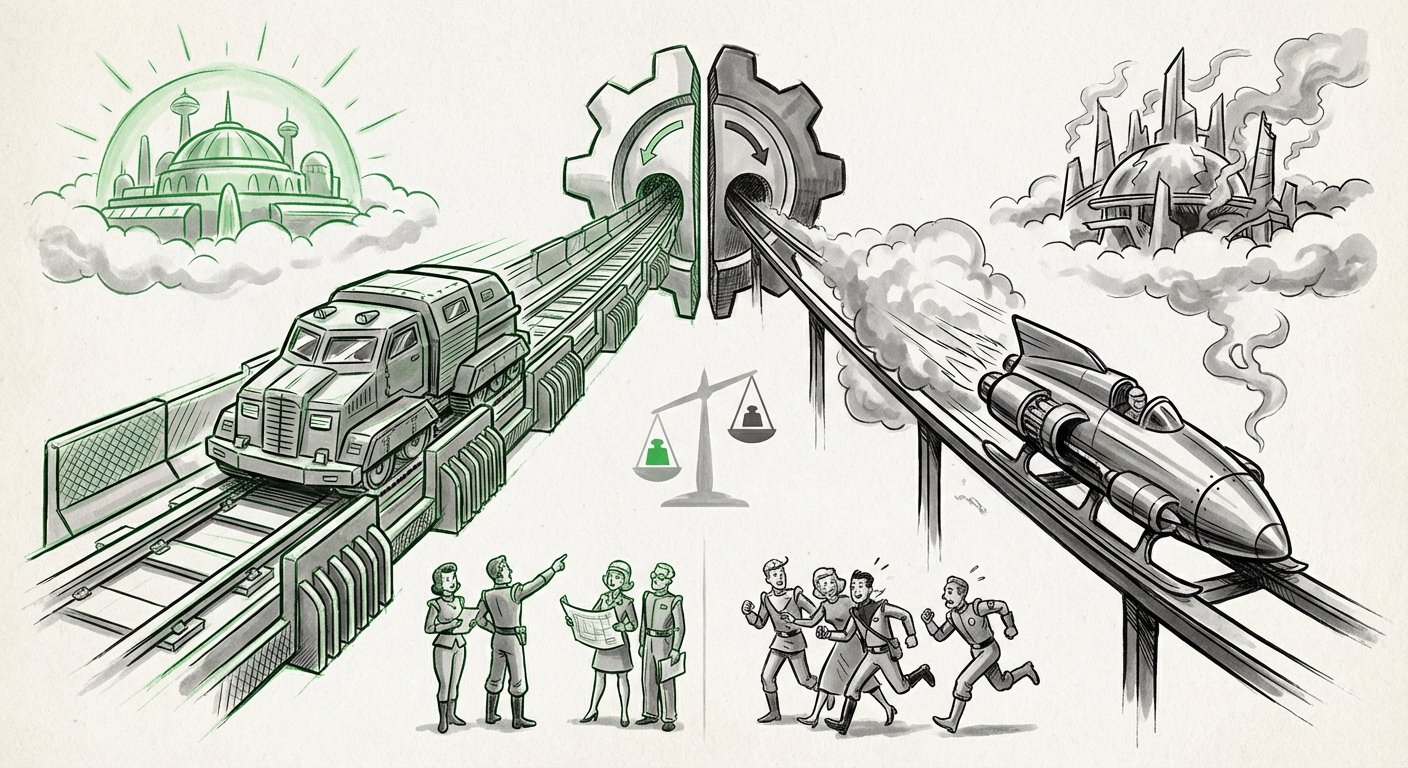
The stock market reaction doesn't mean AI is doomed. Far from it. But it does signal a shift. The era of "spend at all costs" may be giving way to an era of "spend smart." Companies will need to show progress. They'll need to prove that AI investments are translating into real business value.
This could lead to a more disciplined approach. Instead of chasing the biggest models, companies may focus on efficiency. They may prioritize AI applications that deliver quick wins. They may also collaborate more, sharing costs and risks. The AI hype cycle is maturing into a reality check, and that's a good thing.
In the future, we may see a shift toward smaller, more specialized AI models. These models can be cheaper to train and run, and they can be tailored to specific tasks. This would make AI more accessible and affordable for businesses of all sizes. We may also see more investment in AI efficiency, such as better algorithms and hardware. The goal will be to get more out of every dollar spent.
We may also see a consolidation in the AI industry. Smaller companies that can't afford the massive spending may be acquired or go out of business. This could lead to a few dominant players, which raises concerns about competition. However, it could also lead to more efficient use of resources as companies share infrastructure.
How AI Will Be Used: Practical Implications for Businesses
For businesses, the message is clear: AI must solve real problems. The days of experimental AI projects with no clear ROI are numbered. Companies will demand measurable outcomes. They'll ask: Does this AI reduce costs? Does it improve customer satisfaction? Does it speed up processes?
This means AI will be used more strategically. We'll see a rise in practical applications: automating routine tasks, analyzing data for insights, personalizing customer experiences, and generating content. AI will become a tool, not a magic wand. The companies that succeed will be those that integrate AI into their workflows to boost efficiency and innovation.
For example, businesses might use AI to handle customer service inquiries, freeing up human agents for complex issues. They might use AI to analyze sales data and predict trends. They might use AI to generate marketing copy or design prototypes. The key is to start small, measure results, and scale what works.
But businesses also need to be cautious. AI is not a silver bullet. It requires clean data, skilled people, and clear processes. Companies that rush into AI without proper planning may waste money and time. The smart approach is to build a solid data foundation, train employees, and set clear goals.
To measure AI ROI, businesses need to set clear metrics. They should track cost savings, revenue growth, customer satisfaction, and employee productivity. They should also consider the total cost of ownership, including maintenance and training. A common mistake is to focus only on the initial investment and ignore ongoing costs.
How AI Will Be Used: Implications for Workers and Society
For workers, AI will change job roles. Some tasks will be automated, but new jobs will emerge. The key is adaptability. Workers who learn to work alongside AI, using it to augment their skills, will thrive. Those who resist may struggle.
This means lifelong learning is more important than ever. Workers should focus on skills that AI can't easily replicate: creativity, critical thinking, emotional intelligence, and complex problem-solving. They should also learn how to use AI tools in their daily work. Companies can help by providing training and reskilling programs.
For society, the spending fears raise important questions. AI requires massive amounts of energy and resources. As companies invest more, we need to consider the environmental impact. We also need to ensure that AI benefits are shared widely, not just among a few tech giants. This means supporting policies that promote competition, transparency, and ethical AI development.
There's also the issue of AI bias and fairness. As AI systems make more decisions, we need to ensure they are transparent and accountable. Companies should invest in AI governance and ethics. Society needs to have a conversation about the rules we want for AI.
Actionable Insights: What to Do Next
So what should different stakeholders do?
- For investors: Don't panic. Look beyond the headlines. Focus on companies that have clear AI strategies and a track record of delivering results. Pay attention to adoption metrics, not just spending announcements. Ask tough questions about ROI.
- For business leaders: Start small. Pilot AI projects, measure the results, and scale what works. Communicate your AI roadmap to investors with clear milestones. Show that you're spending wisely, not just spending big. Build a data-driven culture and invest in talent.
- For workers: Embrace lifelong learning. Develop skills that complement AI, creativity, critical thinking, emotional intelligence. Learn how to use AI tools in your daily work. Stay curious and adaptable.
- For policymakers: Encourage transparency. Require companies to disclose their AI spending and its outcomes. Support research into efficient AI and sustainable computing. Ensure that AI development aligns with societal values and protects workers.
For companies just starting with AI, consider these steps: 1) Identify a specific problem that AI can solve. 2) Gather the data you need. 3) Choose a tool or build a model. 4) Test it on a small scale. 5) Measure the results. 6) Decide whether to scale or pivot. This iterative approach reduces risk and increases the chances of success.
Conclusion: A Maturity Test for AI
The fears that hammered big tech stocks on October 31, 2026, are a sign of growing pains, not a death knell. AI is here to stay. The spending will continue, but with more scrutiny. The future of AI is not about how much money is spent, but how well it's used. The companies that figure out how to turn AI investments into real value will lead the next wave. And that's something we can all look forward to.