Agent Skills That Actually Work: How to Structure and Evaluate AI Agents for Real Results
AI agents are moving out of the lab and into real products. They book meetings, answer customer questions, write code, and manage supply chains. But there is a gap between a flashy demo and a system you can trust. The difference often comes down to one thing: how well its skills are built and tested. An agent is only as good as the individual abilities it can call on. If those abilities are messy, vague, or untested, the whole agent fails. This article breaks down how to structure effective agent skills and how to evaluate whether they actually work. It also looks at what this means for the future of AI and how businesses will use it.
The Building Blocks of Reliable AI: What Are Agent Skills?
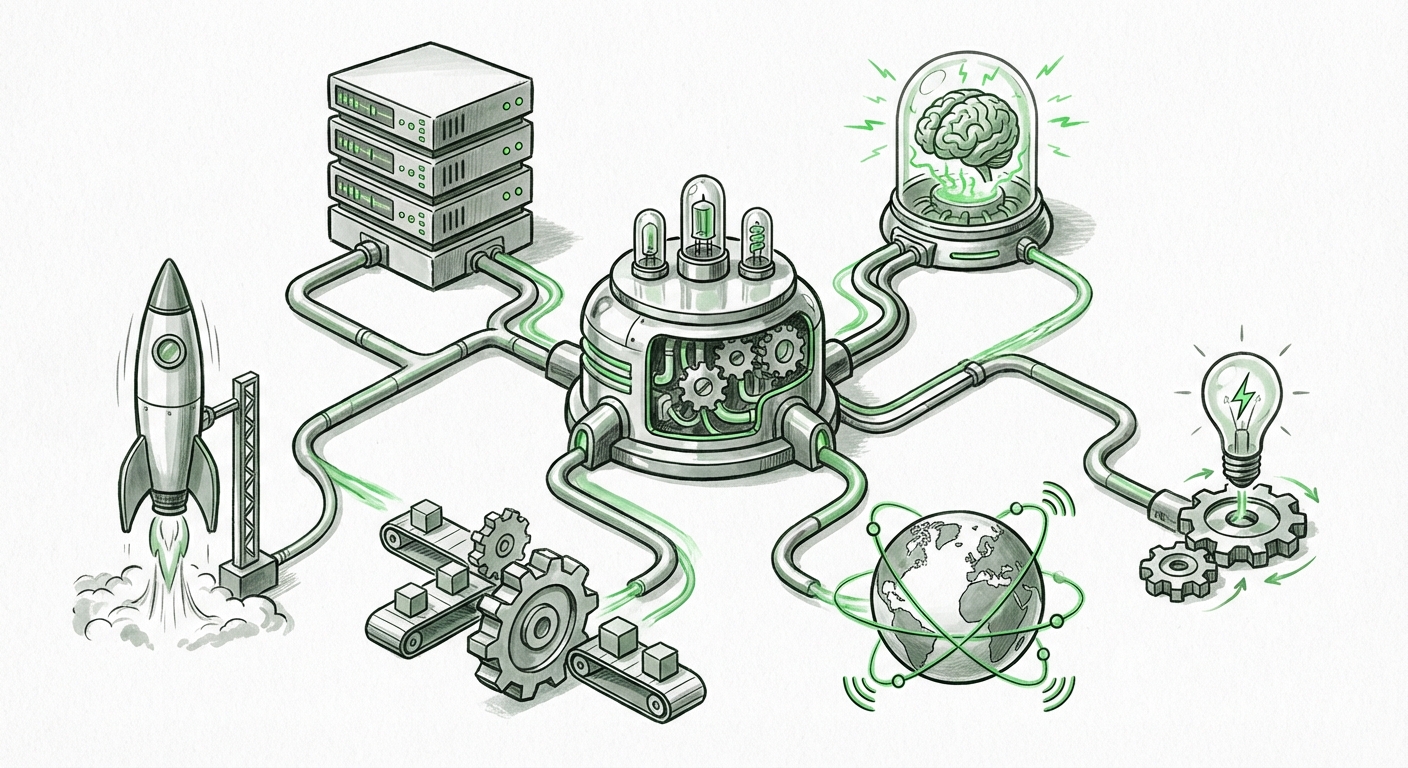
Think of an AI agent as a worker with a toolbox. Each tool in that box is a skill. A skill is a specific, repeatable action the agent can take. Examples include searching the web, querying a database, sending an email, summarizing a document, or calling an external API. Skills are the modular pieces that let an agent do complex work by chaining simple steps together.
In the past, AI systems were often monolithic. You trained one big model to do everything. That approach is brittle and hard to fix. Today, the trend is toward composable skills. Each skill does one thing well. The agent decides which skill to use and in what order. This is powerful, but it also creates a new problem: if you have dozens of skills, how do you make sure they are reliable? How do you structure them so the agent doesn’t get confused? And how do you test them before they cause harm?
The Structure Problem: Why Many Agent Skills Fail
Many agent projects stall because the skills are poorly defined. Here are common mistakes:
- Vague purpose: A skill called “do research” is too broad. The agent doesn’t know when to use it or what success looks like.
- Missing inputs and outputs: If a skill doesn’t specify what data it needs and what it returns, the agent will guess. Guessing leads to errors.
- No error handling: Real-world APIs fail. Networks time out. If a skill doesn’t plan for failure, the whole agent breaks.
- Hidden side effects: A skill that sends an email or deletes a record has real consequences. Without guardrails, the agent might use it by accident.
- Poor documentation: If humans can’t understand a skill, the AI will struggle too. Clear descriptions and examples are essential.
These problems are not just technical. They are design problems. And they are solvable.
Seven Rules for Structuring Effective Agent Skills
Based on best practices emerging across the industry, here is how to build skills that agents can actually use well.
1. Give each skill a single, clear job
A skill should do one thing. “Translate text” is good. “Translate text and summarize it and post it to social media” is three skills in a trench coat. Single responsibility makes skills easier to test, reuse, and debug. It also helps the agent choose the right tool for the task.
2. Define inputs and outputs with strict schemas
Every skill should specify the exact format of its inputs and outputs. Use types, formats, and constraints. For example, an input might require a “customer ID” as a number and a “message” as a string under 500 characters. An output might return a JSON object with a “status” field and a “result” field. This removes ambiguity. It also lets you validate data before and after the skill runs.
3. Provide examples and edge cases
Examples are powerful. Include a few typical inputs and the expected outputs. Also include edge cases: empty inputs, very large inputs, invalid formats, or unexpected values. This helps both the AI and the humans who maintain the skill. It also gives you a ready-made set of tests.
4. Build in error handling and fallbacks
Assume things will go wrong. A skill should catch errors and return a clear message. For example, if an API call fails, the skill might return “service unavailable” instead of crashing. It might also have a fallback, like retrying once or using a cached result. The agent should know what to do when a skill fails, not just stop working.
5. Document dependencies and permissions
Some skills need access to external tools, databases, or APIs. List those dependencies clearly. Also state what permissions the skill requires. A skill that can delete data should be marked as high-risk. This documentation helps with security reviews and helps the agent avoid using dangerous skills without proper checks.
6. Design for composability
Skills should work well together. That means standardizing formats where possible. If one skill outputs a date as “YYYY-MM-DD” and another expects “MM/DD/YYYY”, you have a problem. Consistent data formats make chaining skills reliable. Also think about how skills hand off work. A skill should return enough context for the next skill to do its job.
7. Add guardrails and safety checks
Not every skill should be available all the time. You can add conditions: only allow a “send email” skill after a human approves the draft. Or limit a “spend money” skill to a maximum amount. These guardrails can be part of the skill itself or part of the agent’s decision logic. Either way, they prevent costly mistakes.
How to Evaluate Whether Agent Skills Actually Work
Building a skill is only half the job. You also need to know if it works, and if it keeps working as conditions change. Evaluation is not a one-time event. It is an ongoing process. Here is how to do it well.
1. Write unit tests for each skill
Unit tests check a skill in isolation. Give it a known input and check the output. Test normal cases, edge cases, and invalid inputs. For skills that use AI models, outputs may vary. In that case, test for properties instead of exact matches. For example, check that a summary is shorter than the original and contains the main keywords. Or use a scoring rubric.
2. Run integration tests for skill chains
Most real work uses multiple skills in a row. Integration tests check that skills work together. For example, test that “search web” → “extract facts” → “write summary” produces a coherent result. These tests catch problems like format mismatches or data loss between steps.
3. Use red-teaming and adversarial testing
Try to break your own skills. Feed them confusing inputs, malicious prompts, or unusual data. See if they fail safely. For example, can a skill be tricked into revealing sensitive information? Can it be made to call a dangerous tool? Red-teaming helps you find weaknesses before bad actors do.
4. Measure the right metrics
What does “working” mean? Define metrics for each skill. Common ones include:
- Success rate: How often does the skill complete its task correctly?
- Latency: How long does it take?
- Cost: How much does each call cost in compute or API fees?
- Safety violations: How often does the skill break a guardrail?
- Human satisfaction: For subjective tasks, do people rate the output as useful?
Track these metrics over time. A skill that worked last month might fail today if an external API changed.
5. Add human review for high-stakes skills
Some skills should not run fully automatically. For example, a skill that issues refunds or sends legal notices should have a human in the loop. Human review can catch errors that automated tests miss. It also builds trust with users.
6. Monitor in production
Evaluation does not stop at launch. Set up monitoring to track skill performance in the real world. Log inputs, outputs, errors, and latency. Set alerts for sudden changes. This helps you catch regressions quickly and fix them before they affect many users.
7. Build a regression suite
Every time you fix a bug or update a skill, add a test for it. Over time, you build a regression suite that protects against old problems coming back. This is standard practice in software engineering, and it is just as important for AI skills.
The Future of AI: Modular Skills, Standardization, and Trust
What does this mean for the future of AI? The shift toward structured, evaluated agent skills is part of a larger trend: AI is becoming more modular and more engineering-driven. Instead of building one giant model that does everything, teams are building libraries of small, reliable skills. These skills can be reused across different agents and products. They can be shared, versioned, and improved over time.
We are likely to see the rise of skill marketplaces and standard formats for describing skills. Just as app stores made software modular, skill libraries will make AI agents more capable and more consistent. Companies will compete on the quality of their skill libraries, not just their models. A well-tested skill for “extract data from invoices” might be more valuable than a slightly better language model.
This also changes how we think about safety. If skills are modular, we can certify them. We can test them against standards. We can require that a “financial transaction” skill meets certain safety criteria before it is used. This is a path toward trustworthy AI systems, not because the model is perfect, but because the building blocks are well understood and well tested.
What This Means for Businesses and Society
For businesses, the message is clear: treat agent skills like software assets. That means investing in design, documentation, testing, and monitoring. It also means creating governance around which skills are allowed, who can use them, and what guardrails apply. Companies that do this well will ship reliable AI agents faster. Those that skip these steps will face costly failures and lost trust.
For society, better-structured skills mean more predictable AI. When an agent uses a skill, we can know what it is supposed to do and how to check if it did it. That makes it easier to audit, regulate, and improve. It also makes it easier to build AI that aligns with human values, because each skill can be designed with safety and fairness in mind.
There are challenges. Standardization is hard when the technology is moving fast. Small teams may lack the resources to build robust evaluation pipelines. And there is a risk that skill libraries become fragmented, with different formats and standards. But the direction is clear: the future of AI is not just about bigger models. It is about better building blocks.
Actionable Insights: Start Building Better Skills Today
If you are building AI agents, here is where to start:
- Audit your current skills. Pick three and check them against the seven rules above. How many are missing clear inputs, examples, or error handling?
- Write one test for every skill. Even a simple test is better than none. Build from there.
- Create a skill registry. Document every skill your agent can use. Include its purpose, inputs, outputs, dependencies, and risk level.
- Add a human review step for high-risk skills. Start with one skill that has real-world consequences.
- Track metrics in production. Use logs and dashboards to see how skills perform over time.
These steps are not glamorous, but they are what separates a demo from a dependable product. The companies that master them will lead the next wave of AI adoption.
Conclusion
Agent skills are the quiet foundation of the AI agent revolution. When they are well-structured, clear, specific, documented, and safe, they let agents do real work reliably. When they are sloppy, they cause failures that erode trust. Evaluation is not optional; it is how you prove a skill works and keep it working. As AI becomes more modular, the teams that treat skills as serious engineering artifacts will build the agents that people actually use. The future of AI will be built one well-tested skill at a time.