How to Build an AI Skill That Writes in Your Voice
Anyone who has used an AI writing assistant knows the feeling. You ask for a paragraph. You get back something that is grammatically perfect, well organized, and completely, unmistakably not you. It sounds like a very polite stranger who has read a lot of blog posts and has never met you.
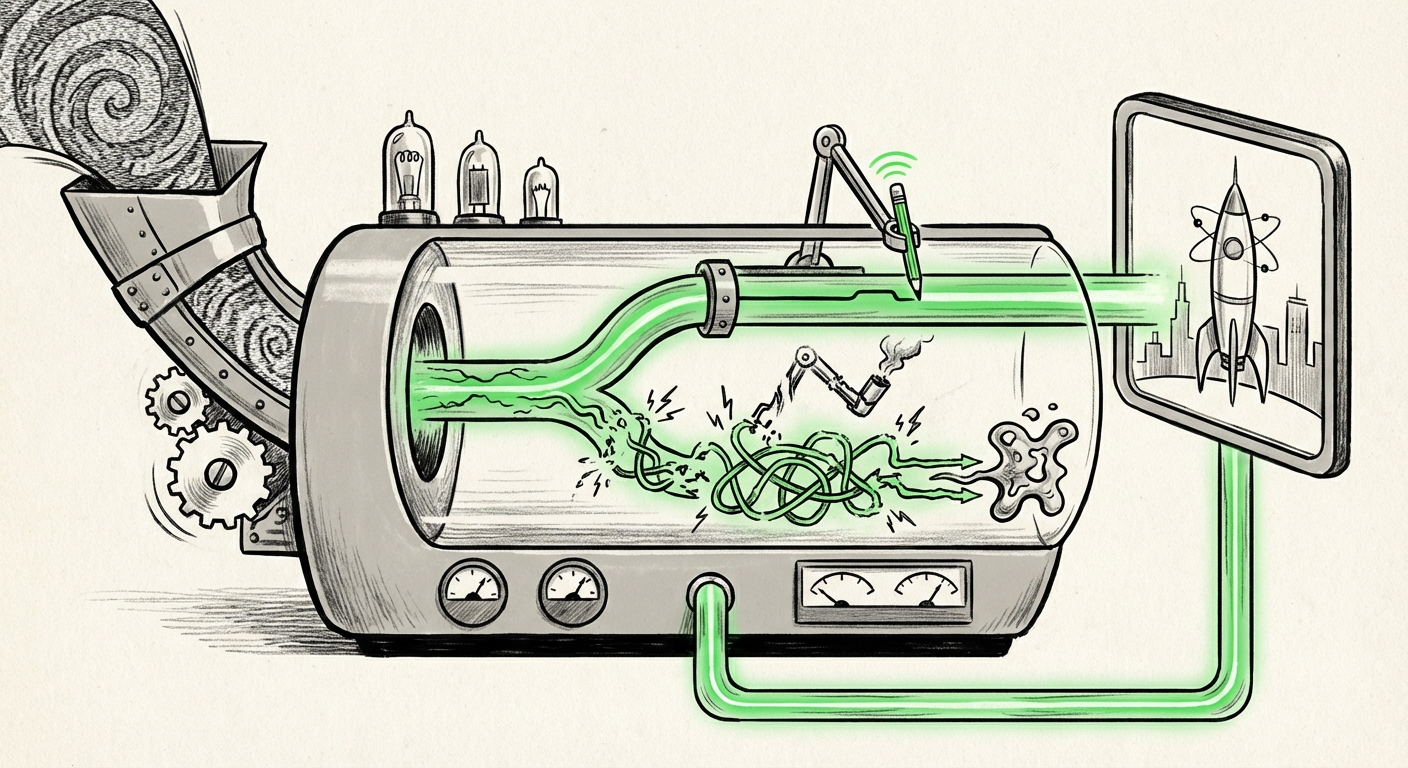
That gap, between "good writing" and "your writing", is where a new category of work is forming. People are no longer just prompting a chatbot to write something. They are building repeatable AI skills: custom, reusable setups that teach a model how they write, what they care about, and what they would never say. The goal is not a clever one-off prompt. The goal is a permanent writing partner that sounds like you on its worst day and like your best draft on its best.
This is a bigger shift than it sounds. It changes how individuals and companies think about brand voice, training, and trust. And it raises questions we are going to be wrestling with for years.
Why "Voice" Is the Hardest Part of AI Writing
Most writing advice tells you voice is about word choice. It is really about rhythm, restraint, and judgment. Voice is the part of writing that says this sentence is too long, or that joke will land wrong with this audience, or we don't use that word here.
That is why generic AI output feels flat. Models are trained to land in the middle, the safest, most broadly acceptable version of a sentence. The middle is where all the personality goes to die. Your voice lives on the edges: the short blunt sentence after a long winding one, the specific detail nobody else would pick, the habit of ending a thought with a question.
So building a voice-matching skill is not about asking the model to be "friendly and professional." That instruction produces the same beige paragraph for every person who types it. Real voice matching means feeding the model evidence: what you actually wrote, how you actually edited, and what you would have cut.
What an AI Skill Actually Is
Think of a skill as a kit that travels with the model. It has three parts:
- Instructions, the standing rules for how the skill should behave, written once and reused.
- Examples, real samples of your writing, so the model can pattern-match instead of guess.
- Reference files, a style guide, a list of banned words, a glossary of terms you use, sample structures you like.
A prompt is a request. A skill is a job description. Once it exists, you stop re-explaining yourself every time and start giving short, ordinary instructions, "draft a follow-up email to this client," "tighten this paragraph," "turn these notes into a post", and getting back something you can actually use.
The Building Blocks of a Voice-Matching Skill
1. Start with real samples, not descriptions
The single biggest mistake is describing your voice instead of showing it. "I'm conversational but authoritative" is a description. Three paragraphs you actually wrote last month are evidence. Gather the good stuff: emails you were proud of, posts that got replies, documents you wrote without a template. Aim for variety, not volume, different formats, different audiences, different moods.
2. Write the style guide you'd never write
This is where the work gets uncomfortable and valuable. Most people cannot explain their own writing habits until they are forced to. Sit down and list your actual rules: sentence length, punctuation habits, whether you use contractions, how you open a piece, how you close one, and which words make you cringe. Include the negative rules, because they matter most. Never start with "In today's fast-paced world." Don't use exclamation points. No em-dash pileups.
3. Build a banned list
Every model has favorite filler. Yours probably has ones you'd never touch. A banned-word list is the fastest way to make output feel human. Add the phrases you see in every other AI draft and the corporate jargon you hate. Then add the softer stuff: hedging language, throat-clearing openings, summarizing sentences that repeat what you just said.
4. Give the skill a feedback loop
A voice skill is not finished the day you build it. It gets better when you correct it. When a draft comes back wrong, don't rewrite it silently, tell the skill what was off and why. Over time you build a living document that captures your real preferences, not your imagined ones.
5. Set the guardrails
Voice without guardrails becomes accidental fabrication. Instruct the skill to ask for facts it does not have, flag anything it is unsure about, and never invent numbers, names, or quotes. A skill that writes confidently in your voice and makes things up is more dangerous than a boring one.
Step-by-Step: Building Yours This Week
- Collect 5–10 samples of your writing across two or three formats.
- Highlight what you like in each one, a phrase, a structure, a closing line. Those highlights become your examples.
- Write a one-page style guide with do-rules and don't-rules side by side.
- Create a glossary of terms, product names, and abbreviations you use consistently.
- Load everything into a skill with clear instructions about task, audience, and length.
- Test on three real tasks you would normally do by hand.
- Edit the output and feed back the edits as new examples so the skill learns from your corrections.
The whole process takes a few hours. The payoff compounds every time you use it.
The Business Case: Voice at Scale
For individuals, a voice skill is a productivity win. For organizations, it is closer to an infrastructure decision.
Consider what large companies spend on brand consistency. Style guides get written, distributed, ignored, and rewritten. Every new hire produces documents in a slightly different register. Marketing, support, sales, and legal all speak in different tones, and customers feel the seams.
A well-built voice skill is a style guide that executes itself. Support replies, sales emails, documentation, and internal memos can be drafted in a consistent register from day one. New team members produce on-brand work faster because the standard is baked into the tool rather than buried in a PDF nobody opens.
There is a second-order effect that matters just as much: institutional memory. A skill can hold not just tone but terminology, approved claims, and past phrasing that worked. That is knowledge that usually walks out the door when someone leaves.
The Risks Nobody Wants to Talk About
Voice-matching is powerful, and power always comes with a bill.
- Homogenization. If everyone uses a voice skill tuned to "engaging and clear," we may end up with millions of people sounding identical but confident. The safeguard is specificity, the weirder and more particular your examples, the less generic the output.
- False authorship. Writing in your voice is not the same as being you. Anyone reading should know when a draft was machine-assisted, especially in contexts where trust is the whole point.
- Impersonation. The same techniques that clone your own voice can clone someone else's. Consent and disclosure are not optional features here; they are the foundation.
- Skill drift. Models change, instructions get stale, and a skill built last year may quietly stop matching you. Voice skills need occasional audits, not just one-time setup.
- Over-reliance. The muscle of writing is also the muscle of thinking. Outsourcing the draft is fine; outsourcing the judgment is not.
What This Means for the Future of AI
The first era of AI writing was about capability: can it produce a paragraph? The second era was about control: can we make it follow instructions? We are now entering a third era, and it is about identity. Can a model represent a specific person or brand faithfully, reliably, and with the right limits?
That shift changes what "good AI" means. A model that is smarter but sounds like nobody is less useful than one that is slightly less capable but sounds exactly right for its job. Expect the market to reward customization over raw horsepower, and expect the skill layer, not the model, to become where the real differentiation lives.
It also changes the economics of expertise. A senior writer's value was partly in producing words. Increasingly it is in encoding judgment: the rules, the taste, the bans. The people who can articulate why a sentence works will be the ones who build the best skills.
And it changes trust. Once anyone can generate text that sounds like anyone else, proof of authorship becomes a product. Disclosures, signed content, verified channels, these will move from compliance checkbox to competitive advantage. The companies that get this right will earn something increasingly rare: the belief that a human actually meant what you just read.
Actionable Takeaways
- Show, don't describe. Real samples beat adjectives every time.
- Write your negative rules first. What you refuse to say defines your voice more than what you embrace.
- Treat the skill as a living document. Feed back your edits; audit it regularly.
- Build guardrails before you build speed. Fact-checking and uncertainty flags come first.
- Disclose where it counts. Decide now which contexts require a human byline.
- Start small. One format, one audience, one skill. Then expand.
The most interesting thing about a voice skill is not that it saves time. It is that building one forces you to understand your own writing for the first time. You end up with a tool that sounds like you, and a clearer picture of who that is.