ChatGPT's New Data Powers and the Rise of Personal AI Agents: What It Means for the Future of AI
Something important is changing in how people use AI. For the past few years, the pattern was simple: you opened a chat window, typed a question, and got an answer. The AI knew only what you told it in that moment, plus whatever it had learned during training.
That pattern is breaking. ChatGPT is gaining new powers to work with real data, the files, messages, calendars, and records that make up your actual working life. At the same time, personal AI agents are gaining traction: software that doesn't just answer, but takes steps on your behalf toward a goal you set.
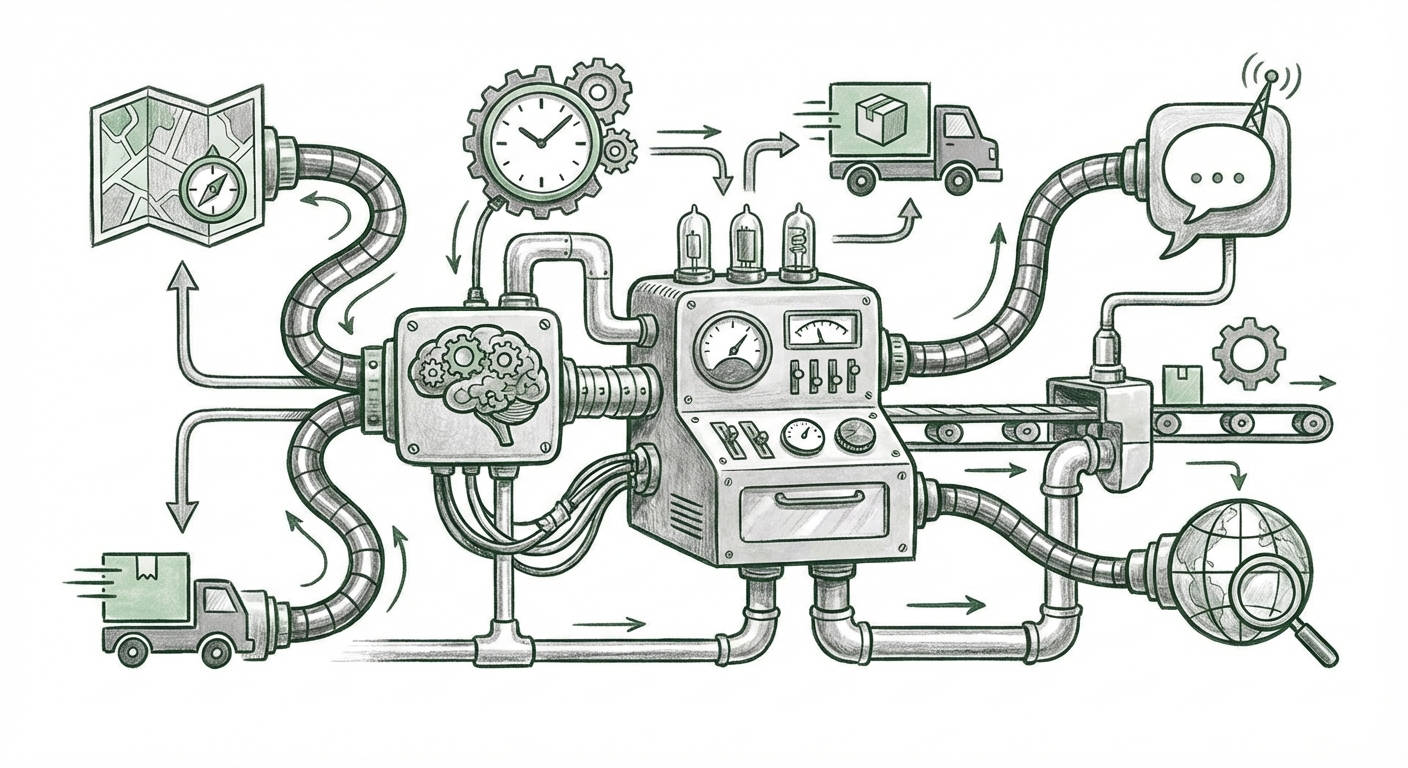
These two trends are not separate stories. They are the same story. Data gives an agent context. Context gives an agent the ability to act well. Put them together, and you get a shift from AI as a clever text tool to AI as a working layer that sits between you and your digital life.
This article breaks down what is happening, why it matters, and what businesses and ordinary users should do about it right now.
Why "Data Powers" Are the Real Turning Point
A chatbot that only knows what you paste into it is limited by your patience. You have to find the right document, copy the right paragraph, and explain the context again and again.
The new direction is different. ChatGPT is being given the ability to reach into connected sources of information so it can work with your data where it already lives. The value is obvious: fewer copy-paste loops, fewer "let me explain my situation" restarts, and answers that reflect reality instead of a summary you typed in a hurry.
But this is not just a convenience upgrade. It changes the shape of the product in three ways:
1. Memory becomes infrastructure
When an AI can hold on to context across sessions and sources, it stops feeling like a search box and starts feeling like a colleague who was in the meeting. The quality of the output depends less on clever prompting and more on how well your data is organized and permissioned.
2. Answers become actions
Once an assistant can see your data, the natural next question is, "So why don't you do something about it?" That is exactly how agents are born, from the gap between knowing and doing.
3. Permissions become the product
If an AI can read your files, the most important feature is not intelligence. It is control. Who approved access? What can it touch? Can you see a log of what it did? These questions move from the security team's slide deck to the main product experience.
Why Personal Agents Are Gaining Traction Now
Agents have been demoed for years. What is different now is that several practical barriers have fallen at the same time.
- Models handle multi-step work better. Planning a sequence of small actions and recovering when one fails is the core skill of an agent. That skill has improved a lot.
- Tool use is standard. Modern AI systems are built to call other software, not just produce text. That turns a model into a doer.
- Connectors are normal. The plumbing that links AI to documents, inboxes, and business apps is becoming a standard part of the stack rather than a custom project.
- Costs have come down. Running many small AI steps behind the scenes is now affordable enough for everyday use, not just flagship demos.
- People are ready. After years of chatting with AI, users trust it enough to let it try a task, as long as they can review the result.
The result is a shift in what "using AI" means. You stop writing prompts and start assigning outcomes.
The Big Shift: From Answers to Outcomes
When AI was a chat window, success was measured in words. Did the summary look right? Was the email draft usable?
With data-connected agents, success gets measured in finished work. Did the report get built? Did the meeting get scheduled? Did the invoice get matched to the purchase order?
This changes how buyers think. A business does not want "AI." It wants fewer hours spent on repetitive work and fewer mistakes in the handoffs between systems. The winning products will be the ones that can prove a completed task, not just describe one.
It also changes how vendors compete. If everyone has access to strong models, the difference comes from three places: the quality of the data connections, the safety of the permission system, and the depth of understanding of a specific job.
What This Means for the Future of AI
The agent becomes the interface
Today you open an app to do a thing. Tomorrow you may tell an agent the thing and let it pick the app. That flips the power structure of software. Apps become tools that agents call, and the agent becomes the front door.
Context is the moat
Everyone can rent a strong model. Almost no one can easily copy ten years of well-organized, properly permissioned company knowledge. Data readiness is becoming the real competitive advantage, and the real bottleneck.
Trust engineering becomes a real discipline
An agent that reads data is helpful. An agent that reads too much data and acts on it is a risk. Expect a new layer of product design focused on confirmations, spending limits, action previews, and audit trails. This is boring work compared with model research, and it will decide which agents people actually use.
Small, focused agents may beat one giant assistant
A single assistant that knows everything is appealing, but specialization is often safer. A finance agent that only touches finance data is easier to approve than a general agent with keys to everything. Expect companies to favor narrow, well-guarded agents stitched together into a workflow.
Standards will decide the winners
If every agent needs a custom connection to every tool, adoption slows down. The organizations that push open, simple ways for agents to connect to data and apps will lower the cost of the whole ecosystem.
Practical Implications for Businesses
For leaders, the message is blunt: the agent era rewards clean data and clear rules. Everything else can be bought.
Fix your data before you buy the agent
Agents fail for unglamorous reasons. Files are duplicated. Naming is inconsistent. The customer record lives in three systems and disagrees with itself. An agent does not magically clean this up; it just exposes it faster. Start with the two or three workflows where data is already trustworthy.
Treat identity and permissions as AI infrastructure
Every agent needs an identity. It should have the least access it needs, be tied to a human owner, and be easy to switch off. If your access rules are messy for people, they will be dangerous for agents.
Measure hours and errors, not excitement
Pick a narrow task. Measure the time it takes today and the error rate today. Run the agent in a supervised mode. Then compare. A pilot that cannot produce a number is a demo, not a project.
Start where the work is repetitive and reviewable
Good first targets include drafting routine replies, summarizing incoming documents, reconciling simple records, preparing meeting briefs, and turning support tickets into first-draft answers. All of these have a human check at the end, which keeps risk low while value shows up fast.
Plan for shadow agents
If you do not give employees a safe way to use agents, they will connect their own. That is already happening with chat tools. Build an approved path, a list of connected apps, and a simple way to report something that went wrong.
Rethink the security model for prompt injection
When an AI reads outside content, that content can try to give it instructions. Any agent that reads email, web pages, or shared documents needs to treat that material as untrusted. Limit what an agent can do without a human saying yes.
What It Means for Workers and Society
The most realistic near-term change is not mass replacement. It is a shift in the day-to-day job. Less time gathering and formatting. More time deciding, checking, and directing.
That is a real skill change. The people who do well with agents are not the fastest typers. They are the ones who can describe an outcome clearly, spot a bad result quickly, and set sensible boundaries. Judgment becomes the bottleneck, not effort.
There is also a privacy story. People will accept an assistant reading their calendar. They will be far less comfortable with a system that quietly reads everything and shares it somewhere else. The companies that explain data use in plain language, and make access easy to see and revoke, will earn the trust that turns into adoption.
And there is an accountability question. When an agent books the wrong flight or sends the wrong invoice, who is responsible? The honest answer is: the person or organization that deployed the agent. Clear logs and clear ownership are not optional features. They are the price of letting software act.
Actionable Insights: A Short Playbook
- Audit your context. List the three data sources an agent would need for your most painful workflow. Fix the worst quality problem first.
- Write agent rules in plain English. What can it read? What can it change? What needs a human approval? Keep it to one page.
- Run one supervised pilot for 30 days. Track time saved, errors caught, and errors missed. Decide with data.
- Require action previews. Any agent that sends, buys, deletes, or changes something should show the change before it happens.
- Log everything. Keep a record of what the agent accessed and did. It helps with debugging, security, and trust.
- Train people to direct, not just prompt. Teach staff how to define outcomes, set limits, and review output.
- Build an approved list. Give employees safe, sanctioned agent tools so they don't improvise with risky ones.
The Bottom Line
ChatGPT gaining stronger data powers and personal agents gaining real traction are two sides of the same move: AI is moving from answering questions to working inside your context. That is a bigger change than another round of model improvements, because it turns AI into something you delegate to rather than something you consult.
The winners in this next phase will not be the organizations with the smartest model access. They will be the ones with clean data, tight permissions, clear human checkpoints, and the discipline to start small and measure honestly. The technology is ready enough. The work now is in the plumbing, the rules, and the trust.