Claude Fine-Tunes Open Source LLM: What This Means for the Future of AI
In a development that could reshape how AI models are built and used, a team has successfully used the AI assistant Claude to fine-tune an open source large language model (LLM). The experiment, reported on December 4, 2025, demonstrates a powerful new way to leverage proprietary AI to improve open source alternatives. This matters because it blurs the line between closed and open AI, potentially democratizing access to highly capable, specialized models while raising important questions about cost, control, and creativity in the AI industry.
For businesses and developers, this approach could mean cheaper, faster ways to create custom AI tools. For society, it hints at a future where advanced AI is not just the domain of a few big tech companies but can be tailored and owned by smaller organizations. Let’s break down what happened, why it’s significant, and what it means for the future of AI.
The Experiment: Using a Big Model to Teach a Smaller One
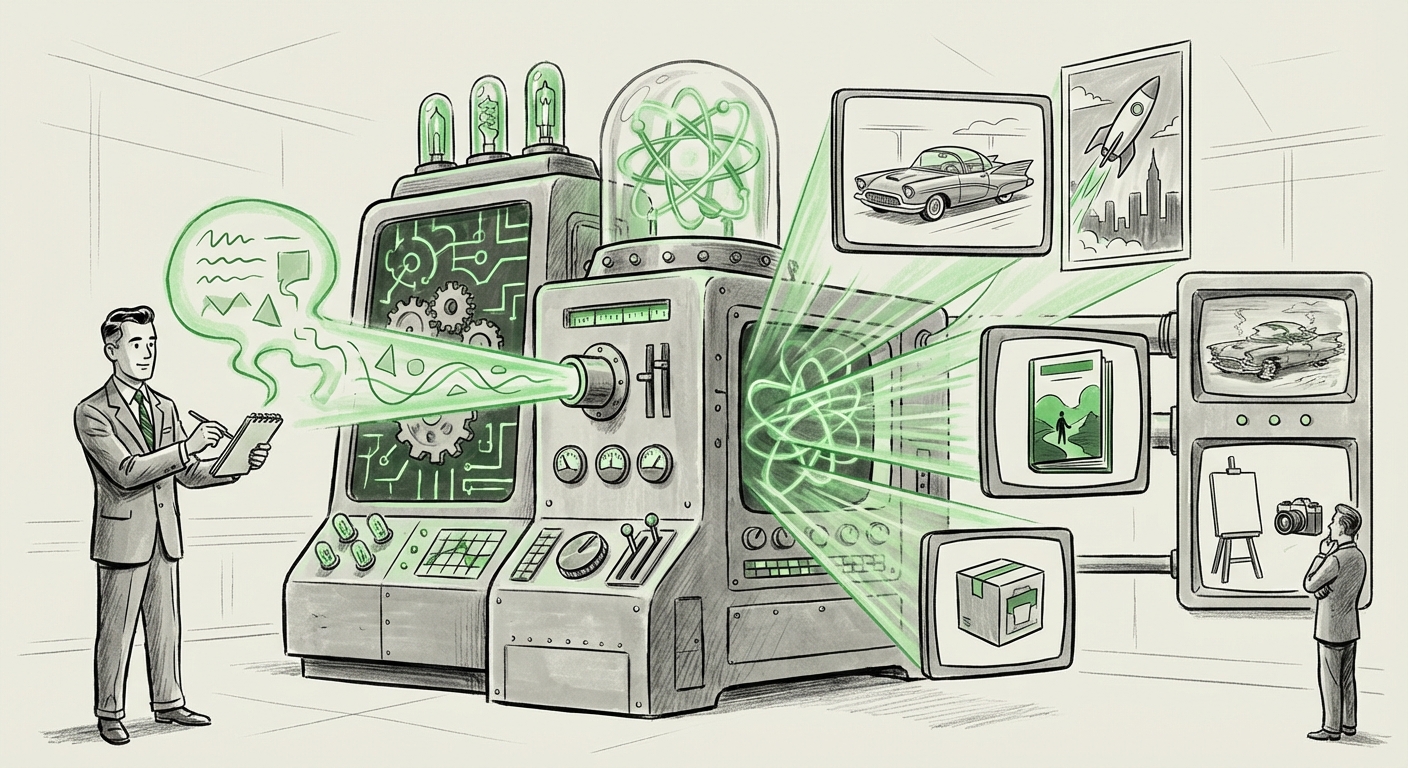
At its core, the experiment is a clever twist on a technique called model distillation or synthetic data generation. Here’s how it works: you have a large, powerful proprietary model like Claude. You ask it to generate high-quality training data, answers, explanations, or examples, for a specific task. Then you use that data to fine-tune a smaller, open source model. The open source model learns from the “teacher” model’s outputs without needing the teacher’s original code or massive compute resources.
This is a big deal because training a large model from scratch costs millions of dollars and requires enormous computing power, not to mention access to huge datasets. Fine-tuning an existing open source model, on the other hand, is much cheaper and faster. By using Claude as a data generator, the team essentially bootstrapped the open source model to perform better on certain tasks, without paying for Claude’s API for every user query down the line.
“The ability to use a top-tier proprietary model to improve an open source one is a big shift,” says an AI researcher familiar with the approach. “It means you can get close to the performance of a big model on specific tasks while keeping costs low and maintaining control over your own deployment.”
Why This Matters: Democratizing AI Development
The biggest implication is democratization. Until now, creating a highly capable AI model required either huge resources (to build from scratch) or ongoing fees (to use a proprietary API). With this method, a small startup, a university lab, or even a solo developer can create a specialized model that runs locally and costs little to operate.
Imagine a healthcare company that wants an AI to help analyze patient notes. They could use Claude to generate thousands of examples of how to summarize medical text, then fine-tune an open source model on that data. The result: a custom tool that understands their domain, runs on their own servers (keeping sensitive data private), and doesn’t require a subscription. The same goes for legal firms, customer service teams, or any business with niche language needs.
This lowers the barrier to entry dramatically. It also means more competition in the AI space. Instead of a few big labs controlling the most advanced models, we could see a flourishing of specialized open source models, each tuned for a particular industry or task.
The Blurring Line Between Open and Closed AI
There’s a fascinating tension here. Proprietary models like Claude are owned by companies that invest heavily in research and development. Open source models are freely available for anyone to use and modify. By using Claude to fine-tune an open source model, the experiment shows that these two worlds can feed each other.
On one hand, this is a win for open source: it gets a boost from the latest proprietary advances. On the other hand, it raises questions. What are the terms of service for using Claude to generate training data? Could this reduce the incentive for companies to open-source their own models? And what happens if a proprietary model’s outputs are used to train a competitor?
For now, the experiment suggests that proprietary models can act as “teachers” for the entire ecosystem. But as this practice grows, we’ll likely see more debates about licensing, attribution, and fair use. Companies may need to update their terms to clarify whether synthetic data generated by their models can be used for training other models.
Practical Implications for Businesses
So how can businesses actually use this? Here are a few actionable insights:
- Cost savings: Instead of paying for API calls to a proprietary model for every user interaction, you can fine-tune an open source model once and run it locally. The upfront cost of generating training data with Claude is a one-time expense, and ongoing costs are minimal.
- Data privacy: Open source models can be deployed on your own infrastructure, so sensitive data never leaves your control. This is crucial for industries like healthcare and finance.
- Customization: You can tailor the model to your specific vocabulary, tone, and requirements. Claude’s diverse outputs can help the open source model learn nuanced behaviors.
- Speed: Fine-tuning a small model is fast, often hours or days, not weeks. This lets you iterate quickly and adapt to changing needs.
However, there are challenges. You need expertise to generate the right training data and to fine-tune the model effectively. Quality control is essential: if Claude’s outputs contain errors or biases, the open source model will learn them. And you’ll need to evaluate the fine-tuned model thoroughly to ensure it meets your standards.
Risks and Ethical Considerations
No technology is without risks. The most obvious concern is bias amplification. If Claude has certain biases (and all large models do), those biases will be baked into the synthetic data and then into the fine-tuned model. Without careful oversight, this could lead to unfair or discriminatory AI systems.
Another risk is over-reliance on a single teacher model. If everyone uses Claude to generate training data, we might end up with many open source models that share the same blind spots and limitations. Diversity in training data is important for robust AI.
There’s also the question of security. Open source models can be inspected and audited, which is good for transparency. But if the training data was generated by a proprietary model, it might contain patterns or information that the proprietary model’s owner considers sensitive. This is a legal gray area that will likely be tested in the coming years.
Finally, we should consider the economic impact on AI companies. If businesses can use Claude to create their own specialized models, they might reduce their spending on API subscriptions. This could pressure proprietary model providers to offer more value or adjust their pricing models.
What This Means for the Future of AI
Looking ahead, this experiment points to a future where AI development is more collaborative and distributed. Here are a few predictions:
- A boom in specialized models: Just as websites proliferated in the 2000s, we’ll see a wave of fine-tuned open source models for every niche imaginable, from legal research to creative writing to customer support.
- New roles for big AI labs: Companies like the makers of Claude might become “data providers” as much as model providers. They could offer tools and services to help customers generate high-quality synthetic data.
- More competition: Open source models will get better faster, thanks to techniques like this. That’s good for consumers and businesses, who will have more choices.
- Regulation and standards: As synthetic data becomes more common, we’ll need standards for quality, transparency, and ethics. Governments and industry groups will likely step in.
The experiment also highlights a broader trend: AI is becoming a tool to build other AI. This recursive improvement could accelerate progress in ways we haven’t seen before. But it also means we need to be thoughtful about how we use these tools.
Conclusion: A Small Experiment with Big Implications
Using Claude to fine-tune an open source LLM might sound like a niche technical trick, but it represents a significant shift. It shows that the line between proprietary and open source AI is not a wall but a bridge. It gives smaller players access to cutting-edge capabilities. And it opens up new possibilities for customization, privacy, and cost savings.
As this approach becomes more common, we can expect a more diverse and dynamic AI ecosystem. The big labs will still lead in raw model capability, but the rest of us will have powerful tools to build on. The future of AI is not just about bigger models, it’s about smarter ways to use them. And this experiment is a perfect example of that.