Nemotron Lands on Halloween Eve: What NVIDIA's Open Model Push Means for the Future of AI
On October 30, 2026, the night before Halloween, a new entry in the Nemotron line of AI models arrived. For most people, that date means candy and costumes. For the people who build with artificial intelligence, it means something else: another data point in a pattern that is quietly reshaping the entire industry.
The Nemotron name belongs to NVIDIA's family of AI models. And the timing of this release tells a story that goes well beyond a single product. It tells us where the open model race stands as 2026 winds down, why big companies are moving away from renting their intelligence from a single vendor, and what the next wave of AI adoption will actually look like inside real businesses.
Here is the big picture, and what it means for you.
A Halloween Release Is a Signal, Not a Coincidence
Model release dates are never random. They land when developer attention is high, when budgets are being planned, and when a company wants to own the conversation heading into the next quarter.
Late October sits right in that sweet spot. Enterprise teams are locking in next year's technology plans. Developers are wrapping projects before the holidays. And the industry is bracing for the next round of announcements that always follows.
Dropping a model the night before Halloween does something else too. It gives the release a memorable hook. In a market where new models appear almost weekly, being memorable matters as much as being good. The best model that nobody tries is worth less than a good model that everybody remembers.
But the deeper signal is this: the release cadence of open models has become relentless. A few years ago, a new open-weight model was an event. Now it is a rhythm. And that rhythm is changing how companies plan their entire AI strategy.
The Open-Weight Shift Is Now a Business Reality
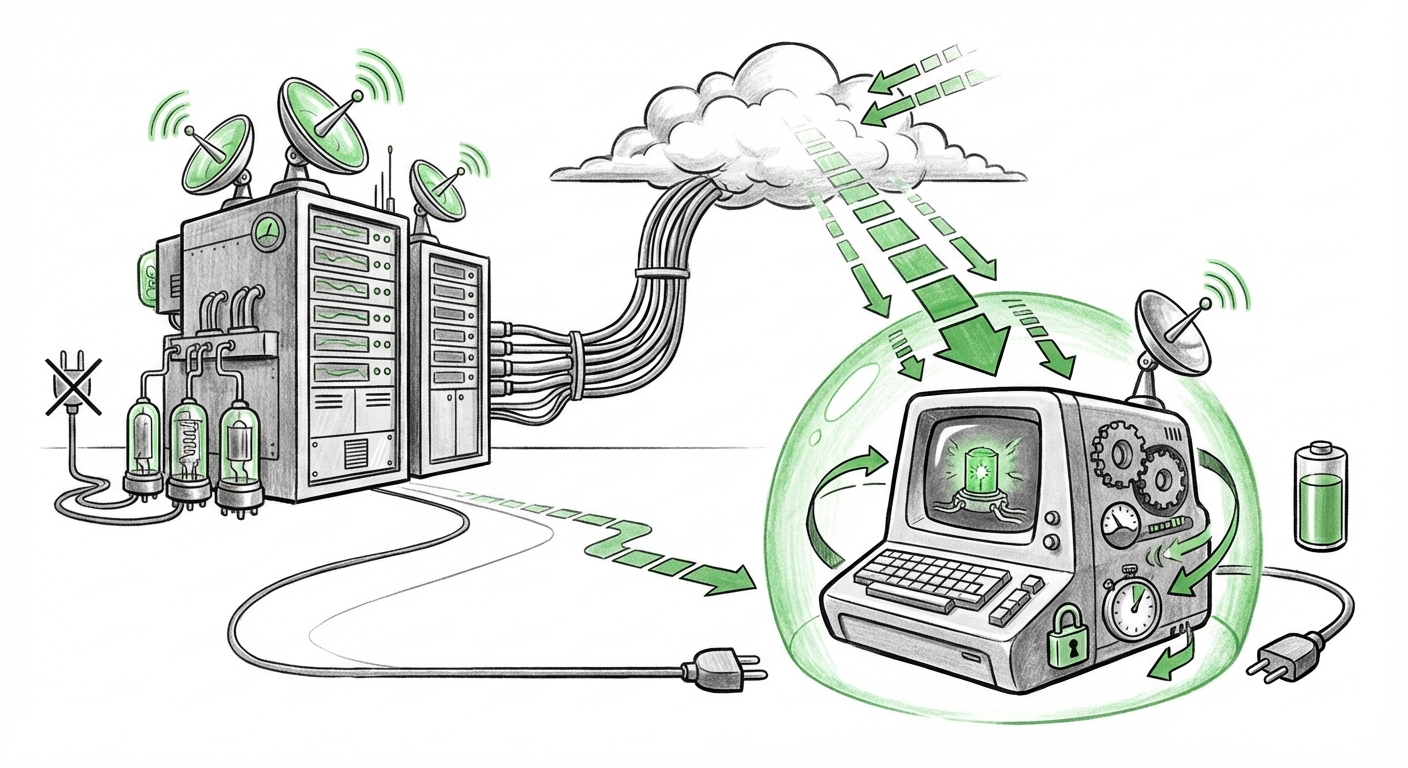
The single biggest change in enterprise AI over the past two years is not that models got smarter. It is that companies stopped assuming they had to rent their intelligence from someone else's cloud.
Open models, the kind you can download, run on your own hardware, and fine-tune on your own data, have moved from hobbyist curiosity to boardroom strategy. The reasons are practical, not ideological:
- Cost predictability. Paying per token is easy to start and hard to forecast. Running a model on hardware you already own turns a variable cost into a fixed one.
- Data control. In regulated industries, sending sensitive information to an outside API is a legal problem, not a technical preference.
- Customization. A general model knows a little about everything. A fine-tuned model knows a lot about your business.
- No lock-in. Companies that build on open foundations can switch hardware, switch vendors, and negotiate from a position of strength.
The Nemotron line sits squarely in this world. It is part of a broader push by hardware makers to make sure there is strong software to run on their chips, a classic strategy. Sell the compute, but make sure the models are there to justify it.
What is different now is that this strategy has matured. It is no longer about proving open models can compete. It is about making them the default choice for serious enterprise work.
Smaller, Faster, Cheaper: The Real Competition
If you only follow headlines, you might think the AI race is about who has the biggest model. It is not. Not anymore.
The race that matters in 2026 is about usefulness per dollar. A model that is slightly less capable but ten times cheaper to run will win most real-world deployments. A model that fits on a single server will beat one that needs a data center, for the vast majority of tasks companies actually have.
This is where release timing becomes interesting again. Each new generation in a family like Nemotron tends to push the same direction: better performance at the smaller end of the size range, better tooling for fine-tuning, and better support for the messy realities of production, long documents, structured output, multi-step tasks, and integration with existing software.
The practical result is that the floor keeps rising. Capabilities that required a frontier model in 2024 now run comfortably on modest hardware. That means more companies can build AI features into their products without a massive infrastructure bill.
Agents Are the Next Test, and the Next Bottleneck
The hottest topic in AI right now is agents: systems that do not just answer questions, but take actions. They read files, call tools, book appointments, file tickets, and run multi-step workflows on their own.
Agents are also brutally demanding. They need models that can follow instructions precisely, recover from mistakes, and stay on task across many steps. One wrong turn early in a chain can ruin the whole result.
This is where open models have made their biggest leap, and where a new Nemotron release matters most. The enterprise appetite for agents is enormous, but so is the anxiety. Nobody wants an unpredictable system touching their customer records or their inventory.
Running an agent on a model you control, inside your own environment, with your own guardrails and logging, is a much easier sell to a risk committee than pointing an autonomous process at a third-party API. Expect the agent wave to be built disproportionately on open foundations for exactly this reason.
Safety Moves In-House
There is a quiet shift happening around AI safety. It used to be something vendors handled for you. Now it is becoming something companies handle themselves.
When you run your own model, you also inherit responsibility for how it behaves. That means content filters, logging, human review steps, and clear rules about what the system is allowed to do. It is more work than calling an API, but it also means the controls are yours, and so is the audit trail.
For regulated industries especially, this is a feature, not a burden. Being able to show a regulator exactly which model version ran, what data it saw, and what it output is a genuine advantage. Open models make that possible in ways a closed service often cannot.
What This Means for Businesses: A Practical Playbook
So what should you actually do with this? Here is a short, honest checklist.
1. Stop Treating Model Choice as Permanent
Build an abstraction layer between your application and the model. The models will keep changing every few months. Your product should not have to be rewritten each time. Teams that can swap models quickly will always have the cheapest, fastest option available to them.
2. Test Before You Trust
Run a new model against your own real tasks, not someone else's benchmark. Benchmarks tell you how a model handles puzzles. Your data tells you how it handles your business. A day of evaluation on real examples beats a month of reading leaderboards.
3. Start Small, Then Scale
Do not begin with the biggest model you can find. Begin with the smallest one that clears your quality bar. You can always move up. Moving down later means rewriting prompts, retesting, and retraining your team, so start lean.
4. Treat Data as the Moat
Every major model is trained on roughly the same public internet. What separates your AI from your competitor's is proprietary data: your documents, your processes, your history. The companies that win will be the ones that organize that data and put it to work.
5. Budget for the Boring Parts
Evaluation, monitoring, logging, and cost tracking are unglamorous. They are also the difference between a demo and a product. Plan for them from day one.
What to Watch Next
A few things will determine whether this release turns into real momentum:
- Adoption by developers, not just announcements. The only benchmark that matters long-term is whether people actually build with it.
- Ecosystem support. Fine-tuning tools, deployment guides, and integrations with common frameworks matter as much as raw capability.
- Hardware availability. Open models are only as useful as the compute they run on. Supply will shape adoption.
- Enterprise case studies. One serious deployment inside a bank or a hospital is worth more than a thousand demos.
The Bigger Picture
Zoom out, and the Halloween Eve release is a small piece of a much larger story. AI is moving from a service you buy to a component you own. It is moving from a chat window to a set of systems running quietly inside everyday software. And it is moving from a race for the biggest model to a race for the most useful one.
That shift is good news for most organizations. It means more control, more predictability, and more room to build something genuinely yours. It also means more responsibility. When the model lives inside your walls, so does the accountability for what it does.
The companies that thrive in the next phase of AI will not be the ones that chase every release. They will be the ones that build the discipline to evaluate quickly, deploy carefully, and improve continuously, treating each new model, whether it lands on Halloween or a random Tuesday, as an upgrade to a system they already own rather than a fresh start they have to survive.
That is the real lesson hiding behind a spooky release date. The models will keep coming. The winners will be the ones who are ready.