Why You Should Never Point a Laser at an Aircraft, And How AI Is Rewriting the Playbook
A small handheld laser looks harmless. In a backyard at night, it draws a bright dot on a fence, a tree, a cloud. But point that same dot at the sky and catch an aircraft in the beam, and you have created a genuine in-flight emergency. That single act, often done out of curiosity rather than malice, has become one of the more stubborn safety problems in modern aviation.
The headline advice is simple and absolute: never point a laser pointer at any aircraft, ever. Not at a plane on approach, not at a helicopter overhead, not at a drone, not "just once" to see how far it reaches. The reason has nothing to do with the laser damaging the aircraft and everything to do with what it does to the humans flying it.
But this story is not only about a safety warning. It is also about a technology gap that artificial intelligence is uniquely positioned to close, and about what that tells us regarding where AI is heading next.
Why a Tiny Light Is a Serious Threat
Laser light behaves differently from a flashlight. It travels in a tight, coherent beam that stays narrow over long distances, which is exactly why a beam aimed from the ground can still be intense when it reaches a cockpit hundreds or thousands of feet up.
When that beam enters a cockpit at night, the effects fall into three buckets:
- Glare. The beam scatters across the windshield or the eye, washing out the view. A pilot flying a visual approach suddenly cannot see the runway environment or the instruments clearly.
- Flash blindness. A bright burst temporarily overwhelms the retina, leaving a lingering afterimage. This is the equivalent of looking directly at a camera flash in a dark room, except the person affected is responsible for dozens or hundreds of lives.
- Distraction and startle. Even a brief flash breaks concentration at the worst possible moment. Critical phases of flight, takeoff, approach, landing, hovering at low altitude, leave almost no margin for a broken scan or a flinch.
The risk multiplies at night, when the beam is most visible and the flight crew's eyes are adapted to darkness. A crew member who has lost night vision can take many minutes to fully recover it, and by then the aircraft may already be past the point where a go-around is the easy option.
There is also an innocent explanation that catches people out. A person on the ground has no reliable way to judge distance or altitude at night. What looks like a plane far away may be much closer than it appears, and the beam widens as it travels. The result is that people who never intended to interfere with an aircraft do exactly that.
The Detection Problem AI Is Built to Solve
Here is where the story becomes an AI story. The core difficulty in responding to laser incidents is not the laser itself, it is finding the source.
A pilot reports a green flash. Air traffic control relays the position. But a beam of light has no trail, no registration, no identity. From the air, a laser on the ground is a point source in a dark landscape full of point sources. By the time anyone responds, the person holding it has usually switched it off and walked away.
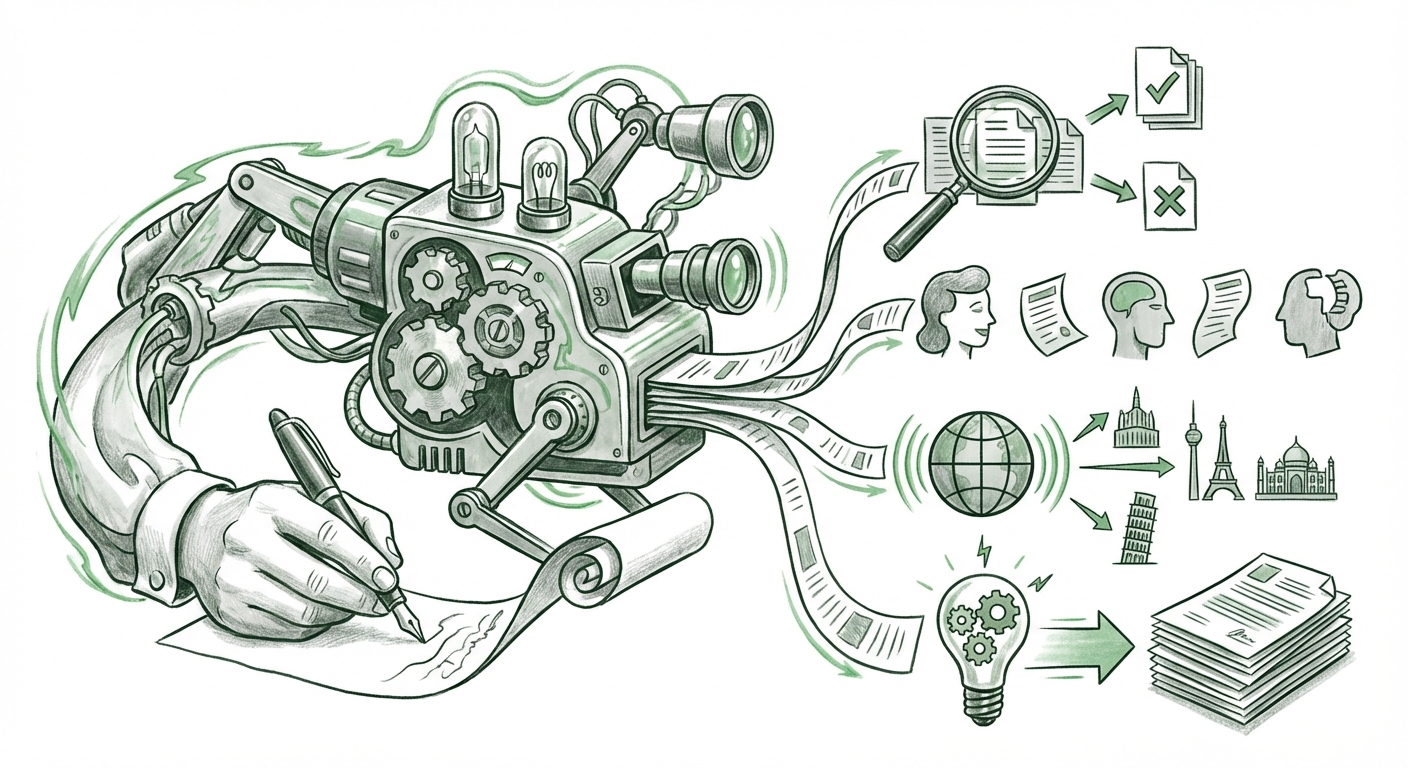
That is precisely the kind of needle-in-a-haystack, low-signal, time-critical problem that modern machine learning handles well. Several capabilities are converging:
1. Computer vision that can tell a laser from a streetlight
Cameras pointed at the sky, on airport grounds, on rooftops, mounted near approach paths, generate an enormous amount of visual noise. An AI model trained on labeled examples can separate the specific optical signature of a laser hit from car headlights, tower beacons, fireworks, reflections, and stars. The useful output is not an image but a classification: probable laser event, with a timestamp and a direction vector.
2. Triangulation from multiple fixed sensors
One sensor gives you a bearing. Two give you a rough location. Three or more, with synchronized clocks and known positions, let a system compute where the beam originated to within a small area. Machine learning improves this by estimating beam angle and origin even when sensors are imperfect, intermittently blocked, or noisy, the sort of messy real-world input that traditional geometry alone handles poorly.
3. Sensor fusion across aircraft and ground systems
An aircraft's own position, altitude, heading, and the reported time of the event are all data points. AI systems excel at fusing these separate streams, flight telemetry, ground camera bearings, weather, and timing, into a single coherent picture that narrows the search area dramatically and quickly.
4. Edge processing for speed
Milliseconds matter. Running detection models directly on cameras or local processors, rather than sending everything to a distant data center, means an alert can be raised while the beam is still on. Edge AI also avoids saturating networks with constant video uploads and keeps raw footage local, which matters for privacy.
From Detection to Prediction
The more interesting shift is from reacting to predicting. Once laser incidents are captured as structured data, time, location, altitude, aircraft type, phase of flight, weather, and sky conditions, patterns emerge. Analysts can build risk maps that highlight which neighborhoods, flight corridors, and time windows carry elevated risk.
That has concrete operational value:
- Flight planning. Crews can be briefed on high-risk corridors before departure rather than being surprised on final approach.
- Targeted awareness campaigns. Instead of generic public messaging, outreach can be aimed at the specific communities sitting under high-incident approach paths.
- Smarter patrol placement. Law enforcement can position units where the model expects the next cluster, not where the last one happened.
- Trend detection. A sudden rise in a new area may signal a local event, a new product being sold nearby, or a change in flight paths, all actionable signals.
Predictive risk modeling is where AI moves from a novelty to a genuine force multiplier. It converts scattered, one-off complaints into a map that can be acted on.
Accountability and the Evidence Chain
Detection only matters if it leads somewhere. A triangulated location combined with a timestamped sensor log gives investigators something they rarely have in these cases: a defensible starting point.
AI-assisted analysis can help correlate multiple reports that might otherwise look unrelated, match an event to a specific narrow search area, and preserve a documented chain of evidence from sensor to alert. That is the difference between a frustrating dead end and a case that can actually be pursued.
It is also a reminder that the deterrent value of technology is often greater than its direct operational value. When people understand that a beam can be traced, the appeal of pointing one at the sky drops sharply.
The Limits, and Why They Matter
None of this is magic, and overpromising would be a mistake.
- False positives are expensive. A system that cries wolf sends responders on wasted trips and erodes trust. Precision matters more than raw sensitivity.
- Privacy is a real constraint. Cameras pointed at the sky and the neighborhoods beneath it raise legitimate questions. On-device processing, data minimization, and clear retention rules are not optional extras.
- Adversarial behavior exists. People who intend harm adapt. Models need continuous retraining on new patterns.
- Explainability matters in investigations. "The model flagged it" is not evidence. Investigators need to see the underlying sensor data and the reasoning chain.
These constraints are not reasons to avoid AI in this space. They are the design requirements that separate a useful system from an expensive liability.
What This Means for the Future of AI
The laser-aimed-at-an-aircraft problem is a small, specific case with an outsized lesson. It sits at the intersection of three trends that will define the next few years of applied AI:
Physical-world AI is the next frontier
Most of the AI conversation of the past few years has been about text and images on a screen. The harder, more valuable work is happening in the physical world, perception systems that watch airports, roads, factories, and power infrastructure. These systems must handle bad weather, dirty lenses, odd lighting, and sensors that fail. Laser detection is a textbook example of AI being asked to do something genuinely difficult in an environment nobody controls.
Small models at the edge will outperform giant models in the cloud
A detection model that must respond in real time, on hardware bolted to a pole, cannot depend on a round trip to a data center. The future belongs to compact, efficient models that run locally and send only conclusions upstream. This pattern will repeat across manufacturing, retail, agriculture, and security.
The winning products fuse AI with existing operations
AI does not replace air traffic control, flight crews, or law enforcement. It makes them faster and better informed. The most durable AI businesses are not selling models. They are selling improved outcomes inside workflows that already exist and already have budgets.
Actionable Takeaways
For individuals: Never point a laser at anything in the sky. If you own a high-powered laser, store it responsibly, know that aiming it skyward is treated as a serious safety matter, and assume any beam directed at an aircraft can be traced.
For airport and aviation operators: Treat laser incidents as a data problem, not just a nuisance report. Standardize capture, time, location, altitude, direction, aircraft phase, so that models have something to learn from.
For technology teams: Design for precision over recall, run inference at the edge, and build the audit trail before you build the dashboard. Explainability is a feature, not paperwork.
For policymakers and community groups: Invest in awareness where the risk actually concentrates. A map beats a poster.
For investors and strategists: Watch the unglamorous safety and infrastructure layer. The highest-value AI deployments of the coming decade will often be invisible, quietly preventing incidents rather than generating headlines.
The Bottom Line
A laser pointer is a consumer product with an aviation-grade consequence. The advice remains unchanged and unconditional: don't point one at an aircraft. What is changing is our ability to detect, trace, and understand these events when they happen anyway.
That shift, from hoping someone notices, to knowing within seconds where a beam came from, is a preview of how AI will quietly reshape safety-critical systems across society. Not by replacing human judgment, but by giving it better eyes, faster.