New AI Builds for 30 October 2026: Why Steady Releases Now Matter More Than Big Launches
On 30 October 2026, another round of new builds landed. For most people scrolling past the notice, it looks like routine housekeeping, a date, a version bump, a short note. But that ordinariness is the story. The most important change in artificial intelligence right now is not a single dramatic breakthrough. It is the fact that AI systems are being rebuilt, retuned, and re-shipped on a schedule that looks far more like modern software than like a research lab.
That shift changes how AI is bought, deployed, trusted, and regulated. It changes what "state of the art" even means when the answer has a shelf life of weeks. And it changes the job of every team that has wired an AI model into a product, a workflow, or a customer experience.
From Big Reveals to a Rhythm of Builds
For the first few years of the generative AI boom, progress arrived as events. A model was unveiled, a launch page went live, everyone tried the same prompts, and the conversation ran for months. Those moments were exciting, but they were also misleading. They made AI look like a series of magic tricks rather than what it has become: an engineering discipline with a shipping calendar.
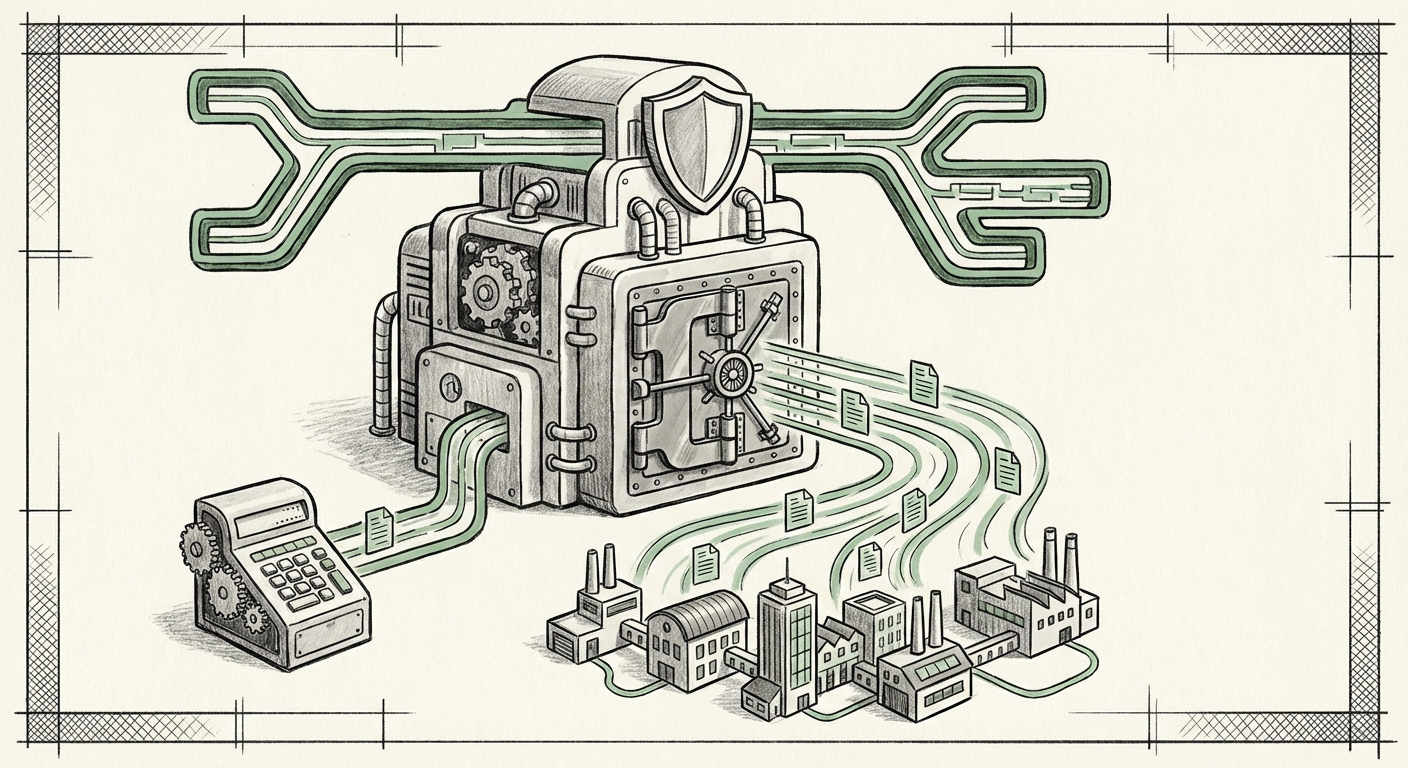
A dated build announcement is a different kind of signal. It says that the team behind a system has a pipeline steady enough to push changes on a predictable rhythm. It says that testing, evaluation, rollout, and rollback are no longer improvised. Above all, it says that the people building these systems expect them to keep changing, and they expect their users to keep up.
This is the pattern that mature technologies eventually settle into. Databases, browsers, operating systems, and cloud platforms all passed through the same doorway. The transition is rarely celebrated, but it is the point at which a technology stops being a novelty and starts being infrastructure.
Why Release Cadence Is Now the Real Product
When updates arrive this often, the cadence itself becomes a feature. A slow, irregular release schedule forces customers to plan around uncertainty. A fast, predictable one lets them build the assumption of improvement into their own roadmaps.
There are three practical consequences worth paying attention to.
1. Quality of change beats size of change
Frequent builds tend to be smaller and more focused. That is usually good news. Small changes are easier to test, easier to explain, and easier to roll back if something goes wrong. The alternative, a sprawling, once-a-year overhaul, concentrates risk into a single anxious week.
2. The evaluation layer becomes critical
If a system's behaviour shifts every few weeks, then the teams that thrive are the ones that can measure behaviour shifts quickly. Anyone shipping AI features without a repeatable way to test outputs against their own use cases is essentially flying with a broken instrument panel. The build calendar is a standing reminder to invest in that instrumentation.
3. Distribution gets easier, adoption gets harder
Shipping is no longer the bottleneck. Getting thousands of organisations to absorb the change, retrain staff, update prompts, revise documentation, re-run compliance reviews, is the bottleneck. The gap between how fast a system improves and how fast an organisation can adapt is now one of the defining tensions in enterprise AI.
What This Means for Technical Teams
For engineers, a steady build rhythm demands a different posture: assume motion. The default should be that the model underneath your product will change, whether or not you ask it to.
A few habits separate teams that handle this well from teams that get blindsided.
- Pin what matters, and know why. Locking to a specific build is a legitimate engineering choice for regulated or high-risk workflows. It is only safe if you have a plan for when that build is eventually retired.
- Build evaluation into the pipeline, not after it. Golden datasets, regression suites, and human spot checks should run automatically whenever a new build lands, before it ever reaches a user.
- Design for graceful degradation. Assume a percentage of outputs will be wrong. Route low-confidence cases to a human, and make failure look like a helpful message rather than a broken experience.
- Keep prompts and integrations versioned. A prompt is code. It belongs in a repository with history, review, and tests.
- Watch for silent drift. Improvements to one capability can quietly alter behaviour in another. Track the metrics you care about over time, not just at launch.
None of this is exotic. It is ordinary software discipline applied to a system whose outputs are probabilistic rather than deterministic. The teams that internalise it early will treat build announcements as routine; everyone else will treat them as emergencies.
The Business Side: Procurement in a Moving Market
Buyers face a subtler problem. When capability improves on a rolling basis, the value of what you signed up for six months ago may no longer resemble what you have today, for better or worse. Contracts, security reviews, and internal approvals were mostly designed for a world where a purchase stayed the same after it was made.
Three adjustments help.
Move evaluation in-house. A vendor's benchmark scores tell you very little about your own workload. Run a structured trial on your real documents, your real tickets, your real edge cases. Re-run it when a notable build lands.
Write change into the contract. Ask how updates are communicated, how much notice you get, whether older builds stay available, and what happens when they don't. These questions are now as important as pricing.
Budget for adaptation, not just licences. The hidden cost of a fast-moving platform is the human time spent re-testing, re-training, and re-documenting. Organisations that fund that work explicitly get far more out of each release than those that treat it as unplanned overhead.
There is also a strategic upside. Fast cadence means problems that were once hard blockers, an accuracy gap, a language limitation, a formatting quirk, may simply be solved by time. Sometimes the right answer to a frustrating limitation is to wait a few weeks and re-test, rather than to build an elaborate workaround.
Governance: The Moving Target Problem
Regulators and risk teams face the hardest version of this challenge. Rules are usually written against a fixed artefact: this system, this dataset, this certificate. AI systems that update every few weeks strain that model.
The emerging answer is to shift oversight from the artifact to the process. Instead of certifying a snapshot, you certify the ability to monitor, evaluate, log, and respond. Does the operator know when a build changes? Can they measure the impact? Can they pull it back? Is there a paper trail showing that each release passed a defined gate?
That approach is more durable than any one-time audit, and it aligns with what good engineering teams are already doing. For organisations in health, finance, education, and public services, the practical takeaway is to build a lightweight change log for every AI system in production, what build, what date, what was tested, what changed in behaviour, who approved it. It takes minutes per release and saves months of confusion later.
For Society: The Expectation of Constant Improvement
Wider culture is quietly recalibrating too. People are learning that AI tools get better without anyone announcing it, that an assistant which failed at a task last month may handle it today. That has real benefits, especially for accessibility, language support, and low-cost productivity tools.
It also creates a strange kind of forgetting. Capabilities that felt astonishing a couple of years ago now feel like the floor. That normalisation is a compliment to the technology and a challenge for public understanding. When systems change quietly, so do their risks, and the public conversation often lags behind the actual state of the tools.
The reasonable middle ground is neither hype nor dismissal. It is a habit of periodic re-checking: reassess what these systems can and cannot do at regular intervals, rather than forming a permanent opinion on the basis of one early experience.
A Practical Playbook for the Next Build Cycle
- Nominate an owner. One person should be accountable for what happens when a new build lands, testing, comms, rollback.
- Keep a use-case test set. Twenty to fifty realistic examples from your own work, with expected outcomes, run on every material change.
- Define your canary path. A small internal group gets each new build first, for a fixed period, before wider rollout.
- Log behaviour, not just errors. Record where outputs changed, not only where they failed.
- Set a re-evaluation date. Every quarter, revisit assumptions about which tasks AI should and should not handle.
- Communicate in plain language. Staff and customers need a simple answer to "did the tool change, and does it affect me?"
The Bigger Picture
A dated build announcement is easy to ignore. That is exactly why it deserves attention. It marks the point where AI stops being a series of spectacles and becomes a dependable, continuously improving utility, one that ships on a schedule, competes on reliability, and asks its users to keep pace.
The future of AI will not be decided only by whoever produces the most impressive demonstration. It will be decided by whoever can turn improvement into a repeatable process, and by the organisations that build the discipline to absorb that improvement without breaking the things that depend on it. The 30 October 2026 builds are one entry in a log that is going to get very long. The winners are the ones already reading it closely.