Supermoon and Rare Mars-Jupiter Meetup: What November's Night Sky Teaches Us About the Future of AI
November brings two reasons to step outside and look up. The night sky will feature a supermoon, a full moon that looks bigger and brighter than usual, and a rare meetup of Mars and Jupiter, where the two planets appear close together in the sky. Both events are free, both are open to anyone with a clear view, and both are the kind of thing people text their friends about.
They are also a surprisingly good way to think about artificial intelligence. Here is why: a sky event is a moment that is predictable, shared, and highly anticipated. Millions of people want the same basic things at the same time, when to look, where to look, what they are actually seeing, and a good photo to remember it by. That is exactly the shape of a problem where AI is being put to work right now.
A Rare Pairing Worth Planning Around
The Mars-Jupiter meetup is the rarer of the two events. Planets move at different speeds along their paths, so a close pairing like this is a matter of timing and geometry. It will not happen on just any night. The supermoon, meanwhile, gives even casual skywatchers something obvious to notice, a moon that appears larger and brighter than a typical full moon.
Put together, November offers a bright, easy-to-find moon and a planet pairing that rewards anyone who knows to look. That combination of easy access and rarity is what turns a night-sky event into a cultural moment. It also creates a wave of demand: for explanations, for timing, for viewing spots, for gear, and for content.
Why Predictable Events Are the Perfect Testing Ground for AI
Most of the work AI is doing in the real world is not about surprise. It is about preparation. A sky event is the ideal example because the "what" is known in advance and the "who" is enormous.
Think about what a person actually needs in the days before a supermoon or a planet pairing:
- Timing help. When is the best window where I live?
- Plain-language explanation. What does "supermoon" really mean, and why do Mars and Jupiter look close together?
- Practical tips. Do I need a telescope, or will my phone work? Where should I stand?
- Personal context. What was happening in the sky on a date that matters to me?
- Follow-up. What should I look for next month?
These are all tasks AI systems handle well today: summarizing information, adapting it to a reader's level, personalizing it by location, and answering follow-up questions in plain conversation. No single expert can personally answer the same question in a hundred different ways for a hundred different people. An AI assistant can, and it can do it at the moment of curiosity, which is when learning actually sticks.
AI Already Looks Up: Pattern-Finding Beyond Human Scale
The deeper connection between AI and the night sky is not about apps. It is about how machines find patterns.
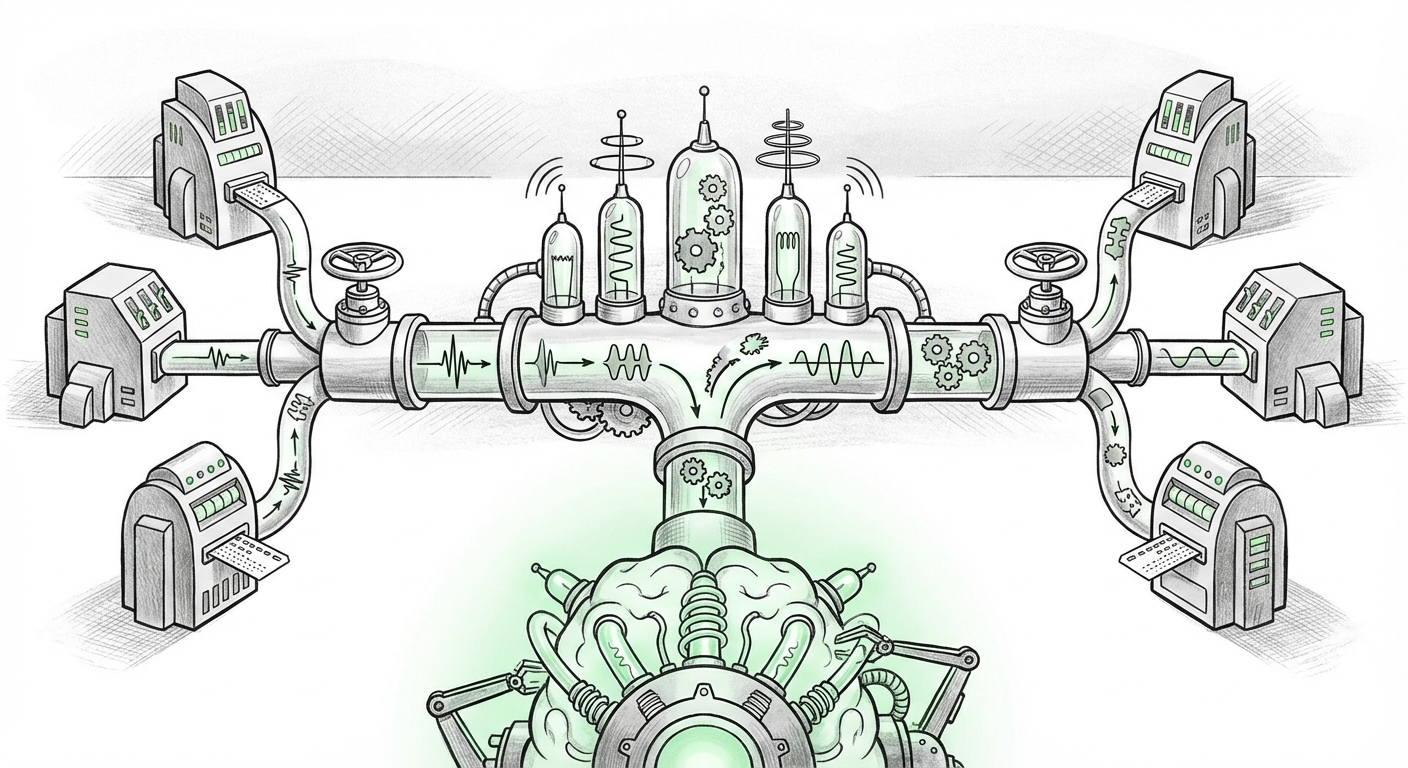
Modern AI is very good at a specific kind of work: scanning huge amounts of data and spotting structure that people cannot hold in their heads. That skill is valuable anywhere data comes in faster than humans can review it. Sky surveys produce enormous volumes of images, and the same core technique, a model trained to recognize patterns in images, is used across medicine, manufacturing, agriculture, and security.
The lesson from astronomy-style pattern-finding carries over directly to business. If your company produces more data than your team can review, customer behavior, sensor readings, satellite imagery, video feeds, support tickets, the bottleneck is no longer storage. It is attention. AI's most reliable contribution is not replacing judgment. It is filtering noise so human judgment lands on the right items.
The Attention Wave: Event-Driven Demand Is a Business Problem
Events like a supermoon and a rare planet pairing create a predictable spike in attention. That spike is a useful model for any business that lives or dies on timing.
When interest in a topic jumps, three things happen at once. Search and question volume rises. Customer service load rises. And the cost of a bad answer rises, because more people see it. AI helps most in that middle layer, handling the flood of routine questions so trained people can handle the harder ones. The pattern applies to product launches, seasonal demand, weather events, travel surges, and local happenings like a viewing party at a park or a museum.
Here is the practical takeaway for operators: map your year into known peaks and unknown peaks. Known peaks, like a scheduled sky event or a holiday, should be pre-loaded with prepared content, clear answers, and staffed escalation paths. Unknown peaks need flexible systems that can absorb a sudden burst without falling apart. AI is far better at the first than most teams assume, and still limited at the second without human oversight.
Wonder Is Not a Workflow, and That Matters
There is a cautionary side to this story, and it is worth stating plainly. The reason a supermoon or a Mars-Jupiter pairing matters is not the information. Information is free and everywhere. What matters is the experience: standing outside, maybe with your kids or friends, seeing something real and slightly strange.
AI can make that experience easier to reach. It can tell you when to look, explain what you are seeing, and help you take a better photo. It can also get in the way. If every moment of curiosity gets routed through a screen and a chatbot, the point of going outside gets lost.
That is a design rule for the next few years of AI products, not just astronomy apps. The best AI removes friction and then gets out of the way. Tools that keep pulling attention back to themselves will lose to tools that quietly make the real-world moment better. The gap between those two designs is the difference between a product people use and a product people resent.
Actionable Steps for Teams Right Now
If you are deciding where AI fits in your organization, the November sky offers a simple framework.
1. Start with questions, not models
Collect the top questions your customers or staff ask repeatedly. If a question has a stable answer and a high volume, it is a good first candidate. That is why sky-event questions are so easy, they repeat, they are answerable, and getting them wrong is low-stakes.
2. Build for the attention spike, not the average day
Most systems are designed for normal traffic. Design for the day interest jumps. Test what happens when ten times the usual number of people ask at once, and make sure real humans can step in.
3. Keep a human in the loop where trust is fragile
Routine explanation can be automated. Anything that feels personal, a child's first question about space, a customer's complaint, benefits from a person being reachable quickly.
4. Measure learning, not just clicks
If an AI tool explains something well, people should come away understanding more. Track whether they ask better follow-up questions, not just whether they stayed on the page.
5. Treat wonder as the product
The outcome you want is a person who looks up, understands what they see, and wants to do it again next month. Build backward from that outcome, and the technology choices get simpler.
What to Watch Next
The near future of AI will not be defined by one dramatic breakthrough. It will be defined by how well these systems handle ordinary, repeated, high-volume human curiosity, the kind that shows up every time something interesting happens in the sky, in the news, or in a customer's life. Predictable events with big audiences are where the gains show up first and where the failures are most visible.
November's sky gives us a rare planet pairing and a brighter-than-usual moon. It also gives us a clean test case: can technology make a real experience better without taking it over? The organizations that answer yes will be the ones people actually trust with the next wave of AI.
So check the timing where you live, find a dark spot, and look up. Then notice how you found out about it. That is the future of AI, happening quietly in the background of a very old sky.